
Erving Goffman

cell-tower-1351714045

“Steve, what did we decide to codename her?”

Steve clicked through his notes. “Turnkey, sir.”

“Turnkey? Who the hell came up with that?” Raymond knew The Agency was running out of codenames, but this was ridiculous. As a top official, he had enough on his mind; how was he supposed to keep track of this shit?

“Well, I think it’s because—”

“So does that mean we’re moving ahead?” Isobel interjected.

“The data is there,” said Michael. “We’re positive she has one of the stronger connections to Wedge that we’ve been able to identify. The frequency of their SMS communication alone—plus the fact that they so often text late at night—indicates that this is clearly more than a working relationship.”

“Not to mention,” Patricia added, “that Occupy essay they wrote came out almost a year ago. If it was purely a working relationship, they’d have no reason to still be in contact.”

“So you think they’re lovers?”

“Well, we’re not certain yet,” Michael replied. “I’ve got Steve filing for a warrant to go through the SMS content, and her email content as well. We’re hoping she’ll turn out to be less opaque than Wedge—”  more...
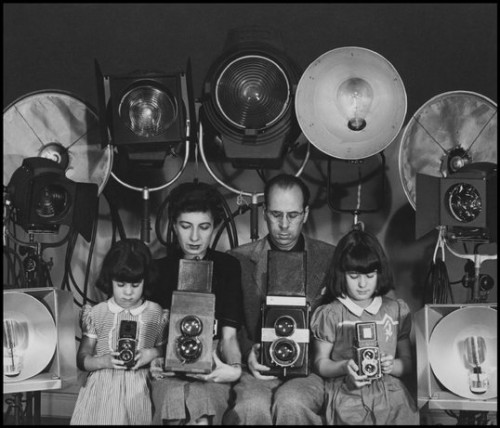
We begin with the assumption that social media expands the opportunity to capture/document/record ourselves and others and therefore has developed in us a sort-of “documentary vision” whereby we increasingly experience the world as a potential social media document. How might my current experience look as a photograph, tweet, or status update? Here, we would like to expand by thinking about what objective reality produces this type of subjective experience. Indeed, we are increasingly breathing an atmosphere of ambient documentation that is more and more likely to capture our thoughts and behaviors.

As this blog often points out, we are increasingly living our lives at the intersection of atoms and bits. Identities, friendships, conversations and a whole range of experience form an augmented reality where each is simultaneously shaped by physical presence and digital information. Information traveling on the backs of bits moves quickly and easily; anchor it to atoms and it is relatively slow and costly. In an augmented reality, information flows back and forth across physicality and digitality, deftly evading spatial and temporal obstacles that otherwise accompany physical presence.

When Egyptians dramatically occupied the physical space of Tahrir Square this past January more...