
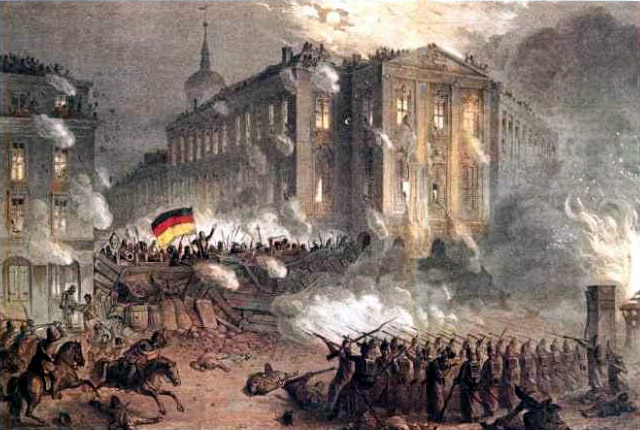
With all the rhetoric around “Facebook Revolutions” and “Twitter Revolutions”1 that we’ve had to endure over the last couple of years, it’s easy to get the sense that there’s something new about the character of contemporary political protest and revolutionary action, and that this newness is, in some fundamental way, the practical result of the omnipresent nature of technology. It’s difficult to miss the profound interweaving and enmeshing of the physical and digital aspects of protest as we see it in both the Arab Spring and Occupy Wall Street – the weight of the protests produced by the occupation of physical space by gathered human bodies, coupled with the constant documentation and nearly instantaneous sharing of images, video, and text that have chronicled these physical occupations and arguably helped them to grow – in short, the augmented nature of contemporary social action. We see this and to us it feels new. Even if we recognize that there are old things at work here – symbolism, patterns of mobilization and diffusion, pieces of the past reclaimed for the purpose of the present – we at least feel instinctively that there is something novel about the Arab Spring, Occupy, and all the other movements and events that have birthed themselves in correlation.
