campaign

In this post, I’d like to make an argument about a way to understand how the Democratic party seems to be making messaging and policy decisions. An argument like this can’t be made in a vacuum—or in 1,500 words. Nor can any one or even ten reasons be decided upon for why the leaders of a party do what they do. But I recognize a pattern in how the DNC and leadership has acted over the past decade and I want to work that through here. So please forgive any indication that I am not a policy wonk or political analyst—I do not claim to be, nor do I wish to be either. more...

21359643669_fa6ab6e1d8_z

“The founding practice of conspiratorial thinking” writes Kathleen Stewart, “is the search for the missing plot.” When some piece of information is missing in our lives, whether it is the conversion ratio of cups to ounces or who shot JFK, there’s a good chance we’ll open up a browser window. And while most of us agree that there are eight ounces to every cup, far fewer (like, only 39 percent) think Lee Harvey Oswald acted alone. Many who study the subject point to the mediation of the killing –The Zapruder film, the televised interviews and discussions about the assassination afterward—as one of the key elements of the conspiracy theory’s success. One might conclude that mediation and documentation cannot help but provide a fertile ground for conspiracy theory building.

Stewart goes so far as to say “The internet was made for conspiracy theory: it is a conspiracy theory: one thing leads to another, always another link leading you deeper into no thing, no place…” Just like a conspiracy theory you never get to the end of the Internet. Both are constantly unfolding with new information or a new arrangement of old facts. It is no surprise then, that with the ever-increasing saturation of our lives with digital networks that we are also awash in grotesque amalgamations of half-facts about vaccines, terrorist attacks, the birth and death of presidents, and the health of the planet. And, as the recently leaked documents about Facebook’s news operations demonstrate, it takes regular intervention to keep a network focused on professional reporting. Attention and truth-seeking are two very different animals.

The Internet might be a conspiracy theory but given the kind, size, and diversity of today’s conspiracy theories it is also worth asking a follow-up question: what is the Internet a conspiracy about? Is it a theory about the sinister inclinations of a powerful cabal? Or is it a derogatory tale about a scapegoated minority? Can it be both or neither? Stewart was writing in 1999, before the web got Social so she could not have known about the way 9/11 conspiracies flourished on the web and she may not have suspected our presidential candidates would make frequent use of conspiratorial content to drum up popular support. Someone else writing in 1999 got it right though. That someone was Joe Menosky and he wrote one of the best episodes of Star Trek: Voyager. Season 6, Episode 9 titled The Voyager Conspiracy. more...

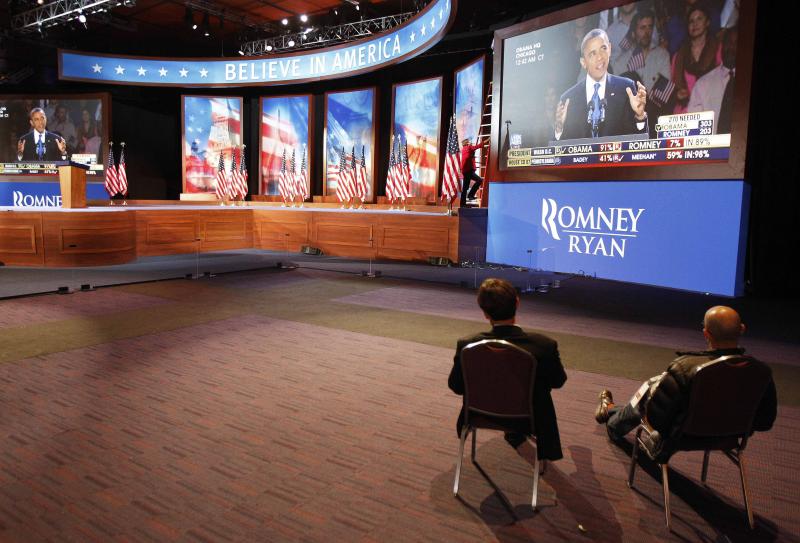
Obama Victory Speech at the Romney Headquarters. Image c/o White People Mourning Romney

In the aftermath of what both sides agree was the most substanceless presidential election in our nation’s history, some variation of the phrase “post-truth politics” has begun haunting the pages of op-eds and news show roundtables (Seriously, its everywhere. Here’s the first five that I found: one, two, three, four, five.).  To say that we live in an age of “post-truth politics” isn’t totally inaccurate, nor is it unworthy of the attention it is getting, but the discussion has yet to truly wrestle with the characeristics of commodified information. Information can be true, and it can be false, but how that information is disseminated, used, and ignored is what truly matters. Information doesn’t (just) want to be free, it also wants to be exploited. more...

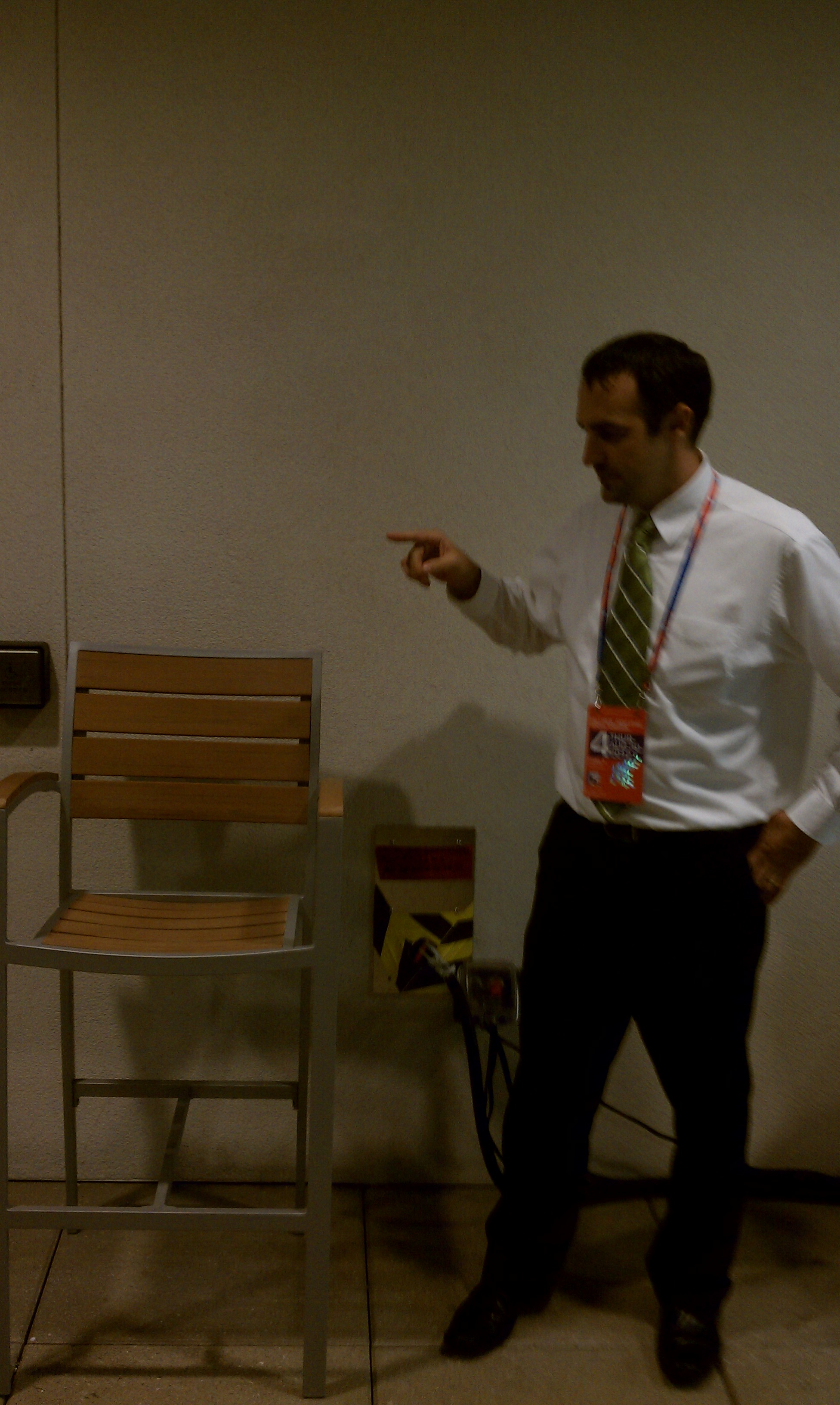
Robert Gehrke, Of the Salt Lake City Tribune invents #eastwooding with a single tweet.

After the final night of the convention, Robert Gehrke (@RobertGehrke) a reporter with the Salt Lake City Tribune, had a colleague take a picture of him pointing at a chair. He was mimicking Clint Eastwood’s now infamous prime-time speech at the Republican National Convention. The performance was (almost) undeniably awkward and strange. Rachel Maddow described Eastwood’s one-man improv skit as, “the weirdest thing I have ever seen at a political convention in my entire life.” Before the network morning shows could pass judgement, twitter users had developed an entire visual language that not only made fun of Eastwood, but the entire Republican party. The performative internet meme called “#eastwooding” had taken shape within hours of Gehrke’s tweet, offering thousands of people a simple framework for creating their own political satire.

more...

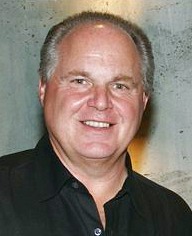
Rush Limbaugh is experiencing an advertiser exodus, and social media is playing a big part.

It’s the kind of story that writes itself. A popular media entity, on one of the oldest forms of electronic mass media, bears the brunt of activists’ Facebook wrath. It combines two old rivalries: liberals and conservatives and new media versus old media. In case you missed it, here’s the brief synopsis of events from ABC news:

Rush Limbaugh remains in big trouble. Advertisers – 11 at last count – are pulling spots off his radio talk show because of the reaction to his calling Georgetown University law student Sandra Fluke a “slut” and a “prostitute.” Opponents are mobilizing on social media for a long campaign to try to convince even more sponsors to drop his program. Ms. Fluke herself has rejected as insufficient Mr. Limbaugh’s attempts at apology

Fluke had testified before congress about the importance of “the pill” for medical uses beyond birth control. Rush concluded that she was having so much sex that she needed the American tax payer to help defer the cost of her contraceptives. (This has led to some speculation that conservatives don’t know how hormonal birth control works.) Thousands of people are organizing to get advertisers to pull their money out of Rush Limbaugh’s show, and many of them are organizing via Twitter and Facebook. Will we be subjected to another round of technologically deterministic news stories about “cyber revolution,” or are we going to have a more nuanced conversation? More precisely, does Rush have a social media problem or has he -all things being equal- just gone too far this time? more...

PJ Rey and I have been following the 2012 presidential campaign on this blog with social media in mind. We watch as President Obama and the republican contenders try to look social-media-y to garner dollars and votes. However, the social media use has thus far been more astroturfing than grassroots. There have been more social media photo-opts to appear tech-savvy than using the web to fundamentally make politics something that grows from the bottom-up. Presidential politics remain far more like Britannica than Wikipedia.

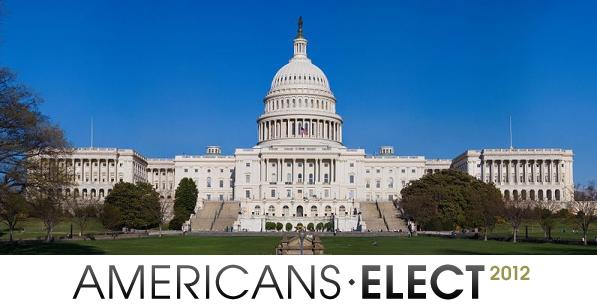
But this might all change, at least according to Thomas Friedman yesterday in the New York Times. He describes Americans Elect, a non-profit attempting to build an entire presidential campaign from the ground up. This might be our first glimpse of an open and social presidential web-based campaign. From their website,

Americans Elect is the first-ever open nominating process. We’re using the Internet to give every single voter — Democrat, Republican or independent — the power to nominate a presidential ticket in 2012. The people will choose the issues. The people will choose the candidates. And in a secure, online convention next June, the people will make history by putting their choice on the ballot in every state.

more...