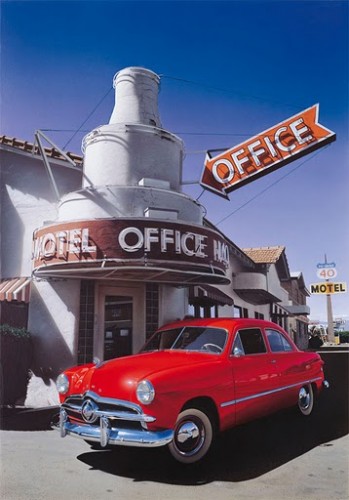
AirBnb

Redlining

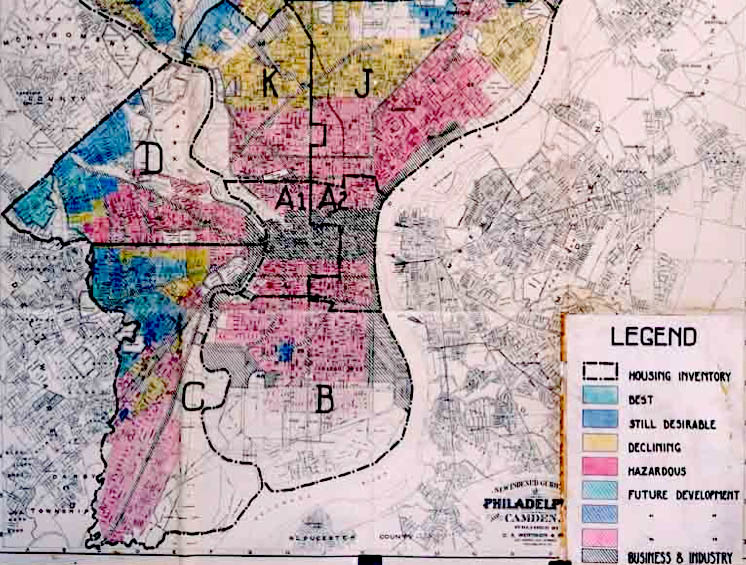
Redlining refers to the racist policy and/or practice of denying services to people of color. The term was coined in the 1960s by sociologist John McKnight and referred to literal red lines overlaid on city maps that designated “secure” versus “insecure” investment regions, distributed largely along racial faults such that banks became disproportionately unwilling to invest in minority communities. In turn, realtors showed different, more desirable properties to White clients than those they showed to clients of color, thereby reinforcing segregation and doing so in a way that perpetuated White advantage. Redlining was outlawed in the 1970s but its direct effects were intergenerational and versions of redlining continue to persist.

Versions of it like this: more...
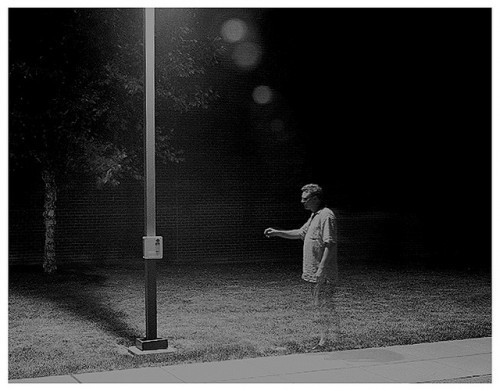
Photo by Bill Ohl
Photo by Bill Ohl

There has been a lot of talk about magic lately in critical, cultural and technological spaces; what it does, who it is for, and who are the ones to control or enact it. As a way of unpacking a few elements of this thinking, this essay follows on from the conversations that Tobias Revell and I, and a whole host of great participants had at Haunted Machines, a conference as part of FutureEverything 2015 which examined the proliferation of magical narratives in technology. With our speakers we discussed where these stories and mythologies reveal our anxieties around technology, who are the ones casting the spells, and where – if possible – these narratives can be applied in useful ways.

As an ex-literature student, I’m quite interested in ghost stories as analogy, because they can reveal, or be an interesting way of exploring, these anxieties; where the voices in the static are coming from, where the pipes are creaking, and what they tell us about what our technology is doing or can potentially do to us.

I’m going to use a load of slightly ham-fisted contemporary narratives to signpost the anxieties that come out of two personal and increasingly algorithmically mediated spaces: the social network and in the home. Where does the role of narrative in magic, the supernatural, and the unknown allow us to get a better grasp of technology’s power over us?  Where are the uncertain terrains of our technologies creating the capacity for hauntings, and where can techniques used to imagine future scenarios better equip us for the ghosts to come? When we think of a haunting, we think of the unseen forces acting upon our domestic space, and when considering technology, a reappropriation of Clarke’s third law that Tobias Revell summoned with his work on Haunted Machines can apply– Any sufficiently advanced hacking is indistinguishable from a haunting. But where else are we haunted? more...

Editor’s Note: This post was written in response to PJ Rey‘s “Incidental Productivity: Value and Social Media” and the text is reposted from mrteacup.org.

PJ Rey has a very interesting post up at Cyborgology about issues of production and labor on social networking sites that has some connections with things that I have been thinking about.

The point seems to be a partial critique of the social factory thesis – that social networks exploit the social interactions of their users, turning it into a kind of labor. This critique turns on the idea of “incidental productivity.” Rey claims that some activity on a social network does not fall into the category of labor as defined by Marx; or to put it another way, the Marx-influenced theory of labor is not conceptually broad enough to cover every type of activity that occurs. Rey proposes the concept of incidental productivity, which seems to mean value that is silently produced as a side effect of some other activity that the user is engaged in. The important point is that users are not aware of the value that they are creating, so this is not labor.

So far, I agree with this. There is only one very small point of disagreement, which is where Rey says in the final paragraph, “A quintessentially Marxian question remains: Who should control the means of incidental production?” I claim that this concept of incidental production is ultimately the liberal-capitalist problem of consumer rights and protections. more...