
Stereotype threat: The difference in performance measured when the belief that people like you (blacks, women, etc) are worse at a particular task than the comparison group (whites, men, etc) is made salient.
The left side of the bar graph is the performance of blacks and whites on a task (on which whites are stereotypically believed to be superior) when stereotype threat is activated (blacks and whites are reminded of the stereotype in some way). The right side of the bar graph is the performance of blacks and whites on the same task when the stereotype remains unactivated. Note the remarkable difference. This demonstrates the ways in which stereotypes, when made salient, affect our performances on “objective” tests.
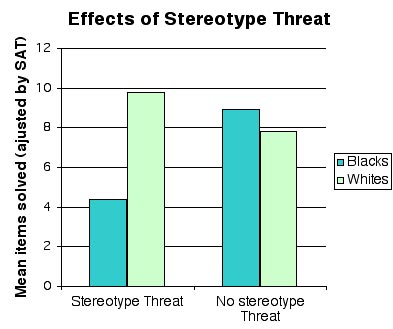
From: The Effects of Stereotype Threat on the Standardized Test Performance of College Students by J Aronson, CM Steelel, MF Salinas, MJ Lustina. In Readings About the Social Animal, 8th edition, edited by E. Aronson. Stolen from Wikipedia.
Comments 2
Human Rights Facts (182): Stereotype Threat and Michel Foucault « P.A.P. Blog – Human Rights Etc. — April 2, 2010
[...] (source) [Irwin] Katz found that Blacks were able to score better on an IQ test, if the test was presented as a test of eye-hand coordination. Blacks also scored higher on an IQ test when they believed the test would be compared to that of other blacks. Katz concluded that his subjects were thoroughly aware of the judgment of intellectual inferiority held by many white Americans. With little expectation of overruling this judgment, their motivation was low, and so were their scores. (source) [...]
Luke Shaw — May 24, 2026
Where is my train now helps passengers check live updates of their journey, including the exact Coach position train during travel. It shows real-time movement so users can see where each coach is located on the route. With this feature, travelers can track their train easily and plan boarding or arrival more accurately.