Archive: Nov 2007


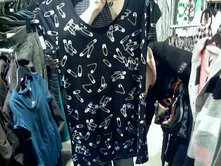
This might be a useful image for talking about the commodification of protest and “alternative” culture. It was being sold at the H&M store in Pasadena. It’s the latest in a progression of the co-opting of the punk aesthetic–first stores like Hot Topic started selling clothing with rips and safety pins and such in them, so you could go pay a lot of money for pre-packaged punk or goth looks. Now it’s gone a step further where they no longer even bother to put a real safety pin in–now you just get pictures of safety pins, meant to evoke that sense of non-conformity in the safest, most easily-marketed way possible, along with your Sum 41 (or whatever their name is) CD.
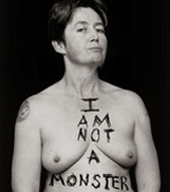
This is an image that graces the cover of a new documentary about intersex individuals called Black and White.


In general, though, I think it’s a really powerful image that refuses to accept that women who are not young, with a teenage girl’s body, and a submissive attitude are somehow offensive.

Courtesy of feministing.com and the SWS listserv.


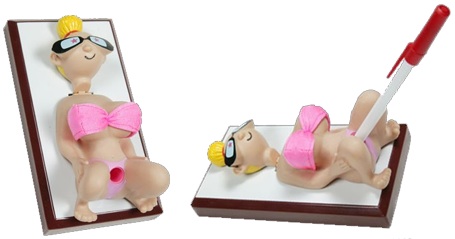
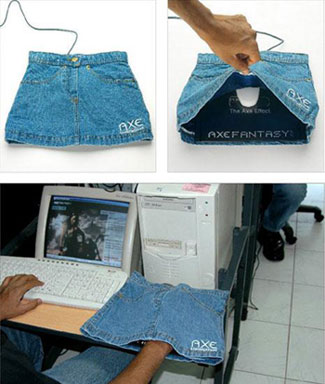
These are pretty disturbing for a number of reasons. Maybe it is just my wish that they aren’t real, but I’ m skeptical about whether they really exist. They don’t appear to be photoshopped, but even though they’re linked all over the internet, I couldn’t find the actual place/s that sell them. And while I was searching around I found this mouse pad. Note that the size of the mini skirt is really very disturbingly small.

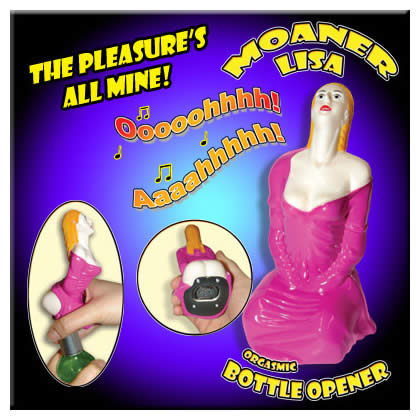
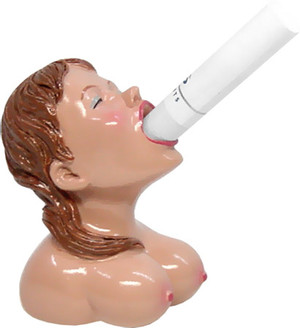
And I also found a lot of people who want to buy that pencil sharpener. And one person who thinks that this knife holder is “far more offensive” than the pencil sharpener.

What do you think? Oh, and the knife holder is available multiple places including here.

[youtube]https://www.youtube.com/watch?v=ck14LKBI9GM[/youtube]

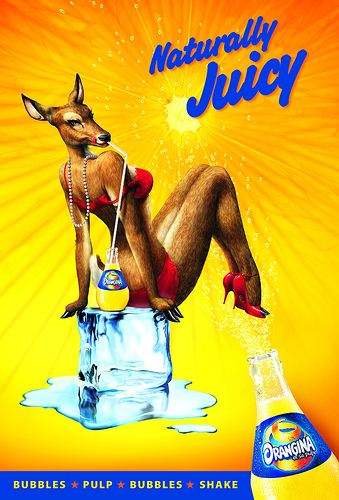
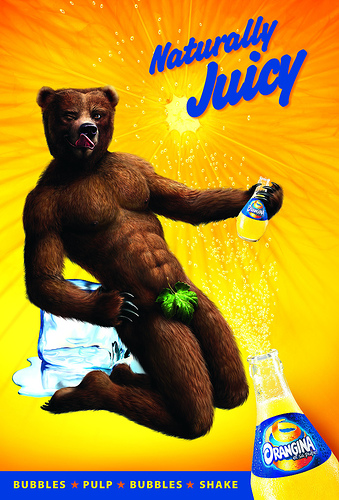
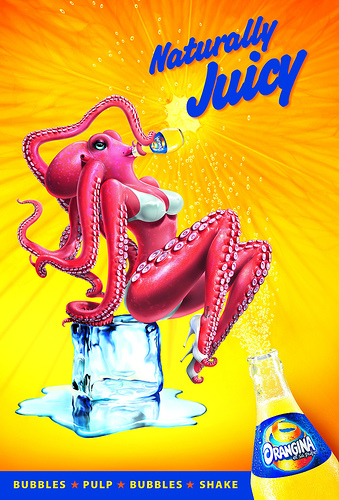
Make what you will of this. The sexual availability of the female…um…wildlife, all of whom are sexy and sexualized and dancing with the one male, the bottles of Orangina erupting from between the female zebras’ legs, and the female octopus squeezing Orangina out of her boobs…there’s a lot to work with.

Gah.

Christine B. sent in a link to set of Orangina ads on Flickr:

2016158443_9320b8584a

2016642988_2cd8ea14ac

2016670926_297874842c

There are quite a few others, but I’m sure you get the idea.

Gwen Sharp is an associate professor of sociology at Nevada State College. You can follow her on Twitter at @gwensharpnv.

This is an interesting example of the way in which powerful media companies control what gets out there. MTV refused to show ads, made by the Media Foundation to promote Buy Nothing Day, on its station. They stated that the ad “goes further than we are willing to accept on our channels.”

The ads are here. Thanks to AdBusters for this tip.

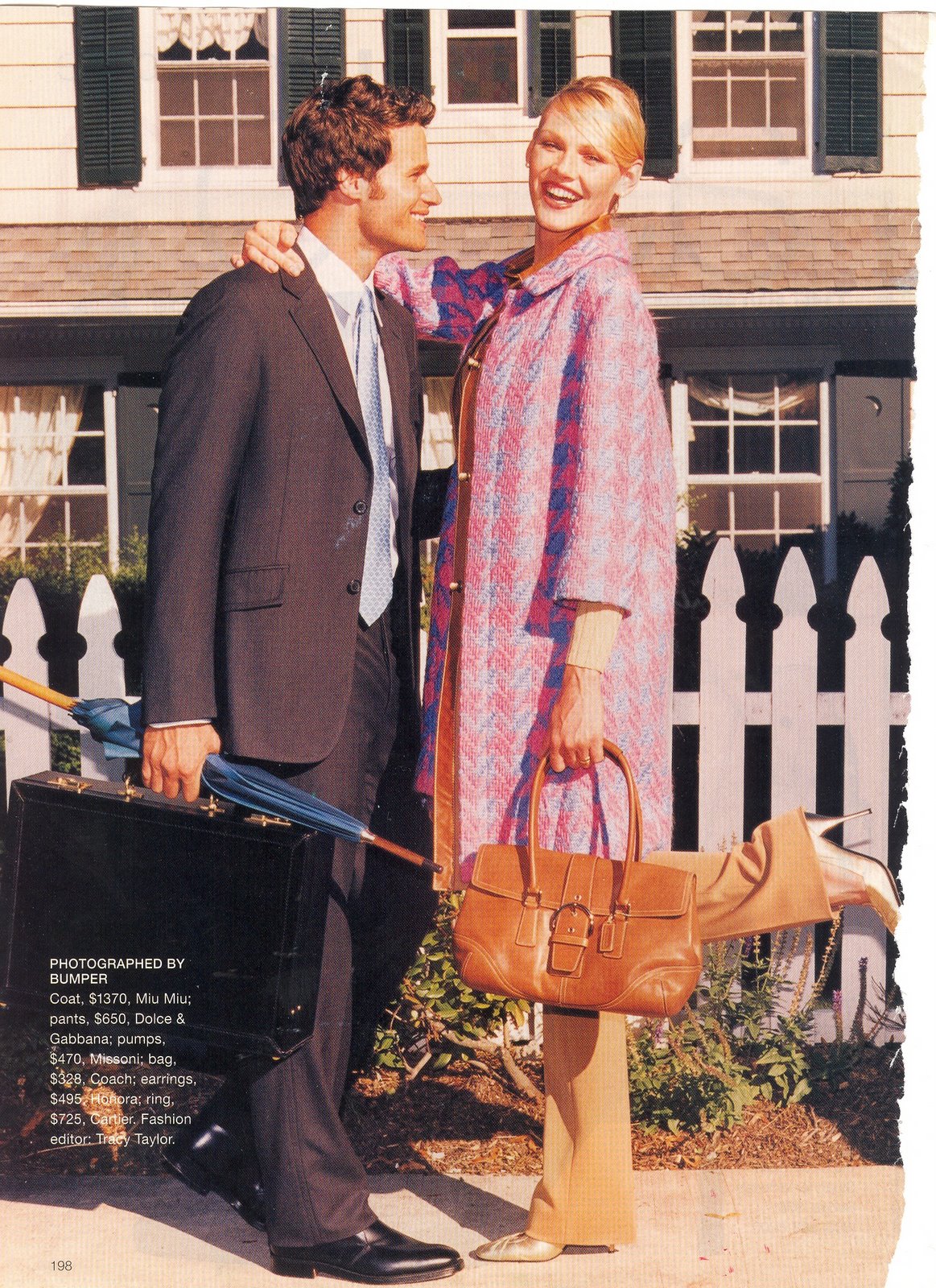
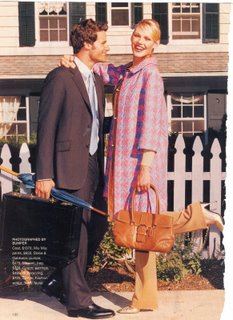
I LOVE this image. It’s a fashion spread.


Question:
Who’s taking care of those little tow-headed boys behind the white picket fence when both mommy and daddy go to work?

I use this picture to talk about the way in which middle- and upper-class women are “getting equal” with men by transferring their caretaking responsibilities to less privileged women… who are, as in this ad, invisible.

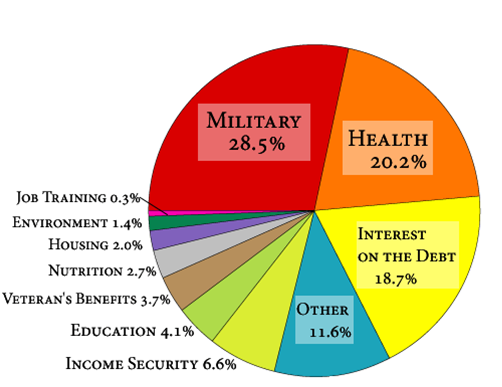
One of my favorite questions to ask in (especially) Introduction to Sociology classes is: In an ideal world, for what reason does the U.S. government exist? That is, what is a state for? For protection from other states? To protect private property? To maximize happiness? To pool and then redistribute resources for the collective good? It’s something most of them have never thought about. After a discussion, I show them this:

This is where our federal tax dollars go. Students are horrified by the military spending, but completely stumped by the interest on the debt. Most of them have no idea that our debt has any consequences at all.

The pie chart is from http://www.nationalpriorities.org/. You can go every year and update your chart here.

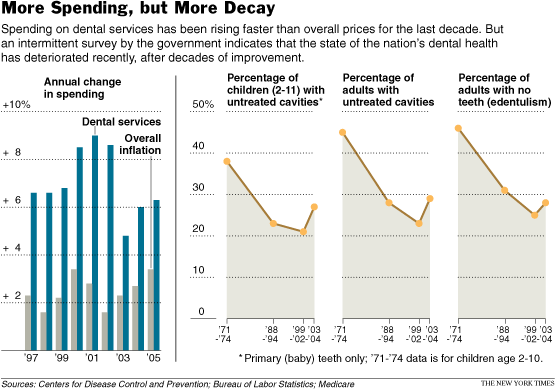
I’m sort of obsessed with the recent escalation in the standards for “good” teeth. I saw a film from the 80s the other day where Keifer Sutherland had yellow teeth. Yellow teeth! I am so well-adjusted to the new bleaching practices that I was genuinely disgusted. I’m not proud. Adding to all this bleaching are new technologies like veneers and invisible braces and whoknowswhat. As each becomes more and more common, it becomes more and more unusual to have less-than-perfect teeth and the pressure to undergo these cosmetic procedures becomes less about being extraordinary and more about being ordinary. Anyway, I found this in the New York Times (see source in image):


Any guesses as to who it is in society that is disproportionately cavity-stricken?

Or… anyone interested in critiquing the line graphs? That is a really rapid change between ’99-’02 and ’03-’04 and there are a lot of years strangely lumped together. Could it be an artifact of bundling?