
This year’s November elections in the United States included two high profile “gay marriage” cases, one in Maine, one in Washington State. Both states typically vote Democratic, are predominately White, and are on the Northernmost borders of the US, brushing up against Canada (where gay marriage has been legal since 2005). Accurate data on religiousity is hard to come by, but Maine and Washington are both considered to be far more secular than their counterparts in the South and Southeast. Now a week after the elections with most of the votes counted, activists and analysts are attempting to understand what happened: Why did Maine vote against gay marriage, and Washington vote for civil unions (AKA “everything but marriage”?)
In Maine, gay marriage was voted down by voters at 53% to 47%. (But just two weeks before the vote, polls indicated a dead heat at 48% to 48%, with 5 percent undecided).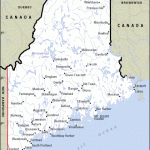
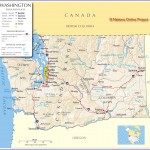 In Washington, civil unions (AKA “everything but marriage”) between same sex partners and opposite sex partners older than 62 was approved by almost the same percentage as disproved in Maine: Approximately 53% to 47%.
The Huffington Post (via AP newswire) reports that Maine is just the latest in failures for gay marriage to pass by popular vote:
Gay marriage has now lost in every single state — 31 in all — in which it has been put to a popular vote. Gay-rights activists had hoped to buck that trend in Maine — known for its moderate, independent-minded electorate — and mounted an energetic, well-financed campaign.
Yesterday’s issue of The National Review Online, a conservative online publication, featured a triumphant story on the Maine defeat:
Robert P. George, a professor of politics at Princeton and founder of the American Principles Project, observes: “Maine is a northeastern liberal state with a significant student population. There are few blacks and very few Mormons. There is not a large Evangelical Christian population. The forces working in the state for the abolition of the conjugal conception of marriage as the union of husband and wife had the strong support not only of the media, but also of the state’s governor and other leading political figures. They had a significant funding advantage. On Election Day, they got the large turnout that they believed would assure them of victory. Yet, when the votes were counted, the people of Maine came down solidly in favor of restoring the conjugal conception of marriage that the state’s legislature and governor attempted to abolish.” (Lopez, “Winning with Marriage: Another year, another electoral victory.”) (emphasis mine).
Prof. George clearly marks some of the usual suspects opposing gay marriage: Mormons, non-intellectuals, evangelical Christians, and African-Americans. George and editor Kathy Lopez from NRO argues that that since none of these demographics are dominant in Maine, the reason must be that Maine voters simply know the difference between right and wrong: (“Why has gay marriage consistently lost when put in the hands of voters? Because what’s true is true. Most people know in their own heart that marriage is between a man and a woman”).
Assuming that the answer to this question is a bit more complicated than “right” or “wrong,” I first turned to the U.S. Census Bureau for quick facts on Maine and Washington. Here we see that:
- Washington state is BIGGER: approx. 6.5 million in Washington vs. 1.3 million in Maine.
- Washington state is GROWING FASTER: 11% growth in Washington, 3.3% in Maine; (US average 8%).
- Washington state has YOUNGER population demographics: 12% age 62+ in Washington, 15.1% age 62+ in Maine; (US average: 12.8% 62+)
- Washington residents make more MONEY: $55,628 median household income in Washington; $45,832 in Maine; (US median household income: $50,740)
- Washington is MORE RACIALLY DIVERSE: Washington is 84.3% White; Maine is 96.4% White (US average: 79.8%).
- Washington voters are MORE EDUCATED: 27.7% B.A or higher in Washington, 22.9% B.A. or higher in Maine (US average: 24.4%)
The demographics for King County (including Seattle) are even more striking. With a population of over 1.8 million (bigger than the entire state of Maine), 44.4% over the age of 25 hold at least a Bachelor’s degree. King County voters also voted in favor of Referendum 71 (“everything but marriage”) by a landslide: 68% to 32%.
We know from numerous social surveys that higher education and younger age are often correlated with tolerance toward gays. These factors may help to explain some of the difference between Washington and Maine election results. For example, Lax and Phillips (2009) show that across the U.S.:
- only 10-35% of people age 65+ support gay marriage
- but 35-75% of people between age 18-29 support gay marriage.
- Incredibly, this means that on the aggregate level, age matters more than location: i.e. young people in gay-hostile states are more likely to support gay marriage than older people in gay-friendly states! (See graph here).
Since Washington State is younger while Maine is older than the national average, the age-factor (in addition to the education factor) seems quite relevant in these elections. (Another twist here is that in Washington State, older heterosexual voters actually had an incentive to vote for civil unions).
For gay marriage rights activists, simply waiting for old people to die off (or for more people to go to college) is unsatisfying; this strategy also doesn’t work for conservative defenders of exclusive heterosexual marriage rights. Thus, debates around gay marriage continue to boomerang back to the sacred associations of marriage: Can the meaning of marriage change? Should they? What are the consequences of changing the meaning of marriage?
My hunch is that for those 5% of Maine fence-sitters, it was the fear around changing the meaning of “marriage” that tipped them toward the status quo. In Washington state, marriage wasn’t on the line so voters got to skip past those fears, bringing them toward a post-modern future.
Stay tuned for: “When does the meaning of marriage change?”
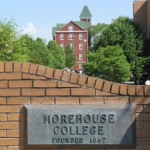 Morehouse College is a small all-male college in Atlanta Georgia with 2,700 students. It has recently instituted a ban on women’s clothing, high heels, and carrying purses within its student body. Dr. William Bynum, vice president for Student Services reported that “We are talking about five students who are living a gay lifestyle that is leading them to dress a way we do not expect in Morehouse men.” CNN reports that the college has stated that those who are found breaking the policy will not be allowed to go to class unless they change. The school also reports that “chronic dress-code offenders could be suspended from the college.”
 Stuart Hall, in his seminal work on social inequality and culture (titled Representation: Cultural Representations and Signifying Practices), defines how a sense of “othering” develops among more powerless groups when marked as “different” from (and often inferior to) dominant groups. “Othering” as you can see is a verb and refers to how powerless groups are marked and viewed as different and then frequently treated differentially by dominant groups on the basis of such markings. Marginalized groups, in turn, frequently come to see themselves as “different from” dominant groups and, at times, take on the qualities of dominant groups so as to assure that the possibilities for acceptance and upward mobility are not squelched within “mainstream society.” For African-American men in particular, as a response to having a lack of access to traditional means of masculinity (e.g. the occupational structure and mobility within it), scholars have further suggested that many African-American men adopt a “cool pose” that exaggerates attributes of masculine prowess (physicality and sexuality) to compensate for the lack of empowerment in other areas of their lives (Staples, 2006; Majors & Bilson, 1993; Messner, 1997). This process is said to be due to institutional and personal racism and discrimination which deny many African-American men traditional opportunities for masculine affirmation (e.g., education, employment, etc.). Behaviors to constitute hegemonic masculinity (the most dominant form of masculinity in a given period–often middle class and heterosexual), often include those that conform to gender role expectations that signify masculinity not only in the African-American community but broader society more generally.