My latest, up at Recessionwire.com today! Today’s post questions whether laid off men’s (ok, Marco’s) values are changing, now that they’re spending more time at home. Hint: It’s all about the eggs. I’d love your comments!
masculinity
We’ll be at the Brooklyn Museum on Saturday, June 20 at 2pm for what promises to be one of our liveliest versions ever. There’s more over at the WomenGirlsLadies blog, and on a YouTube channel coming soon. Please spread the word!
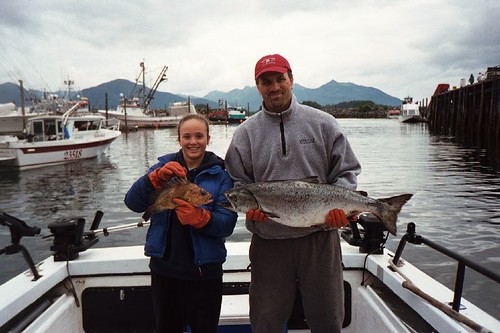
In the spirit of Father’s Day on June 21 — and in honor of fathers everywhere — this edition of The Man Files features a guest post by Dani Meier. Dani writes about his experience as both a custodial and non-custodial parent. This stuff doesn’t fit neatly on a Hallmark card, but it should! It comes from the heart and speaks to so many, whether we are fathers, have fathers, or watch our children’s relationships with their own dads unfold.
One in three children in America — 24 million kids — do not have their father in the home. Forty percent of them have not seen their dad during the past year. Half of them have never set foot in their father’s home. And then there are the fathers who live under the same roof, but are absent in other ways. Just plain MIA. Many dads leave.
I was one of them.
When my daughter was three, her mother and I separated. When she was six, though I’d shared equally in parenting till then, I moved out of state, 650 miles away.
In my case, however, I came back. Again and again, I came back.
I committed myself to staying in my daughter’s life. I got a second job to pay for flights and for the next twelve years, we alternated every other weekend, sometimes more, between my going to her and her coming to me — a schedule that she and I maintained till she graduated from high school. A unique father-daughter bond evolved between us, emotional closeness despite geographical distance. But two roundtrip flights a month for twelve years adds up to nearly 300 flights that she or I took back and forth to see each other. That’s a lot of goodbyes to start logging at age six.
She’s now 21. Totally legal. No fake IDs.
I recently visited her in Rome where she spent part of her junior year of college. More than the Eternal City’s sweeping arc of history and culture, however, small moments stand out: ambling around Piazza Navonna after midnight, sipping Limoncello, strolling aimlessly. We bar-hopped in Trastevere where, in one café, a phenomenal swing jazz trio accompanied us as we danced for the first time ever as two adults. On my last day, we took a train to the Umbria hillside village of Orvieto, a medieval town with winding alleyways and cobblestone streets, sitting on a chunk of volcanic rock overlooking a valley.

Hugging my daughter goodbye the next day was wrenching. It was as if all our goodbyes were distilled into this single hug: twelve years of goodbyes, hugs that bridged childhood, adolescence, and, now, adulthood.
I’m also father to a six-year-old son. As I look into his beautiful eyes today, I see the eyes of my daughter. My mind frequently jumps involuntarily to how confusing it would be for him if I moved away. Yet I know that’s what my daughter lived through at his age.
Goodbyes can cause a lot of heartache. The problem for many children, however, is that they don’t get to say goodbye to their fathers on a regular basis. That would imply that they actually see their dads in the first place. As a therapist, many of the youth and adults I work with have never met their fathers or they see them rarely if at all. Other fathers lived with their kids but were invisible, buried in their work or a bottle or some other distraction.
There’s a paradox of contradictory trends in Daddy Land. Lots of fathers are rewriting what it means to be a dad: They are more involved in their children’s lives than any fathers in American history. They not only play catch or coach Little League, they also change diapers, make meals, help with school work, and are emotionally open with their children. This coincides, however, with the fact that from 1947 to 2007, single-parent households — predominantly mother-headed homes — jumped from 12 percent to over 25 percent. And whether those fathers remarried or not, too many of them don’t maintain consistent ties to their biological children from previous relationships.
Some men claim that divorced mothers block access. But in my experience that’s the exception, not the rule. Fathers who aren’t involved with their children nowadays are usually disengaged by choice. Many don’t even meet their legal obligation for child support while others do so only under threat of legal sanction or garnished wages.
As a father and a husband — and as a therapist — I try to allow for the fact that shit happens. Divorce, breakups, new loves, new jobs, new opportunities. We each must sort through what makes sense as we move through life. And sometimes as we muddle through, we hurt others on our path. Hopefully, we learn, grow, and try to make it right.
My hope is that other fathers who’ve left can still learn, grow, and make it right. Perhaps by next Father’s Day, some of those fathers who’ve said goodbye will realize the importance of coming back. And then they’ll make it right, they’ll come back, and they’ll stay involved, being fathers their kids can count on, dads worthy of the Hallmark card.
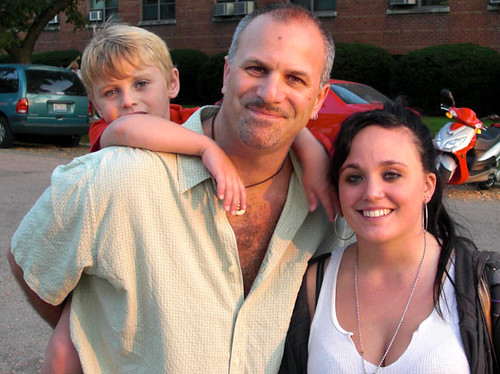
Dani Meier, PhD, MSW, is a psychotherapist, school social worker, community activist, lecturer, and writer. He is a founder of The Real MEN’s Project: Men Embracing Non-Violence, which seeks to place men at the center of the battle against domestic violence and sexual assault. He’s one of a small handful of men who’ve been awarded the Susan B. Anthony Award for efforts on behalf of girls and women in his community, and he is a faculty advisor for his school’s gay-straight alliance. He’s lectured to a range of audiences, from mental health professionals to parent groups on raising strong and gentle sons. He is currently involved in state-wide suicide prevention and intervention initiatives. He is a proud father and a lucky husband.

Join Shira Tarrant as she discusses her new book, Men and Feminism
Tuesday, May 26 @ 7:00PM
Lir Irish Pub, 903 Boylston St., Boston
(617) 778-0089
There’s no denying that men’s involvement and interest in feminism is key to its continuing relevance and importance. Shira Tarrant, an expert in gender politics, feminism, pop culture, and masculinity, in her new work Men and Feminism, addresses the question of why men should care about feminism in the first place.
Men and Feminism lays the foundation for a larger discussion about feminism as a human issue, not simply a women’s issue. Men are crucial to the movement — as fathers, brothers, husbands, boyfriends, and friends. From “why†to “how†to “what can men doâ€, Men and Feminism answers all the questions men have about how and why they should get behind feminism.
Sponsored by the Center for New Words and co-sponsored by the Boston Chapter of NOMAS
Cross-posted at http://shiratarrant.com.
 Why do some men support gender diversity in leadership while others REALLY DON’T? Catalyst asks this question through a new body of research evaluating men’s involvement with gender diversity in a report released today titled, Engaging Men In Gender Initiatives: What Change Agents Need To Know. The study tells us a lot about men’s advocacy for gender equality at work.
Straight from the release:
Bringing men into the conversation of diversity is in a company’s best interest and is paramount to creating equality in business leadership. “The preponderance of men in leadership means their efforts are necessary to advance change in the workplace,†said Ilene H. Lang, President & CEO of Catalyst. “Research continues to show that diversity well-managed yields more innovation and is tied to enhanced financial performance − factors good for all employees.â€
When asked about what keeps men from supporting gender initiatives, some men who were interviewed for the study pointed to a “zero-sum†mentality – a belief that gains for women necessarily mean losses for men. Companies may inadvertently encourage this line of thinking by instituting practices that increase competition between employees and put the focus on the individual first above the organization as a whole. A shift away from this “win or lose†mentality to a recognition that everybody benefits from gender equality can lead men to become greater advocates of change.
What are some characteristics that make men advocates for gender equality? The report finds that men who are seen as champions of diversity have a strong sense of fairness. Men who were committed to the ideal of fairness were found to have more personal concerns about issues of equality in general and were more aware of gender bias in the workplace and likely to take action.
Men identified as taking action on gender diversity indicated factors that may work as roadblocks to becoming champions of equality. These obstacles included two barriers to men’s engagement: fear of losing status or of being seen as part of the problem, and apathy – a sense that issues of gender do not concern men. Organizations can take steps to help remove these barriers and engage men in initiatives to promote gender equality by appealing to men’s sense of fairness, providing men with women mentors, exposing men to male leaders who champion inclusion, and inviting men into the discussion through male-only and male/female groups. In addition, research shows that men gain significant personal benefits such as better health, freedom to be themselves, and the ability to share financial responsibilities with a spouse or partner when working in a place free of gender bias.
Amen to all that, I say. You can download a pdf version of study here.
You heard it here first! Or rather, folks have heard it on Publisher’s Lunch last week, and I’m uberexcited to share the news with the GWP community. Here’s the listing announcing my next project (title, of course, subject to change!):
NON-FICTION: HISTORY/POLITICS/CURRENT AFFAIRS
Young feminist commentator and author of SISTERHOOD, INTERRUPTED: FROM RADICAL WOMEN TO GRRLS GONE WILD Deborah Siegel’s MAN ENOUGH: HOW THE NEW MANHOOD IS CHANGING WOMEN’S LIVES, exploring how young men today may express very different attitudes about gender equality than previous generations but at the same time our cultural ideals of masculinity have not changed very much, to Amy Caldwell at Beacon Press, in a nice deal, by Tracy Brown at Tracy Brown Literary Agency (NA).
 Our very own Shira Tarrant, of The Man Files here at GWP, was speaking on WBAI radio today about her awesome anthology Men Speak Out: Views on Gender, Sex and Power. Joining Shira were filmmaker Byron Hurt, author Jeremy Adam Smith (who I met last weekend at CCF!) and author Jacob Anderson-Minshall. The group chatted about some of our favorite topics over here: men, masculinity, sex, relationships, violence prevention, and positive change. Check out the MP3 version here.
 Miley Cyrus is all grown up. Yes, I am going to squeeze Simone de Beauvoir and Miley Cyrus into the same sentence. If you’re following Miley’s career these days, you’ll know that she’s “becoming a woman†in the media and entertainment worlds. Simone de Beauvoir definitely had it right, and rarely do we see so clearly exactly how someone “becomes†a woman. But really, this is her “adult,†womanly roll-out, and just to be sure we get it the media coverage makes clear that Miley is all “grown up†now. She’s on the cover of Glamour magazine this month, hit the American Idol stage this week in a sexy strapless gown, and has a movie in theatres nationally. With a career like that she definitely has adult responsibilities, I’m sure.
But just ask my daughter—Miley is sixteen, which does not seem especially grown up to me, particularly as the parent of an 8-year-old (So my daughter is halfway to adulthood?? I hope not!). Here are my questions: what does it mean for a sixteen-year-old (or her handlers) to be reinventing herself as a “woman†in media terms? Can we expect her to shed the squeaky-clean image and angle for meatier (read: sexier) parts? And what does it mean for her tween fan base to witness this transformation? Finally, you tell me: when do girls become women? What marks that transformation in your mind?
Becoming a man. Judith Warner has a thoughtful column this week, “Dude, You’ve got Problems,†about the use of “gay†as an epithet. She writes, “It’s weird, isn’t it, that in an age in which the definition of acceptable girlhood has expanded, so that desirable femininity now encompasses school success and athleticism, the bounds of boyhood have remained so tightly constrained?â€Â I’m not so sure, however, that I agree with Warner’s assertion that being called a “fag†has “almost nothing to do with being gay.â€Â Instead, she argues, “fag†is used to deride weakness or femininity. Well, yes, and that’s what I call homophobia, which certainly does go hand in hand with sexism.
Is Women’s Studies the next Sex and the City? Let’s hope HBO can do for women’s studies what it has already done for big city career girls, mobsters, undertakers, and polygamists. The cable network apparently has a show in development about a former “feminist It Girl†who is now turned to being a professor at a small liberal arts college. Will such a show poke fun at women’s studies? Sure, this field offers plenty of material for laugh lines, but if we also wind up as the next hit series everyone is talking about, then the HBO line on my cable bill will have been money well spent.
 I’m supershort on battery so may only get through part of this next session, but here we go…
Jeremy Adam Smith, creator of the blog Daddy Dialectic and author of the book The Daddy Shift, is introducing the panel by talking about the difference in attitudes about fatherhood among his grandfather, his father, and himself.
Panelists are:
Reeve Vanneman (he’ll be talking about The End of Gender Revolution?)
Oriel Sullivan (on Slow but Steady-ish Change)
Josh Coleman (speaking on The Ghost of Traditional Marraige in Contemporary Ones)
Mignon Moore (talking about Is Convergence Moot in Same Sex Copules?)
Amy and Marc Vachon, bloggers at Equally Shared Parenting and coauthors of a forthcoming book on the subject (on that)
Reeve Vanneman is up first: There was a big shift in the 1990s, he notes, a stalling in gender revolution. But the question is, why? Three possible reasons:
1. End of feminist protest: in the mid-1990s, media coverage of feminism declined…
2. Economics: in the mid-1990s, for the first time in a long time, men’s earnings increased. They had stagnated in the 1970s, but during the early Clinton years, there were fairly broad-based increases in men’s earnings.
3. Culture: gender attitudes shifted (ie, when surveys asked questions like “do you agree that a working mother can have a warm relationship with her children?” the answer “yes” trended upward from the 1970s, then leveled off in the 1990s; other questions tracked were questions like “do you believe that men make better politicians”? etc)
In sum, we have evidence that there was a stalling of gender revolution in the mid-1990s. But we don’t fully know WHY.
ARGH! Hate to leave ya’ll hanging, but I’m running out of battery here…
 Josh Coleman steps up to the mike and frames the conference by starting with how the women’s movement has made life better not only for women but for men. Yet at the same time, and especially in this moment of recession, where men are being laid off in droves, women’s increased power is in some way a challenge to men’s identity. The traditional markers of male identity–protector, provider–have been eroded. As Michael Kimmel says, men are left with all of the empowerment and none of the power. [??!!] So there’s a crisis in masculinity out there. (Ok, yes, reality check: women earn 80% what men do, etc etc.)
Questions the conference will ask:
How will recession affect relationships between men and women?
Will men express their masculinity by doing even less?
Is the gender revolution dead, or still evolving?
What’s going on with gender convergence in families and intimate relationships?
What’s going on with gender in the next generation?
Is our culture of individualism make marriages today more happy and resilient or more fragile?
What kind of work/family policies make families more resilient and what makes them more stressed?
What does the recent election tell about gender today?
Stay tuned….
We’ll be at the Brooklyn Museum on Saturday, June 20 at 2pm for what promises to be one of our liveliest versions ever. There’s more over at the WomenGirlsLadies blog, and on a YouTube channel coming soon. Please spread the word!
In the spirit of Father’s Day on June 21 — and in honor of fathers everywhere — this edition of The Man Files features a guest post by Dani Meier. Dani writes about his experience as both a custodial and non-custodial parent. This stuff doesn’t fit neatly on a Hallmark card, but it should! It comes from the heart and speaks to so many, whether we are fathers, have fathers, or watch our children’s relationships with their own dads unfold.
One in three children in America — 24 million kids — do not have their father in the home. Forty percent of them have not seen their dad during the past year. Half of them have never set foot in their father’s home. And then there are the fathers who live under the same roof, but are absent in other ways. Just plain MIA. Many dads leave.
I was one of them.
When my daughter was three, her mother and I separated. When she was six, though I’d shared equally in parenting till then, I moved out of state, 650 miles away.
In my case, however, I came back. Again and again, I came back.
I committed myself to staying in my daughter’s life. I got a second job to pay for flights and for the next twelve years, we alternated every other weekend, sometimes more, between my going to her and her coming to me — a schedule that she and I maintained till she graduated from high school. A unique father-daughter bond evolved between us, emotional closeness despite geographical distance. But two roundtrip flights a month for twelve years adds up to nearly 300 flights that she or I took back and forth to see each other. That’s a lot of goodbyes to start logging at age six.
She’s now 21. Totally legal. No fake IDs.
I recently visited her in Rome where she spent part of her junior year of college. More than the Eternal City’s sweeping arc of history and culture, however, small moments stand out: ambling around Piazza Navonna after midnight, sipping Limoncello, strolling aimlessly. We bar-hopped in Trastevere where, in one café, a phenomenal swing jazz trio accompanied us as we danced for the first time ever as two adults. On my last day, we took a train to the Umbria hillside village of Orvieto, a medieval town with winding alleyways and cobblestone streets, sitting on a chunk of volcanic rock overlooking a valley.
Hugging my daughter goodbye the next day was wrenching. It was as if all our goodbyes were distilled into this single hug: twelve years of goodbyes, hugs that bridged childhood, adolescence, and, now, adulthood.
I’m also father to a six-year-old son. As I look into his beautiful eyes today, I see the eyes of my daughter. My mind frequently jumps involuntarily to how confusing it would be for him if I moved away. Yet I know that’s what my daughter lived through at his age.
Goodbyes can cause a lot of heartache. The problem for many children, however, is that they don’t get to say goodbye to their fathers on a regular basis. That would imply that they actually see their dads in the first place. As a therapist, many of the youth and adults I work with have never met their fathers or they see them rarely if at all. Other fathers lived with their kids but were invisible, buried in their work or a bottle or some other distraction.
There’s a paradox of contradictory trends in Daddy Land. Lots of fathers are rewriting what it means to be a dad: They are more involved in their children’s lives than any fathers in American history. They not only play catch or coach Little League, they also change diapers, make meals, help with school work, and are emotionally open with their children. This coincides, however, with the fact that from 1947 to 2007, single-parent households — predominantly mother-headed homes — jumped from 12 percent to over 25 percent. And whether those fathers remarried or not, too many of them don’t maintain consistent ties to their biological children from previous relationships.
Some men claim that divorced mothers block access. But in my experience that’s the exception, not the rule. Fathers who aren’t involved with their children nowadays are usually disengaged by choice. Many don’t even meet their legal obligation for child support while others do so only under threat of legal sanction or garnished wages.
As a father and a husband — and as a therapist — I try to allow for the fact that shit happens. Divorce, breakups, new loves, new jobs, new opportunities. We each must sort through what makes sense as we move through life. And sometimes as we muddle through, we hurt others on our path. Hopefully, we learn, grow, and try to make it right.
My hope is that other fathers who’ve left can still learn, grow, and make it right. Perhaps by next Father’s Day, some of those fathers who’ve said goodbye will realize the importance of coming back. And then they’ll make it right, they’ll come back, and they’ll stay involved, being fathers their kids can count on, dads worthy of the Hallmark card.
Dani Meier, PhD, MSW, is a psychotherapist, school social worker, community activist, lecturer, and writer. He is a founder of The Real MEN’s Project: Men Embracing Non-Violence, which seeks to place men at the center of the battle against domestic violence and sexual assault. He’s one of a small handful of men who’ve been awarded the Susan B. Anthony Award for efforts on behalf of girls and women in his community, and he is a faculty advisor for his school’s gay-straight alliance. He’s lectured to a range of audiences, from mental health professionals to parent groups on raising strong and gentle sons. He is currently involved in state-wide suicide prevention and intervention initiatives. He is a proud father and a lucky husband.
Join Shira Tarrant as she discusses her new book, Men and Feminism
Tuesday, May 26 @ 7:00PM
Lir Irish Pub, 903 Boylston St., Boston
(617) 778-0089
There’s no denying that men’s involvement and interest in feminism is key to its continuing relevance and importance. Shira Tarrant, an expert in gender politics, feminism, pop culture, and masculinity, in her new work Men and Feminism, addresses the question of why men should care about feminism in the first place.
Men and Feminism lays the foundation for a larger discussion about feminism as a human issue, not simply a women’s issue. Men are crucial to the movement — as fathers, brothers, husbands, boyfriends, and friends. From “why†to “how†to “what can men doâ€, Men and Feminism answers all the questions men have about how and why they should get behind feminism.
Sponsored by the Center for New Words and co-sponsored by the Boston Chapter of NOMAS
Cross-posted at http://shiratarrant.com.
Why do some men support gender diversity in leadership while others REALLY DON’T? Catalyst asks this question through a new body of research evaluating men’s involvement with gender diversity in a report released today titled, Engaging Men In Gender Initiatives: What Change Agents Need To Know. The study tells us a lot about men’s advocacy for gender equality at work.
Straight from the release:
Bringing men into the conversation of diversity is in a company’s best interest and is paramount to creating equality in business leadership. “The preponderance of men in leadership means their efforts are necessary to advance change in the workplace,†said Ilene H. Lang, President & CEO of Catalyst. “Research continues to show that diversity well-managed yields more innovation and is tied to enhanced financial performance − factors good for all employees.â€
When asked about what keeps men from supporting gender initiatives, some men who were interviewed for the study pointed to a “zero-sum†mentality – a belief that gains for women necessarily mean losses for men. Companies may inadvertently encourage this line of thinking by instituting practices that increase competition between employees and put the focus on the individual first above the organization as a whole. A shift away from this “win or lose†mentality to a recognition that everybody benefits from gender equality can lead men to become greater advocates of change.
What are some characteristics that make men advocates for gender equality? The report finds that men who are seen as champions of diversity have a strong sense of fairness. Men who were committed to the ideal of fairness were found to have more personal concerns about issues of equality in general and were more aware of gender bias in the workplace and likely to take action.
Men identified as taking action on gender diversity indicated factors that may work as roadblocks to becoming champions of equality. These obstacles included two barriers to men’s engagement: fear of losing status or of being seen as part of the problem, and apathy – a sense that issues of gender do not concern men. Organizations can take steps to help remove these barriers and engage men in initiatives to promote gender equality by appealing to men’s sense of fairness, providing men with women mentors, exposing men to male leaders who champion inclusion, and inviting men into the discussion through male-only and male/female groups. In addition, research shows that men gain significant personal benefits such as better health, freedom to be themselves, and the ability to share financial responsibilities with a spouse or partner when working in a place free of gender bias.
Amen to all that, I say. You can download a pdf version of study here.
You heard it here first! Or rather, folks have heard it on Publisher’s Lunch last week, and I’m uberexcited to share the news with the GWP community. Here’s the listing announcing my next project (title, of course, subject to change!):
NON-FICTION: HISTORY/POLITICS/CURRENT AFFAIRS
Young feminist commentator and author of SISTERHOOD, INTERRUPTED: FROM RADICAL WOMEN TO GRRLS GONE WILD Deborah Siegel’s MAN ENOUGH: HOW THE NEW MANHOOD IS CHANGING WOMEN’S LIVES, exploring how young men today may express very different attitudes about gender equality than previous generations but at the same time our cultural ideals of masculinity have not changed very much, to Amy Caldwell at Beacon Press, in a nice deal, by Tracy Brown at Tracy Brown Literary Agency (NA).
Our very own Shira Tarrant, of The Man Files here at GWP, was speaking on WBAI radio today about her awesome anthology Men Speak Out: Views on Gender, Sex and Power. Joining Shira were filmmaker Byron Hurt, author Jeremy Adam Smith (who I met last weekend at CCF!) and author Jacob Anderson-Minshall. The group chatted about some of our favorite topics over here: men, masculinity, sex, relationships, violence prevention, and positive change. Check out the MP3 version here.
Miley Cyrus is all grown up. Yes, I am going to squeeze Simone de Beauvoir and Miley Cyrus into the same sentence. If you’re following Miley’s career these days, you’ll know that she’s “becoming a woman†in the media and entertainment worlds. Simone de Beauvoir definitely had it right, and rarely do we see so clearly exactly how someone “becomes†a woman. But really, this is her “adult,†womanly roll-out, and just to be sure we get it the media coverage makes clear that Miley is all “grown up†now. She’s on the cover of Glamour magazine this month, hit the American Idol stage this week in a sexy strapless gown, and has a movie in theatres nationally. With a career like that she definitely has adult responsibilities, I’m sure.
But just ask my daughter—Miley is sixteen, which does not seem especially grown up to me, particularly as the parent of an 8-year-old (So my daughter is halfway to adulthood?? I hope not!). Here are my questions: what does it mean for a sixteen-year-old (or her handlers) to be reinventing herself as a “woman†in media terms? Can we expect her to shed the squeaky-clean image and angle for meatier (read: sexier) parts? And what does it mean for her tween fan base to witness this transformation? Finally, you tell me: when do girls become women? What marks that transformation in your mind?
Becoming a man. Judith Warner has a thoughtful column this week, “Dude, You’ve got Problems,†about the use of “gay†as an epithet. She writes, “It’s weird, isn’t it, that in an age in which the definition of acceptable girlhood has expanded, so that desirable femininity now encompasses school success and athleticism, the bounds of boyhood have remained so tightly constrained?â€Â I’m not so sure, however, that I agree with Warner’s assertion that being called a “fag†has “almost nothing to do with being gay.â€Â Instead, she argues, “fag†is used to deride weakness or femininity. Well, yes, and that’s what I call homophobia, which certainly does go hand in hand with sexism.
Is Women’s Studies the next Sex and the City? Let’s hope HBO can do for women’s studies what it has already done for big city career girls, mobsters, undertakers, and polygamists. The cable network apparently has a show in development about a former “feminist It Girl†who is now turned to being a professor at a small liberal arts college. Will such a show poke fun at women’s studies? Sure, this field offers plenty of material for laugh lines, but if we also wind up as the next hit series everyone is talking about, then the HBO line on my cable bill will have been money well spent.
I’m supershort on battery so may only get through part of this next session, but here we go…
Jeremy Adam Smith, creator of the blog Daddy Dialectic and author of the book The Daddy Shift, is introducing the panel by talking about the difference in attitudes about fatherhood among his grandfather, his father, and himself.
Panelists are:
Reeve Vanneman (he’ll be talking about The End of Gender Revolution?)
Oriel Sullivan (on Slow but Steady-ish Change)
Josh Coleman (speaking on The Ghost of Traditional Marraige in Contemporary Ones)
Mignon Moore (talking about Is Convergence Moot in Same Sex Copules?)
Amy and Marc Vachon, bloggers at Equally Shared Parenting and coauthors of a forthcoming book on the subject (on that)
Reeve Vanneman is up first: There was a big shift in the 1990s, he notes, a stalling in gender revolution. But the question is, why? Three possible reasons:
1. End of feminist protest: in the mid-1990s, media coverage of feminism declined…
2. Economics: in the mid-1990s, for the first time in a long time, men’s earnings increased. They had stagnated in the 1970s, but during the early Clinton years, there were fairly broad-based increases in men’s earnings.
3. Culture: gender attitudes shifted (ie, when surveys asked questions like “do you agree that a working mother can have a warm relationship with her children?” the answer “yes” trended upward from the 1970s, then leveled off in the 1990s; other questions tracked were questions like “do you believe that men make better politicians”? etc)
In sum, we have evidence that there was a stalling of gender revolution in the mid-1990s. But we don’t fully know WHY.
ARGH! Hate to leave ya’ll hanging, but I’m running out of battery here…
Josh Coleman steps up to the mike and frames the conference by starting with how the women’s movement has made life better not only for women but for men. Yet at the same time, and especially in this moment of recession, where men are being laid off in droves, women’s increased power is in some way a challenge to men’s identity. The traditional markers of male identity–protector, provider–have been eroded. As Michael Kimmel says, men are left with all of the empowerment and none of the power. [??!!] So there’s a crisis in masculinity out there. (Ok, yes, reality check: women earn 80% what men do, etc etc.)
Questions the conference will ask:
How will recession affect relationships between men and women?
Will men express their masculinity by doing even less?
Is the gender revolution dead, or still evolving?
What’s going on with gender convergence in families and intimate relationships?
What’s going on with gender in the next generation?
Is our culture of individualism make marriages today more happy and resilient or more fragile?
What kind of work/family policies make families more resilient and what makes them more stressed?
What does the recent election tell about gender today?
Stay tuned….