beauty

/* Style Definitions */
table.MsoNormalTable
{mso-style-name:”Table Normal”;
mso-tstyle-rowband-size:0;
mso-tstyle-colband-size:0;
mso-style-noshow:yes;
mso-style-priority:99;
mso-style-qformat:yes;
mso-style-parent:””;
mso-padding-alt:0in 5.4pt 0in 5.4pt;
mso-para-margin:0in;
mso-para-margin-bottom:.0001pt;
mso-pagination:widow-orphan;
font-size:10.0pt;
font-family:”Calibri”,”sans-serif”;}

My daughter turned eleven this week. Though I agree with Allison Kimmich’s earlier post, which argued that it’s great to be a girl here in 2010, I can’t help but worry that growing up female in our culture still results in growing down.

Some examples to ponder:

When my daughter and I went to the mall to have her ears pierced last Saturday, we were deluged with anorexic size mannequins in thongs and barely-there bras.

Later, at the movies, we watched yet another film with a male protagonist (which included a male sidekick who ogled females throughout the entire movie).

For school, she worked on yet another dead white male report.

On television, she is still inundated by stories that focus on a girls looks and emphasize romance and/or beauty as the most important pursuits for a girl.

In music, there are undoubtedly many power-house female musicians, but this seems dampened by all the singing of ‘ho’s’ and ‘get-lows.’

Yet, there are positive aspects to each of these observations. At the mall, my daughter noticed the sexualization of the mannequins and complained about it, showing her awareness that our culture objectifies women in damaging ways (and revealing what I like to think is more feminist awareness in the culture generally). As for the film we watched, it did include one rockin’ strong girl character – only one, but one is better than none. As for books, we are able to find many feminist-friendly reads to fill her endless reading desires (and she subscribes to New Moon, a great feminist magazine for girls). Television may be the area most difficult to put a positive spin on, but at least there are more girl-driven shows. As for school, in general I think there is more emphasis on a diversified curriculum, one that offers more than the hetero white male view of the world.

However, I wish we had come further since I turned eleven back in 1982. The Equal Rights Amendment failed to pass that year, and has yet to be ratified. Laura Ingalls was still rocking the prairie feminism in “”Little House on the Prairie,” and my mom watched a show driven by the super-heroines “Cagney and Lacey.” Sure, Daisy wasn’t wearing much in “Dukes of Hazzard” and Suzanne Sommers was the stereotypical blonde ditz “Three’s Company,” but at least we had the strong mom and daughter trio of “One Day at a Time.” In music, female power abounded via the likes of the GoGos, Joan Jett, and Stevie Nicks. And ET, the top grossing film of the year, gave us one of my longtime favorite female actresses, Drew Barrymore. It was the year Women’s History Week was officially recognized, which has happily expanded to an entire month. (Ah, would that we could have inclusive history year round!)

In my hazy recollections of being eleven in 1982, I recall feeling I could be or do anything I set my sites on. I think here, in 2010, my daughter feels the same despite the fact popular culture still inundates her with the message she is only a sex object, only good for how she can please men, only important so long as she “plays by the rules” and shrinks to fit the mold of the “ideal female.”

As her world expands to include more ideas and experiences, her body is still expected to shrink to fit ever smaller and tighter fashions. As she grows up, the “queen be” culture at school seems to become ever meaner and more judgmental. As she is able to watch “more grown up” television and films, she is introduced incessant sexualization, dehumanization, and silencing of females. And, as her body starts to show the markers of womanhood, she will undoubtedly become more battered by the male gaze of a culture that is more pornified than ever.

Alas, growing up for girls in our culture in many ways still means growing down – but with feminist moms like ourselves guiding our daughters as they grow, I take heart in the fact that many girls are given the opportunity to expand their thinking, their horizons (and yes, even their bodies) without exhortations to “be quiet and diet.”
A friend of mine recently introduced me to the website pinkstinks.co.uk: a “campaign and social enterprise that challenges the culture of pink which invades every aspect of girls’ lives.” Founded by two “thirty-something” British twin sisters, pinkstinks aims to spark public discussion and influence the media to promote positive gender roles to girls worldwide. Website co-founder Abi Moore, a London-based documentary filmmaker and mother of two sons, grew disgusted by the vapid 24/7 media coverage of Paris Hilton and other celebrities while the achievements of brilliant female scientists and other talented women go virtually unrecognized. Determined to provide more substantive female role models for girls today, Abi teamed up with her sister Emma Moore—a publishing executive and parent of two girls—to start the online venture.

Their appealing website creatively challenges the “culture of pink” and its reductive, restrictive gender stereotyping. On one level, pink is just a color—and if you’re a mother struggling with whether to buy a rose-hued wardrobe for your princess-obsessed daughter, rest assured that a few pink shirts or dresses won’t keep your five-year-old out of the Ivy League down the road. On the other hand, though, “pink” is more than a color: it’s a ubiquitous cultural symbol for a set of prevailing values and messages about what it means to be feminine, for what girls are supposed to care about: beauty, appearance, domesticity, and (before you know it) heterosexual allure.

According to the website, for example, more than 60% of British girls aged 7 to 10 wear lipstick and / or perfume, while over 40% wear eye shadow or eyeliner. Among British girls aged 15-17, 73% say that when they feel bad about themselves, it’s related to their looks or their weight, rather than school work or other abilities. In contrast, pinkstinks motivates girls to develop more meaningful ambitions and privilege brains over beauty.

If you visit the website, be sure to click the box labeled “voices,” which links you to a video of two Swedish pre-teens who took on Toys-R-Us for its “very gendered and sexist Christmas Catalogue.” According to the young investigators, only 14 out of 54 pages of the catalogue portray boys and girls playing with the same toys. Their report is an inspiring example of children’s feminist activism on a global scale—and it may prompt your own kids to question, or at least be aware of, the hidden politics of pink. You can also purchase some alternative merchandise, including a bib or t-shirt emblazoned with the slogan “I’m no Princess.” Just think of how adorable your little one might look in that!  And by all means feel to comment with your thoughts below:  does pink stink?

Adina Nack, Ph.D is the author of Damaged Goods? Women Living with Sexually Incurable STDs (Temple University Press) and her articles have been reprinted in more than a dozen edited volumes. She is an Associate Professor of Sociology at California Lutheran University where she enjoys teaching courses on sexuality, medical sociology, deviance, and pop culture. We’re pleased to have her here again at GWP! – Deborah

I read Naomi’s Wolf’s book The Beauty Myth when it was first published in 1991. As an undergrad growing into my own version of a third-wave feminist identity in beauty-centric southern California, her words rang so true. If knowledge is power, then I and other feminists were certain that soon the tide would turn — girls and women would stop buying into this myth, stop buying magazines that promoted body-loathing, and we would rebel against unrealistic and unhealthy social norms.

Sadly, it’s 18 years later, and her message still resonates with undergrad women (and men) today. As a professor, I had the privilege of meeting Naomi when she came to speak at my campus, California Lutheran University, to talk about the “Beauty Myth” As you watch this clip of her new DVD, I encourage you to ask yourself (1) How many girls and women do I know who believe in this myth? (2) Which corporations are profiting from their misery, and (3) What am I doing to reject the myth and help others reject it?

Personally, I think make-up/hair products/push-up bras are okay as long as you don’t feel like you cannot leave the house without them — costumes can be fun as long as you love and accept yourself when you are ‘un-costumed.’ Eating healthy and moderate exercise are good goals, as long as your self-image and self-worth are not defined by your weight/size. For this post, I won’t weigh in on cosmetic surgery…that’s a whole post unto itself. But, as the mom of a 5-year-old daughter, I make sure to never criticize my appearance in front of her (though, I’m still working on not being critical in my own head), and I aim to de-emphasize physical beauty as a value in my interactions with her. Here’s wishing that Wolf’s The Beauty Myth will strike future generations of college students as truly mythical – outdated, outlandish, and out of touch with their generation…

Naked women. What’s not to love, right?
Well…Let’s talk about Frank Cordelle.

Cordelle is a photographer with a long-running exhibit he calls The Century Project. It’s a collection of pics — nude girls and women ages birth through 100. (Get it? One hundred years of naked women = The Century Project.) The line-up for 2009 includes shows at the University of North Carolina, Wilmington, Rhodes College in Memphis, and the College of William and Mary in Williamsburg, VA.

The pics are supposedly a celebration of the naked female body in a variety of shapes, sizes, races, and ages. Each photo comes with a little story about the featured female. Many of these “moving personal statements,” as Cordelle calls them, are first-person blurbs about overcoming abuse, eating disorders, etc.

Cordelle’s Mission Statement describes his exhibit as a project that “aims more generally to stimulate thought and discussion about subjects that are often taboo in our culture, or otherwise too personal, too painful.” An 8-year-old girl certainly has lots to tell us. But why does she have to do it in the nude?

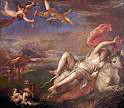
Visual artist Karen Henninger comments, “if men REALLY got the issues, they would refrain — as in take a break — from female nudity. There is NO need for men to do female nudity — unless it SERVES them. It’s pretty much a mainstream art thing. Female nudity is acceptable and will get you attention. So much for art being a place of ‘creativity,’” Henninger says. Check out the Met. Or any other museum. As the Guerrilla Girls have noted for years, themes of female nudity melded with rape or sexual assault — regardless of how the art is intended — have been a constant theme in art history. Think Rubens’ Rape of Europa or Hayez’s Susannah at her Bath. Depicting women naked, vulnerable, or linked in some way to abuse has been “a constant way for women to be portrayed” in the art world Henninger comments.

But back to Cordelle.

The problem is not female nudity or female sexuality. The problem is that The Century Project uses naked female bodies, eating disorders, and abuse in ways that promote voyeuristic interest. While childhood nudity should be free and joyful, in our culture that’s a big challenge because girls are already hypersexualized at younger and younger ages. As a result we — as a culture — often don’t know how to see a naked female body (regardless of age) other than in sexualized terms. Is she available? Arousing? Sexually interesting? Or not?

I am anti-censorship. I’m a huge fan of feel-good sexual exploration and the freedom to accept our own bodies on our own terms.

The Century Project is not it.

It’s the same old-same old: girls’ and women’s naked bodies on display. I saw the exhibit and talked to the photographer. For the most part, the “moving personal statements” moved me to want to vomit. The exhibit visually exploited women and put their stories on display for no apparent productive end.

Check the photographer’s website and see what he has to say under the FAQ “Why Women?” I remain unconvinced that he gets the issues. Cordelle’s explanation for exhibiting naked female bodies reinforces assumptions about women as different and needing special attention or unique protection. There’s something really off about it. He puts girls and women on display while claiming concern for our well being. Really, Frank: Don’t.

And P.S., Therese Shechter (Trixie Films) has continued this convo over at the blog American Virgin. Drop by and take a look!

Sarah Palin’s wardrobe continues to have political traction nearly a week after Politico first reported that the McCain camp spent $150,000 to outfit their vice presidential candidate for the campaign trail. The New York Times then reported that Palin’s makeup artist was the single highest paid employee in the campaign during a recent two week period (thanks to Allison for the link!). The McCain/Palin team has done their best to explain and back track on the “clothes kerfuffle.” McCain now claims that a third of the $150,000 worth of clothes has been given back, Palin says that she isn’t wearing the designer duds any more and has gone back to wearing her clothes from her “favorite consignment shop in Anchorage, Alaska” (which just seems pretty disingenuous and transparently silly at this point), and Elizabeth Hasselbeck from The View, who is on the trail with her, argued “This is deliberately sexist.”

As I said in my first post, I think it is deliberately sexist, but on the McCain camp’s side. They thought it more important to make sure that Palin was perfectly outfitted and make-upped than well-coached on the issues and prepped for interviews and speeches. Perhaps it was to bring in those “Dudes for Palin.” As Bob Lamm noted after my first post, a huge story was made out of John Edwards’ $400.00 haircut during primary season. Like Palin, he ran a campaign based on being one of the people. And like Palin, he experienced a backlash, not to mention a good ribbing from Republicans when his expensive haircut was revealed. Compared to Palin, $400 doesn’t seem so bad now, and it makes me skeptical of the “sexist” arguments.

Our readers had some great comments on whether the wardrobe matters:

more...

This morning I’m pleased to bring you a review by Claire Mysko (pictured left), author of the just-released You’re Amazing!: A No-Pressure Guide to Being Your Best Self. I mean really, who better to review an anthology of very personal essays about what women see when they look in the mirror than a writer who is also the co-founder of Inside Beauty and 5 Resolutions to Transform the Fashion and Beauty Industries, two groundbreaking initiatives that have garnered international acclaim for responsibly addressing the intersections of health, body image, fashion, and beauty?! Without further ado, here’s Claire. – GWP


About Face: Women Write About What They See When They Look In the Mirror

Edited by Anne Burt & Christina Baker Kline

Seal Press

Too often, beauty and body image are dismissed as superficial issues. Courtney Martin recently wrote about an exchange she had with another feminist who told her, “I’m so sick of hearing young feminists talk about fashion and body image…What about the women in Afghanistan!?” I would encourage that feminist to read About Face—a collection of twenty-three essays written by women talking about what they see when they look in the mirror. This is certainly not fluff or frivolity. The writers in this anthology share deeply personal stories that build a compelling case for the central message of this collection: It’s complicated. It’s complicated because what we see in the mirror is subjective. As we come to new understandings about our lives and ourselves, the way we see our faces can change, too.

Meredith Maran exposes what se learned about her own beauty when she was photographed with her supermodel niece. Kym Ragusa approaches her reflection as ethnography, tracing her features through photos of her mother and grandmother, and the lines on maps revealing where her family has made its mark over the centuries. And in her essay “Souvenir,” Manijeh Nasrabadi describes how a trip to stay with her family in Iran transformed her reflection:

“Snagged by my own reflection, I stopped and stared. Nothing jarred. Nothing tweaked my consciousness painfully away from some imagined, whiter version of myself. It was as if the settings in my brain had changed and reconfigured what my mind could see. Oh, so that’s what I look like. I heard myself sigh in relief. There was nothing ugly or needed to be changed. There was nothing American, Jewish, Zoroastrian, or Iranian to hate or hide. I laughed with myself. I smiled, and it was me I saw smiling. Then I knew what it meant to feel at home.”

I am one of those young feminists who believes it is critically important for women to talk about body image and beauty. We must explore how the reflection we see in the mirror is a reflection of our relationships, our experiences, our cultures, and our exposure to media messages—if not for ourselves, then for future generations.

According to the Girls Inc. “Supergirl Dilemma” study, we have made great progress in overcoming some gender stereotypes over the last six years. More girls now see that they can be good leaders and fewer girls believe that they should be expected to take care of housework and babysitting. The areas where stereotypes and pressures have gotten worse? Looks and appearance. In 2000, 74% of girls said that girls are under a lot of pressure to dress the right way; in 2006, that number jumped to 84%. Sixty percent of girls in the study believe that they must be thin to be popular; that’s up from 48% in 2000.

About Face is the kind of book that can prepare us to be the role models these girls need. The editors say that “looking in the mirror without turning away—and then talking about it honestly—is a radical act.” The women in this collection have taken that task to heart. I hope that others will read their words and be inspired to stage their own radical acts, whether in the bathroom mirror, in the rearview mirror, or even passing by a store window. These reflections offer opportunities for positive change. Let’s claim them as our own.

This month Seal Press offers up another new anthology, About Face: Women Write about What They See When They Look in the Mirror, edited by Anne Burt and Christina Baker Kline. In this one, 24 women of varying ages (23 to 75) and races brave a standoff with their reflections. From the book’s description:

From lines to wrinkles, dark circles to freckles, a woman’s face tells the unique story of her life. In many ways it’s a roadmap — with each singular characteristic, crease, and blemish serving as a milestone of having lived, loved, and endured….In the essay “On Reflection,” contributor Patricia Chao stares at herself and dares to ponder who she is when she is not being loved or desired by a man. In “My Celebrity Face,” Alice Elliott Dark must endure hearing her college crush tell her that she looks like the man on the Quaker Oats box. This leads her to a life filled contradictions — but ultimately ends in contentment with the woman she’s become….About Face dares women to look at themselves — no flinching or turning away; no poses, and no excuses. Both challenging and warm, About Face will inspire women to examine their faces, flaws and all, and to learn to love what they see.

And hey wow: celebrity makeup artist Bobbi Brown wrote the foreword. Essayists include Jennifer Baumgardner, Bobbi Brown, Kristin Buckley, Marina Budhos, Patricia Chao, Alice Elliott Dark, Susan Davis, Louise DeSalvo, Bonnie Friedman, Kathryn Harrison, Annaliese Jakimides, Dana Kinstler, Benilde Little, Meredith Maran, Manijeh Nasrabadi, Ellen Papazian, Kym Ragusa, Jade Sanchez-Ventura, Pamela Redmond Satran, Rory Satran, Alix Kates Shulman, Catherine Texier, S. Kirk Walsh, and Kamy Wicoff.

Had I been writing an essay for this one (ahem! kidding. sort of), I would have written about my nose and teeth and ears — all of which caused me great suffering as a teenager. Right through the eighth grade, a mean boy named Jeff Foy called me, alternatingly, Bugs Bunny, Dumbo, and The Beak. Didn’t seem to help me to know that everyone called him Jeff Foy the Toy Boy. Yep, Jeff suffered too.

Anyway, as I was explaining just yesterday to a beautiful and dear friend, when your physical appearance was made fun of as a kid, that feeling of ugliness gets internalized. It’s often very hard to wish away. Adolescence may be time-limited, but that sense that there is something wrong with you persists. Shout outs to college, college therapists, and college boyfriends — all of whom, in my case, helped me face that self-doubt and feel better about, well, my face.

I look forward to reading this book! Would any GWP reader like to offer up a guest review? Email me at girlwpen@gmail.com and we’ll arrange.