Archive: Oct 2018

Jessica Fulton / The Joint Center

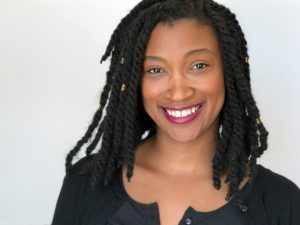
Revisit this March 2018 interview with Jessica Fulton to celebrate her new position at the Joint Center for Political and Economic Studies as their Economic Policy Director. As their twitter description puts it the Joint Center is currently focused on the future of work and congressional staff diversity. Jessica generously gave her time last spring to Framingham State University students seeking to learn about careers in public policy for Black women.

Last month I got to interview Jessica Fulton via Skype to learn more about her career and her work. She is the External Relations Director at the Washington Center for Equitable Growth. Equitable Growth is a research and analysis organization that is dedicated to finding ways to promote broad-based economic growth. Before Jessica was at EG, she was the Outreach Director at the DC Fiscal Policy Institute, an organization that focuses on budget issues for the District of Columbia. Jessica is an alum of the University of Chicago, where she received her Bachelor’s degree in Economics, and of DePaul University, where she earned a Masters in Economic Policy Analysis. Our conversation—and the interview below—focused on my desire to get some pointers on how more young women of color can make a difference in social policy.

EO: What are your top pieces of advice to young minority women seeking to work in social policy?

JF: If you’re able, try to get an internship in DC so that you’re able to learn more about how things work here. There are a few organizations and Members of Congress that pay their interns, and that’s obviously ideal, but many don’t. If you’re unable to find a paid internship, and can’t afford to take an unpaid one, consider alternate ways of getting into policy work. I know people who got their start by working in a paid position on a campaign of a candidate they really believed in. Others found entry level assistant positions to get their foot in the door. You can also consider getting an unpaid internship and supplementing it with a part time job, which is what I did.

Also, it’s much easier to get a job in DC if you’re actually in DC. It’s really expensive to live here, but if you can come sleep on a friend’s couch for a bit, you can set up interviews, informational conversations, and networking opportunities that could get you some meaningful connections. You should also try applying for jobs with a local address on your resume if possible.

EO: How do you advise people to zero in on areas of focus?

JF: I think one of the most important things that you can do is to start to get to know people who are working on the topics that excite you most. Ask people you know for introductions to people who might be willing to sit down with you to do informational interviews. If you don’t have connections already, think about your networks. Are there alumni from your university who might be willing to speak with you? Do your professors know people who work in social policy? Talking to those people about what they do and what their days look like can be a great way to figure out what you want to do.

You should also try to sign up for newsletters from the particular policy organizations or Members of Congress that you’re interested in. That way, you can get to know more about the topics different organizations work on and what they actually do. This could be helpful in future interviews, but also may help you to figure out which specific issue areas you have a passion for.

EO: Why are young minority women so important to the work of social policy?  

JF: A good number of social policy issues disproportionately affect people of color, yet there are usually very few of us in the room when the problems or the solutions are being discussed. And while things are slowly getting better, often women of color, especially black women, aren’t at the decision making tables even if they are part of a policy organization. I think that’s actually really important. For example, when I walk into a room, I’m bringing my education and work experience, but I’m also bringing my life experience and that of my friends and family members. The other folks in the room have important perspectives as well, but my friends, family members, and even myself, are more likely to have experienced certain obstacles and situations that are more common in minority communities. So when I’m thinking about problems and solutions, I can’t help but to look at it through that lens as well. And I think in the end, when you consider how any kind of problem solving works, the most effective solution is one where you’ve considered a diverse set of perspectives to arrive at your conclusion.

Jessica Fulton is now Economic Policy Director for the Joint Center.  You can follow her on twitter at @JessicaJFulton, and follow them on @JointCenter. Eunice Owusu is a Council on Contemporary Families Public Affairs Intern and a 2018 graduate of Framingham State University in Sociology with a minor in Political Science.
Molly MacDermot is the Director of Special Initiatives at Girls Write Now

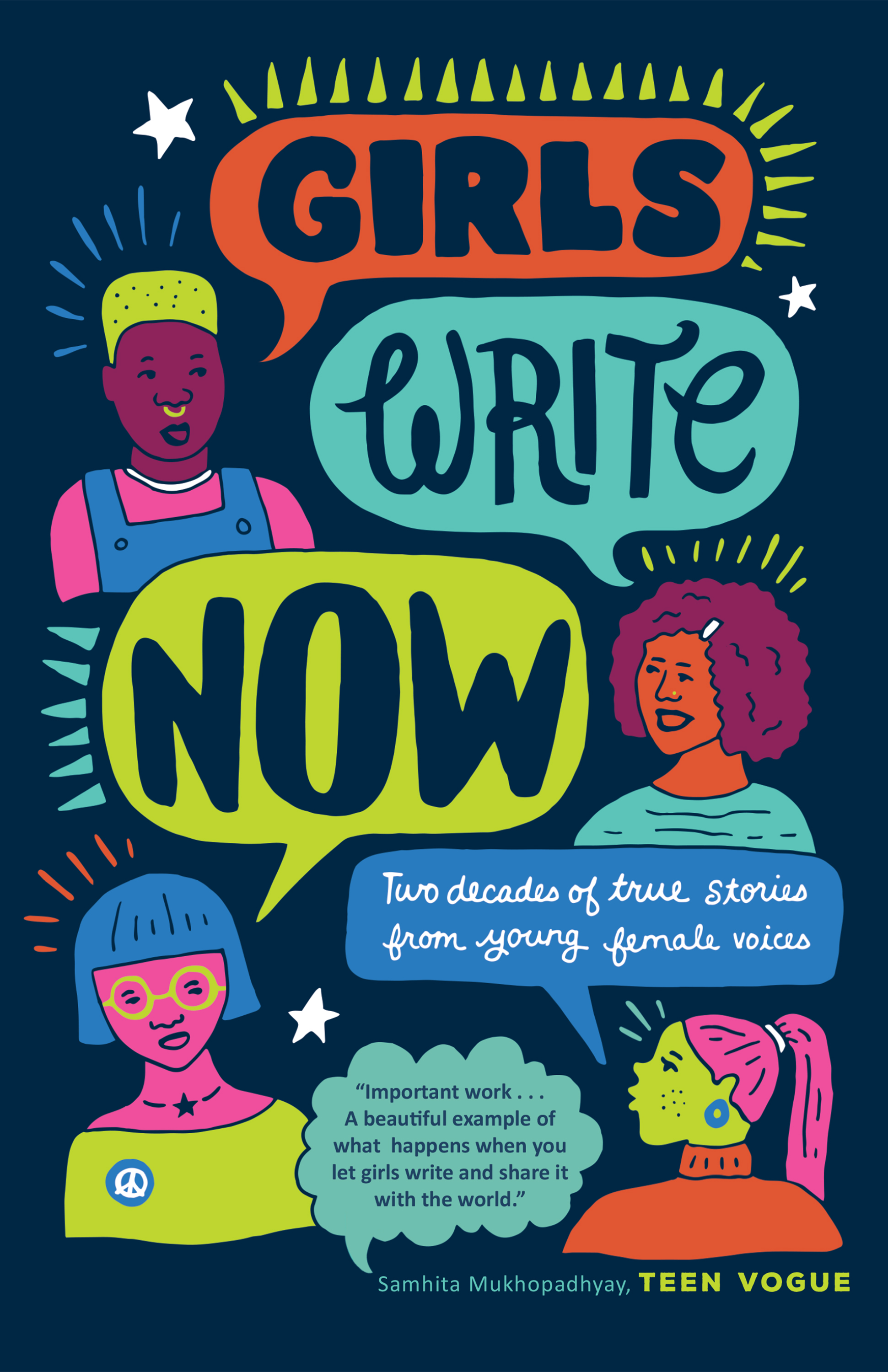
I’ve had the honor of editing five annual-anthologies for Girls Write Now. Today’s next generation of women writers are alright, and their stories are making the world better. They’re also making me feel better —filling me with hope. When Tin House editor Masie Cochran proposed publishing an anthology that showcases two decades of true stories from our young female writers, I was ecstatic. Finally, readers can enjoy the evolution of female thought in one book. Pre-order your copy from Books Are Magic, here.

In Girls Write Now: Two Decades of True Stories from Young Female Voices (Tin House/October 17, 2018), you’ll meet Danni Green (her knockout essay “Dear Kanye” opens the collection), who can’t get her dad to sign her financial aid paperwork for college. She desperately wants to believe she’s meant for a different life than what she sees around her, but she’s not sure if believing is enough. You’ll witness Romaissaa Benzizoune wrestle with wearing a hijab to school, and Maggie Wang’s struggle to be what she calls “a model minority girl.” You’ll also delight in the lighter moments, like Tashi Sangmo remembering the morning bird chatter in her birthplace of Tibet, or Michaela Burns peeling red apples with her grandmother.

Together, these stories offer an overdue portrait of what it is to be a girl in New York City, and in America as a whole. They’re stories we desperately need to hear. 100% of these writers are high-need. 94% are girls of color. Many are first- and second-generation immigrants. Astonishingly, 100% of them have gone on to college and the majority have graduated, flying in the face of national averages (nationwide, only 8% of low-income students will matriculate). And trust me, we’ll be seeing many of these names on book covers for years to come.

An excerpt from Danni Green’s “Dear Kanye”. Danni was born in New York and graduated from Lewis and Clark in Portland, Oregon

Dear Kanye, January 14, 2012 7:45 pm

Nine days ago I called financial offices of the colleges I applied to. Told them I had to submit my FAFSA without parental information. Told them Shawn won’t give me his information and my mother and I have tried. Told them how Shawn raises his voice, shows his ignorance, and shouts like he’s Otis Day. How he calls me stupid. Says I shouldn’t be trying to get money from the government. Every time my mom and I try.

Each college said my parents are married and Shawn lives in the house so they couldn’t help me. They told me I was in a tough situation. They told me I was in a tough situation like I didn’t know that. Like I don’t see the lives of the people I live with and how content like a snake has opened its mouth and swallowed their lives whole. My brother Robert is jobless. Almost thirty. Has an Associate’s degree and no idea what to do with his life. My sister Jessica is sleeping with the man she loves and isn’t her husband. She just got laid off. Has four children and no more Food Stamps. And her rent has to be paid. My brother Darius made a house out of my Grandfather’s room to avoid everything that’s on the outside of his door. My younger brother Philip has taken the Geometry Regents three times. Cuts classes. Smokes weed and wonders what he’ll do with his life. My mother. Had she gone to UCLA would be a doctor right now. The closest Aunt Carla has gotten to being an actress is watching the Academy Awards every year. She flips the pages of her celebrity tabloids looking for herself.

Who am I supposed to look up to? Who is supposed to show me how I can make my dreams real?

I’m watching Jon Sands and Adam Falkner live at The Bowery Poetry Club. But I’m sitting in my computer chair looking at them on a screen. Seeing them makes me want to pull the pretty stars out the sky. Rip open my chest and stuff them in. Because I want to be pretty. On the inside. And I’m hoping stolen stars can shine away whatever’s in me trying to kill the person I can be if I were only not Here.

Adam was my English teacher. Last summer I bought Jon Sands’ book. I know this guy. Like had conversations with this guy. Like went to this guy’s workshops. If they are not made of better stuff than me like stars then why are they where I want to be and I am not?

I’m not in a tough situation, Kanye. But if I don’t get out of the house on Wyckoff Street I will be, but it’ll be My Life. It’ll be a husband I don’t love, an affair to make me feel alive, a checking account with a zero balance, a job that’ll brand me Good Enough and children whose faces ask, What’s for dinner?

Currently it’s 7:54. The 14th day of 2012. A Saturday. But it feels like 2011 and 2010 and ’09 and ’08 and ’07 and ’06 and every year when I felt I was absolved of any good thing in me the second I walked through the front door of my house. Barriers between the days are crumbling and morphing 24 hours into one long minute.

There is too much contempt in my soul to have a life like the ones I see daily. My family has redefined happiness to make their life mean something. Since the second semester of tenth grade I worked my ass off to get A’s. I lost sleep to write essays, didn’t hang out with friends to do homework.

But it’s slowly sinking in. There isn’t an escape from what dirties the dishes and puts the dust between the floorboards of my house. Not living your dreams is a sickness. My parents are carriers. It is in my plasma waiting to infect my cells. And sometimes I cry like I’m terminally ill. The tears tumbling down to my shirt is evidence that I’m dying. Because everything has just gotten so hard. Like breathing. Like having faith in myself. Like believing I won’t stay Here. College was supposed to get me out of Here.

Now I’m too full of fear that I’m going to be My Family. I’ve seen the way their muscles fold, how their joints crack. I feel that what’s in Them is seeping into me. At times I ask myself Who am I kidding thinking that I’ll be different? That I’ll do something with my life? Adam is playing the piano. Jon Sands just read a poem. I like it. The crowd clapped. I want someone to clap for me. To be proud of me. Tell me Good Job. So I could stop thinking I’m such a failure. Because I strived for college but can’t pay and will likely defer a year and I’ll see my friends leave and I will stay. Jon Sands is up in front of people. A mic before him. Performing poems. All I want to do is write poems. Touch someone with my poems. I want someone to like them. What am I doing with my life that I’m not on stage. That I’m not There? If I were There I wouldn’t know another hungry night, I wouldn’t be scared to pray. I wouldn’t wake up feeling so weak. I’d be doing something with my life. I’d…I’d… Did you ever ask yourself, Kanye, what am I doing with my life that I’m not There? If you did. What was your answer?

Roxane Gay’s advice to young women writers:

“Everyone has a voice. It’s just a question of just finding the courage to use it, and the first step in finding the courage is knowing that no matter who you are or how quiet you think your voice is, your voice matters. You’re never going to please everyone with what you say, but you don’t have to worry about that. You have to only satisfy yourself to start with, and I think, with that kind of acceptance, you can begin to use your voice. Regardless of any insecurities you feel have to have an innate confidence in yourself and your voice because if you don’t believe in your voice, then no one else is going to listen.”
Roxane Gay


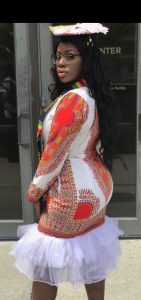
And by she, I mean Eunice Owusu, a 2018 Framingham State University graduate. She walked across the stage, shook hands with the president of the institution while her family, friends, and plenty of others who look up to her, support her, and love her, cheered her on. Currently, Eunice is a cheerleading coach for South High Community School, building and creating a group that fosters a positive energy for supporting all of the teams they are motivating at every game. Filling the world and the people around her with positivity is only one of Eunice’s many strengths. Eunice is extremely talented in the art of makeup and began her very own business, Hint of Ebeauty, creating wigs. However, her passions do not stop there. Her interest in Family Law and Policy drives her future for changing the lives of low-income families and immigrant families through looking at the policies that effect these populations. Because of this passion, Eunice plans on attending graduate school next fall. In addition, because of what we learned in our course studying careers of Black women in public policy in Washington, D.C. I had the opportunity to learn more of who Eunice is, who Eunice was, and everything that Eunice will be:

TC: What did you learn through your independent study: From Margin to Center—women of color in policy? Why did you take the course and what did you learn about yourself?

EO: One of the biggest things I learned in this study was that in order to be the most confident Black woman, you cannot be afraid of your own voice. There is so much importance and weight in speaking up for those who cannot be at the table, when the table is full of those can never relate. The very few Black women proves that there is in fact racial disparities in American work life. But it is one thing to sit and complain rather than to become informed and aware. To be informed and aware is to make sure that our faces are necessary and are holding positions that lead to redirection of policy to benefit evenly and equally for everyone while bringing justice. Black women in policy such as Janelle Jones, Valerie Wilson, Angela Hanks, Misha Hill, Cherrie Bucknor, and Jessica Fulton all agree that educated Black women are needed and should not be afraid to speak up. For me, in the past, I shied away and became passive because of the fear of being “too passionate” or “too angry” in situations where my voice would have secured the change I wanted to see. It was important to me to see what women from similar backgrounds as my own did to get where they are today. This study became my motivating push to follow their footsteps while creating my own path into policy work.

The study was formulated by my professor, Dr. Virginia Rutter, who helped us to connect with Black women doing policy work in DC. I took this class to help me really figure out what I wanted to do in my graduate studies and what kind of career I can make out of my Sociology and Political Science background. It helped me understand what policy work actually is and what kind of things go into it on a day to day basis. To see first-hand what kinds of people are part of organizations such as the Economic Policy Institute and DC Fiscal Policy Institute really helped my understanding of what life after grad school could be like. To me, there is no formula or handbook on how to be a successful woman after college. The truth is that months after graduating from Framingham State, I’m still trying to figure out how to get to the next step. This study made me realize that my presence, my knowledge, and awareness of the community I come from can speak volumes in public policy.

TC: How do you feel your identity, as a Black woman, has impacted your experience in college?

 EO: My identity as a Black woman impacted my experience in college because of the fact that I knew that I was not “cut from the same cloth” as others. In other words, being an African woman in college that represented my entire family, immigrants, and the ones that live in my country, Ghana, college was less of finding myself and more of making sure I was making all the ones counting on me proud. That pressure alone was my motivation to make sure I was soaking up all the knowledge I could for the ones in family that didn’t make it past their first few years of high school; some, their first years of junior high. As a Black first-gen woman, my layers made me excited to study the main things that were affecting my family first hand: immigration, education, and income inequality.

My identity as a Black woman impacted my experience in college because it framed my passions in my studies. It motivated what classes I took and what kinds of organizations I joined. My dark skin tone combined with my intelligence shows people that not only are Black women capable, our ideas are worth listening to. While attending a white institution with undercover racial bias and people who always underestimate the minorities who attend the school, I was able to understand not only what it means to be a Black woman but what it means to be myself. From freshman year to post grad, I no longer find myself sitting in in the back and listening to others. I have become a brave voice potential of change in the communities I am a part of.

TC: What would you tell high school Eunice?

EO: High school Eunice was my most indecisive self. This is because I battled back and forth in whether or not I wanted to pursue family law or do something STEM related. I became the only one taking classes like human geography while my friends took classes like physics. Coming from an African family, the expectation to become a doctor or engineer or anything STEM related was the ideal and that discouraged me from following the beat of my own drum. I would tell high school Eunice that there is nothing wrong with making a career out of passions. There was no need to seek the approval of others because it didn’t matter what field I chose. What mattered for me was whether or not it fed my want to help others battling things that I witnessed and went through, coming from a single-parent-immigrant household. I would tell high school Eunice that nothing comes easy, but it will make sense in the end. I would tell her that studying something that you are passionate about is extremely important because that determines your ability to not only retain information but to apply just about anything.

Tasia Clemons is a 2018 graduate at FSU in Sociology with a minor in Spanish. She is currently a Hall Director and in the Higher Education and Student Affairs Administration program at Canisius College. Follow Tasia at @TasiaClemons. Eunice Owusu is a Council on Contemporary Families Public Affairs Intern and a 2018 graduate of Framingham State University in Sociology with a minor in Political Science.