Archive: Sep 2014

Tina Pittman Wagers is a clinical psychologist and teaches psychology at University of Colorado Boulder. She just survived a heart attack.
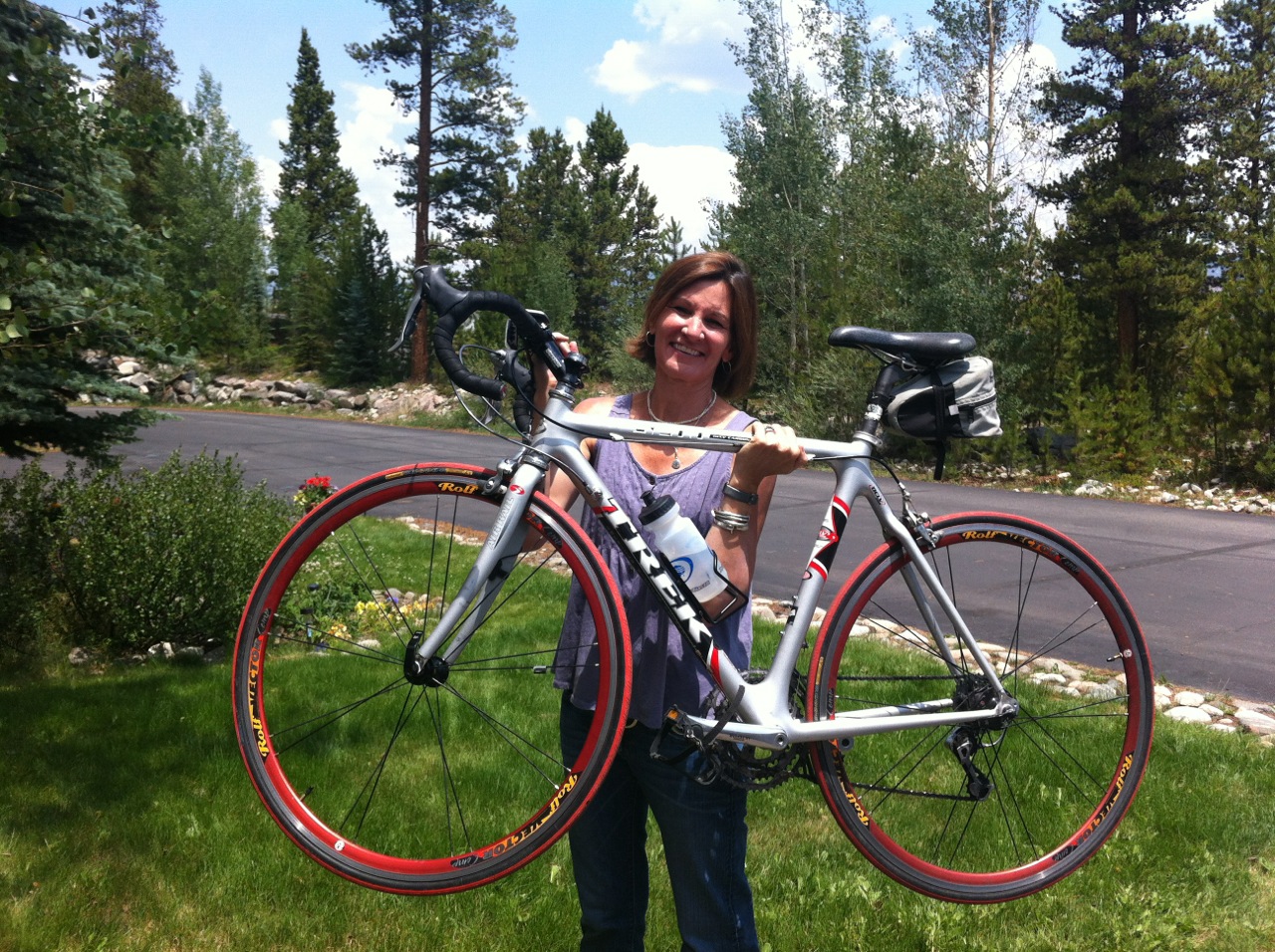
Tina Pittman Wagers finished a triathlon six weeks ago.
Tina Pittman Wagers finished a triathlon seven weeks ago.

I am new to this role as a heart patient. My heart attack was five weeks ago, and I am getting the feeling that I have just begun down the confusing maze of angiograms, CT scans, EKGs, medications (and lots of ’em), heart rate monitors, cardiac rehab classes and blood tests. Indeed, even the phrase “my cardiologist” is one I never thought would pass my lips. Here’s why: I am 53 (we’ll discuss the significance of this age in a moment). I am fit, active, slim, haven’t eaten red meat for about 20 years and am a big fan of kale, salmon and quinoa, much to the chagrin of my two teenage sons. I live near the foothills in Boulder, Colorado, where I hike with my dog and often a friend or two, almost every day. I had completed a sprint triathlon two weeks before my heart attack. Ironically, this event was a fundraiser for women with breast cancer – it turns out that heart disease kills women with more frequency than breast cancer. But, hey, who knew?

My heart attack happened while I was swimming across a lake in Cascade, Idaho. I was about a quarter mile into the swim when I found that I couldn’t breathe, and was grabbed by an oddly cold and simultaneously searing band of pain about three inches wide across my sternum. My husband, Ken, was on a paddleboard nearby and helped pull me out of the water, and started paddling me back, stopping to allow me to vomit on the way back to shore. If you’ve never been on a paddleboard, it may be hard to imagine the balance it takes to paddle relatively quickly and keep the board from getting tipped over by the unpredictable movements of a heaving passenger in the midst of a heart attack. Suffice to say that I am grateful for Ken’s strength and balance in innumerable ways. An hour later, I was at a clinic in McCall, Idaho, where an astute ER doc was measuring my heart rate (very low) and heart attack-indicative enzyme called Triponin (rising) so I won an ambulance ride to St. Luke’s Hospital in Boise, Idaho. I received excellent care there, queued up for an angiogram the next morning and was diagnosed with SCAD: a spontaneous coronary artery dissection, and, fortunately, a relatively mild one. Twenty percent of SCADs are fatal. Furthermore, I have none of the typical risk factors for heart disease, like high blood pressure, diabetes or high cholesterol.

I do have one of the main risk factors for this kind of heart attack, though: I am a woman. Eighty percent of these heart attacks occur in women. The average SCAD patient is 42, female and is without other typical risk factors for heart attacks. The current thinking about SCADs is that they are not as rare as originally thought, but are under- diagnosed because they happen in women who don’t look like typical heart patients.

Another related factor: I am menopausal. The majority of SCAD patients are post-partum, close to their menstrual cycle or menopausal – all times in women’s lives during which we experience significant fluctuations of sex hormones. Up until five days before my heart attack, I had been on low doses of Hormone Replacement Therapy (HRT), in an effort to vanquish the hot flashes, sleep disruption and cognitive fogginess I was experiencing. I suppose HRT might have also represented an attempt to hang on to youth, in a youth-and sexuality-obsessed culture in which the transition to menopause often means a dysregulated and sweaty march into irrelevance.

Since I had my heart attack, I’ve spent a lot of time (and money, but that’s another column) interacting with professionals in the cardiology world, trying to figure out what happened to me, and how I can avoid having another SCAD – the rate of recurrence in my population is about 20-50 percent. I have encountered some lovely people, but almost all of them are baffled about what to do with me. I am atypical, as they inevitably explain, but the medications, the treatments, the rehab programs that they have to offer are designed for typical patients. So, that’s what my doctors try, but there is a lot of “voodoo vs. science” as one cardiologist explained, because science doesn’t have the answers to my questions. (I would add that there is a cardiologist, Dr. Sharonne Hayes at The Mayo Clinic, who is doing a lot of the research and seeing the patients who’ve had SCADs. I hope to meet her one day. I imagine a scene something like my 13-year-old self meeting David Cassidy, only in an exam room in Rochester, Minnesota– it’ll be just that cool.)

One of the factors that contributed heavily to my medical predicament was no doubt my menopausal and HRT status. The American Heart Association points out that lower estrogen levels in post-menopausal women contributes to less flexible arterial walls, clearly a factor in SCADs. The question then arises: how might HRT help prevent another heart attack? However, as anyone who’s even scratched the surface of the HRT world, there is a lot of conflicting data about who should use HRT, who shouldn’t, what the benefits and risks are, and what the differences may be between different formulations and methods of delivery of HRT. One study, the Women’s Health Initiative study, was a large study started in the early 1990s, and was a valiant attempt to gather data about the effects of HRT on women’s health, including cardiovascular health. Unfortunately, the average age of the women in this study was 63 – 12 years older than the typical age of the American woman hitting menopause and considering HRT, so the results have been criticized for their poor generalizability to newly menopausal women.  The research on HRT since the WHI study has been scattered, often contradictory, and hard for the average woman to access.

Why do we know so little about women and heart attacks, why they happen, what the symptoms are, and what we can do about hormonal factors that contribute? A big part of the problem is that, until the National Institute of Health (NIH) Revitalization Act in 1993, researchers largely excluded female humans from their studies. NIH has just this year (2014!) decided to use a balance of male and female cells and animals in their research. Up until now, 90 percent of the animal research has been conducted on males. Animal research, which is often a precursor to clinical trials in humans, has been missing out on vast pieces of investigation related to the female body. I am living (fortunately) proof of the fact that the delays in including females in research have translated into significant gaps in clinically relevant knowledge related to women’s health. Well-meaning physicians and practitioners only have the “typical” approaches to try with their “atypical” patients. Why this appalling delay to include female subjects? Because female rodents as well as humans experience menstruation and menopause, which are frequently considered dysregulating nuisances to many scientists. As a consequence, we have an enormous amount of catching up to do in order to understand what factors affect female bodies and health problems in different ways than our male peers.

Emma Watson gave a great talk last week to the UN about feminism meaning equal access to resources. One of the most important resources we have is scientific knowledge that can be applied to responsible, effective and efficient clinical care. Let’s hope that women can start to be understood as typical research subjects and patients, not as inconvenient, fluctuating, atypical anomalies.
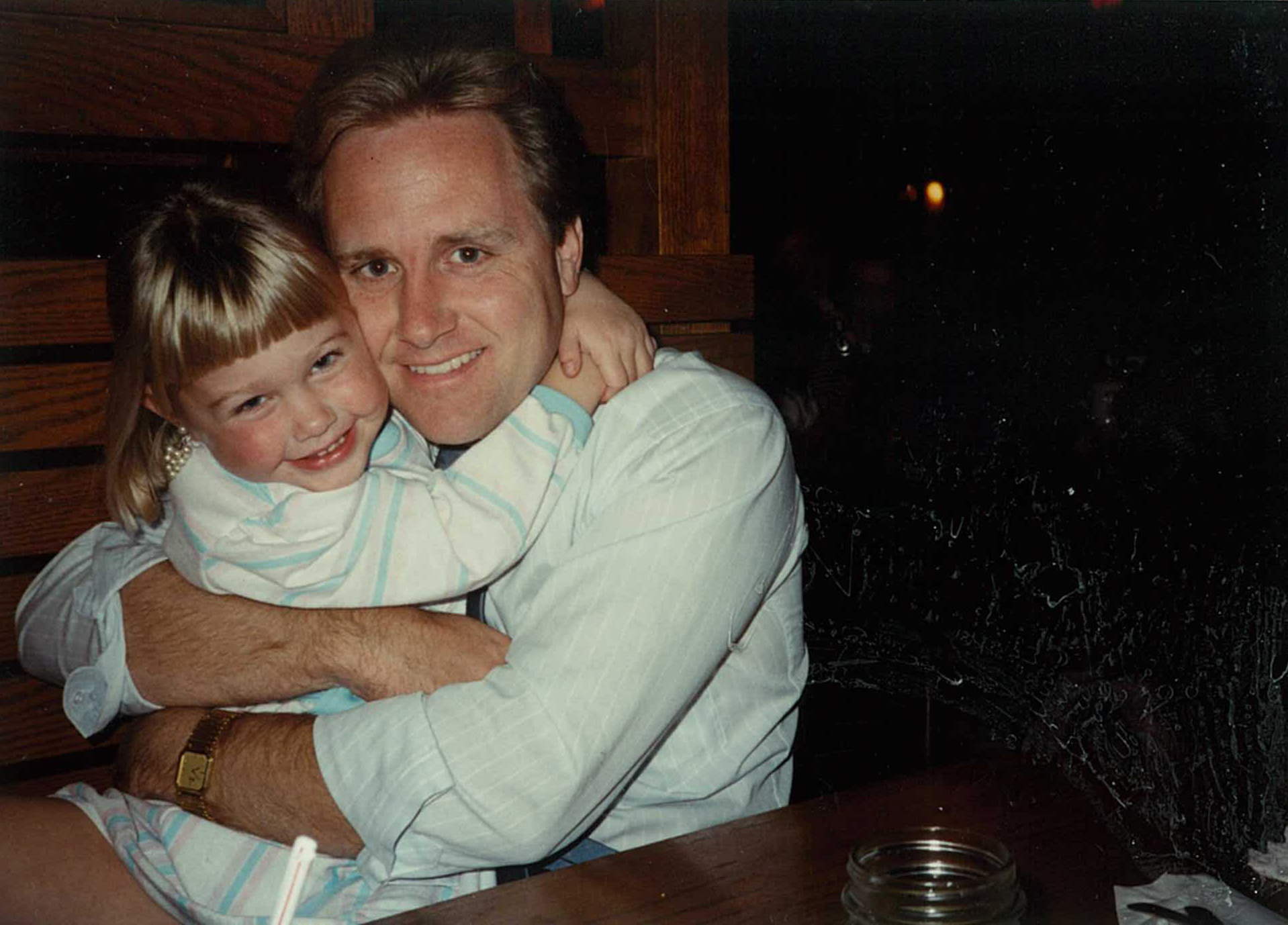
In 2013, I became the director of an unusual gender center. This is its story.

September 18, 2014

My Girl w/ Pen column is called “GenderLab” or watch what happens when you run one of the most unusual gender centers in the country. That sounds hyperbolic. I know because I can’t believe I’m living it. As we are about to finish year one today, I’ve come up for enough air to document this experiment. And this year I’m going to be writing about it.

Kurt Voss & Daughter Cassandra

The heart of our center is a story of father/daughter love. You heard that right. Not an abstract story about rights and politics–though we know from Women’s Studies that those things are also personal. But ours starts with the personal. This is a story of love across difference. Of grief and transformation. Of a father who listened to his daughter and a daughter who stayed in dialogue with her father.

Cassandra Voss, for whom the center is named, was my student. She was effervescent. Let me give an example. When I first met her in 2004, I was two years into being an assistant professor. In class I was talking about the film Iron Jawed Angels, which is about Alice Paul and the suffragettes who secure the women’s vote in 1920. In the film, Alice Paul is played with pluck and determination by Hilary Swank; she wears her hair in long braids on occasion. After class, a young woman, Cassadra Voss, ran up to me and said, “Look, I wear my hair like Alice Paul. Ever since I saw the film, I love to wear my hair in braids like her.” I thought who is this luminous, geeky creature in front of me who does feminist cosplay? I loved her from the start.

Cassandra set out to be the first-ever major in Women’s and Gender Studies at our school. We started a minor in 2005 (notably late in higher ed), but she wouldn’t settle for that. She was also determined to put on the first production of the Vagina Monologues. And she insisted on hiring the first man in the Women’s Center. So she wasn’t so different from Alice Paul afterall. The thing that’s harder to capture about her is that she was one of the most hopeful, ebullient people I’ve met in my life. And that combination of bravery and delight was intoxicating. She was the kind of student who always bounded into my office and plopped on my couch. There was nothing small or half-hearted about her.

You see I’ve been in Women’s Studies a long time. Since I was 19–the same age Cassandra was when she first took Introduction to Women’s Studies. At her age, I was equally passionate about gender and social justice, but I was not nearly as loving. Early I had to manage so much anger about deep inequality and oppression; I didn’t know what to do with it. Cassandra managed to keep believing in people and “their better angels” which often made me feel a bit sheepish in her presence. She recentered my politics in love. And one of the ways she did that was how she talked about her dad.

Cassandra Voss, St. Norbert College

I’ll never forget when Cassandra said to me, “My dad is coming to hear our panel on The Women’s Room and he’s conservative and I want you to meet him.” I had taken Cassandra and a handful of students to present their work on that interesting, rarely taught early classic, The Women’s Room by Marilyn French. Now they were presenting it again at our undergraduate research day. I walked in the room and spotted him immediately. He had the starchiest shirt in the room. On a campus that is uber midwest-casual, Kurt Voss was pressed and tucked. And like his daughter, game for anything. Which is why the Fox-news watching, deeply religious CEO was in the front row taking notes about second-wave feminism. Some of Cassandra’s friends snickered at his questions which were uninformed, understandably, and real. Real questions, ones they needed to answer to not cocoon themselves in their private ideologies. That day in the spring of 2006, I had no idea that a little over a year later, Kurt and I would begin a friendship after Cassandra’s death that would last six years.

Cassandra died unexpectedly in 2007.  Sometimes I still dream about her. Only now when I wake up, I go to work and see her face every day in the building her father built for her. Some days I talk to her. Some days, I stare at the floor because I can’t look at her face. It’s just too much. I make my coffee and get to work. But there are moments, like her birthday coming up where I remember one of the three life-long goals she wrote on her then “Myspace” page in 2007: my goal is to make my dad a hard-core feminist.

She got her wish.

Stay tuned for how that dad built a multi-million dollar gender center.

Follow us at: www.snc.edu/cvc    Facebook: https://www.facebook.com/snc.cvc

Cassandra Voss Center St. Norbert College, De Pere, Wisconsin
Cassandra Voss Center,  St. Norbert College, De Pere, Wisconsin

girl-32813_640Hey GWP Community!

A slew of interesting books “bridging feminist research and popular reality” (our tagline) are either just out or on the horizon, from Seal, Feminist Press, Demeter Press, and many more. Shoot me an email [deborahgirlwpen (at) gmail (dot) com] if you’d be interested in guest reviewing any of these–either individually or in a cluster–here on Girl w/Pen, with an eye toward the larger conversations, perspectives, and research they tap into:

Rebecca Hains’ The Princess Problem: Guiding Our Girls through the Princess-Obsessed Years

Stacey Radin’s Brave Girls: Raising Young Women with Passion and Purpose to Become Powerful Leaders

Jessica Valenti’s Full Frontal Feminism, Second Edition

Babygate: How to Survive Pregnancy and Parenting in the Workplace by Dina Bakst, Phoebe Taubman, Elizabeth Gedmark

Sarah Granger’s The Digital Mystique

Melanie Klein and Anna Guest-Jelly’s anthology, Yoga + Body Image: 25 Personal Stories About Beauty, Bravery & Loving Your Body

Queering Motherhood: Narrative and Theoretical Perspectives edited by Margaret F. Gibson

Reconceiving Motherhood by Patricia Hill Collins

Feminist Parenting From Theory to Life Lived edited by Lyndsay Kirkham

Intensive Mothering: The Cultural Contradictions Of Modern Motherhood edited by Linda Ennis.

And of course if there’s a book you’d like to review that’s not on the list, please inquire within.

Yours in bridging,
Deborah

dt.common.streams.StreamServer
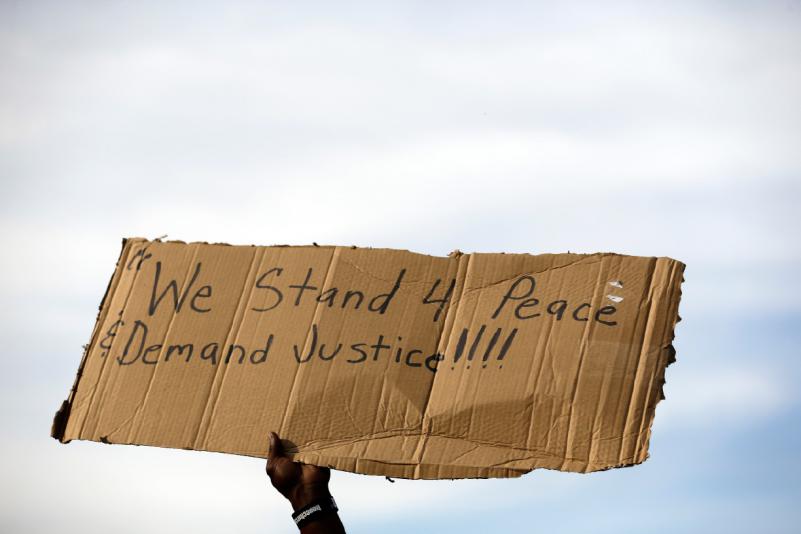
This image originally appeared at the Concord Monitor: http://tinyurl.com/odqjcdv

From a Politics of Shame to a Politics of Grief

On August 9, Officer Darren Wilson fired his gun at least six times at unarmed 18-year-old Michael Brown, killing him in broad daylight. Within a day, the streets of Ferguson became the epicenter of a national outcry over racial profiling and police brutality. As images of unrest in Ferguson circulated from the streets and into cyberspace, one meme has been particularly electrifying in calling attention to the ongoing problem of race in America. Typically, it has featured two frames: one taken from the Civil Rights movement, the other from recent events in Ferguson, MO. The intent is to draw the viewer’s attention to the disturbing parallels between today’s and yesterday’s racial landscapes, and most often, they feature men: men as protesters, men as police.

Where are the corresponding pictures of women?

After all, during the Civil Rights movement, women were often on the front lines to expose the blind injustice of Jim Crow America and inspire within white Americans – particularly Northern onlookers – shame by virtue of their apathy and lack of action in the face of images of water-hosed and beaten women. This was a politics of shame, and for at least a time, it worked.

Fast-forward to 2014, however, and a different kind of racialized motherhood is mobilized, one centered not on shame but on grief. On August 25th, three mothers – Leslie McSpadden, Sabryna Fulton, and Valerie Bell – embraced to publicly mourn their sons, Michael Brown, Trayvon Martin and Sean Bell. Speaking with CNN, they talked about the support they could uniquely mobilize for one another, about pushing through the pain of loss and despair, about what it means to carry on the memory of their sons in light of “character assassinations” used to justify their deaths. A day later, Oscar Grant’s mother Wanda Johnson proclaimed in a heart-wrenching open letter: “this is where we, as parents, have to be relentless in the vindication of our sons” (here).

Double Jeopardy, Double Injuries

In pursuing vindication for their sons by insisting that their lives are worthy of grief, the mothers of Michael Brown, Trayvon Martin, Oscar Grant, Sean Bell and others face a particular kind of “double jeopardy,” a term that sociologist Deborah Kinguses to call attention to how race and gender intersect to deepen the marginalization of women of color. They are judged on two counts: first, they are on the stand for their sons in the court of law and public opinion. With their sons unable to speak on their own behalf, these mothers are in constant battle to assert the dignity of their sons, to insist on their moral character, to maintain their innocence.

Here, to be a good mother means navigating the sociolegal insecurities that come along with the criminalization of young men and boys of color. It means asking, and coming to terms with, a difficult question: “Will my child be profiled as a criminal, and arrested or even killed as a result?” To be a good mother thus means having – as sociologist Dawn Dow examines in her study of middle-class African American motherhood – “the talk” with their sons about the “first impressions” their mere presence gives to onlookers and how to interact with police to avoid escalation. Indeed, it means coming to grips with the police and the criminal justice system as antithetical to one’s responsibilities as a mother. Perhaps for this reason, Charles Epp, Stephen Maynard-Mooddy, and Donald Haider-Markel’s Pulled Over, a landmark study of racial profiling, found that African American women in their 40s were more likely to agree that “the police are out to get people like me” than any other age/race demographic aside from Black men under 30 years old.

While these mothers take on the burden of proving their sons’ innocence as if it were their own, this burden is their own to the extent that they are defending not only their sons – but their identities as mothers, as well. Patricia Hill Collinsargues that “controlling images” – of the welfare mother, the mammy, the jezebel – have long dictated the terms on which African American mothers are judged as bad, immoral or incompetent mothers. Each of these mothers has had to navigate their own character assassinations. For example, Sabryna Fulton, mother of Trayvon Martin, has been accused by conservative media of “cashing in” on her son’s death and intimidated by George Zimmerman’s brother from filing a civil suit as the case “might not be very flattering” for her and her family.

This double jeopardy reverses the sociological imagination, rendering collective responsibility for injustice into an individual (and apparently maternal) obligation. With this double jeopardy, the deaths of their sons bring a double injury: the injury of losing one’s child combined with the injury of having failed to navigate an impossible burden.

Cults of Motherhood

In this context, the popular portrayals of today’s grieving mothers of the post-Civil Rights era – the era of so-called “colorblindness” and “post-racial America” – do not cull a politics of shame in the viewer as much as reinforce a politics of grief. This is where the ‘cult of motherhood’ meets a ‘culture of poverty’ narrative to create a discourse that allows for empathy with these women as mothers while denying their structural position as Black women. The public focus on their mourning comes dangerously close to suggesting that the failure of American society is their failure, which is perhaps why these mothers are so appealing to the likes of CNN. Too often in their coverage, their grief is mobilized not to a reveal an uncomfortable truth about American society, one implicating all citizens as members of a structurally unequal society, as much as appeal to a depoliticized maternalism.

This supports a distinct cult of motherhood – a cult of the mourning Black mother, who bears the brunt of a vast carceral apparatus and who has no one to turn to but other mothers-in-mourning when she fails at this impossible task. Indeed, there’s something neo-Moynihanian about the public portrayal of these mourning mothers and the way this cult of motherhood has been distorted in ways that individualize their pain. This portrayal reinforces what many Americans want to think about their nation’s problem of race: that there’s really no broad issue of race, but rather an issue of circumstance and perhaps bad choices.

Gendered frames become the co-conspirator of racial ideologies: the racism of a “colorblind” society becomes masked as nothing more than a mother’s failure. Whereas the politics of shame held white Americans responsible in an era of Civil Rights, today’s politics of grief reduces this issue to one implicating Black sons and their mothers. It shouldn’t take a maternal discourse to recognize, empathize with and speak truth to the profound injustice of racialized violence in America. These women should capture the American public’s attention not because they have proven themselves as mothers but because they are fellow citizens. Yet with the recognition of the value of black life tied to the cult of motherhood, Leslie McSpadden, Sabryna Fulton, Valerie Bell, Wanda Johnson and others are left with the burden of not only their sons’ deaths but also the heavy problem of race in America.

__________________

Jennifer Carlson (PhD, UC Berkeley) is an Assistant Professor of Sociology at the University of Toronto who studies policing, gun cultures, and violence. Her book Citizen-Protectors: The Everyday Politics of Guns in an Age of Decline (2015, Oxford) examines the growing popularity of gun carry among Americans.