
New & Noteworthy
How do Americans Define Discrimination? Well… It’s Complicated by Jordyn Wald covers new research in the American Journal of Sociology on how Americans disagree on what counts as discrimination. Some focus on intent and unequal treatment, others on unequal outcomes and power. Views differed by issue and by group, with younger Democrats leaning toward outcomes and power and older Republicans toward intent.
Backstage with TSP
Fall semester is here! The TSP Board’s first meeting is this week, and we’re excited for another year of bringing sociology to a screen near you. For board members, TSP is not only a place to publish and network, but also a chance for grad students to learn about public sociology. We discuss sociology in the news, brainstorm ways to make it more accessible, and are continually innovating new projects. Stay tuned.
More from our Partners & Community Pages
- Attending Church Encourages Acceptance of Atheists? No, It’s a Suppression Effect by Paul A. Djupe, Amanda J. Friesen, Anand E. Sokhey, and Jacob R. Neiheisel on the increases in acceptance of atheists from church attendance and its apparent statistical suppression effect, when Christian nationalism is included, attendance does not raise and often lowers support.
- Financial Theatrics by Elena G. Van Stee writes us research which shows families favor “pseudo-formal” written-but-flexible loan agreements because they preserve the recipient’s dignity, ease discomfort, and help separate personal from financial relationships.
Council on Contemporary Families
- 3Q with Andréa Becker Get it Out: On The Politics of Hysterectomy with Alicia M. Walker and Andréa Becker on how hysterectomies are common yet silenced, and that people’s choices are constrained by a fertility-first, under-researched, and unequal U.S. healthcare system, with added barriers in gender-affirming care and across race and class.
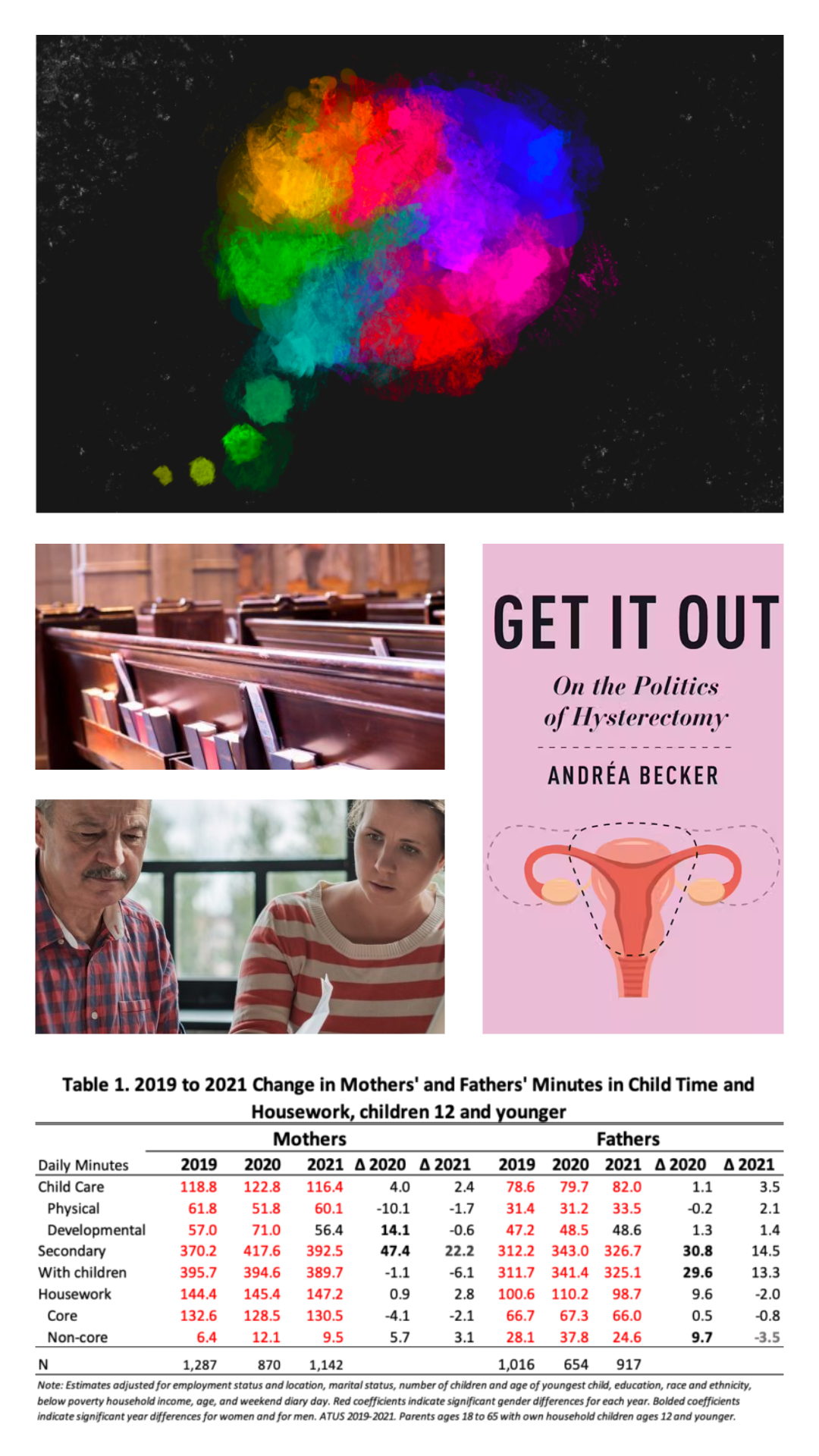
- Pandemic Influences on Gender Inequality in Unpaid Work by Liana C. Sayer and Joanna Pepin on how COVID briefly narrowed gaps as fathers spent a bit more time with kids, but by 2021 mothers still did more childcare and housework, so lasting equality will require men doing more unpaid labor.
Comments