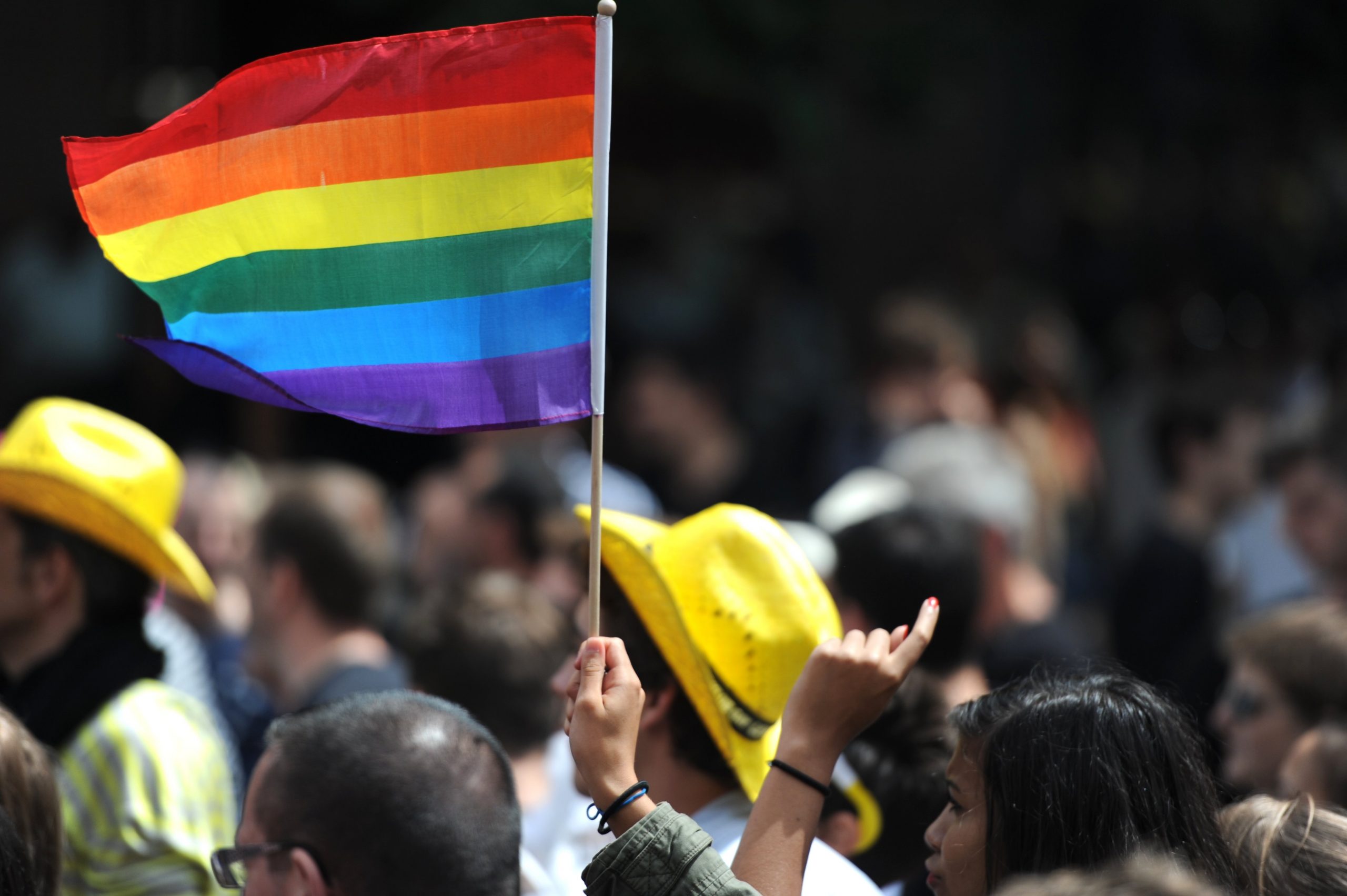
“Gay pride 164 – Marche des fiertés Toulouse 2011.jpg” by Guillaume Paumier is licensed under CC BY 2.0.
Over the past decade, the number of adults in the United States who identify as LGBTQ+ has more than doubled. At the same time, the number of terms describing people’s sexualities and gender identities has increased as well, and continues to evolve. Given these changes, how do LGBTQ+ people decide which labels to use when describing or disclosing their identities?
In a new study, researchers Holmes and Ghaziani sought to understand how LGBTQ+ people make sense of the different identity labels available to them. Through interviews with LGBTQ+ adults around Vancouver (most of whom were in their 20s), the researchers found most respondents used more than one label to define their sexuality. Most commonly, these respondents described themselves as both “queer” and either “gay”, “bisexual”, or “pansexual”. Some respondents used a series of labels to define their identity, offering descriptions like “nonbinary, queer, bisexual, gray-sexual, and aromantic.”
Additionally, some LGBTQ+ people in this study reported using different identity labels in different situations to avoid potential confusion or conflict. For example, some people would use better-known terms – such as “gay”, “lesbian”, or “bisexual” – when communicating their identities to older or more conservative people. As one respondent described, “I pretty much just stick to ‘queer’ [in Vancouver], but when I’m in Texas, my dad is – he doesn’t understand, really, so for him, it’s ‘gay’.”Some respondents also discussed using different labels in interactions with other LGBTQ+ people to avoid potential in-fighting over the legitimacy of their identity. As one person described, “I will use gay, queer, or bisexual depending on who I’m speaking to…When I’m speaking to someone like a lesbian or someone in the queer community, I’ll call myself queer, because I still have that fear that I’m seen as less gay or less deserving of being in that space.”
These findings highlight that how people express their identities often varies across situations. To try to help interactions run smoothly, LGBTQ+ people discussed adjusting the identity labels they used based on their audience. This reflects classic insights from the sociologist Erving Goffman: that identities are not stable internal constructions, but evolve and are negotiated in social interactions.
Comments