
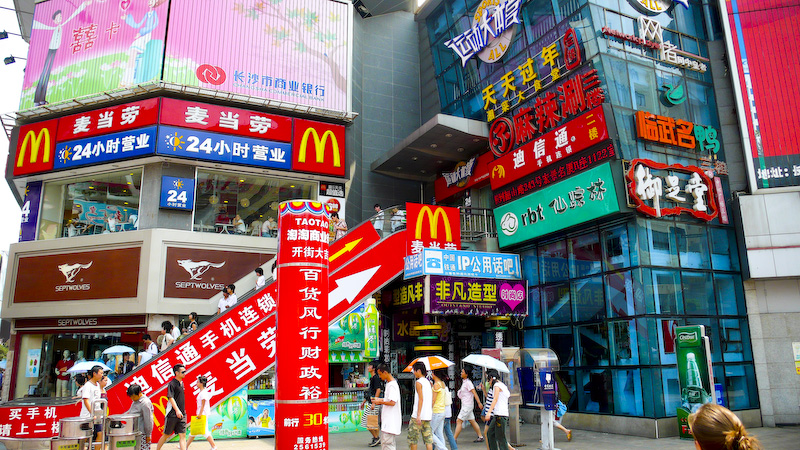
China’s post-socialist market reform started around 1978 and came into full force in the 1990s. This reform transitioned China from a planned economy to a market-driven one. Yang Cao, in his 2024 article, investigates the cultural impact of this transition. He asks, in particular: how did this economic transformation reshape cultural values of materialism among Chinese citizens?
Materialism, for Cao, is the belief that success, happiness, and social worth are primarily defined through wealth and consumption. He uses data from the Chinese General Social Survey (CGSS) and multilevel statistical models to examine how province-level institutional changes (the density of private enterprises, labor market flexibility, and regional GDP) affect individuals’ values about income, prestige, and work hours.
Cao finds that individuals living in regions that are more deeply penetrated by market forces tend to express stronger materialist values, even after controlling for factors like income, education, and occupation. These people prefer extrinsic rewards like income to intrinsic rewards such as feelings of achievement. Additionally, Cao found that materialist values are more pronounced among younger cohorts and urban residents – that is, those who are both embedded in China’s market economy and more exposed to related cultural messages.Cao’s research on the case of China helps us understand broadly how market transitions, not just capitalism per se, can contribute to deep cultural change. China’s case helps illuminate how market institutions can generate new cultural values centered on competition, individualism, and consumption, from post-socialist countries to emerging economies. It also suggests the potential social fragmentation that can follow when traditional values are displaced by market-oriented worldviews.
Comments