
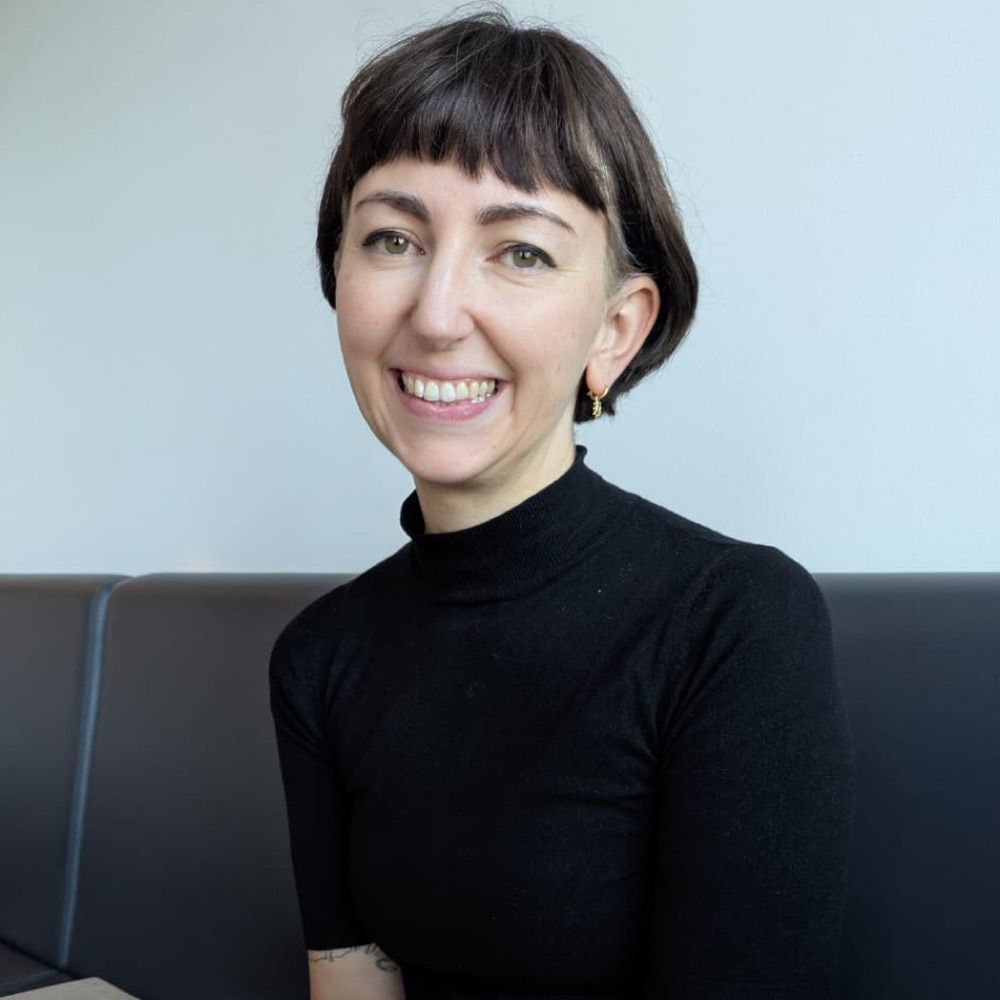
Dr Hannah McCann is a senior lecturer in Cultural Studies at the University of Melbourne. Hannah’s academic work sits within the field of Critical Femininity Studies, with research on topics including queer femininities, beauty culture, and queer fandom. She is the author of Queering Femininity: Sexuality, Feminism and the Politics of Presentation (Routledge) and co-author of Queer Theory Now: From Foundations to Futures (Bloomsbury). Her most recent book is Emotions, Bodies, and Identities in the Hair and Beauty Salon: Caring Beyond Skin Deep (Bloomsbury). You can find her on BlueSky handle: https://bsky.app/profile/binarythis.bsky.social & on her Website: https://www.hannahmccann.com.au/
AMW: One of your central findings is that salon work functions as a form of care work. How does recognizing emotional talk, bodily touch, and aesthetic labor as care challenge dominant ways that both the beauty industry and care work itself are typically understood and valued?
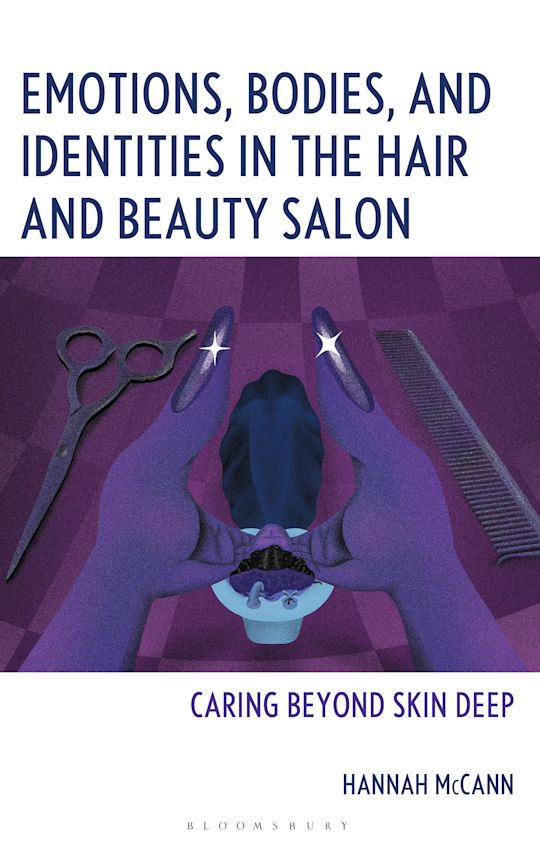
HM: It is anecdotally known that the hair/beauty salon can often feel like a therapeutic space. People can vent about their lives at the same time as being physically pampered and aesthetically transformed. Along these lines, many of the salon workers that I interviewed for this project referred to themselves as “makeshift therapists” or similar. This is not to suggest that going to a salon is the same as seeing an actual therapist. However, to understand the salon as a site of care takes seriously the notion that salons can be profoundly meaningful in people’s lives, and that workers deserve better training and recognition for the work that they do.
As part of this research, I worked in a hair salon for a period, and I can definitively say that everything that happens in life gets discussed in the salon. From births to deaths and everything in between, workers are privy to the intimate details and textures of life. These disclosures happen while bodies are being touched and managed, often intimate places (like the head) rarely touched by others, and an aesthetic transformation is occurring that impacts how one’s inner sense of self aligns with one’s outer appearance.
Indeed, if we ignore the care dynamics that occur in this space, we resist the idea that salon workers out to be better trained and supported to deal with client disclosures around issues like domestic violence or mental health. People tend to enter the industry very young, and we essential dump them in the deep end in this intensely social, bodily place, with no support, and no guidance on how to refer people to the right pathways for help. Without better support, workers in this industry are at high risk of burnout.
Feminists have long highlighted how care work is often feminised work (largely expected to be performed by women), and how it is socially, culturally, and economically undervalued. However, in Western feminism there is a strong tendency to define beauty practices as fundamentally oppressive and patriarchal, such that feminists have largely stayed away from the site of the salon. The few feminist studies on salons that do exist tend to emphasise the emotional aspects and downplay the importance of aesthetics to the care dynamic. I think we can adopt a more ambivalent approach to beauty that at once recognises the oppressive elements of beauty norms, at the same time as understanding how surfaces/aesthetics can be a way to feel affirmed in one’s identity – a point which becomes more obvious in accounts from queer, trans and gender diverse people, about aesthetics – and that workers getting this “right” can feel like a form of care.
AMW: You show that salons are sites where identities are actively curated rather than merely expressed. What did you find about the kinds of identities that are most often supported, stabilized, or constrained through salon interactions, and what does this tell us about broader cultural norms around gender, respectability, and selfhood?
HM: One of the key things to note is that there is a wide diversity of types of salons, what salons offer, who is working there, and what communities they connect to and cater for. So, for example, in recent years queer salons catering the LGBTIQ+ community have become more ubiquitous. Having said that, many of the salon clients that I interviewed talked about times in salons when they experienced feeling misunderstood by salon workers or sometimes directly discriminated against, especially when it came to issues of gender, race, and sexuality.
The hair and beauty in Australia would do well to better train workers around diversity, for example, when it comes to gendered expectations about hair, different hair types, and diverse identities broadly. This is not to say that you can train away homophobia and racism, etc, but there is space to intervene at a more fundamental level to challenge and change assumptions some workers coming into the industry might have about bodies and identities. Having said all this, despite some negative experiences, the clients that reported such stories to me also each had vivid examples of times they had been affirmed in salons. I gathered many testimonies about how significant these interactions can be, both positive and negative.
AMW: The book highlights a tension between clients’ experiences of salons as “self-care” and the labor performed by workers. Based on your findings, what are the consequences of framing salon visits as self-care for how we socially, economically, and emotionally value the workers who provide this care?
HM: This is such an important question — I found time and time again that clients talk about care in the salon as “self-care”, which comes directly from a wellness discourse. This wellness discourse is a distortion of much earlier radical Black organising which argued for self-care as a political act. Self-care has since been transformed into a highly individualistic/neoliberal pursuit. Of course, many salons also use this discourse!
The problem with this language is that it hides the fact that someone is doing the work. If you get a haircut, or a manicure, or a facial in a salon, this involves a worker or workers working on your body, responding to your emotional disclosures, and translating your aesthetic desires. In a successful salon interaction, a worker is managing a lot. If it feels rejuvenating, if you feel cared for, it is because someone else has laboured to achieve this for you.
As I analyse in my book, media representations of salon workers frequently represent them pejoratively as unskilled “bimbos”, but being good at salon work involves this unique combination of touch/talk/and aesthetic management that really is highly skilled. I hope that people engage with my work and think differently about what salons do and can mean in people’s lives, and that the industry does better to systematically support workers to do their work safely.
Alicia M. Walker is Associate Professor of Sociology at Missouri State University and the author of two previous books on infidelity, and a forthcoming book, Bound by BDSM: Unexpected Lessons for Building a Happier Life (Bloomsbury Fall 2025) coauthored with Arielle Kuperberg. She is the current Editor in Chief of the Council of Contemporary Families blog, serves as Senior Fellow with CCF, and serves as Co-Chair of CCF alongside Arielle Kuperberg. Learn more about her on her website. Follow her on Twitter or Bluesky at @AliciaMWalker1, Facebook, her Hidden Desires column, and Instagram @aliciamwalkerphd
Comments