
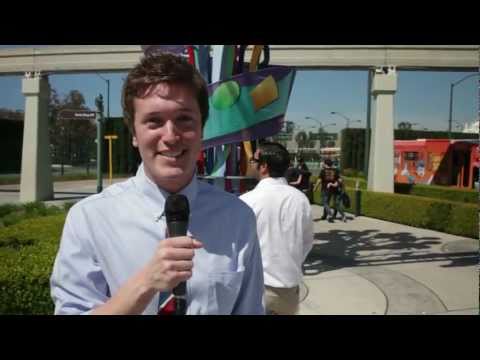
Writer/Producer Sameer Asad Gardezi is behind a trio of videos that are a response to a video entitled “Hate Comes to Orange County” {below}, where protestors and local politicians {Ed Royce [R-40], Gary Miller [R-42] and Villa Park Councilwoman Deborah Pauly} expressed their views about an event at the Yorba Linda Community Center. The event in question was a fundraiser held by the Islamic Circle of North America, an America Muslim relief group, raising money for women’s shelters. The controversy about protest centres on the taunts, including derogatory comments about Muhammad being a pervert, references to wife beating, and the ever popular “go home terrorist”.

Gardezi is using these satirical videos to push back on this divisive speech::
“I can’t say that this was my revolutionary stance to vindicate a group of people…It was the only way I felt I could react to the situation in a way that could satisfy me — if other people felt the same that was the cherry on top.”
He’s using humour, on a YouTube channel titled teapartyyouthla, in the Aladdin videos [see part 1] to take a Disney pop culture icon and turn the extreme rhetoric against it::
“We weren’t explicitly unveiling anything or trying to provide a new truth, just trying to break down something that already exists and use satire as a way to showcase that.”
There’s also a Facebook page with this gem::
“Let’s never forget a kabob is an evil hot dog. Nonetheless, thank you for the post KABOBFest.”
Gardezi noted the use of humour with the blowback from the Alexandra Wallace debacle, where a notorious fameball UCLA student posted an anti-Asian rant to build an audience–further questioning the adage that any PR is good PR. Sameer wanted to tap this satirical vein with his videos. I think this is an interesting addition to the discourse, using hyperbole and projecting context on to a sacred cow of sorts. I also think that this shtick is a whole lot fresher than Stephen Colbert’s, which is getting stale and sharing far too many jokes with The Daily Show.