
Flashback Friday.
Jenn F. found herself faced with a “Lucky Taco” at the end of her meal at a Mexican restaurant. It contained the following wisdom: “Paco says, ‘A bird in hand can be very messy.'”
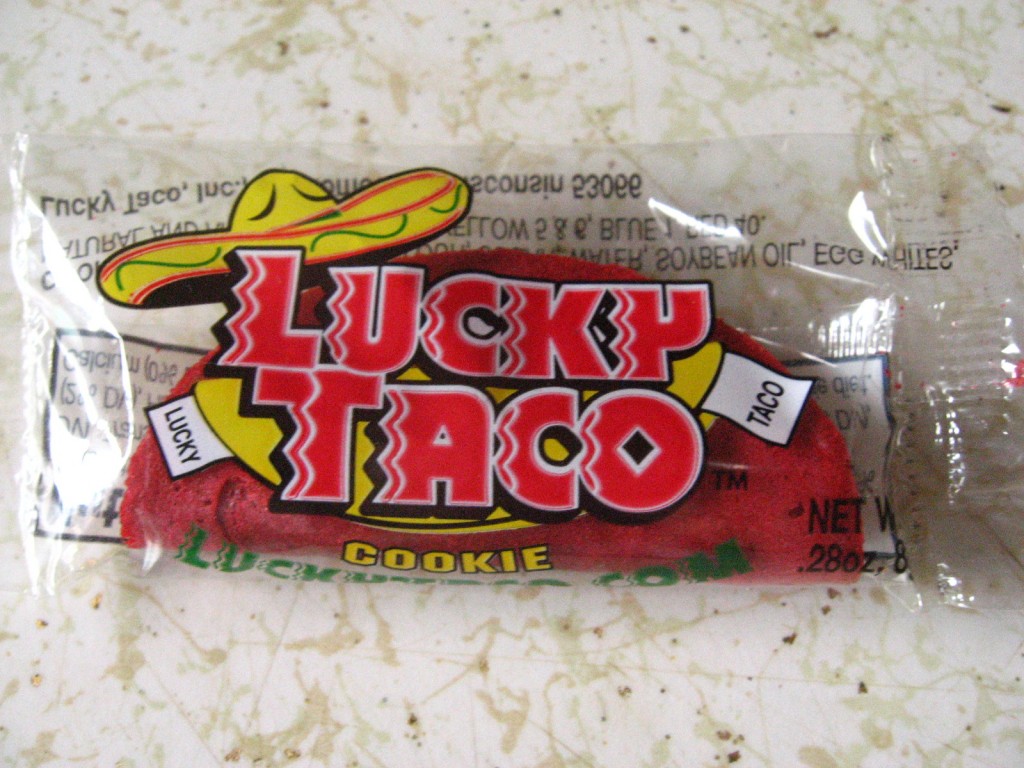
The Lucky Taco is, of course, a “Mexican” version of the Chinese fortune cookie with which most Americans (at least) are familiar. Jenn also sent the link to the company that makes them, the Lucky Cookie Company, and they have two other versions, the Lucky Cannoli and the Lucky Cruncher (meant to be, respectively, version inspired by Italians and the “tribal” [their term, not mine]). Behold:
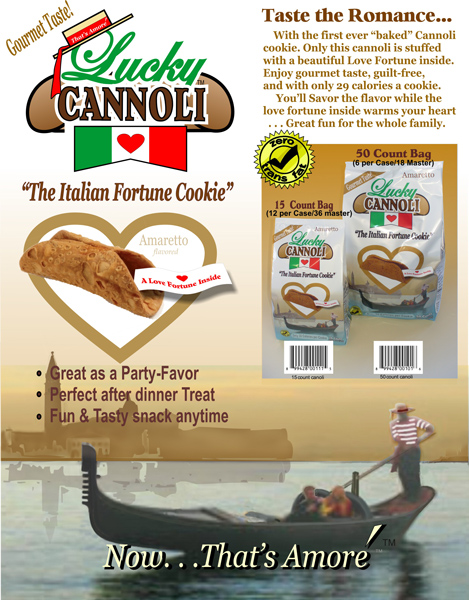
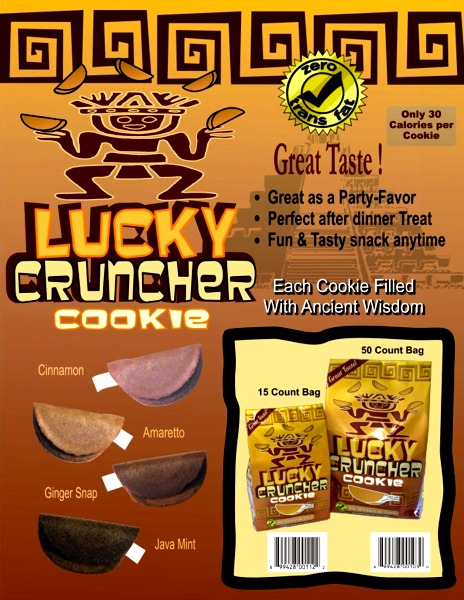
So this company took the Chinese fortune cookie and re-racialized it…. three times over. Is this is an appropriation of Chinese culture?
Nope.
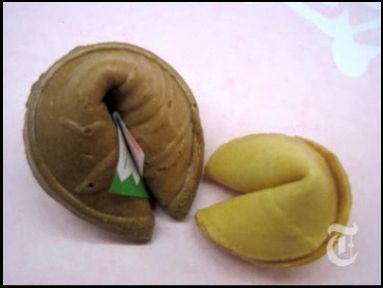
The fortune cookie isn’t Chinese. As best as can be figured out, it’s Japanese. But, in Japan, the fortune cookie wasn’t and isn’t like it is in the U.S. today. It’s larger and made with a darker batter seasoned with miso (instead of vanilla) and sprinkled with sesame seeds. This is a screenshot from a New York Times video about its history:
This drawing is believed to depict Japanese fortune cookie baking in 1878:
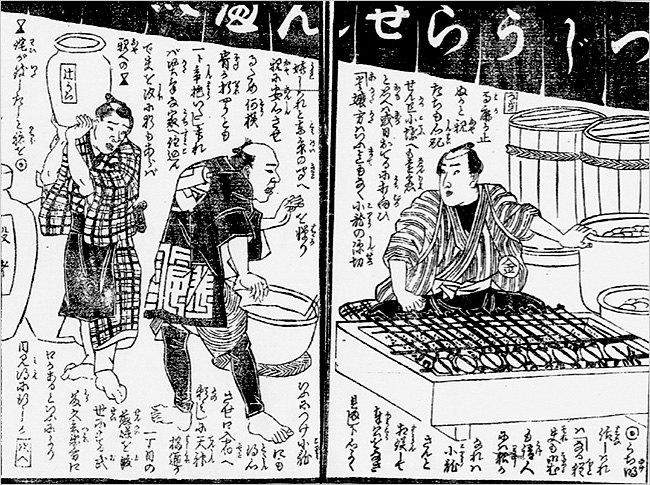
According to the New York Times, it was Japanese-Americans in California who first began making and selling fortune cookies in the ’20s. Many of them, however, served Chinese food. And Chinese-Americans may have picked up on the trend. Then, when the Japanese were forced into internment camps during WWII, Chinese-Americans took over the industry and, voila, the “Chinese fortune cookie.”
So the “Chinese” fortune cookie with which we’re all familiar isn’t Chinese at all and is certainly of American (re-)invention. So, insofar as the Lucky Taco, Lucky Cannoli, and the Lucky Cruncher are offensive — and I’m pretty sure they are — it’ll have to be for some other reason.
Originally posted in 2010.
Lisa Wade, PhD is an Associate Professor at Tulane University. She is the author of American Hookup, a book about college sexual culture; a textbook about gender; and a forthcoming introductory text: Terrible Magnificent Sociology. You can follow her on Twitter and Instagram.
Comments 51
Deaf Indian Muslim Anarchist — February 3, 2010
A lot of "ethnic" food served in American restuarants are actually American or Westernized. The ravioli was invented in St. Louis... and chicken tikka masala, very popular in the UK, was in fact, invented in Manchester, England.
my father went to China for the first time in 2006 and he said that Chinese food over there, is NOTHING like "Chinese" food here in the States.
Groovymarlin — February 3, 2010
I don't think you could really call these cookies an appropriation of anybody's culture. Maybe some type of patent infringement. ;-)
Seriously, I can't see why any of them (including the original "Chinese" version) might be considered offensive. Maybe if the idea of ethnic cuisines being Americanized offends you? I'm open to other explanations.
gypsy_cat — February 3, 2010
Here's a video of people in China trying fortune cookies for the first time. For the most part, they're mystified as to what to do with the slip of paper inside: http://www.youtube.com/watch?v=Bp4IGgQoVQE It's an interesting twist on what we think of as a "Chinese" food item here in the States.
(And, for the record, I never ate better in my life than I did during my three weeks in China. All the ingredients were amazingly fresh and light-years away from the overly-processed, high-sodium, fried and oversauced crap that passes for "Chinese" food in the U.S.)
Jillian C. York — February 3, 2010
I do think that the particular marketing of these cookies is racist and obnoxious, but no more so than any other product that uses that type of imagery, and I don't think I agree on the cultural appropriation angle here. "A cruel parody of an authentic tradition" is a stretch for just the cookie itself.
AMarie — February 3, 2010
As a foodie who refuses to eat not-authentic cuisines, I refuse to eat these things. I can't believe Mexico's rich history, culture and peoples can be summed up in a fortune cookie/taco concoction with Red #5. I'll pass. I'm quite certain, also, that Italy is more than it's cannolis.
The "tribal" ones... I won't even go there. Sort of makes me think of how the Na'vi in Avatar were portrayed- a mish mash of Amazon myths, perceptions of North American indigenous peoples, with a smattering of Pacific Islander "culture" (as if it's a monolith!) and a smidge of "African" animist beliefs. "Ethnic" is interchangeable.
Maria — February 3, 2010
so wait... we have a japanese cookie that has been masqueraded as a chinese cookie being pawned off as italian and mexican cookies?
are they all yummy? then awesome. i've never met someone of japanese descent who complained about them any more than i've ever complained about starbucks making up pseudo-italian words for drinks. food is one of the biggest parts of american culture that we have made our own, and is recognized as such (eg, folks in japan know hot dogs are american, even though they were originally based off german sausage.)
BUT- you know what DOES irritate me though, and the very first thing that struck me before i even thought about the cookie? that the italian cookies are all about love (helloooo stereotype), the mexican ones are blunt and crass, and... well who knows what the "ancient tribal wisdom" is. (that's always bothered me about fortune cookies, too: not all chinese are confucians who go around spouting random wisdom.)
Dustin L — February 3, 2010
I'm not sure this is as much an appropriation of the fortune cookie as it is an appropriation of the taco, the cannoli, and whatever pseudo-Aztec food that's supposed to represent. The packaging is also incredibly problematic, for reasons discussed above.
If you want to talk about cultural appropriation in the American Chinese food industry, I'd say the prime offender is P.F. Chang's, the corporation founded and owned by a white guy that does its best to put locally owned Chinese restaurants out of business.
Tumor — February 3, 2010
Seems to me they're going off something popular in order to make money without much regard for stereotypes....
Cannot imagine the use for the "tribal" cruncher. Sold in tourist traps?
links for 2010-02-04 | Racialicious - the intersection of race and pop culture — February 4, 2010
[...] Re-Racializing the Fortune Cookie | Sociological Images "Jenn F. found herself faced with a 'Lucky Taco' at the end of her meal at a Mexican restaurant. It contained the following text: 'Paco says, ‘A bird in hand can be very messy.’” [...]
Real Perfer not to answer — February 5, 2010
Hi,
I read your post everyday and nearly feel out of my chair when I saw my artwork in your post... as I designed the theluckycookiecompany.com.
Did the site call it 'Chinese' somewhere?
I know the guy who started the company and it all started with a group of people south of the boarded 'having a few' with a traditional Mexican meal... thinking what a great idea it would be to have a after dinner treat that enhanced a traditional Mexican meal. And 'pop' there was the idea. For a few years it was just 'the lucky taco', then everyone who tried them suggested making a variety for different meals.
They called it 'lucky' for the message of luck and good will in the treat.
Should people be offended by a theme reference around the history of the Mexican Fortune Cookie?
Everything in our societies media is based on some form of ethnic, religious or social culture and marketing is a massive tool that treads deeply into offending nearly every facet of these.
Really love that you found me this way, the irony is awesome.
NOTE: I am a little bias and would prefer to leave out my opinion of 'offensive' on this one.
Really perfer not to answer — February 5, 2010
Hi,
I read your post everyday and nearly feel out of my chair when I saw my artwork in your post... as I designed the theluckycookiecompany.com.
Did the site call it 'Chinese' somewhere?
I know the guy who started the company and it all started with a group of people south of the boarded 'having a few' with a traditional Mexican meal... thinking what a great idea it would be to have a after dinner treat that enhanced a traditional Mexican meal. And 'pop' there was the idea. For a few years it was just 'the lucky taco', then everyone who tried them suggested making a variety for different meals.
They called it 'lucky' for the message of luck and good will in the treat.
Should people be offended by a theme reference around the history of the Mexican Fortune Cookie?
Everything in our societies media is based on some form of ethnic, religious or social culture and marketing is a massive tool that treads deeply into offending nearly every facet of these.
Really love that you found me this way, the irony is awesome.
NOTE: I am a little bias and would prefer to leave out my opinion of 'offensive' on this one.
Discriminatory Fortunes « PotSociology — February 5, 2010
[...] Sure, fortune cookies are actually an American creation (just like most Chinese food at restaurants in this country for that matter), but this shit is a whole different variety of bizarre and offensive. Let’s perpetuate us some classic American racial stereotypes! (via Sociological Images) [...]
Ulises Ornelas — February 5, 2010
Let me start of by saying that we are in America. The Great United States this is where evrybody wants to be at. Everybody has the right to produce and make what they want, I believe that this is a topic that has nothing to do with being a stereo type. People are here to make profit and succeed in life. The creation of a Mexican taco fortune cookie is pretty cool actually and so is the chineese. I dont think it should be takingas an insult. Nonetheless it should be taking as a compliment if anything. So stop tripping.
Amy&Lauren — February 5, 2010
This isn't some terrible parody. It's not like it's an attact on any one culture. If anything, it's a compliment on the Chinese culture. Apparently the fortune cookie was a good idea, or they would have faded long ago. I can see WHY people would get offensive, but I myself don't find it offensive. Immitation is the highest form of flattery, right?
Le — February 5, 2010
Oh boy what a revelation (regarding the first comment) since my favorite Indian dish is chicken tikka masala. With that said, I've always known that I've never had true Indian food since it's never been a mind-blowing experience of spices. As far as Chinese food in China goes, it also depends on which part of the country you happen to visit (I'm Chinese, born there too). For example, if you live in Northern California where there is a huge population of Chinese but they're mostly from Hong Kong and the Southeastern Cantonese province of the mainlaind which is where I'm from, and then you go to China but visit some other region, then of course the food will be completely different from what you're used to in America. Either way though, you're right, the food won't be the same. The food is one of my favorite things about visiting China.
Weekend Link Love « The Feminist Texican — February 7, 2010
[...] Sociological Images: Re-Racializing the Fortune Cookie [...]
W — February 12, 2010
Why is it "cruel"?
Why can't American's just be influenced by another culture, and make it part of their own culture? No one has a set culture, and you can take freely from someone elses culture without being a "thief".
We're headed to a mono-multi-culturalism in 100 years or so anyway, so I don't see why appropriation and adoption of other cultures and the mixing of cultures is necessarily a bad thing.
If Americans weren't allowed to adopt anything from other cultures all we'd have would be bear stew and long houses.
What Counts As U.S.A. Ethnic Food? » Sociological Images — June 18, 2010
[...] American foods, much like foods defined as Chinese often aren’t found in China (e.g., the fortune cookie). It’s a good example of the social construction of national foods — that is, a set of [...]
lyssa — July 17, 2010
They say that pizza was invented in Italy, but there were signs of it in China around the same time. That's what I've heard, at least.
Also, I find the Lucky Taco to be pretty funny. I know my dad would find it hilarious.
Cookies and Misconceptions; Supplementary Post – siberianadventuretime — May 30, 2016
[…] (https://thesocietypages.org/socimages/2015/08/21/re-racializing-the-fortune-cookie/) […]
Esme — May 16, 2018
I came to this page after posting a picture of a fortune cookie along with my "fortune¨ that I received at Mongolian BBQ. The fortune read ¨Wednesday is your lucky day" and I posted the picture on Wednesday. A girl form my school commented ¨cultural appropriation¨ and I then feared that I had offended her. Im just wondering if that post was indeed offensive, though I had no intentions of it being so.