Seeking your Recommendations for top 10 Sexual Stories of 2010!

For the second year in a row, we at Sexuality & Society are compiling a list of top ten stories of the year. We are looking for stories from around the globe related to sexuality, culture, health, and politics from 2010. Please email us at sexuality@thesocietypages.org with your recommendations (and if we use them we’ll be sure to credit you as well).

Thanks! Kari Lerum and Shari Dworkin

____

Click here for Sexuality & Society’s top 10 Stories of 2009

Terrorism against Sex Workers: It’s time to Take a Stand

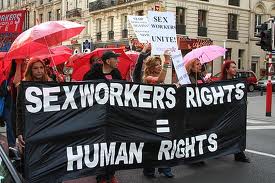
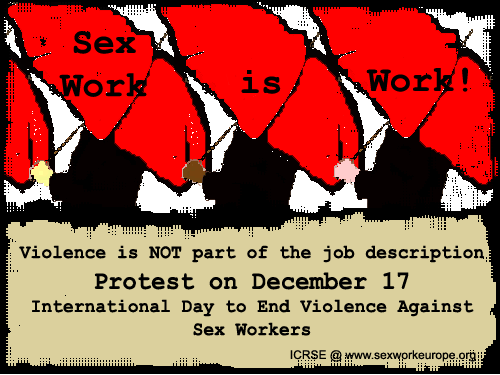
For the past 7 years, December 17th has been recognized by sex workers and their allies as a day to recognize that violence against sex workers is endemic to many societies. It is also a day to commit energy toward making the cultural and working conditions of sex work safer. This is very different from simply telling people not to be sex workers (Imagine criminalizing the mining industry and jailing miners as a way to protect them; imagine how much more dangerous the mining industry would be if there were no health and safety regulations in place). The work of making any cultural and work environment safer for all is to recognize the right of individuals to be agents over their own bodies, to achieve personal livelihood, and to live a life free of terror.

This work, on a larger scale, also entails the recognition of the potential social value of sex work. This does not mean that all sex workers love their job, any more than all miners love theirs; what it does mean is that it is not enough to listen only to the tragic stories (reaffirming the notion that people involved in this work must be punished), while covering ones eyes and ears to other stories (which suggest that the work is not intrinsically dangerous, evil, or otherwise worthy of punishment). As academics, policy makers, and citizens we don’t have to personally become providers or consumers of sex work (or the mining industry) to have compassion. But we must take seriously people’s claims that they, their families, and their communities can benefit economically or socially from their work, and ask what it is that we can do to make their work safer.

This year’s Dec. 17 vigils, at least in the US, will be tinged with a new sense of urgency given the recent discovery of 4 bodies in Long Island, some or all of whom were women sex workers. (See NBC news link here). Targeted violence on this scale is a form of war, of terrorism, of outright hatred for a particular category of people. Can you imagine the media and political response if the bodies were of children, or of politicians, or a particular ethnic or religious group?

Today, and all this week, a number of progressive media outlets are featuring stories about the importance of Dec. 17 anti-violence vigils. Rh Reality Check is featuring a series of stories, one of which I’m reposting in full below:  ”Treating Violence Against Sex Workers as a Hate Crime”  By Rosie Campbell and Shelly Stoop. (Other links also provided at the end of this article).

—————–

Treating Violence Against Sex Workers as a Hate Crime

By Rosie Campbell and Shelly Stoops

December 16, 2010 – 6:40pm

Published under: Women’s Rights | End Violence Against Sex Workers Day 2010 | England | Prostitution | sex work

Rosie Campbell and Shelly Stoops’s blog | Printer-friendly version | Login or register to post comments | ShareThis

This article is part of a series published by RH Reality Check in partnership with the Global Network of Sex Work Projects (NSWP) to commemorate the International Day to End Violence Against Sex Workers, December 17th, 2010. It is excerpted from Research For Sex Work 12, published 17 December 2010 by the NSWP, an organization that upholds the voice of sex workers globally and connects regional networks advocating for the rights of female, male, and transgender sex workers. Download the full journal, with eight more articles about sex work and violence, for free at nswp.org.  See all articles in this series here.

Over the last decade sex work projects, the police and other agencies in Liverpool (United Kingdom) have been addressing violence against sex workers, encouraging reporting and taking crimes committed against sex workers seriously. In recent years Armistead Street, a sex work outreach and support project in Liverpool, has worked with Merseyside Police to continue to build on this legacy. This partnership has led to unprecedented increases in the number of street sex workers reporting crimes committed against them to the police, the number of active investigations of such crimes, and the numbers of people being charged, brought before the courts and convicted of crimes. Key to this success is the practice in Liverpool of treating crimes against sex workers as hate crime.

Liverpool is a city in the North West of England. The majority of women involved in street sex work in the city experience problematic drug use, with high levels (over 90 percent) of heroin and crack cocaine use. They also experience social exclusion including homelessness. Research in the city, and frontline project work, has for over a decade reported high levels of violence against street sex workers, 80 percent of them reporting they have experienced violence in the course of their work. These studies showed there was noticeable under-reporting of incidents to the police. The key reasons identified for not reporting were: sex workers believing they would not be taken seriously or would not be treated with respect by the police; a lack of trust in the police; poor previous experience with law enforcement; fear of revenge from attackers; fear of arrest for soliciting; anxiety about court cases and fear that involvement in sex work would become public.

Groundbreaking Move

Liverpool has had more than its share of tragic loss of lives amongst sex workers in the UK, with eight women who were involved in street sex work murdered since 1990, of which five cases remain unsolved. The most recent murder of Anne Marie Foy in September 2005 led to a debate in the city about how to manage street sex work, resulting in strong support to address violence against street-based sex workers. During the murder investigation, Merseyside Police acknowledged that relationships with agencies and sex workers were ad hoc, that there were difficulties contacting and maintaining contact with vital witnesses, and that there was a continued lack of trust in the police amongst sex workers.

In a groundbreaking move in late 2006 Merseyside Police agreed a policy that all crimes against sex workers be treated as hate crime. They were the first, and at the time of writing, the only force in the UK to do so. In this country, the hate crime model has been developed for dealing primarily with racially motivated and homophobic crime. In policing policy, if a reported crime is classified as a hate crime, it will receive an enhanced response with more attention and police resources being allocated to it. The hate crime approach implicitly recognises that violence against sex workers is shaped by discrimination and attitudes of hostility and prejudice.

In the same period of time, Armistead Street was the first sex work project to secure government funding for an Independent Sexual Violence Advisor (ISVA) located within the project.2 ISVA’s were introduced as part of the national government strategy to address rape and sexual abuse. Armistead Street’s ISVA is a specially trained member of staff who co-ordinates initiatives in the sex work project to address violence and safety, liaises with the police, offers training and awareness-raising sessions to other agencies and last but not least, supports sex workers who have been victims of crime to ensure all their holistic health and social care needs are met. This includes advocacy and intensive support if cases are progressing through the criminal justice system. Key concerns in this regard have been, first, to improve the quality of evidence, and second, to support sex workers in getting their cases to court. The approach used is victim-centered and low-threshold (see below). The ISVA works closely with the Sexual Assault Referral Centre (SARC) which opened in Liverpool in 2008. SARCs are regional centres that provide holistic care – including the collection of forensic evidence – for victims of rape and other forms of sexual violence.

Ugly Mugs

One of the tasks of the ISVA is to coordinate the ‘ugly mugs’ (‘bad date’) scheme. After each incident, sex workers are encouraged to make formal reports to the police as well as fill out an ugly mugs form. An ugly mugs report describes the incident, characteristics of the perpetrator, e.g., clothing, hair, accent, approximate age and height, and descriptions of his car or the location where the incident took place. Not only does the report serve to warn other sex workers of dangerous individuals, it can also be (anonymously) shared with the police to aid investigation and in some cases, support evidence.

In 2007/2008, 65 ugly mugs reports were made to the project, 2 for robbery, 29 for rape and other serious sexual offences, and 16 for assaults. The rest covered a range of offences such as being held against one’s will, verbal abuse and threats of violence. Ugly mugs reporting forms and processes have been developed with advisory input from Merseyside Police. There is a formally agreed process for the processing and analysis of ugly mugs reports by the police. For instance, the information is used in the official investigation of the incident it reports on, as well as shared with police officers in areas where street sex work takes place. Further, the forms are used for monitoring and analyzing incidents related to sex work.

Supporting Cases Getting to Court

Armistead Street has adopted an approach which puts the victim of violence first and tries to eliminate all barriers that make it difficult for him or her to access justice. For instance, early evidence can be taken by outreach staff (including the ISVA), who carry early evidence kits. Further, the ISVA can be present when a police officer interviews a victim, using video. This interview can also take place at the project’s premises as Armistead has its own video interview equipment. Normally, two police officers will conduct such interviews but as the ISVA has had specialist training from the police on interviewing vulnerable witnesses, she can replace one of them. Outreach staff assist victims of violence from clients in filling out an ugly mugs form.

If a sex worker wants to press charges, the ISVA will support him or her in filing an official complaint with the police. If a particular case is going to court, the ISVA will apply early for ‘special measures’, so witnesses can give evidence from behind screens or via a video link to protect their identity and avoid having to face their attacker at court. She will also work with the courts to avoid where possible that the victim has to spend a long time at court waiting to give evidence. If someone is on a methadone prescription, the ISVA can liaise to arrange for people to collect the medicines before court and if someone is homeless, accommodation can be arranged during trials. The work in Liverpool has seen tangible outcomes. The proportion of sex workers giving permission to share their ugly mugs form and full details with the police and willing to make a formal report, increased almost fivefold, from about 20 to 95 percent. Of the eighteen people who have been brought before the court since 2006, fifteen have been found guilty, a conviction rate of 83 percent. Since the Sexual Assault Referral Centre and Rape Support Unit opened, 98 percent of all sex workers experiencing sexual offences have gone to the SARC for full forensic medical examination. No sex workers supported by Armistead have withdrawn their formal statement or refused to proceed. News of success travels fast. Recently, Armistead Street’s example has been followed by other organisations: a further five sex work projects secured funding for an ISVA located in their service in 2010.

Gaining Trust

Building confidence in the police amongst sex workers and gaining trust has been very important in creating these achievements. Strong partnership work with ongoing liaison and communication between Merseyside Police, the sex work project and sex workers has been key. Since 2006, the police have appointed a sex work liaison officer. Linked to this has been a commitment to getting the message out that crimes against sex workers will not be tolerated in the city, hence challenging attitudes that such violence is acceptable. For instance, senior police officers have engaged with the media to communicate the message that sex workers are part of the community and will get the full protection of the law.

The police have also worked at building trust with sex workers providing ‘friendly faces’, routes for reporting, and information and reassurance via leaflets and the media, as well as utilising the intermediary role of the Armistead Street project. Information about cases brought to court and the successful outcomes are shared with sex workers via outreach work and mechanisms such as the ugly mugs newsletter.

All this has seen a real shift in the relationship between street sex workers and the police in terms of violence against sex workers. Many sex workers now expect that the police will take them seriously and many will independently report to the police as well as to the project, through ugly mugs forms. There has been a real shift in balance within wider policing policy of street sex work. The safety of sex workers and collecting evidence are now priorities, and whilst a degree of law enforcement in response to community complaints regarding soliciting does take place, there is continuous contact with Armistead Street. The police now consider the impact of each planned action on the safety of sex workers. Sex workers are also encouraged to work in areas covered by video surveillance for their security.

There is still a long way to go. For example, the police policy applies to sex workers in all sectors of the sex industry but proactive work building trust with indoor sex workers is underdeveloped. Nevertheless, the work in Liverpool shows that real in-roads can be made into enabling reporting, investigating and prosecuting crimes against sex workers if there is commitment and resources are dedicated to do this. Indeed this can happen even within a challenging and problematic framework in which street sex work is criminalised. This highlights that addressing actual violence against sex workers needs to be a strategic and operational priority in all legal settings.

———-

Related links:

Looking for a happy, gay, holiday film?

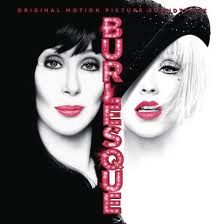
I’m happy to say that I’m now also a contributer to Ms. Magazine‘s blog. My first article there is a review of Burlesque, the musical film starring Cher and Christina Aguilera. The original article can be viewed at this link. I’ve also inserted its text below (without the internal links and Ms. Magazine‘s pretty formatting):

——————————————–

Burlesque Is So Gay. And That’s A Good Thing.

December 2, 2010 by Kari Lerum

When I worked as a strip club waitress, part of my job was to look out for troublemakers: people entering the club with an intention to harm the dancers. OK, it wasn’t officially my job (that was up to the managers and bouncers), but as a feminist, an ally, and also friend to some of the dancers, I felt it was my unquestionable duty. The worst of the troublemakers? Undercover cops–guys who would enjoy a lap dance and then slap their pleasure provider with a ticket for indecency.

Now, more than 10 years later, as a tenured professor, my job has expanded to analyzing sexual-social systems and all forms of sexual policing. This is why I’m interested in not just Burlesque itself, the new musical film starring Cher and Christina Aguilera, but also the film’s sociocultural context, including the chorus of negative reviews.

Even before Burlesque’s Thanksgiving release, reviewers were sharpening their knives, eager for a kill. Not since the mid-90s releases of Showgirls and Striptease–both of which were given Golden Raspberry Awards for the worst in cinema–have reviewers been so eager to tear a movie and its (sexually unapologetic, dancing, woman) protagonist to shreds.

Post-release, most reviewers have followed a standard formula: Compare Burlesque to Showgirls; make fun of Christina Aguilera; declare the film a miserable failure. Below is a sampling:

• The headline for Marshall Fine’s review in Fox News exclaims: ‘Burlesque’ not just Bad, it’s ‘Showgirls’ Bad.’ Fine organizes his review around ridicule of Christina Aguilera:

There’s nary a surprise to be had, except for Aguilera’s apparent misconception that she has acting talent.

• Catherine Shoard’s review in the Guardian concludes “Two divas, one stage – you do the maths,” with the apparent assumption that no stage, or film, is big enough to fit more than ONE larger-than-life female (and unapologetically sexual) protagonist.

• Mary Pols’ review in Time judges Aguilera not against her co-star, but against other women who have played similar roles:

Aguilera, making her dramatic debut, is far from a great actress, but compared to Elizabeth Berkley [Showgirls] or Spears [Crossroads], she is a veritable Nicole Kidman [Moulin Rouge].

(Note that of the three films, only Moulin Rouge, which ends with the death of the prostitute/dancer protagonist, is implied to be “good.”)

• Finally, Michael Phillips of the Chicago Tribune ridicules not just the plot and the acting, but delivers the final cut: “The whole movie amounts to an I-will-survive anthem.” A curious denigration, as Gloria Gaynor’s mega-hit single “I Will Survive” is a recognized anthem for the women’s movement, the gay movement and HIV/AIDS survival.

With these critiques in mind, I took my partner and brother-in-law to see Burlesque on Thanksgiving weekend. Burlesque has a familiar plot for US audiences, full of underdog themes: A sweet, talented small-town protagonist moves to Hollywood to pursue her dreams. She faces initial hardships (can’t get a job as a singer or dancer), but her path is altered when she meets an intriguing character (in this case the character is a place, a magical neo-Burlesque theater). The protagonist meets opposition from the theater’s boss (Cher) and a rival performer, but through her determination and raw talent works her way into a top singing/dancing position.

Our immediate reaction? Pure, easy pleasure. Burlesque is a light, sometimes cheesy, visually gorgeous, sexually tame, feel-good film. A perfect Disneyland-for-Adults distraction for the Holidays. Cher and Aguilera have the kind of voices that make your hair raise, out of not horror but out of delight. Technically, it gets right some elements of both classic burlesque and the neo-burlesque scene, but it’s also a montage of styles borrowed from American Idol, Pussycat Dolls, and Las Vegas showgirls. Worthy of an Oscar? I’ll leave that up to the Academy of Motion Picture Arts and Science–but I won’t be surprised if costume design is in the running.

What then accounts for the cutting reviews of Burlesque and Aguilera? What grand community or artistic standards does this film, or Aguilera, violate? Is there really no place for a fluffy, feel-good, aesthetically pleasing film during the holidays?

Then again, maybe I’m a bad film cop, and Aguilera is just an irredeemable actress, deserving of that ticket for indecency. At least her voice isn’t in question; perhaps her policers would ease up if she simply became the voice of a cartoon character, like the Rapunzel figure in Disney’s new holiday film, Tangled. As it turns out, Burlesque and Tangled have much in common: both were light musical romances released around Thanksgiving, both feature pretty, young, blonde, female protagonists and tall, dark-haired mother figures. Indeed, reviewers like Marshall Fine (who could barely spit out his disdain for Aguilera in Burlesque) seem quite taken by the “tale of the girl in the tower with the long, loooong hair.” According to Fine: “Disney’s new film manages to be romantic, musical, moving–and outstandingly funny. Don’t skip it.”

There is an intriguing similarity between Marshall’s enthusiasm for Tangled and reviews of Burlesque coming from gay or gay-friendly sources. Sara Michelle Fetters from Seattle Gay News writes:

But just because there are no surprises doesn’t mean there isn’t plenty of cheesy cornball fun to be had by watching Burlesque. Aguilera is fairly charming as the star-struck ingénue, while Cher and Tucci (playing the requisite Gay best friend with an answer for everything) could do this sort of thing in their sleep and make it somehow worthwhile. Despite my best efforts to the contrary, I never felt terrible about sitting in my theater seat. Heck, most of the time I was reasonably entertained, going along with the flow even if every fiber of my being told me not to.

Mick LaSalle, writing for SF Gate, is unabashedly enthusiastic about the film:

Burlesque is irresistible from its first minutes, and over time it creates a whole atmosphere, not only onscreen but within the audience. It’s big, perfectly cast and entertaining in every way, but more than that it feels like a generous public event. See it with other people. See it with a crowd.

Much more can be said about the film’s web of inside jokes and gay cultural references and the fact that Cher and director Steve Antin were (at different times) long-time lovers with media powerhouse David Geffen.

But ultimately, here is where Burlesque goes “wrong”: While trashed for being too predictable, it is actually not predictable enough. Unlike most other contemporary Hollywood (fictional) films about sexual, dancing women, our protagonist is a “good girl” who is sexually expressive but suffers no negative consequences. She is not forced to choose between innocence and sensuality, good girl and vamp. She, and everyone else at the club, gets to have it all. The club is not a hotbed of despair, corruption, and exploitation. The tall dark mother figure, a sexy burlesque dancer herself, is not a villain. Rather, as a club owner she is fiercely loyal to her employees; her club is their family. Women employees ultimately stick together, survive and thrive. Gay employees are loved and integral to the club. No one dies.

I have a strong suspicion that it is all of this–more than the soft dramatic tension and cheesy lines–that most mainstream film reviewers really can’t stomach.

World AIDS Day & the First U.S. National HIV/AIDS Strategy

On World AIDS Day (December 1), it is crucial to recognize the progress that has been made concerning prevention, treatment, and care efforts and all of the urgent work that still needs to be done. Worldwide, 33 million people are living with HIV. In the United States alone, 1.1 million people are living with HIV (CDC, 2010). Within the US, 20% of people are not aware that they are living with the virus. In the richest nation in the world, 3 decades into the epidemic, 56,000 people per year are infected, HIV is the leading cause of death for African-American women age 25-34, the epidemic has an alarming impact on communities of color, particularly young MSM of color, and there are vast disparities in access to prevention, treatment, and care (El-Sadr, Mayer, & Adimora, 2010).

Despite the fact that I normally discuss the state of the HIV pandemic globally, I am going to focus my comments on the epidemic in the United States. This is because in July of 2010, President Obama put into place the FIRST National HIV/AIDS Strategy in history of the United States. The goals of the policy (White House, 2010, p. vii) are to:

  1. Reduce the number of people who become infected with HIV,
  2. Increase access to care and health outcomes for people living with HIV; and,
  3. Reduce HIV-related health disparities.

In order to meet goal #1, the policy proposes that the US:

“intensifies HIV prevention efforts in communities where HIV is most heavily concentrated, expand targeted efforts to prevent HIV infection using a combination of effective, evidence-based approaches, and educate all Americans about the threat of HIV and how to prevent it” (p. vii).

In order to meet goal #2 (increasing access to care and improving health outcomes for people living with HIV), the policy calls for: 

“establishing a seamless system to immediately link people to continuous and coordinated quality care when they are diagnosed with HIV, take deliberate steps to increase the number and diversity of available providers of clinical care and related services for people living with HIV, and to support people living with HIV with co-occurring health conditions and those who have challenges meeting their basic needs, such as housing” (p. ix).

Finally, in order to reduce HIV related health disparities, the public and private sector are called upon to:

“reduce HIV-related mortality in communities at high risk for HIV infection, adopt community-level approaches to reduce HIV infection in high-risk communities, and reduce stigma and discrimination against people living with HIV” (p. ix).

The US National HIV/AIDS Strategy can be found here.

Meeting these goals is an enormous task and will require efforts well beyond the federal government, academia, media, health care institutions and practitioners, policy-makers, community mobilization and community based groups to include each and every sector of society. In December of 2010, a special issue of JAIDS was released that assessed the state of the epidemic in the US and made suggestions to ensure that the goals of the National Policy are realized. In it, Chris Collins and Dazon Dixon Diallo praised the National Policy and argue that for prevention efforts to truly succeed, it will be important to advance prevention funding alignment (ensure funding matches epidemic conditions and priorities) and accountability (improve transparency of prevention funding), go to scale with effective prevention efforts in communities at elevated risk, foster synergies between evidence-based prevention and community-based efforts for home-grown and locally developed interventions, and to go “beyond individual behavior change programming by putting a greater emphasis on structural, network, and policy interventions” (Collins & Diallo, 2010, p. S. 148).

Colleagues Ada Adimora and Judith Auerbach agree with this last point in particular, underscoring that “social determinants — the conditions in which people are born, live, work, and age — are critical influences on health and that these determinants, which are shaped by the distribution of money, power, and resources can be influenced in positive ways” (Adimora & Auerbach, 2010, p. S. 132). They detail how social determinants both influence HIV risk and the course of the epidemic and reveal how several structural interventions (such as comprehensive sex education with access to male and female condoms, syringe exchange programs, health care availability, and housing) help to reduce risk behaviors and increase access to care.

Indeed, the National HIV/AIDS policy and its implementers hope to reduce the number of people who become infected with HIV, increase access to care and health outcomes for people living with HIV and reduce HIV-related health disparities. To do so, it will be necessary to support work that intervenes on social and structural determinants of HIV, including poverty reduction, incarceration, homelessness, and food insecurity, along with the numerous other strategies that are discussed and planned as a result of the National policy.

———————————————-

Related links:


References:

  • Adimora, A.A. & Auerbach, J. (2010). Structural interventions for HIV prevention. JAIDS, 55 (S2),  S132-135.
  • Collins, C. & Diallo, D.D. (2010). A prevention response that fits America’s epidemic: Community Perspectives on the status of HIV prevention in the United States. JAIDS, 55 (S2), S148-S150.
  • El-Sadr, W., Mayer, K., Adimora, A.A. (2010). The HIV Epidemic in the United States: A time for action. JAIDS, 55 (S2), S63.

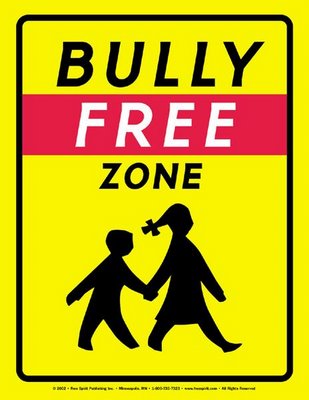
Interested in Bully-Free Zones? (or Not?)

Yesterday (Nov. 17, 2010) I was a guest on “Voices of Diversity,” a weekly community radio show on KBCS. The topic of this week’s show was Bullying in schools. The audio of the show will soon be available on audio archives at KBCS, but in the post below I follow up on the question of whether or not everyone *really* wants to get rid of bullies. …. See below for my elaboration:

————————————–

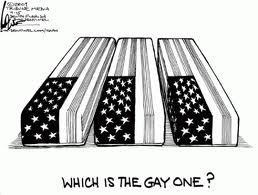
The recent rash of high profile suicides by boys who were bullied for gender and sexual non-conformity has created a wake up call for parents and school administrators in the U.S. To create a broader base of support from heterosexual allies, as well as to reach out to GLBT youth themselves, a number of new educational and activist initiatives have emerged. Dan Savage created the “It Gets Better” video project, directed at GLBT youth in despair over hostile treatment and at risk of killing themselves. The Gay and Lesbian Alliance against Defamation (GLAAD) declared Oct. 20, 2010 Spirit Day to call attention to and memorialize the recent suicides. Secretary of State Hillary Clinton even released her own version of an “It Gets Better” video.

Predictably, given the larger antagonistic climate toward non-heteronormative youth, not all heterosexuals have responded with as much compassion as the current US Secretary of State. Arkansas School Board vice president Clint McCance has made himself the most recent poster child for non-compassion (AKA being a big jerk) after he wrote on his Facebook page a variety of obscenities including:

“Seriously they want me to wear purple because five queers committed suicide. The only way i’m wearin it for them is if they all commit suicide.”

“It pisses me off though that we make special purple fag day for them. I like that fags can’t procreate. I also enjoy the fact that they often give each other AIDS and die.”

And perhaps the most cruel of all (at least for me as a parent):

“I would disown my kids if they were gay. They will not be welcome at my home or in my vicinity. I will absolutely run them off.”

Since Facebook is a semi-public forum, many people outside of McCance’s circle of like-minded friends witnessed his rant. All kinds of people — including people in his own community — started to wonder: Does Clint McCance *really* wish all gay kids would just kill themselves? Even if they were his own children?

After uproarious calls for his resignation (including, unfortunately, similar verbal assaults against McCance and his family), the Arkansas school board vice president agreed to an interview with Anderson Cooper on CNN (who, coincidentally, maintains a private identity but is widely reported to be gay, and whose brother committed suicide at the age of 23). Looking like a kid caught for bad behavior, McCance had little to say but claimed to be remorseful. When pressed by Cooper as to whether or not he would resign (for technical reasons he could not be fired), McCance said, yes he was resigning from the School Board.

Now that McCance is now gone (at least for now) from a school administrative position, has anything changed in his surrounding cultural and institutional system? Human behavior never happens in a vacuum – there is always a surrounding cultural and physical infrastructure that creates messages or opportunities for people to act in cruel or inequitable ways. This is more complicated than thinking about pro-social versus anti-social behavior; about “bad” school board members versus “good” ones.” This is because cruel behavior is sometimes completely in line with the social agenda of larger systems of power.

There seems to be an assumption in mainstream media outlets that “everyone” wants to get rid of bullies. But this is actually not the case, since bullying is, at a very basic level, a technique for ensuring and preserving separate and unequal distinctions between people.

In fact, people and institutions interested in preserving their separate and “superior” distinction — whether this is based on race, religion, sex, and/or sexual orientation — meet anti-bullying legislation (or related events such as “spirit day”) with lukewarm or even hostile responses.

For example, in 2001, Christian Right lobbyists stalled the first attempt to bring anti-bullying legislation to Washington State. In 2010, Clint McCance and others balked at the suggestion of a special day for mourning youth suicide connected to anti-gay bullying. In both cases, the resistance is around deep seated beliefs that boys/men and girls/women must conform to traditional gender roles (with men being “masculine”, powerful, and exclusively attracted to women; and women being “feminine”, submissive to men, and exclusively attracted to men). If they fall out of line, the logic goes, they must be corrected. Ridicule, shaming, social exclusion .. these are all forms of maintaining rigid and unequal distinctions between insiders and outsiders; they are also forms of bullying. Hence the resistance to anti-bullying legislation by some who want to maintain rigid and unequal distinctions.

Why is it that bullying tactics work “better” on some kids than others? Why don’t all queer kids commit suicide in the face of severe public ridicule and social excommunication?

One reason may be that the ones who survive — like Constance McMillen (who was subjected to a dramatic network of lies and harassment by students, teachers, and parents alike) – have access to deep resources, support, and identity outside of their world of bullies. If excluded from the bully group, they don’t feel that their entire world will disappear.

After many months of discrimination, harassment, and being lied to by school administrators (who created a secret prom that she wasn't invited to), Constance McMillen continued to fight with the strong support of her parents and the ACLU. Constance won a law suit and international recognition, including most recently being named one of Glamor Magazine's "Women of the Year."


But sometimes, even for those kids who carry on in the face of bullies– more drastic forms of violent control occurs. This was the case for Matthew Shepard and Lawrence King — both of whom were murdered by other boys who were angry that they were not sufficiently hiding their feminine or “gay” characteristics.

So to sum up: for those of us truly interested in creating bully-free zones, we must directly speak out against not just individual acts of cruelty, but infrastructures which create and reinforce distinct, segregated, and unequal categories between people. This means directly questioning (not just staying silent or “neutral” to) common beliefs about what constitutes a “superior” and “inferior” person and what justifies differential treatment. It is only then that we can start to dismantle the bully. 

Related Sexuality & Society stories:

Recommended References & Resources:

Making Condoms Fashionable

The winning entry for Project Condom Season 2. Designed by University of South Carolina junior Marquis Bias; modeled by USC senior Danielle Watson.


I recently attended the massive American Public Health Association meetings in Denver, where there were a number of scientific sessions on topics related to reproductive and sexual health. One of the more exciting sessions for me was a session on “Sexual Health Issues of Youth,” where Professor Lisa Lindley (Global & Community Health, George Mason University) discussed the philosophy and impact of a creative sex education program called “Project Condom.” This program combines the concept of “Project Runway” with condom couture for the intended impact of promoting safer sex.

Powerpoint slide from Lindley's APHA presentation, borrowed with permission.

“Project Condom” is the creative brainchild of Ryan Wilson, who works in Student Health Services at University of South Carolina. Together with Lindley (who was then a professor at USC) and a team of USC faculty, staff, and students, Wilson has now seen Project Condom through its third season. (In addition to being inspired by Project Runway, Wilson’s team was also extending the work of Adriana Bertini, a designer/activist credited for creating the idea of condom couture.)

Student groups participating in Project Condom are provided with 1,000 condoms in assorted colors. Each group develops a PG-13 theme for their design (e.g. pregnancy prevention, STI/HIV protection, abstinence). The judges (most recently including Santino Rice from Project Runway) rate the designs on 5 criteria: Overall concept and theme, use of condoms or abstinence symbol, creativity, stage presence, and interview justification. To see video footage of Project Condom click here: Project Condom, Season 3

Besides offering a forum for artistic expression, there is evidence that Project Condom is increasing both awareness of sexual health and propensity for using condoms amongst USC students. (Evidence based on surveys of audience members of Project Condom as well as increased volume of free condoms being taken on campus).

Project Condom is now being replicated at George Mason University as well:

We at Sexuality & Society applaud Wilson, Lindley, and the Project Condom team for this promising Sexual Health approach!

Minding the gap between teens’ sexual identity and sexual behavior

In societies with strict rules, sanctions, and moral/institutional hierarchies attached to sexuality, we find gaps between people’s reported sexual identity and what they actually do. Because the stakes are high if people fall from esteemed sexual categories, people in these societies are invested in maintaining at least the perception of sitting on sexual high ground. 

Different societies and organizations vary in their strategies for addressing gaps between identity and behavior. In the U.S. there is an entire media/medical/criminal justice industry built around catching, shaming, treating, and punishing (or at least exposing hypocrisy) for those who fall from their esteemed socio-sexual positions (e.g. Cheating Celebrities, Pedophile Priests, Gay Anti-Gay activists).

A newly released study indicates that from a sexual health perspective it may be more important than ever to acknowledge these known gaps in identity and behavior, especially when it comes to young people. This study, lead by Dr. Preeti Pathela of New York Department of Public Health and Mental Hygiene, found that for sexually active teens, nearly 1 in 10 engage in same-sex sexual activity; an increase over previous studies. (It is not clear whether this is a result of an actual increase in same sex behavior, sexual behavior in general, or whether respondents in this study were just more likely to report their same sex activities).

Regardless of the reasons for the reported increase in same sex sexuality, since teens in this often stigmatized group are also less likely to use condoms and other safe sex precautions, some sort of strategy is needed. From a sexual health perspective, creating space and decreasing stigma for same sex attraction in curriculum and school cultures is a basic first step. Below is a summary of the study:

———-
By Zach Gottlieb

NEW YORK (Reuters Health) – A new study suggests that nearly one in sexually active ten teens have same-sex partners — almost twice as many as previous research found. According to a 2002 study of Massachusetts and Vermont teens, only 5 percent to 6 percent of teens had same-sex partners.

In the new study, 9.3 percent of teens said they did.

“Clearly there’s a high rate of same-sex partners among teens, and we need to recognize any vulnerabilities that may be associated with these behaviors,” said Dr. Susan Blank, an assistant commissioner at the NYC Health Department. Blank, who was not involved with the study, was referring to a lower rate of condom use and unwanted sex among teens with same-sex partners seen in the study.

The new research, published in the journal Pediatrics, looked at more than 17,000 teens in New York City. It found that teens who had sex with only their own gender or with both genders were more likely to engage in risky sexual behaviors, putting themselves at greater risk for sexually transmitted diseases (STDs).

According to the U.S. Centers for Disease Control and Prevention, half of the 18 million new cases of STDs that occur each year happen among people aged 15 to 24.

Such risky behaviors included not using a condom during sex and having forced sex. More than half of boys who engaged in bisexual behavior didn’t use a condom, compared to a fifth of those who engaged exclusively in heterosexual behavior. The difference was not quite as large for girls who engaged in bisexual behavior and those who engaged exclusively in heterosexual behavior, but it was similar: About half of the former didn’t use a condom, compared to 30 percent of the latter.

About a third of those teens who engaged in bisexual behavior had forced sex at some point in their lives, much higher than the 6 percent of those boys who engaged exclusively in heterosexual behavior and the 16 percent of the similar group of girls.

Elizabeth Saewyc, a researcher at the University of British Columbia, told Reuters Health that these teens may engage in riskier behavior because sex education programs don’t always acknowledge gay, lesbian, and bisexual relationships.

“Some teens I’ve seen tell me that they completely check out of sex ed because they feel what they were learning didn’t apply to them,” said Saewyc, who was not involved in the new study.

She suggested that educators need to acknowledge gay, lesbian, and bisexual relationships more often in sex education curriculums so that teens are more likely to listen and will feel more comfortable discussing any issues.

Though the authors of the new study report that the rate of same-sex partners is higher than previous studies, Saewyc pointed that this rate is actually similar to what she has seen in her own work and other studies.

In the 2008 British Columbia Adolescent Health Survey, for teens who were sexually active, 8 percent of males and 10 percent of females reported having had a same-sex partner. In a study looking at the 2001 Minnesota Student Survey, 9.4 percent of teens reported having had partners of the same or both sexes.

Dr. Preeti Pathela, lead author of the new study, said the results may have been different this time around because some states do not measure same-sex encounters. Still, Pathela said, it’s clear that some teens are more vulnerable to risky behavior and STDs than others. In discussing sexual relationships and potential risks, she said it is important that parents, educators, and researchers focus on behaviors and not just on sexual identity.

“How teens identify themselves doesn’t always correlate with actual behaviors,” said Pathela, a research scientist in the New York Department of Public Health and Mental Hygiene. “Behavior is a better measure of what’s actually happening because teens are changing rapidly.”

SOURCES: http://link.reuters.com/gas77m Pediatrics, October 25,2010.

http://www.nlm.nih.gov/medlineplus/news/fullstory_104931.html

Sexual Health Survey makes Splash (without any Back-Splash)

Two weeks ago, Indiana University researchers at the Center for Sexual Health Promotion debuted the results of their mammoth National Survey of Sexual Health and Behavior. The study, released Oct. 4, 2010 in the Journal of Sexual Medicine, reported that adults in the U.S. have substantial variety in their sexual lives and that American teens are far more likely than adults to use condoms. 

As a sexuality researcher I was (and am) impressed by the depth and breadth of the study as well as the vast amount of media coverage it received. News headlines around the globe proclaimed that people in the US are getting “friskier,” and “branching out sexually.” The Colbort Report and Saturday Night Live both mentioned the report in friendly comedic skits.

(By the way, since Kinsey’s studies in the mid-twentieth century we’ve known about enormous sexual variety in the U.S.  Without systematic historical data it’s unclear whether or not all Americans are actually getting “friskier,” but this new study does a fantastic job of systematically documenting what people across many generations are doing today).

My main surprise around this study? The virtual non-response by conservative religious bloggers and organizations, who are usually quick to offer their critique on cultural trends which indicate approval of (or even a neutral stance on) sexuality outside of adult heteronormative marriage.

This study certainly indicates such a cultural trend, both in its survey design and in its results. Below is a summary of findings, borrowed from the National Survey of Sexual Health and Behavior’s website:

“Many surveys of adolescent sexual behavior create an impression that adolescents are becoming sexually active at younger ages, and that most teens are sexually active,” said Dr. Fortenberry (one of the study’s authors). “Our data show that partnered sexual behaviors are important but by no means pervasive aspects of adolescents’ lives. In fact, many contemporary adolescents are being responsible by abstaining or by using condoms when having sex.”

The graph below illustrates the striking inverse linear correlation between age and condom use (contradicting common patronizing assumptions about “our youth” being sexually irresponsible):

Condom Graph

The following bullet points are also taken from the study’s website: 

  • There is enormous variability in the sexual repertoires of U.S. adults, with more than 40 combinations of sexual activity described at adults’ most recent sexual event.
  • Many older adults continue to have active pleasurable sex lives, reporting a range of different behaviors and partner types, however adults over the age of 40 have the lowest rates of condom use. Although these individuals may not be as concerned about pregnancy, this suggests the need to enhance education efforts for older individuals regarding STI risks and prevention.
  • About 85% of men report that their partner had an orgasm at the most recent sexual event; this compares to the 64% of women who report having had an orgasm at their most recent sexual event. (A difference that is too large to be accounted for by some of the men having had male partners at their most recent event.)
  • Men are more likely to orgasm when sex includes vaginal intercourse; women are more likely to orgasm when they engage in a variety of sex acts and when oral sex or vaginal intercourse is included.
  • While about 7% of adult women and 8% of men identify as gay, lesbian or bisexual, the proportion of individuals in the U.S. who have had same-gender sexual interactions at some point in their lives is higher.
  • At any given point in time, most U.S. adolescents are not engaging in partnered sexual behavior. While 40% of 17 year-old males reported vaginal intercourse in the past year, only 27% reported the same in the past 90 days.
  • Adults using a condom for intercourse were just as likely to rate the sexual extent positively in terms of arousal, pleasure and orgasm than when having intercourse without one.

These findings provide important information for many, including parents, partners, and sexual health workers. As a way to avoid erroneous advice and policy it’s important for all of us to update our assumptions about who does what sexually.

But why the lack of moral uproar? Perhaps this silence is the true sign of a cultural shift — a striking contrast to the conservative backlash to the Kinsey reports. Then again, the scientific magnitude of this study does make it relatively impenetrable — just like a good condom when used correctly.

—————

Also recommended (for a brief overview of the Kinsey studies, an important historical precursor)Jim Burroway. Jan. 3, 2008. “According to the Kinsey Reports: A Noisy revolution in social science and popular culture.” Box Turtle Bulletin. 

Compromising Positions: Reflections on the Violence Against Women Act

Sexuality & Society welcomes this guest post from Karen Rosenberg, who holds a Ph.D. in Women Studies and directs the Writing Center at the University of Washington Bothell.

________________________________

It has been more than 15 years since The Violence Against Women Act (VAWA) was passed and signed into law by President Bill Clinton. Since becoming law on Sept. 13, 1994, VAWA has provided billions of dollars to bolster the criminal legal response to violence against women, provide services for domestic violence and sexual assault victims, and increase protections for battered immigrant women. 

I got into anti-violence work in VAWA’s infancy and continue to wrestle with the questions that brought me to the movement in the first place. These questions include: Why is there so much violence in intimate relationships? What kinds of activism are most effective for reducing this violence? What role should the state play in regulating (reducing violence in) romantic relationships? What role should the criminal legal system play? What role should our communities play?

Working as a legal advocate in a mainstream anti-domestic violence program in the mid-1990s, I saw VAWA as unquestionably good. Finally, there was federal recognition that violence against women is pandemic, and serious, and worthy of public attention. Federal dollars–billions of them—were going to every corner of the country.  

I worked on several projects funded with VAWA dollars. I collaborated with cops and prosecutors to design trainings and improve the criminal legal response to domestic violence. I began to see fewer cops saying “we don’t get involved in domestics,” or telling violent husbands to “take a walk around the block to ‘cool off.’” I helped women navigate the legal system and advocate for their interests and the interests of their children. I brought the concerns of battered women to policymakers. And every few years, when VAWA came up for re-authorization, I contacted my senators and urged them to continue funding VAWA. I saw these changes in the criminal justice and legal systems as the unquestionably sweet fruits of feminist activist labor.

It wasn’t until I interviewed feminist activists in the course of my dissertation research on responses to violence against women in Seattle, Washington and Vancouver, British Columbia, that I realized that the larger social justice picture was quite a bit more complicated. One activist I interviewed had a particularly powerful critique of VAWA:

“…At first we’re like VAWA has both good things and bad things.  But then I really understood the bad things about VAWA and understood that it was part of…this big, gigantic, monstrous crime bill and inside of this crime bill was where we got…the bullshit around three strikes and mandatory minimums and things that were devastating to our communities.  So if you ask me now whether or not we should have supported VAWA given the money that came to programs and given the general attention that was put on violence against women, both of which are good, I say ‘no.’ (Seattle feminist activist)

Soon after transcribing these words, I began to do some homework. I learned that VAWA, indeed, was part of a massive crime bill. Though then-Senator Joseph Biden (D-Del.) initially introduced VAWA as a stand-alone bill in 1990, it did not command the necessary support to pass. After 4 years of lobbying and revising the legislation, Congress folded it into a comprehensive crime bill. As legal scholar Rachelle Brooks explains, embedding VAWA into a comprehensive crime bill “…placed many feminists in the awkward position of mobilizing around a measure with which they did not agree.” She goes on to say that:

“…the symbolic act of consolidating VAWA in the Crime Bill means that the legislative system grouped domestic violence with other violent crimes and has framed it as a criminal problem.  By associating domestic violence against women with other criminal acts the state can ignore the many other roots of this violence” (Brooks 1997: 79).

Indeed, a look at the budget for the initial VAWA legislation reflects this commitment to the law and order response: over half of the funding—almost one billion dollars—was allocated to criminal legal system remedies. This was a significant infusion of money into criminal legal organizations and contributes to the perception in the US that cops and courts are intimately involved with and the primary responders to domestic violence. The budget also gave significant funding to social service remedies, most notably battered women’s shelters. However, even this funding helped bring the CLS into women’s lives and communities. Much of the VAWA funding required women’s anti-violence organizations to work collaboratively with CLS agencies (such as many of the projects I have worked on).

Another problematic aspect of feminist support for VAWA—which has received even less attention than the problems with the de facto support of a far reaching crime bill—is the removal of the Racial Justice Act from the final version of VAWA. The proposed legislation would have given inmates of color additional avenues to appeal death sentences. Feminist acquiescence to the removal of the Racial Justice Act led to the all-too-familiar feminist prioritization of gender over race. As Brooks comments, by supporting the final version of VAWA embedded in the crime bill “…feminists implicitly endorsed both the removal of the Racial Justice Act…” as well as the racism in the CLS (Brooks 1997: 80).

Where does this leave us now, nearly 16 years after the initial passage of VAWA? While I am acutely aware of the limits of advocacy within the criminal legal system, I do think it makes a difference that the key players in the criminal legal system receive training and tools to intervene in cases of intimate partner violence. As a result I do not regret my support for VAWA.  I doubt that so much attention, and so many resources, could have been dedicated to address violence against women in the 1990s outside of a law and order frame. 

However, as we approach the 16th year anniversary of VAWA, I believe that activists should continue to rethink violence against women outside of a law and order frame, and make connections between interpersonal violence and other forms of violence (the 2001 Incite!-Critical Resistance statement is a powerful expression of the connections between interpersonal violence and state-sponsored violence). I am inspired by the work of local activist groups exploring community-based responses to violence against women that deemphasize the role of the CLS. This work has included, for example, organizing groups of friends who share information about what’s going on in their intimate relationships to counteract the isolation that often accompanies abuse and creating community dialogue about the impact of specific acts of abuse. Here in Seattle, two groups at the forefront of this work are Communities Against Rape and Abuse and the Northwest Network of Bi, Trans, Lesbian and Gay Survivors of Abuse.

VAWA was born of compromise and the tensions that were present at its inception—the focus on gender at the expense of race, the over-reliance on the CLS—are still very much with us. At the same time, the sustained attention and resources directed toward the problem of violence against women has been genuinely helpful in many ways. The critiques of VAWA that activists and academics have developed over the life of VAWA move us powerfully ahead – pointing us toward the importance of community involvement and the dangers of relying too heavily on cops and courts to change a culture that fosters violence against women.

———————————————————-

Karen Rosenberg directs the Writing Center at the University of Washington Bothell and has been involved in anti-violence against women organizing for over 15 years. She earned her doctorate in Women Studies from the University of Washington and her research explores the contradictions inherent in using the criminal legal system to regulate intimate relationships.

Referenced and recommended sources:

  • Brooks, R. (1997).  “Feminists negotiate the legislative branch: the Violence Against Women Act.”  In C.R. Daniels & R. Brooks, (Eds). Feminists negotiate the state: The politics of domestic violence (65-82). Lanham: University Press of America.
  • Incite! Women of Color Against Violence. (2006). Color of violence: The Incite! anthology. Cambridge, Mass: South End Press.

Embracing Contradictions: Why Gay Catholics and Religious Academics need leaders like O’Brien now more than ever

Chapel of St. Ignatius, Seattle University. The design of this chapel is based on the metaphor of "A Gathering of Different Lights," which "describes Seattle University's mission" as well as "St. Ignatius' vision of the spiritual life as comprising many interior lights and darknesses, which he called consolations and desolations." (SU chapel website).

It has been a Wild-kind of month for faculty, staff, and students at Marquette University and Seattle University. After President Wild of Marquette University tore up a signed job contract with a woman who would be their first “out” Lesbian administrator (Jodi O’Brien, of Seattle University) many faculty, staff, and students on both MU and SU campuses have been left in turmoil.

Although Marquette has managed to “resolve” this conflict with a negotiated settlement, President Wild’s actions call into question a number of basic academic assumptions including: 1) the honesty of Marquette University’s statements on commitments to diversity and anti-discrimination, 2) the assumption that GLBTQ people are welcome community members within Jesuit institutions (unlike conservative Catholic and Evangelical Protestant institutions, Jesuits are known for their tolerance, encouragement of fearless intellectual curiosity, and commitment to social justice), and 3) the assumption that University faculty have the rights and responsibilities of sharing the governance of their institution.

Milwaukee Archbishop Jerome Listecki, a key player in convincing Marquette President Wild to tear up his job contract with Jodi O'Brien

The recommendation to hire Dr. O’Brien as Dean of Arts & Sciences at Marquette came after two years of committee searches, interviews, and deliberations. The President and Provost of Marquette also met with committee members and all job candidates, and signed on with the decision to offer the job to O’Brien. This extensive vetting process was obliterated after two local conservative Catholic leaders (neither of them faculty or staff members at Marquette) caught wind of O’Brien’s hire. Somehow, unbelievably, these two men (Milwaukee Archbishop Jerome Listecki and Father Paul Hartmann, the archdiocese’s judicial vicar) were able to trump the entire academic administrative vetting process at MU. The search committee and was abruptly informed that their input — as well as O’Brien’s administrative leadership skills — was neither needed nor welcome.

Despite the strong suspicion among many that this is a clear case of discrimination based on sexual orientation, President Wild has maintained throughout the aftermath of his rescinded offer that this is simply about a mismatch between O’Brien’s scholarship and Marquette’s mission. Wild has yet to adequately specify how and where O’Brien’s scholarship is anti-Marquette, anti-Jesuit, or anti-Catholic, but Father Paul Hartmann (one of the two local church officials who complained) explains that O’Brien investigates a particular “subject matter” that may create “dichotomies,” “tensions,” and “contradictions.” According to the Milwaukee Sentinel (May 12, 2010):

“Hartmann sent a March 3 letter  to the chair of the search committee that said the gender studies professor “pursues subject matter that seems destined to actually create dichotomies and cause tensions (if not contradictions) with Marquette’s Catholic mission and identity.”

As long-time colleague, mentee, and friend of Jodi O’Brien, and as a former lecturer at Seattle University (a place I still hold near and dear to my heart) I am very familiar with O’Brien’s work, as well as her commitment to Jesuit education. Ironically, what the conservative church leaders fear is actually what makes O’Brien a successful Jesuit scholar and administrator. Namely, O’Brien’s ability to embrace (rather than denounce or deny) contradictions and tensions– may in fact be a pinnacle Jesuit model of intellectual and spiritually complexity.

In her 2009 Presidential address to the Pacific Sociological Association, Professor Jodi O’Brien describes the personal growth that comes with wrestling religious and spiritual contradictions:

My research with queer Christians led me to understand and define the social self as a process of wrestling contradiction. We are in a constant state of becoming. This “becoming” is shaped through processes of interaction and revealed through the internal dialogues in which we observe, feel, comment on, and try to make sense of our own complexity. The process of self-understanding is a dialectical process of definition, a continual interplay between personal experiences and attempts to fit experience into existing conceptual categories and representations. All of us struggle to make sense of ourselves, to find ways of self-expression, and to be heard and understood. Our sense of self undergoes constant revision as it encounters friction, contradiction, and conflict along the various boundaries that constitute meaning (O’Brien 2009, Pp. 15–16).

She continues to describe how the intellectual process of finding connections in the face of conflict provides an opportunity for personal as well as professional transformation:

Isn’t this what we’re doing as sociologists when we strive to practice scholarship that matters: finding connections, revealing patterns, striving to bridge seemingly contradictory perspectives by offering deeper, richer frameworks of understanding? My suggestion is that when we experience fully the contradiction, conflict, and pain of engaging with our own teaching and research, we can’t help but be transformed  …. This produces an epistemology of contradiction that, together with the principles of the “sociological imagination,” enables us to navigate through complex personal and professional terrain in ways that both resonate and inspire (O’Brien 2009, P. 20 )

Rather than embracing the powerful teaching moments of such everday contradictions, Marquette University officials have chosen to rescind them, putting themselves closer to the edges of rigidity, fear, and fundamentalism, rather than intellectual curiosity, creativity and, I would argue, spiritual vitality.

I will leave it to Jodi O’Brien to describe the nuances and evolution of her thinking throughout her illustrious scholarly career. However, for those interested in reading more about how stereotyping and prejudice works, O’Brien’s own social psychology textbook, The Production of Reality is a great resource.  In this text as well as in the dozens of lectures she’s given to churches and universities around the country, including other Jesuit Catholic universities, O’Brien teaches us about  the subject matter of  ”permissible prejudice” – in other words, prejudice that is deemed ok if those in positions of authority justify it as such through their actions or non-actions.

And it is this critical perspective on prejudice and power that is the deeper “subject matter” at hand. This is the kind of subject matter that creates critical reflection on all forms of power relations, including but certainly not limited to that pertaining to religious institutions. This is precisely why those invested in maintaining an uncritical stance on particular power relations within the larger Marquette community needed her to leave; this is also precisely why Gay Catholics and religious academics need leaders like O’Brien now more than ever.

———————————————–

Referenced and recommended sources:

O’Brien, J. (2009) “Sociology as an epistemology of contradiction.” Sociological Perspectives 52, 1, 5-22.

O’Brien, J. (2007).”Queer Tensions: The Cultural Politics of Belonging and exclusion in same gender marriage debates.”” Pp. 125-149 in Interdisciplinary Readings on Sex and Sexuality. Amsterdam: Rodopi.

O’Brien, J. (2005).  The Production of Reality: Essays and Readings in Social Interaction, 4th Edition. Newbury Park, CA: Pine Forge Press (Sage).

O’Brien, J.  (2002).  “Heterosexism and Homophobia.” Article length entry for the International Encyclopedia of Social and Behavioral Sciences.  Oxford: Elsevier Publishing.

Jaschick, S. “Stained Glass Ceiling.” Inside Higher Education. May 11, 2010.

While this case underscores timeless clashes between religion and sexuality—particularly in the form of gay and lesbian “permissible prejudice” within religious institutions — some argue that this discrimination is rising in a backlash movement against the fight for equal rights by gays and lesbians. For example, On March 6, 2010, the Washington Post reported that Virginia Attorney General Ken Cuccinelli, a conservative Republican, advised Virginia’s public colleges and universities to revoke policies protecting employees on the basis of sexual orientation.

See also the National Gay and Lesbian Task Force statement on ending job discrimination.


Related posts on Sexuality & Society:

http://thesocietypages.org/sexuality/2010/05/12/in-annuling-contract-with-obrien-marquette-can-assume-its-missionary-position/

http://thesocietypages.org/sexuality/2010/05/10/marquette-rescinds-job-offer-to-sociologist-and-sexuality-scholar-jodi-obrien/