For the 5th year in a row, Sexuality & Society brings you its (highly subjective and mostly North American/U.S.-centered) list of top ten sexual stories of the year!
One of the satisfying aspects of compiling these stories each year is noticing their connections to past stories. Collectively, these “sexual” stories are critical to the societal narratives that are told and retold and sometimes sold to make sense of our lives. Below are some of the stories which struck us as worth retelling and analyzing…..Check out our lists for 2009, 2010, 2011, and 2012!
Also: We maintain an active Facebook Page — please find us there as well!
———–
10. Iowa court says it’s ok to fire women who are “irresistible”
This story is so ludicrous that it is difficult to believe that it is not out of The Onion. Nonetheless, it relies on 19th Century Victorian notions of femininity whereby women were viewed as responsible for controlling men’s sexual desires, and thus ensuing calls for modesty were viewed as minimizing the possibility of sexual attention from men. See below for a 2013 version of this Victorian mentality:
Melissa Nelson was fired because her boss found himself unable to restrain himself around her “irresistible” charms. An all male jury and judge agreed that the scourge of irrisistible women must be stopped.
(CNN) — Melissa Nelson lost her bid Friday to have Iowa’s top court reverse its ruling that held the former dental assistant did not suffer gender bias when she was fired for being “irresistible.”
The Iowa Supreme Court stood by its December finding that Dr. James Knight was legally able to fire the assistant after his wife became concerned about the relationship between the two.
Knight’s conduct was not sex discrimination in violation of the Iowa Civil Rights Act, the court said.
The all-male court had previously ruled against Nelson, finding that employees who are seen as an “irresistible attraction” by their employers can be fired in such circumstances.
9. Susan B. Komen rejects money donated by exotic dancers
The Pink foundation has made our list for a second year in a row …. (remember last year, when they cut funding to Planned Parenthood due to anti-abortion politics within the foundation? But then they changed their mind?). This year they kept themselves under the public radar but still received some press when they refused money from a fundraiser held by exotic dancers. Their rationale? “Southern Nevada’s Executive Director Stephanie Kirby said it’s Susan G. Komen’s national policy to not partner with certain businesses, especially ones that may sexualize women.”
“It just doesn’t fall in line with who we are as an organization. There are too many survivors out there who no longer have the body part that is being displayed at a lot of these shows,” Kirby said.”
One of many T-shirts available for purchase at the Save the Ta-Tas Foundation.
Meanwhile, the Komen Foundation also appears to be consistent in their distancing from sexualized breasts as they have no official partnership with the Save the Ta-Ta’s Foundation — a breast cancer research and for-profit organization which sells T-shirts like “Save a life; grope your wife.”
8. Teen girls criminalized for their consensual sexual relationships
Kailyn Hunt (18) was prosecuted and eventually jailed for her relationship with a 14 year old girl.
In the state of Florida the age of sexual consent is 16. The problem is that the age of sexual exploration is much earlier than this. Given increased attention to the issue of child sexual abuse over the past couple of decades (a good thing), there have been many cases of older teenage partners now being defined as sex offenders, even if the relationship with consensual and non-violent (a bad thing). This is what appears to have happened to Kaitlyn Hunt, who was 18 when she entered into a sexual relationship with a girl four years her junior. The younger girl’s parents objected, and found that they could enforce their objections by law. Given the threat of going to prison and being a registered sex offender, Hunt chose a plea bargain, plead guilty to all charges and is now in jail. (Source: http://www.cnn.com/2013/10/02/justice/florida-gay-teen-kaitlyn-hunt-case/)
7. Russia instigates state-sponsored terrorism against sexual, ethnic, and artistic diversity (e.g.: gay people, labor migrants, and the punk rock band Pussy Riot).
Since 2011, thousand of people have gathered for Anti-Putin demonstrations such as this one in Moscow. See: http://en.wikipedia.org/wiki/2011–13_Russian_protests
In June of 2013, Putin signed into law an “anti-gay propaganda bill” which sought to punish individuals for “promoting” homosexuality. The law imposes fines for those members of society who “disseminate information at minors that are directed at forming nontraditional sexual setups” or which cause “distorted understandings” that gay and heterosexual relationships are “equivalent.” (see http://www.huffingtonpost.com/huff-wires/20130630/eu-russia-gay-rights/)
AmericaBlog reported on these events by stating that “Russian President Vladimir Putin signed into law … one of the most draconian anti-gay laws on the planet.” (right up there with Uganda: see # 6 below).
“The new law, coming only seven months before Russia is to host the Winter Olympics in Sochi, would ban anything considered pro-gay, from gay-affirmative speech, to gays holding hands in public, to even wearing rainbow suspenders. The law also contains a provision permitting the government to arrest and detain gay, or pro-gay, foreigners for up to 14 days before they would then be expelled from the country. That provision ought to send chills to anyone gay, lesbians, bisexual or transgender who is planning to attend or participate in the Winter Olympics.” (see: http://americablog.com/2013/07/russia-olympics-sochi-gay-law-putin.html)
The Russian media is also under fire by Putin: One Russian news media outlet is now under investigation for reporting on a gay teacher who was recently fired for being gay (he was said to teach that gay relationships are equivalent to heterosexual relationships). The news coverage did not report negatively (enough) about the gay teacher. (see http://www.advocate.com/news/world-news/2013/11/14/russian-newspaper-accused-violating-gay-propaganda-law)
While the Putin regime is also instigating crackdowns on ethnic minority labor migrants in Moscow, there is an increased movement to oppose Putin’s politics both inside and outside of Russia. The recently released members of the Punk band, Pussy Riot — imprisoned for two years as punishment for their anti-Putin demonstration in an Orthodox Russian Church — have promised to be part of this ongoing movement for greater sexual and social justice in Russia. See: http://www.ft.com/cms/s/0/927f4516-6f0c-11e3-bc9e-00144feabdc0.html#axzz2pBljprat
6. U.S. preacher behind Uganda “kill the gays” efforts will be tried for crimes against humanity
Since 2009 we have been following the story about the connection between US conservative evangelical preachers and the push by some lawmakers in Uganda for strident and violent anti-gay laws. See our first post on this here:
Scott Lively, a US based anti-gay evangelical pastor who went to Uganda to preach his hatred, is now being tried for crimes against humanity.
Despite widespread global opposition, a version of this bill passed on Dec. 20, 2013. However, the story continues to evolve with now Ugandan GLBT activists pushing for accountability for the U.S. religious leaders who stirred up this mess. In what is being called a “landmark decision” .. “a federal US judge (has) ruled that the case filed by a Ugandan LGBT advocacy group against American anti-gay evangelist Scott Lively, for his collaboration with religious and government officials in Uganda that lead to the introduction of the African nation’s “Kill the Gays” bill, will be allowed to proceed.”
“As reported in Gay Star News, Michael Ponsor, the US District Judge in Massachusetts, said “Widespread, systematic persecution of LGBTI people constitutes a crime against humanity that unquestionably violates international norms.” This marks the first ruling by a federal U.S. judge calling the persecution of LGBT persons a crime against humanity, possibly setting a precedent for the human rights of sexual minorities will be protected under international law.”
—
“The case against Lively stems from the evangelist’s 2009 lecture tour of Uganda, the theme of which according to its Ugandan organizer, was “the gay agenda – and the threat homosexuals posed to Bible-based values and the traditional African family.”
A 2010 article published in , The New York Times, wrote about on one of Lively’s speaking engagements in Uganda.”[T]housands of Ugandans, including police officers, teachers and national politicians,” reportedly attended the conference. Lively and his colleagues “discussed how to make gay people straight, how gay men often sodomized teenage boys and how ’the gay movement is an evil institution’ whose goal is ’to defeat the marriage-based society and replace it with a culture of sexual promiscuity.’” Lively wrote days later that “someone had likened their campaign to ’a nuclear bomb against the gay agenda in Uganda.’” (Source: http://www.edgeonthenet.com/?148277)
5. Regnerus’ anti-gay “study” condemned by the American Sociological Association
The past year showed us not just that U.S. based anti-gay pastors have influenced the laws of other countries (see #4 above), but that flawed empirical studies conducted by credentialed researchers can also inflict malicious impacts. The most striking example of this can be seen with the case of Mark Regnerus, who has a Ph.D. in sociology and is an Associate Professor at University of Texas, Austin. In the words of John Becker from The Huffington Post:
“The study was widelydiscredited for its flawed methodology, its wildly inaccurate conclusions and its alleged partiality. Nonetheless, it has been breathlessly touted by the anti-gay right as evidence justifying their opposition to equal marriage rights for same-sex couples. Many of the Supreme Court briefs filed by equality opponents rely on the Regnerus study, but the American Sociological Association — Regnerus’ own professional organization — has just demolished those arguments.”
Indeed, given its serious flaws combined with the intent by anti-gay activists to use it to justify anti-gay discrimination, leaders of the American Sociological Association have roundly condemned Regnerus’ study, including but not limited to the 42 page Supreme Court brief in support of overturning the Defense of Marriage Act (DOMA).
Fortunately, law makers in the U.S. are also listening to the reasoning of the ASA as well as human rights activists to nip in the bud any ongoing legal influence of the Regnerus study. On November 12, 2013, we saw this news from a Florida judge:
In today’s opinion, Orange County Circuit Judge Donald Grincewicz ruled that emails and documents possessed by University of Central Florida (UCF) related to the flawed study’s peer-review process must be turned over to John Becker, who sought the documents under Florida’s Public Records Act. UCF houses the journal Social Science Research, which published the Regnerus study, and the editor of the journal, UCF Professor James Wright, led the peer-review process for the research. Becker is represented by the Law Office of Andrea Flynn Mogensen, P.A., and Barrett, Chapman & Ruta, P.A; and the Human Rights Campaign Foundation funded the litigation. (Source: Human Rights Campaign press release found at http://joemygod.blogspot.com/2013/11/florida-judge-orders-ucf-to-release.html)
While Regnerus’ study has been discredited by experts and law makers in the United States, other law makers with malicious anti-gay intent have and will continue to grasp at any “evidence” which supports anti-gay messages. For example, in Russia (see #6 above) the Regnerus study was presented to the Russian legislature and may have played a role in supporting Russia’s recent move to outlaw non-heterosexuality. See: http://www.bilerico.com/2013/08/anti-gay_regnerus_study_to_russia_with_love.php
4. Transgender justice and visibility
Laverne Cox plays the role of Sophia Burset, a transwoman prisoner in Orange is the New Black.
In 2013, many tuned into U.S.-based media and saw several stories featuring transgender individuals and issues. Perhaps the most visible faces were Chelsea (formerly: Bradley) Manning — a U.S. solider who was incarcerated for releasing war-related documents to Wikileaks; and Laverne Cox, one of the stars of the Netflix series hit centered in a women’s prison, Orange is the New Black.
The media attention on the real life and fictional stories of Manning and Cox inspired a press release from the Sylvia Rivera Law Project on “the realties for transgender and gender non-conforming people in prison, jails, and detention centers:”
“A significant amount of media fascination with transgender people in prison is about accessing surgery and focusing on the criminalized act underlying an individual’s sentence. Not only do transgender people in prison have problems accessing healthcare, but they experience a heightened level of gender policing. The clothing they wear, their hairstyles and grooming practices, their bodies, mannerisms and identities are scrutinized and controlled by the state. Any deviance from norms can lead to violence at the hands of corrections officers or other people who are incarcerated. Legal “protections” are hard to access as there is little accountability on the inside. If one is brave enough to risk retaliation and file a grievance, they must follow up with that grievance and timely appeal any denials. It is not until those appeals (usually two) are denied that one can access the court system. Finding a lawyer or representing one’s self pro se (without a lawyer) is another difficult barrier that one must overcome, as SRLP’s report IT’S WAR IN HERE has documented.”
Beyond high rates of incarceration, trangender individuals also face an alarming rate of violence and harassment in the US and worldwide and this intersects with race, class, and other social locations. According to a recent report from the National Coalition of Anti-Violence Programs, in the U.S., LGBTQ people of color experience 1.8 times the violence of white LGBTQ individuals. 73% of all LGBTQ homicide victims are people of color. Transgender people are 3 times more likely to experience police violence than non-transgender individuals, with transgender women experiencing the highest rates.
In one legal step toward transgender rights, in August 2013, Jerry Brown signed into law AB1266 that offered the right for individuals “to participate in sex-segregated programs, activities and facilities” (including bathrooms) based on their gender identity rather than by birth sex. Predictably, conservative groups and religious individuals immediately rallied in protest, creating a new “war on privacy rights.” California Republicans support a referendum that is being prepared to overturn AB1266. While the law goes into effect on January 1, 2014 and the state plans to continue to issue same-sex marriage licenses, there could be enough signatures on Jan 8 against same-sex marriage to push the referendum process forward. We’ll be watching this case unfold in 2014.
3. The Papacy changes its guard
Despite the fact the the majority of the world is not Catholic, the Pope, as leader of the Worldwide Catholic Church, tends to have a lot of influence on sexual politics. (Recent church statistics indicate that 17.5% of the world’s population is Catholic). The Changing of Papal leadership was important in several ways, including the historic resignation of Pope Benedict XVI and the election of the left-leaning Pope Francis.
The old (Pope Benedict XVI , left) vs. the new (Pope Francis, right). Source: http://www.tmz.com/2013/03/13/old-pope-vs-new-pope-whod-you-rather/#ixzz2p6HNNQB2
“Pope Francis faulted the Roman Catholic church for focusing too much on gays, abortion and contraception, saying the church has become “obsessed” with those issues to the detriment of its larger mission to be “home for all,” according to an extensive new interview published Thursday.
The church can share its views on homosexuality, abortion and other issues, but should not “interfere spiritually” with the lives of gays and lesbians, the Pope added in the interview, which was published in La Civilta Cattolica, a Rome-based Jesuit journal.
“We have to find a new balance, otherwise even the moral edifice of the church is likely to fall like a house of cards, losing the freshness and fragrance of the Gospel,” Francis said in the interview.
2. Utah finds itself in a pickle about its marriage politics.
Utah, a state founded by members of the Church of Latter Day Saints (Mormon) church, has long been a bit of an outsider compared to the rest of the nation; indeed it was only after leaders defined marriage as being between one man and one woman that it was accepted into statehood. This was after a long history of plural marriages:
In 1852 church leaders publicized the previously secret practice of plural marriage, a form of polygamy.[52] Over the next 50 years many Mormons (between 20% and 30% of Mormon families)[53] entered into plural marriages as a religious duty, with the number of plural marriages reaching a peak around 1860, and then declining through the rest of the century. (source: http://en.wikipedia.org/wiki/Mormons)
Given the need for the Mormon church to divorce itself from plural marriages it is likely that for Mormon leaders, the moral mantra of monogamous heterosexual marriage is likely undergirded by an ongoing quest for mainstream assimilation. Indeed the success of Proposition 8, the anti-gay marriage ballot proposition in the 2008 California elections, can largely be connected to money from the Mormon Church, which is headquartered in Salt Lake City Utah. (See, for example the documentary 8: the Mormon Proposition.)
Thus, when in December, a federal judge struck down Utah’s anti-polygamy stance on the grounds that one cannot “prohibit cohabitation” mainstream Mormon religious leaders were not happy. The challenge to the law was brought by the Reality TV star Kody Brown who stars along with his four female partners (and 17 children) in the reality TV show “Sister Wives.” The Brown family successfully argued that the Utah cohabitation law violated their rights to privacy and to religious freedom.
Ironically, during the same month, Federal Officials also shot down Utah’s discrimination against same-sex marriage — thus striking down the original requirement by the Feds a century and a half earlier that Utah define marriage as a dyad between one man and one woman. U.S. District Court Judge Robert Shelby stated that the law to ban same-sex marriage conflicted with the U.S. Constitution which guarantees equal protection and due process. Thus even though 2/3 of the voters voted to ban same-sex marriage on a ballot in 2004, in 2013 Utah became the 18th state in the United States (17 states and the District of Columbia) that allows same-sex couples to be legally married.
While same-sex couples flooded the county clerk’s office seeking to be married, movements to reverse both legal the Utah polygamy and same sex marriage decisions are underway. We’ll be following both stories as they progress in 2014.
1. Two victories for sex workers’ rights: Decriminalization of Prostitution in Canada, and the repeal of the Anti-Prostitution Pledge
Finally, we end with two major developments in support of global rights and justice for individuals who work in the sex trade.
The movement for decriminalization of prostitution (much like that of moves historically and currently against criminalization of homosexuality) — arises out of the work of a range of global human rights activists. And after years of work by Canadian activists, on December 20, 2013 prostitution was decriminalized in Canada.
“The Supreme Court of Canada has struck down the country’s major prostitution laws, saying that bans on street soliciting, brothels and people living off the avails of prostitution create severe dangers for vulnerable women and therefore violate Canadians’ basic values.
In a similar spirit, in June of 2013, the U.S. Supreme Court ruled against the Anti-Prostituion Pledge, stating that “it is a violation of the First Amendment for the federal government to force groups to endorse the government’s views opposing prostitution in order to receive funding to combat AIDS overseas.” (Source: http://apps.washingtonpost.com/g/page/politics/read-supreme-court-strikes-down-required-anti-prostitution-pledge-for-hiv-and-aids-workers/243/). Finally! A brief breath of relief from global health workers and sex worker activists across the globe — but more work needs to be done as this ruling still only protects US-based organizations.
—–
Happy New Year from Sexuality & Society! Thanks to all the activists, scholars, and practitioners working towards sexual and social justice. May 2014 be filled with stories of hope and justice.
For the fourth New Year’s Eve in a row, Sexuality & Society brings you its (highly subjective and mostly North American/U.S.-centered) list of top ten sexual stories of the year! This year’s stories are full of shreds of hope and resolve for finding allies in the ongoing effort toward sexual justice and a large dose of old-fashioned us vs. them political fights. (Just a heads-up that we won’t be bringing you the story of Princess Kate and her topless photos, but we were amused/bemused at how much press that story received).
For a walk down sexual memory lane we encourage you to (re) check out our lists for 2009, 2010, and 2011 as well!
1. Susan B. Komen foundation defunds breast screenings at Planned Parenthood.
Although we are used to high profile conservatives attempting to put Planned Parenthood out of business, this story of pink-on-pink malignment caught most of us in Sexual and Reproductive Justice circles by surprise. The Komen Foundation’s decision to cut funding to Planned Parenthood due to anti-abortion sentiment in Komen leadership resulted in enormous public outrage, lack of subsequent support for the Komen foundation, and eventually a reversal of the decision. It remains to be seen how well the Komen Foundation will be able to recover, especially given the critical documentary about Komen entitled Pink Ribbons — which was coincidentally released just after the Planned Parenthood defunding debacle. In contrast, public support for Planned Parenthood seemed to grow stronger than ever:
“The silver lining is that more people than ever are aware that Planned Parenthood provides breast exams, and we’re seeing more people calling us today to make an appointment,” Tait Sye, a spokesperson for Planned Parenthood, told HuffPost. “Politics should not get in the way of women’s health, and people respond powerfully when they see politics interfering with women’s health.” http://www.huffingtonpost.com/2012/02/01/susan-g-komen_n_1247262.html
2. Anita Sarkeesian vs. the (online, sexist, and sexually abusive) trolls.
When Feminist Frequency blogger and media activist Anita Sarkeesian announced that she was going to start a new project to address stereotypes of women in video games, some male gamers responded with vicious online attacks:
Sarkeesian, who runs the video blog Feminist Frequency, became a target of abuse—including rape and death threats—last May after launching a Kickstarter fundraising drive for a project promising to explore sexist gender tropes in video games.
“I love playing video games but I’m regularly disappointed in the limited and limiting ways women are represented,” Sarkeesian wrote. “This video project will explore, analyze and deconstruct some of the most common tropes and stereotypes of female characters in games.”
In response, Sarkeesian was hit with what she calls a “cyber mob” from angry male gamers. Hundreds of abusive tweets flooded her Twitter feed, threatening violence and sexual assault. Vandals attacked her Wikipedia page, plastering it with explicit sexual images, violent images, sexism and racism. Someone even created a video game where users were invited to “beat the bitch up” and punch a digital version of Sarkeesian’s face until it became battered, bloody and bruised.
Sarkeesian fought back, chronicling the harassment on her blog and speaking to dozens of news outlets. She’d originally set a humble fundraising goal of $6,000. But after the torrent of abuse received widespread media attention, donors flooded her page. Sarkeesian finished the Kickstarter campaign with nearly $160,000, or about 25 times what she’d asked for. (http://www.dailydot.com/culture/anita-sarkeesian-ted-talk-misogynist-comments/)
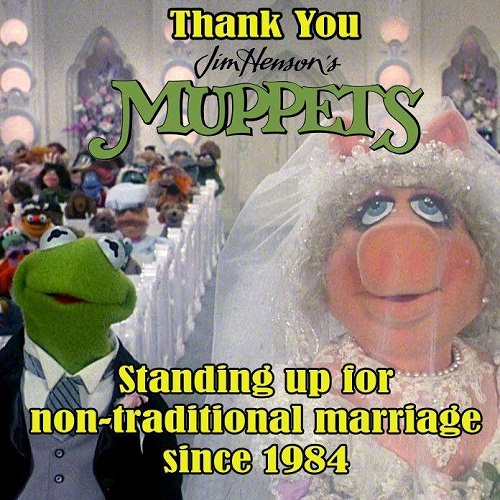
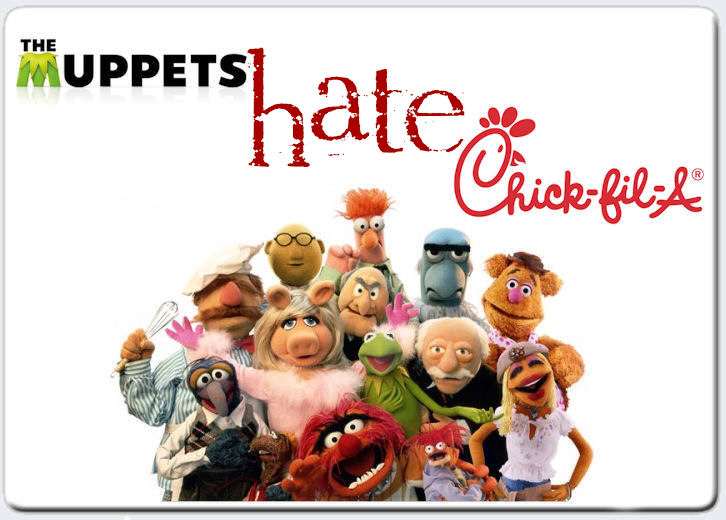
Chick fil-A — an Atlanta based company known for their fried chicken sandwiches– went public with its official disdain for those who live outside of the institution of heterosexuality by donating money to organizations fighting gay marriage. As with the Komen public relations debacle, this story was met with protests and boycotts against Chick fil-A, including critical public statements made by Boston mayor Thomas Menino, Chicago mayor Rahm Emmanuel, and San Francisco Mayor Edwin M. Lee, and a decision by the Jim Henson Company (AKA the Muppets!) to cease all business partnerships with Chick fil-A. (Meanwhile they may have gained some new customer loyalty from social conservatives). Chick fil-A did eventually announce that it would cease to fund anti-gay organizations, but its president has remained firm in his stance that he still doesn’t like the gays…
Given the enormous diversity of family forms in the Bible, it’s surprising that Chick fil-A representatives have not yet clarified which “Biblical” families they DO support …(don’t forget that traditional Biblical families are full of polygamy and inclusion of concubines). Regardless, it’s clear that Kermit, Miss Piggy, and their fans stopped going to Chick fil-A for their lunch break
4. Florida A & M drum major hazed to death; push for an end to hazing on college campuses.
Hazing — and subcultures emphasizing violence and conformity to traditional gender roles on U.S. College campuses — hit the news in 2012 with the death of Robert Champion, an African-American out gay male drum major, and who had made his opposition to hazing openly to his peers. While Champion died in 2011, this story makes our top ten stories for 2012 due to its ongoing media attention and its major impact on institutional transformation at Florida A & M and beyond.
Rober Champion died as a result of hazing in Nov. 2011
Robert Champion died on Nov. 19, 2011, after a ritual called “crossing bus C,” in which band members are forced to walk through a line of band members who are each kicking or punching the person walking by. He began vomiting, complained of breathing difficulty, and later died. Initially, his band mates claimed that they had no idea, according to according to the Palm Beach Press. His parents later told reporters that witnesses had come forward and said that their son was hazed for being gay, or ironically, for being against hazing rituals himself. (http://www.advocate.com/crime/2012/05/03/13-charged-hazing-death-gay-florida-am-drum-major )
The tragic incident resulted in several arrests as well as a newfound commitment by Florida A&M administrators to end the practice of hazing in University sponsored programs. Meanwhile, just before posting this story here, on Dec. 30, 2012 a scathing report was released by the Florida Board of Governors inspector general’s office which “concludes that the school lacked internal controls to prevent or detect hazing, citing a lack of communication among top university officials, the police department and the office responsible for disciplining students.” (see http://www.ebony.com/black-listed/news-views/famu-ignored-hazing-rules-before-robert-champion-death-981)
5. Sandusky goes to prison for child sexual abuse; Penn State officials condemned
The Penn State football sexual abuse scandal made our top ten list for the second year in a row. While individual-blaming solutions have prevailed (sending Assistant football coach Jerry Sandusky to prison for life; toppling the statue of former head football coach Joe Paterno), the evidence is clear that the sexual abuse that happened must be understood and addressed also within the context of big ten football and Penn State. As part of the effort to cast a wider analysis on the situation, scholars of sport and gender continue their critique of Penn State as an example of masculinist sport cultures [for example, see: Cooky, C. (2012). Success without honor: Cultures of Silence and the Penn State Scandal. Cultural Studies/Critical Methodologies, 12, 328-331]. In July of 2012 a blistering report was also released by Louis J. Freeh, former FBI director.
The report is unwavering in its condemnation of the university’s two highest levels of leadership: the president and the Board of Trustees. “By not promptly and fully advising the Board of Trustees about the 1998 and 2001 child sexual abuse allegations against Sandusky and the subsequent Grand Jury investigation of him, Spanier failed in his duties as President,” the report says. “The Board also failed in its duties to oversee the President and senior University officials in 1998 and 2001 by not inquiring about important University matters and by not creating an environment where senior University officials felt accountable.”
The most powerful leaders in the university concealed facts and failed to protect children, primarily because they hoped to “avoid bad publicity,” the report finds. But other factors contributed as well, according to the committee. Specifically, the report blames “A culture of reverence for the football program that is ingrained at all levels of the campus community.” (http://chronicle.com/article/A-Guide-to-the-Penn-State/132797/_
6 & 7. RAPE. RAPE. RAPE.
The practice and politics of rape of women continued to lead the headlines in 2012. So much so, that we’re giving it two positions on our top ten list. #6 goes to the ongoing “war on women” (reported also in our 2011 list) being waged by key U.S. conservative politicians. Instigators of this war include the Republican party’s 2012 Vice Presidential nominee Paul Ryan, who referred to rape as simply another “form of conception.” (This attempts to legitimize complete opposition to abortion, including for teenage victims of rape and incest. see: http://www.huffingtonpost.com/paul-slansky-/paul-ryan-said-something-_b_1832377.html.) GOP Senate Candidate, Todd Akin also attempted to play definitional magic by telling the public what a “legitimate” rape was, and baffled scientists and progressives alike when he claimed that women’s bodies could prevent pregnancy the case of rape. An interesting chronology of such arguments has been put together here for all of us to read given that this type of thinking is certainly not new: (See: http://www.theblaze.com/stories/why-does-todd-akin-think-rape-victims-dont-get-pregnant/)
#7 Goes to the political fury that is currently erupting around harassment and rape of women in India — with most urgent attention being placed on the case of a young woman who was brutally attacked and gang raped for hours and died of assault-related injuries.
The woman, who has not been identified, has become a symbol for the treatment of women in India, where rape is common and conviction rates for the crime are low. She boarded a bus with a male friend after watching a movie at a mall, and was raped and attacked with an iron rod by the men, who the police later said had been drinking and were on a “joy ride.”
She died Saturday morning in Singapore, where she had been flown for treatment for the severe internal injuries caused by the assault. She had an infection in her lungs and abdomen, liver damage and a brain injury, the Singapore hospital said, and died from organ failure. Her body was flown back to India on Saturday.
As news of her death spread Saturday, India’s young, social-network-using population began to organize protests and candlelight vigils in places like the western city of Cochin in Kerala, the outsourcing hub of Bangalore and New Delhi, the capital. Just a tiny sliver of India’s population can afford a computer or has access to the Internet, but the young, educated subset of this group has become increasingly galvanized over the New Delhi rape case.( http://www.nytimes.com/2012/12/30/world/asia/india-rape-delhi.html?_r=0)
Less publicized but also on our minds is the case of another young Indian woman who was recently gang raped; she committed suicide after being pressured by police to either drop her criminal charges or marry one of her attackers. We expect to be hearing much more from Indian human rights activists on this matter in the coming year.(see: http://www.nytimes.com/2012/12/28/world/asia/rape-victim-commits-suicide-in-india.html)
After all that dire news we will end with three more uplifting stories:
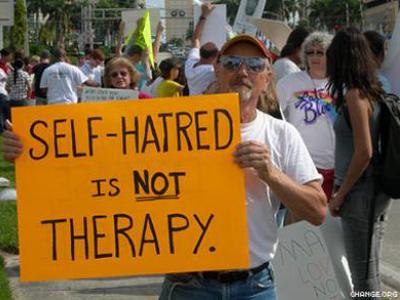
8. Movement to ban “gay conversion” therapy for minors in California.
The move to end the practice of reparative therapy (AKA Gay Conversion therapy) has made some movement in California. Governor Jerry Brown supported a new bill to ban gay conversation therapy for minors; however, the bill is currently blocked. On the Friday before Christmas (Dec. 21) “A three-judge panel of the U.S. 9th Circuit Court of Appeals agreed to block the law, scheduled to take effect Jan. 1, pending a decision on its constitutionality.” (http://latimesblogs.latimes.com/lanow/2012/12/gay-therapy-ban-placed-on-hold-in-california.html).
Gov. Jerry Brown has signed legislation prohibiting a form of therapy aimed at changing a minor’s sexual orientation from gay to straight, the first law of its kind in the nation, officials said Sunday.
Sen. Ted Lieu (D-Torrance) introduced the measure based on his belief that so-called conversion therapy isn’t based on science and is dangerous.
Cultural representations of same sex couples also proliferated in 2012, including stories and photos in Here Come the Brides published by Seal Press. (disclaimer: Sexuality & Society co-editor Kari Lerum has an article in this book).
Gay marriage makes our list yet again this year, this time with wins in Washington, Maryland, and Maine. Additionally, the U.S. Supreme court agreed to hear two cases (one from California, one from New York), challenging state and federal marriage laws which exclude same-sex couples, and U.S. President Barack Obama became the first sitting president to finally publicly support gay marriage. (Sexuality and Reproductive justice advocates in the US and abroad also breathed a sigh of relief when Obama was re-elected to serve as US President for another four years).
10. Free Condom Machines to be installed in Philadelphia high schools
And our final story for the year involves a new development in Philadelphia: Condom dispensers in high schools! We commend Philadelphia school officials for including this as part of a pragmatic and non-shaming approach toward reducing STI rates for Philadelphia teenagers.
Happy New Year from Sexuality & Society! Thanks to all the activists, scholars, and practitioners working toward sexual and social justice; may 2013 be filled with your stories!
As the Gregorian calendar year officially comes to a close, we offer once again a sampling of the year’s top ten sexual stories. While certainly not a complete, in-depth, or globally representative list, we do think that this list contains snippets that have both disturbing and hopeful implications for sexual justice.
Rick Perry in a replica of the jacket worn by Heath Ledger in "Brokeback Mountain."
“By now, you’ve probably seen Rick Perry’s “Strong” ad, in which he opines, “There’s something wrong in this country when gays can serve openly in the military but our kids can’t openly celebrate Christmas or pray in school.” Not only are gays in our military, they’re also composing music for our campaign ads. As the Harvard Political Reviewpoints out, the music that plays in the background of Perry’s ad is inspired by or directly taken from Aaron Copland, a gay composer.” (Nick Greene, Dec. 10, 2011, Village Voice).
Presidential hopeful Herman Cain’s campaign abruptly crashed and burned after news media learned of his long time extra-marital lover. But this was after his multiple cases of sexual harrassment and assault against his former employees were also aired. Most news media, including reputable news outlets like the Washington Post, failed to differentiate between Cain’s alleged criminal and consensual acts, using the language of “accusation” to describe both. See for example this story with a headline of “Ginger White accuses Herman Cain of long affair.”
…”Cain denied the accusations. In an interview that aired before White’s allegations were broadcast, Cain told CNN’s Wolf Blitzer that he knows White and that the two had been friends but that there had been no sexual contact and no “affair.” He characterized their relationship as “trying to help a friend” because of her “not having a job etcetera and this sort of thing.””
The story then goes on to simply state that:
“This month, Cain was accused of sexually harassing several women.”
Such lack of differentiation between criminal and consensual sexual scandals is common among contemporary American mainstream media. Gratefully, Amanda Marcotte (Alternet, Nov. 30, 2011) provides a helpful guide for assessing the significance different kinds of sex scandals. See Marcotte’s article here: “6 Kinds of Sex Scandals: What Should be exposed? What should be left private?”
8. Wienergate
… AND speaking of the need to have more sophisticated interpretative filters around why and how some Wieners constitute a “scandal” … see article above, again. … See also our post about Anthony Weiner:
“In contrast to the Dutch, Americans love sex scandals. We love them so much that in a good year we produce and consume not just one of these high-profile scandals, but several. For many of us interested in sexual justice, the juiciest stories are those of the hypocrites: the Elliot Spitzers who lead anti-prostitute campaigns while purchasing sex; the George Rekers who champion the anti-gay movement while hiring “rent boys,” and the Newt Gingrichs who lead impeachment hearings while engaging in their own extra-marital affairs.”
“In what can only be called an astounding move by an Administration that pledged on inauguration day that medical and health decisions would be based on fact not ideology and for which women are a major constituency, today Kathleen Sebelius, Secretary of the Department of Health and Human Services (HHS) overruled a much-awaited decision by the U.S. Food and Drug Administration (FDA) to make emergency contraception (EC) available over-the-counter (OTC) to women of all ages.
6. The politics of Rape. Rape committed by men against women was frequently in the news during 2011, not because the dynamics of it have changed (it’s always about maintaining/exerting symbolic power), but because some people and institutions have found new tactics of exerting and/or maintaining heterosexism. Here’s a sampling of three such tactics.
Ms Magazine posted several stories on rape this year. This image comes from: http://msmagazine.com/blog/blog/2011/05/02/25-facts-about-rape-in-america/
5. Penn State & masculinist cultures of sexual abuse. Rape and sexual abuse committed by men against boys was again in the news this year. While the Catholic Church and the Military managed to avoid serious spotlight time in 2011, another site of masculine privileged culture — American college football –wasn’t as lucky.
“With former Penn State football assistant coach Jerry Sandusky charged with sexually abusing children—and school officials including iconic former football coach Joe Paterno dismissed for purportedly failing to report Sandusky’s alleged crimes to law enforcement—many observers have compared the situation to a series of similar cases that have rocked the Vatican.”
After all these dire (and at times ludicrous) sexual stories, we will end with four stories on a slightly more hopeful note …
4.Mainstreaming of Transgender stories (including both opportunities and misses for gender transformation).
Transgender actress Harmony Santana
While images of Chaz Bono’s new book and his stint with Dancing with the Stars were ubiquitous, the inclusion of transgender individuals in policies and programs were just as, if not more, influential. Any sort of mainstreaming can bring missed opportunities for radical transformation (in this case for the institution of gender). But Mara Keisling, executive director of the National Center for Transgender Equality details 14 reasons why 2011 was “a game-changing year for transgender rights.” (See full story in The Advocate, Dec. 28, 2011).
GENEVA — The Obama administration announced on Tuesday that the United States would use all the tools of American diplomacy, including the potent enticement of foreign aid, to promote gay rights around the world.
In a memorandum issued by President Obama in Washington and in a speech by Secretary of State Hillary Rodham Clinton here, the administration vowed to actively combat efforts by other nations that criminalize homosexual conduct, abuse gay men, lesbians, bisexuals or transgendered people, or ignore abuse against them. (Myers and Cooper, New York Times, Dec. 8, 2011).
1. The Sexual Politics of Egypt’s Arab Spring, featuring:
Happy New Year from Sexuality & Society! Thanks to all the activists and scholars working toward sexual and social justice; may 2012 be filled with your stories!
As 2011 comes to a close, we are once again soliciting recommendations for top sexual stories of the year. As usual we are looking for stories from around the globe related to sexuality, culture, health, and politics from the past year. Please email us at sexuality@thesocietypages.org with your ideas (and we’ll be sure to credit you as well).
Sincerely,
Kari Lerum & Shari Dworkin, Eds, Sexuality & Society
This year’s top ten sexual stories: an incomplete list from our subjective, North American perspective, containing a mixture of disturbing, entertaining, and hopeful developments.
“Thursday morning, the PBS children’s show announced that a scheduled appearance by Perry, queen of the most inappropriate whipped-cream bra ever, had been canceled. On Monday, a clip of Perrywearing a sweetheart-cut dress, singing a G-rated version of her hit “Hot N Cold” and begging to “play” with Elmo, was leaked on the Web. Parents, outraged by Perry’s C-cup-accentuating dress,immediately protested. “You’re going to have to rename [Sesame Street] Cleavage Avenue,” wrote one commenter, while another simply joked, “My kid wants milk now.” (LA Times, Sept. 23, 2010).
“Reached by New Times before a trip to Bermuda, Rekers said he learned Lucien was a prostitute only midway through their vacation. “I had surgery,” Rekers said, “and I can’t lift luggage. That’s why I hired him.” (Medical problems didn’t stop him from pushing the tottering baggage cart through MIA.)” (Bullock, P. and Thorp, B., Miami New Times, May 6, 2010).
“Constance McMillen has been named one of Glamour Magazine’s ‘Women of the Year’ for 2010. We came to know Constance through her personal ordeal with Itawamba Agricultural High School in Fulton, Mississippi. The school board rejected her request to bring her girlfriend to the prom as her date, and even further, didn’t allow Constance to wear a tuxedo as she had planned.” (Sledjeski, J. GLAAD, Nov. 5, 2010).
“The “family values” Republican National Committee spent almost $2,000 last month at an erotic, bondage-themed West Hollywood club, where nearly naked women – and men – simulate sex in nets hung from above.” (Bazinet, K, and Saltonstall, D. Daily News, March 29, 2010).
“For the past four years, Pastor Dunfee and some of his New Beginnings church members have picketed and protested the strip club in their local community; they’ve even videotaped visitors to the club and posted the videos online in an attempt to hold them accountable for their actions. Pastor Dunfee said the regular protests were to avoid “sharing territory with the devil.”
Irritated by the protests, employees of the club have decided to protest the church—they arrived early in the morning Monday wearing swimwear and toting barbeques, picnic food, sunscreen, and lawn chairs, along with signs reading Matthew 7:15: Beware of false prophets who come to you in sheep’s clothing and Revelation 22:11: He that is unjust, let him be unjust still. ” (Aug.16, 2010; ChurchLeaders.com).
“In December, the European Court of Human Rights ruled that Ireland’s constitutional ban on abortion violates the rights of pregnant women to receive proper medical care in life-threatening cases. Each year, more than 6,000 women travel abroad from Ireland to obtain abortion services, often at costs of over $1,500 per trip. In a statement on the ruling, the Irish Family Planning Association—the IWHC partner that helped bring about this decision—said the court sent “a very strong message that the State can no longer ignore the imperative to legislate for abortion.” (Top Ten Wins, International Women’s Health Coalition, December 23, 2010).
“Asking if the “G-spot” exists can be a bit like asking if God (the other G-spot) exists: It depends on who you ask. And in both cases, science is (thus far) ill equipped to adequately measure either G-spot. ”
“In a break with his traditional teaching, Pope Benedict XVI has said the use of condoms is acceptable “in certain cases”, in an extended interview to be published this week.”
“After holding firm during his papacy to the Vatican’s blanket ban on the use of contraceptives, Benedict’s surprise comments will shock conservatives in the Catholic church while finding favour with senior Vatican figures who are pushing for a new line on the issue as HIV ravages Africa.” (Kington, T., and Quinn, B. Guardian UK, Nov. 21, 2010).
“More than 20 years ago, the International Women’s Health Coalition (IWHC) convened 44 women from 20 countries who conceived of a substance, like contraceptive foam or jelly, which could be inserted vaginally to prevent HIV infection. We named it a “microbicide,” and set out to find scientists and money to develop it. Until recently, progress has been slow, but in July, results from a clinical trial in South Africa found a new gel to be nearly 40 percent effective in protecting women against HIV during intercourse.” (Top Ten Wins, International Women’s Health Coalition, December 23, 2010).
“The recent rash of high profile suicides by boys who were bullied for gender and sexual non-conformity has created a wake up call for parents and school administrators in the U.S. To create a broader base of support from heterosexual allies, as well as to reach out to GLBT youth themselves, a number of new educational and activist initiatives have emerged. Dan Savage created the “It Gets Better”video project, directed at GLBT youth in despair over hostile treatment and at risk of killing themselves. The Gay and Lesbian Alliance against Defamation (GLAAD) declared Oct. 20, 2010 Spirit Day to call attention to and memorialize the recent suicides. Secretary of State Hillary Clinton even released her own version of an “It Gets Better” video. ” (Lerum, K. Sexuality & Society, Nov. 18 2010).
WASHINGTON — “The military’s longstanding ban on service by gays and lesbians came to a historic and symbolic end on Wednesday, asPresident Obama signed legislation repealing “don’t ask, don’t tell,” the contentious 17-year old Clinton-era law that sought to allow gays to serve under the terms of an uneasy compromise that required them to keep their sexuality a secret.” (New York Times, Dec. 22, 2010).
For the second year in a row, we at Sexuality & Society are compiling a list of top ten stories of the year. We are looking for stories from around the globe related to sexuality, culture, health, and politics from 2010. Please email us at sexuality@thesocietypages.org with your recommendations (and if we use them we’ll be sure to credit you as well).
Kari Lerum and Shari L. Dworkin on December 31, 2009
In his book, Telling Sexual Stories: Power, Change, and Social Worlds (1995, Routledge), Ken Plummer explains that when individuals narrate seemingly internal and personal stories about their sexuality, these aren’t very individual or internal at all. Rather, such narratives emerge in themes that are made possible due to specific cultural and political conditions; sexual stories are thus part of larger sexual storytelling culture, and can be understood and made meaningful and visible only via existing cultural frames.
In 1995 Plummer documented three kinds of emerging sexual stories: rape stories, coming out stories, and recovery stories. The year of 2009 brought several unique opportunities of its own to tell sexual stories. Some of these stories reaffirmed and revisited familiar plots to “old” sexual stories, while some forged new territory. We have decided to group this year’s stories (which we have selected with a highly subjective and US based lens) into themes; each theme is a compilation of several individual stories, forming what we see as a larger set of cultural stories being told about the pleasures and dangers of sexuality, and the roles of social institutions in regulating and redefining normative sexual boundaries. Thanks to Phil Cohen, Holly Lewandowski, and Amanda Hess for story leads. Also, thanks to RhReality Check’s Amy Newman for her list of top stories from 2009 (from which we borrowed a few).
In her recent article on Tiger Woods, Shari Dworkin debunks widespread psychological and “sex addiction” explanations for Tiger Woods’ affairs:
“Recent media coverage of Tiger Woods’ marital “transgressions” is overflowing. Some argue that Tiger is sex obsessed and has a “sex addiction” given his high sex drive and desire for sex with many women over time. Others argue that any sports star who is on the road and away from home so much has a huge chance of being unfaithful to their wife. (Some media reports argue that it is “rare” to find a faithful male sports star). Still others argue that Tiger Woods’ late father pressed him down under his thumb too much as a youngster and upon his death, Tiger unleashed his “wild side.” Finally, some news reporters offer that Tiger was “traumatized” as a child when his father cheated on his mother, and that he must just be paradoxically following in dad’s footsteps. But very little media coverage attempts to press beyond an individual level and not many articles offered a much needed broader analysis of masculinity, race, sport, sexuality, and media.”
Similar structural and cultural analyses incorporating masculinity and institutional/political power could and should also be applied to the other stars of this story, including: Mark Sanford, John Ensign, & John Edwards.
Additionally, a cross-cultural perspective is needed here as well (e.g. why are these stories so powerful and shaming in the US, but not in European countries?)
According to The Guardian: “In Latin America policies and attitudes have mellowed over the past two decades and in most countries it is now illegal to discriminate on the basis of sexual orientation. Buenos Aires, Bogota and Mexico City boast gay pride parades and gay-friendly districts where same-sex couples can kiss and hold hands in public. Yesterday Di Bello, 41, and Freyre, 39, became the continent’s first gay married couple. The pair sidestepped a court ruling blocking their wedding in Buenos Aires by holding the ceremony in Ushuaia, capital of Tierra del Fuego province and the world’s southernmost city. They exchanged rings at a civil ceremony witnessed by state and federal officials, prompting jubilation by gay rights activists and consternation from the Catholic church. “My knees didn’t stop shaking,” said Di Bello. “We are the first gay couple in Latin America to marry” (Guardian.co.uk — Dec. 29, 2009).
Gay-marriage- success stories from 2009 also starred: Mexico City, Washington DC, New Hampshire, Sweden, Iowa, Vermont, and Norway. These are just the states, countries, and cities adopting gay marriage in 2009 and doesn’t include the longer list of locales which legalized domestic partnership in 2009. [The appendix to this is the Gay-Marriage-doom-&-gloom story: starring the Catholic Church (Maine) & the Mormon Church (California, from 2008)]
While more women are having multiple-baby births (thanks to IVF technology), not all multiple-birth mothers are viewed the same. Kathryn Joyce from RhReality Check offers an insightful comparison between the highly demonized Angela Suleman (“octo-mom”) and a “Reality TV” family with 18 children:
“Suleman’s newborns were delivered, as it were, into a pop cultural moment of preoccupation with large families. Reality TV shows about families with many children abound on TV’s TLC channel, most notably with the chronicles of the 18-child Duggar family. That the Duggars are grounded in and motivated by the pro-patriarchy Quiverfull movement, with its emphasis on female submission and male headship, is breezily dispensed with in favor of dwelling on the sentimental and zany experiences of life in a 20-person family. “Jon and Kate Plus Eight,” another reality TV show about a large family – this one the result of sextuplets born to a mother who, like Suleman, chose not to selectively reduce the number of embryos that “took” during an IVF treatment – is less burdened by the extremist ideology that undergirds the Duggars’ convictions, but still presents a traditional picture of large family life, with married heterosexual parents and a stay-at-home mother. …. While many observers are concerned with her apparent inability to support such a large family, the fact that she is unmarried has alone been cause enough for others to declare her family a situation of de facto child abuse” (for Joyce’s full article click here).
“…there is an increasing amount of scrutiny and disgust from many regarding the direct connection between the Ugandan anti-homosexual campaign and a conservative U.S. religious group called “The Family” — which some, including The Observer have called a ” cult” due to the requirement for core members to remain secret about their activities. Regardless of what the group is labeled, it is clear that it has been successful in recruiting high level political leaders including some US congressmen and Uganda’s president Museveni to its core values: “fighting homosexuality and abortion, promoting free-market economics and dictatorship, an idea they once termed ‘totalitarianism for Christ’ ”
Irish Justice Minister Ahern at press conference about decades of Priest abuse
As quoted in the LA Times: “Leaders of the Roman Catholic Church in Dublin engaged in a widespread cover-up of abuses by clergy members for decades, a “scandal on an astonishing scale” that even saw officials taking out insurance policies to protect dioceses against future claims by the victims, a commission reported Thursday after a three-year investigation” (see full article here)
Ross Douthat, a conservative writer for the New York Times and the National Review, describes how a culture of fear around sexuality is precisely the kind of culture that produces sexual abuse — and especially cover-ups of sexual abuse. Douthat concludes that:
“…you can see how it could all go bad — how a culture so intensely clerical, so politically high-handed, and so embarrassed (beyond the requirements of Christian doctrine) by human sexuality could magnify the horror of priestly pedophilia, and expand the pool of victims, by producing bishops inclined to strong-arm the problem out of public sight instead of dealing with it as Christian leaders should. (In The Faithful Departed, his account of the scandal, Philip Lawler claims that while less than five percent of priests were involved in actual abuse, over two-thirds of bishops were involved in covering it up.) I suspect it isn’t a coincidence that the worst of the priest-abuse scandals have been concentrated in Ireland and America — and indeed, in Boston, the most Irish of American cities — rather than, say, in Italy or Poland or Latin America or Asia” (see Douthat’s article here).
Ceara Sturgis, fighting for her right to wear a tux for her Senior Class photo
Click here for Adina Nack's post on "cross-dress" codes
In her post in Sexuality & Society, Shari Dworkin writes, “While Caster Semenya’s recent “news” seems to have shocked the world, the concern about “gender verification” in sport has taken place for quite some time. The tests have changed over time…but the point has not (e.g. when women are “too good,” they must not be women). …” (see also sociologist Philip Cohen’s story about Semenya, and an update on Caster’s status in the NYT). Note that in these stories there are never any calls for parallel sex verification tests to see if men they are “too much of a man,”—a man that no other “normal” man can hope to “fairly” compete with. This is because of the specific role that sport has historically played in terms of making boys into men (when women compete, there have been numerous fears that they are masculinized and are not “normal” women).
# 4.Harsher punishments for-sex-with-minors stories, starring: Roman Polanski!
Filmmaker Roman Polanski was arrested in 1977 for the sexual assault of a 13 year old girl. He spent 42 days in a California prison and was released. Upon hearing of a judge’s plan to have him serve more time and possibly deport him, Polanski fled to France. In 1988 Polanski was sued by the girl he assaulted and in 1993 settled with a payment reported at around $500,000. In the years that have passed Polanski also married (in 1989), had two children, and continued on as a prolific and well regarded film maker. For reasons that are still murky in terms of timing, Polanski was arrested on Sept. 26, 2009 (32 years after the crime) at the Zurich, Switzerland airport at the request of US authorities. Polanski’s case, spanning decades and continents, offers an insight into how laws and attitudes about sex with minors has changed in the US:
The LA Times reports that “(s)tatutory rape convictions similar to Roman Polanski’s typically result in sentences at least four times longer today than the 90-day punishment a judge favored before the director fled the United States in 1978, a Times analysis of Los Angeles County court records shows. Polanski’s arrest in Switzerland on an international fugitive warrant — and his pending extradition proceedings — have sparked transatlantic debate about whether the 76-year-old Academy Award winner should serve additional time behind bars for having sex with a 13-year-old girl….The Times analyzed sentencing data to determine how L.A. County courts today handle cases in which men admit to statutory rape — also known as unlawful sex with a minor — in exchange for the dismissal of more serious rape charges, as Polanski did. The findings show that those defendants get more time than Polanski has served — even factoring in his 70-day stint in Swiss detention — but less than his critics may expect. … “Thirty years ago, sexual assault — rape and sex crimes — were treated differently,” said Robin Sax, a former sex crimes prosecutor for the L.A. County district attorney’s office. “Time and education haven’t worked for Polanski’s benefit.”
“There is no question that what Roman Polanski did to a 13 year old girl in the 1977 was wrong, and illegal. But it is also wrong to drag Polanski back to the US 31 years after the crime and have him spend an unspecified amount of time in prison. What possible good would come about by Polanski doing time for the crime? Obviously, it would not function to rehabilitate him or change him in some way. The fact that Polanski has had a stellar film career and apparently lived a law abiding life for 32 years after the crime is indicative that the case for changing Polanski is simply irrelevant.”
The details of Roman Polanski’s case lies in stark contrast to the case of Phillip Garrido, a registered repeat sex offender who was arrested earlier this year for kidnapping 11 yr old Jacee Dugard, and holding her captive and sexually abusing her for 18 years (from 1991-2009). The young Dugard bore two children out of Garrido’s abuse (now ages 11 and 15).
Despite today’s more stringent punishments for statutory rape, we hope that US jurors and judges will be able to distinguish the vast differences between the sexual crimes of Polanski and Garrido.
# 3. No-condoms-for-those-who-need-it-most stories, starring: Pope Benedict XVI!
The Pope’s message was also heard in the US, at least among some US Catholic college students. Amanda Hess, writer for the Washington CityPaper highlights how all 3,000 students at Catholic University are now prohibited from having sex that is “disruptive” (defined as “ANY” sexual expression inconsistent with the Catholic Church including premarital sex and same sex sexuality). These rules are written into the code of student conduct. Hess states that:
“Deference to the catechism spares Catholic administrators from the awkward enterprise of referring to masturbation, condoms, or any other specific of a typical undergraduate’s sex life” … “violations to the student code can’t be absolved in typically Catholic fashion, with forgiveness administered privately after confession to a priest. At the Catholic University of America, your sins are subject to judicial review” (click here for full article).
Clearly, if the Catholic church cannot discuss sex outside of sex within marriage, they cannot discuss condoms very effectively.
#2.Backlash-against-sexual-&-reproductive-justice stories, starring: the murderer of Dr. George Tiller!
Gosh, this story is soooo last century (the 80s and 90s were full of anti-abortion terrorism stories), but unfortunately it’s still a story in 2009.
Dr. George Tiller, a doctor who provided late term abortions in Wichita, Kansas, was shot dead while attending Sunday Church services. Jodi Jacobson, Editor of Rh Reality Check explains the importance of Dr. Tiller’s work, as well as the cultural context for how perceptions of his work are widely inaccurate:
“In all the extensive coverage of the assassination in his church of Dr. George Tiller by a murderer affiliated with extremist right-wing groups, little has been said to shed light on what late-term abortions are, who has them and why. Instead, much of the media and talking heads pontificating on this subject have constantly focused on Tiller’s being “one of the very few doctors who perform late-term abortions,” without providing any context as to why he did so and under what circumstances. As a result, the dominant narrative is one which perpetuates an assumption that people are electing to have late-term abortions for the sake of convenience.” (To read Jacobson’s entire analysis, click here).
And finally, we’d like to end on a positive note, with a list of sexual and reproductive justice stories from 2009:
Supported starting a large prevention campaign to end HIV/AIDS in the African-American community. He formed a campaign called “Act against AIDS” and also formed an Act Against Aids Leadership Initiative AAALI) that partners with 14 of the nation’s leading African-American civic organizations in order to “integrate HIV prevention into each organization’s outreach programs.” The program refocuses national attention on the AIDS epidemic and features a media campaign called “9 1/2 minutes,” to draw attention and visibility to the fact that every 9.5 minutes, someone in the USA is infected with HIV.
And although this last bill still needs to be signed, we are expecting Obama to:
fulfill his promise to fund evidence-based, scientifically based sex education.
We are intrigued by many of this year’s sexual stories, saddened by some, and encouraged by others. May 2010 be filled with opportunities to reframe old (sexist, racist, homophobic, and sex-negative) stories into sexual stories that involve measured discussion of sexual health, sexual justice, and sexual rights.
Kari Lerum & Shari L. Dworkin, Eds. Sexuality & Society.
With 2010 approaching, we are joining in on a tradition of many media/news writers of compiling a list of top ten stories of the past year. Since we only launched Sexuality & Society three months ago, we need your help! We are looking for stories from around the globe related to sexuality, culture, health, and politics from the past year. Please email us at sexuality@thesocietypages.org with your ideas (and we’ll be sure to credit you as well).
Best Regards,
Kari Lerum & Shari Dworkin, Eds, Sexuality & Society
About Sexuality and Society
Sexuality & Society explores relationships between social institutions, cultural practices, sexual health, and sexual policy. Read more…




 the American Sociological Association have roundly condemned Regnerus’ study, including but not limited to the 42 page Supreme Court brief in support of overturning the Defense of Marriage Act (DOMA).

 cohabitation” mainstream Mormon religious leaders were not happy. The challenge to the law was brought by the Reality TV star Kody Brown who stars along with his four female partners (and 17 children) in the reality TV show “Sister Wives.” The Brown family successfully argued that the Utah cohabitation law violated their rights to privacy and to religious freedom.
 While same-sex couples flooded the county clerk’s office seeking to be married, movements to reverse both legal the Utah polygamy and same sex marriage decisions are underway. We’ll be following both stories as they progress in 2014.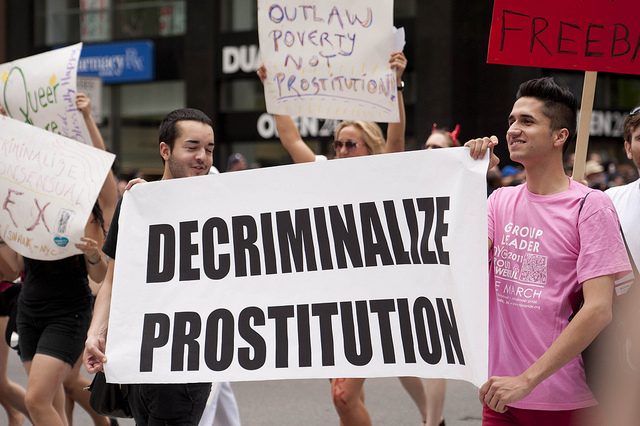




























 Similar structural and cultural analyses incorporating masculinity and institutional/political power could and should also be applied to the other stars of this story, including: