For the fourth New Year’s Eve in a row, Sexuality & Society brings you its (highly subjective and mostly North American/U.S.-centered) list of top ten sexual stories of the year! This year’s stories are full of shreds of hope and resolve for finding allies in the ongoing effort toward sexual justice and a large dose of old-fashioned us vs. them political fights. (Just a heads-up that we won’t be bringing you the story of Princess Kate and her topless photos, but we were amused/bemused at how much press that story received).
For a walk down sexual memory lane we encourage you to (re) check out our lists for 2009, 2010, and 2011 as well!
1. Susan B. Komen foundation defunds breast screenings at Planned Parenthood.
Although we are used to high profile conservatives attempting to put Planned Parenthood out of business, this story of pink-on-pink malignment caught most of us in Sexual and Reproductive Justice circles by surprise. The Komen Foundation’s decision to cut funding to Planned Parenthood due to anti-abortion sentiment in Komen leadership resulted in enormous public outrage, lack of subsequent support for the Komen foundation, and eventually a reversal of the decision. It remains to be seen how well the Komen Foundation will be able to recover, especially given the critical documentary about Komen entitled Pink Ribbons — which was coincidentally released just after the Planned Parenthood defunding debacle. In contrast, public support for Planned Parenthood seemed to grow stronger than ever:
“The silver lining is that more people than ever are aware that Planned Parenthood provides breast exams, and we’re seeing more people calling us today to make an appointment,” Tait Sye, a spokesperson for Planned Parenthood, told HuffPost. “Politics should not get in the way of women’s health, and people respond powerfully when they see politics interfering with women’s health.” http://www.huffingtonpost.com/2012/02/01/susan-g-komen_n_1247262.html
2. Anita Sarkeesian vs. the (online, sexist, and sexually abusive) trolls.
When Feminist Frequency blogger and media activist Anita Sarkeesian announced that she was going to start a new project to address stereotypes of women in video games, some male gamers responded with vicious online attacks:
Sarkeesian, who runs the video blog Feminist Frequency, became a target of abuse—including rape and death threats—last May after launching a Kickstarter fundraising drive for a project promising to explore sexist gender tropes in video games.
“I love playing video games but I’m regularly disappointed in the limited and limiting ways women are represented,” Sarkeesian wrote. “This video project will explore, analyze and deconstruct some of the most common tropes and stereotypes of female characters in games.”
In response, Sarkeesian was hit with what she calls a “cyber mob” from angry male gamers. Hundreds of abusive tweets flooded her Twitter feed, threatening violence and sexual assault. Vandals attacked her Wikipedia page, plastering it with explicit sexual images, violent images, sexism and racism. Someone even created a video game where users were invited to “beat the bitch up” and punch a digital version of Sarkeesian’s face until it became battered, bloody and bruised.
Sarkeesian fought back, chronicling the harassment on her blog and speaking to dozens of news outlets. She’d originally set a humble fundraising goal of $6,000. But after the torrent of abuse received widespread media attention, donors flooded her page. Sarkeesian finished the Kickstarter campaign with nearly $160,000, or about 25 times what she’d asked for. (http://www.dailydot.com/culture/anita-sarkeesian-ted-talk-misogynist-comments/)
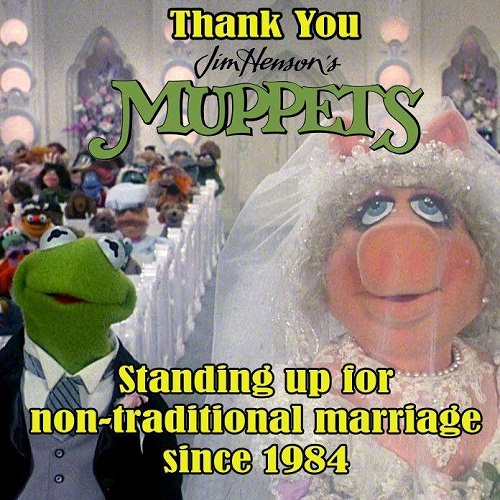
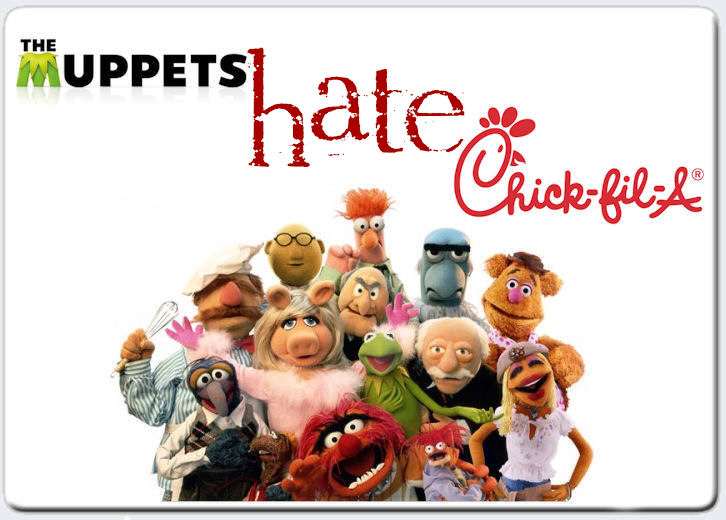
Chick fil-A — an Atlanta based company known for their fried chicken sandwiches– went public with its official disdain for those who live outside of the institution of heterosexuality by donating money to organizations fighting gay marriage. As with the Komen public relations debacle, this story was met with protests and boycotts against Chick fil-A, including critical public statements made by Boston mayor Thomas Menino, Chicago mayor Rahm Emmanuel, and San Francisco Mayor Edwin M. Lee, and a decision by the Jim Henson Company (AKA the Muppets!) to cease all business partnerships with Chick fil-A. (Meanwhile they may have gained some new customer loyalty from social conservatives). Chick fil-A did eventually announce that it would cease to fund anti-gay organizations, but its president has remained firm in his stance that he still doesn’t like the gays…
Given the enormous diversity of family forms in the Bible, it’s surprising that Chick fil-A representatives have not yet clarified which “Biblical” families they DO support …(don’t forget that traditional Biblical families are full of polygamy and inclusion of concubines). Regardless, it’s clear that Kermit, Miss Piggy, and their fans stopped going to Chick fil-A for their lunch break
4. Florida A & M drum major hazed to death; push for an end to hazing on college campuses.
Hazing — and subcultures emphasizing violence and conformity to traditional gender roles on U.S. College campuses — hit the news in 2012 with the death of Robert Champion, an African-American out gay male drum major, and who had made his opposition to hazing openly to his peers. While Champion died in 2011, this story makes our top ten stories for 2012 due to its ongoing media attention and its major impact on institutional transformation at Florida A & M and beyond.
Rober Champion died as a result of hazing in Nov. 2011
Robert Champion died on Nov. 19, 2011, after a ritual called “crossing bus C,” in which band members are forced to walk through a line of band members who are each kicking or punching the person walking by. He began vomiting, complained of breathing difficulty, and later died. Initially, his band mates claimed that they had no idea, according to according to the Palm Beach Press. His parents later told reporters that witnesses had come forward and said that their son was hazed for being gay, or ironically, for being against hazing rituals himself. (http://www.advocate.com/crime/2012/05/03/13-charged-hazing-death-gay-florida-am-drum-major )
The tragic incident resulted in several arrests as well as a newfound commitment by Florida A&M administrators to end the practice of hazing in University sponsored programs. Meanwhile, just before posting this story here, on Dec. 30, 2012 a scathing report was released by the Florida Board of Governors inspector general’s office which “concludes that the school lacked internal controls to prevent or detect hazing, citing a lack of communication among top university officials, the police department and the office responsible for disciplining students.” (see http://www.ebony.com/black-listed/news-views/famu-ignored-hazing-rules-before-robert-champion-death-981)
5. Sandusky goes to prison for child sexual abuse; Penn State officials condemned
The Penn State football sexual abuse scandal made our top ten list for the second year in a row. While individual-blaming solutions have prevailed (sending Assistant football coach Jerry Sandusky to prison for life; toppling the statue of former head football coach Joe Paterno), the evidence is clear that the sexual abuse that happened must be understood and addressed also within the context of big ten football and Penn State. As part of the effort to cast a wider analysis on the situation, scholars of sport and gender continue their critique of Penn State as an example of masculinist sport cultures [for example, see: Cooky, C. (2012). Success without honor: Cultures of Silence and the Penn State Scandal. Cultural Studies/Critical Methodologies, 12, 328-331]. In July of 2012 a blistering report was also released by Louis J. Freeh, former FBI director.
The report is unwavering in its condemnation of the university’s two highest levels of leadership: the president and the Board of Trustees. “By not promptly and fully advising the Board of Trustees about the 1998 and 2001 child sexual abuse allegations against Sandusky and the subsequent Grand Jury investigation of him, Spanier failed in his duties as President,” the report says. “The Board also failed in its duties to oversee the President and senior University officials in 1998 and 2001 by not inquiring about important University matters and by not creating an environment where senior University officials felt accountable.”
The most powerful leaders in the university concealed facts and failed to protect children, primarily because they hoped to “avoid bad publicity,” the report finds. But other factors contributed as well, according to the committee. Specifically, the report blames “A culture of reverence for the football program that is ingrained at all levels of the campus community.” (http://chronicle.com/article/A-Guide-to-the-Penn-State/132797/_
6 & 7. RAPE. RAPE. RAPE.
The practice and politics of rape of women continued to lead the headlines in 2012. So much so, that we’re giving it two positions on our top ten list. #6 goes to the ongoing “war on women” (reported also in our 2011 list) being waged by key U.S. conservative politicians. Instigators of this war include the Republican party’s 2012 Vice Presidential nominee Paul Ryan, who referred to rape as simply another “form of conception.” (This attempts to legitimize complete opposition to abortion, including for teenage victims of rape and incest. see: http://www.huffingtonpost.com/paul-slansky-/paul-ryan-said-something-_b_1832377.html.) GOP Senate Candidate, Todd Akin also attempted to play definitional magic by telling the public what a “legitimate” rape was, and baffled scientists and progressives alike when he claimed that women’s bodies could prevent pregnancy the case of rape. An interesting chronology of such arguments has been put together here for all of us to read given that this type of thinking is certainly not new: (See: http://www.theblaze.com/stories/why-does-todd-akin-think-rape-victims-dont-get-pregnant/)
#7 Goes to the political fury that is currently erupting around harassment and rape of women in India — with most urgent attention being placed on the case of a young woman who was brutally attacked and gang raped for hours and died of assault-related injuries.
The woman, who has not been identified, has become a symbol for the treatment of women in India, where rape is common and conviction rates for the crime are low. She boarded a bus with a male friend after watching a movie at a mall, and was raped and attacked with an iron rod by the men, who the police later said had been drinking and were on a “joy ride.”
She died Saturday morning in Singapore, where she had been flown for treatment for the severe internal injuries caused by the assault. She had an infection in her lungs and abdomen, liver damage and a brain injury, the Singapore hospital said, and died from organ failure. Her body was flown back to India on Saturday.
As news of her death spread Saturday, India’s young, social-network-using population began to organize protests and candlelight vigils in places like the western city of Cochin in Kerala, the outsourcing hub of Bangalore and New Delhi, the capital. Just a tiny sliver of India’s population can afford a computer or has access to the Internet, but the young, educated subset of this group has become increasingly galvanized over the New Delhi rape case.( http://www.nytimes.com/2012/12/30/world/asia/india-rape-delhi.html?_r=0)
Less publicized but also on our minds is the case of another young Indian woman who was recently gang raped; she committed suicide after being pressured by police to either drop her criminal charges or marry one of her attackers. We expect to be hearing much more from Indian human rights activists on this matter in the coming year.(see: http://www.nytimes.com/2012/12/28/world/asia/rape-victim-commits-suicide-in-india.html)
After all that dire news we will end with three more uplifting stories:
8. Movement to ban “gay conversion” therapy for minors in California.
The move to end the practice of reparative therapy (AKA Gay Conversion therapy) has made some movement in California. Governor Jerry Brown supported a new bill to ban gay conversation therapy for minors; however, the bill is currently blocked. On the Friday before Christmas (Dec. 21) “A three-judge panel of the U.S. 9th Circuit Court of Appeals agreed to block the law, scheduled to take effect Jan. 1, pending a decision on its constitutionality.” (http://latimesblogs.latimes.com/lanow/2012/12/gay-therapy-ban-placed-on-hold-in-california.html).
Gov. Jerry Brown has signed legislation prohibiting a form of therapy aimed at changing a minor’s sexual orientation from gay to straight, the first law of its kind in the nation, officials said Sunday.
Sen. Ted Lieu (D-Torrance) introduced the measure based on his belief that so-called conversion therapy isn’t based on science and is dangerous.
Cultural representations of same sex couples also proliferated in 2012, including stories and photos in Here Come the Brides published by Seal Press. (disclaimer: Sexuality & Society co-editor Kari Lerum has an article in this book).
Gay marriage makes our list yet again this year, this time with wins in Washington, Maryland, and Maine. Additionally, the U.S. Supreme court agreed to hear two cases (one from California, one from New York), challenging state and federal marriage laws which exclude same-sex couples, and U.S. President Barack Obama became the first sitting president to finally publicly support gay marriage. (Sexuality and Reproductive justice advocates in the US and abroad also breathed a sigh of relief when Obama was re-elected to serve as US President for another four years).
10. Free Condom Machines to be installed in Philadelphia high schools
And our final story for the year involves a new development in Philadelphia: Condom dispensers in high schools! We commend Philadelphia school officials for including this as part of a pragmatic and non-shaming approach toward reducing STI rates for Philadelphia teenagers.
Happy New Year from Sexuality & Society! Thanks to all the activists, scholars, and practitioners working toward sexual and social justice; may 2013 be filled with your stories!
This past March, Appalachian State University (in Boone, North Carolina) put Dr. Jammie Price, a tenured professor of sociology, on administrative leave. Price was suspended after showing a documentary film which critiques the pornography industry, titled “The Price of Pleasure.” This temporary suspension was enacted as a result of four students’ protest to university administration; they claimed that the film was “inappropriate” for classroom use.
Of course, there has to be a backstory to this. Various sources report that Price was known as a vocal critic of university practices, such as their handling of sexual assault allegationsleveled at student athletes.[1] Prior to screening the film, student athletes had complained to university officials that she had created a hostile environment by facilitating classroom discussions on sexual assault accusations against student athletes on the ASU campus.[2]
After conducting an investigation (in which the University states that it did not focus on the screening of the film itself, but the manner in which the classroom was conducted), the Provost has allowed Dr. Price to return to the classroom as long as she consent to a mandatory “professional development plan.” This professional development plan requires Dr. Price to, among other things, develop and implement steps to contextualize and debrief “sensitive” material in the classroom.
The film at the center of the controversy
Sexuality scholars, researchers, and activists should be concerned about Price’s suspension for many reasons. This includes standard concerns about academic freedom, and questions of academic integrity in dealing with the complex and controversial matters of sexuality, power, and media. This also includes concerns about the “backstory” of student backlash (i.e. critically examining the gender, race, and sexuality dynamics of when students complain about their professors). But this case is also important for an additional set of concerns: that of sexual rights and justice as they pertain to sex work and sex workers.
Dr. Price’s suspension based on her inclusion of “graphic” material in the classroom has lit up the blogosphere. Some have drawn on the language of “academic freedom” in order to conceive of it as a tool to promote truly inclusive democratic debate. Gail Dines — a well-known anti-porn feminist who is featured in the film, has leapt to the defense of Professor Price and the film, The Price of Pleasure. Given the film’s sudden prominence as an educational tool and as a catalyst that re-ignited long held debate about academic freedom, it’s worth pausing to examine the film itself.
The film, produced and distributed by the Media Education Foundation, purports to examine “how pleasure and pain, commerce and power, liberty and responsibility have become intertwined in the most intimate area of our lives.” The MEF is a popular source for academics seeking to include educational films in the classroom and it is known for producing films that espouse similar anti-porn themes (The Bro Code, Dreamworlds). The Price of Pleasure includes clips from pornographic films with the claim that these clips “represent current trends in mainstream pornography.” Some porn performers featured in the film have criticized it for the ways in which they felt the film purposefully misrepresented their perspectives and encoded a patently anti-porn message into something they were told would be an “unbiased” exploration.
Gail Dines, a professor of Sociology and Women’s Studies, at Wheelock College was a senior consultant for the film.[3] The film argues that porn has become what Linda Williams has described as “on/scene”: in other words, that “sexual scenarios” once considered “obscene” have increasingly become part of the public sphere (albiet via public scandal) [4]. However, unlike Williams, the filmmakers name this as a universally bad phenomenon.
Some might critique the filmmakers for espousing a nostalgic, moralistic wish for the “way we never were” (a world free of commercial sex and its’ depictions). A brief survey of U.S. history reveals that commercial sex has been an integral feature in public social life (albeit in different ways) at different moments in time.[5] The filmmakers attempt to sidestep this critique by utilizing a somewhat crude version of Marxist mechanics. For example, in the opening scene, Gail Dines explains that she is accused by some for being “anti-sex” because she critiques pornography, but what such critics don’t realize is that you can criticize McDonalds and still eat food.[6] The comparison doesn’t quite hold up on at least two fronts.
First, unlike food, it is difficult to trace the effects of any cultural product, including pornography. Without rehashing the feminist sex wars and an entire body of social scientific literature, there is no consensus that consumption of pornography causes the perpetuation of sexual violence.[7] Furthermore, the idea that representations directly impinge on or cause individual actions is one that some feminists –via such campaigns as the reform of rape laws—have long sought to contest.
Given the absence of strong direct evidence that porn causes sexual violence, some anti-porn activists instead argue that pornography promulgates a “worldview” that reifies gender inequality writ large and has harmful consequences to the public at large. There are two main components to this anti-porn argument:
porn as a genre universally “objectifies” women, by which they mean that it, more than any other media outlet, trains them to relate to their bodies as a site of scrutiny, to eroticize submission and “degradation,” and that these activities can never be a source for women’s self-creation or pleasure.
pornography leads men (as Robert Jensen, Professor of Journalism at the University of Texas, testifies in the film), to have difficulty distinguishing between the modes of relating to women enabled in and potentially appropriate to erotic fantasy and the modes of relating to women on an everyday basis in which they are not sex objects that are continually available for one’s sexual use.
Embedded in The Price of Pleasure are these logics of direct and uncritical consumption: What you watch becomes who you are. Perhaps this is the message Professor Jammie Price was hoping to introduce to her students. It’s worth asking whether this message alone is able to stimulate expansive and inclusive classroom debate on the topic of commercial sex. It’s worth asking whether this logic is representative of the diverse body of intellectual thought on media reception—which frequently demonstrates that people contest, resist, rescript, as well as reproduce, inequalities in their interactions with media texts.
But it is actually the second part of Dines’ food metaphor (re: McDonalds) that I am interested in. The “McDonalds” analogy situates the amorphous public and producers of porn in a morality tale. In this morality tale, the public are those who, barraged by porn, are being sold a dangerous and harmful product. Producers are either callous, usually male, profiteers or the sex workers themselves, who are either victims or “brainwashed” apologists. To this end, the only self-described former sex worker interviewed at length in the film is Sarah Katherine Lewis, who speaks about what she loathed about working in the sex industry, pointing out that the only options open to her at the time were working in service economies—McDonalds or sex businesses. Either way, the workers in the films are not the ones asked to offer definitive meanings about or set the agenda around business practices. The McDonalds analogy essentially eliminates from the terms of the debate the desires, needs, or interests of those who work at the McDonalds in question, those who for whatever complex array of reasons and motivations make their living via sex work.
Sex workers (and allies) who craft their own intellectual analyses and political agendas around questions of political economy, labor and human rights, and the politics of representation are not even intelligible within the schema of the “anti-McDonaldites.” Based on watching The Price of Pleasure alone, viewers would have no idea that sex worker advocacy groups have advanced trenchant critiques about what can be done to improve their working conditions and social existence.
The case of Professor Price reveals the extent that academic discussion of pornography often centers on the (presumably) non-sex working academic, or the academic advancing an anti-porn critique. No one seems to be questioning the anti-porn message of the film —a message that was perhaps lost on the students who felt violated by its graphicness. What then what does that say about the state of protections for academics and aspiring academics who are current or former sex workers? Or simply those who wish to include in the classroom the voices and worldviews of sex workers speaking on their terms?
In response to Price’s suspension, Gail Dines suggested that if Price had given a ringing endorsement of commercial sex businesses or to have invited what she likes to call “pornographers,” or sex workers and adult business owners (often one and the same), to speak on campus, all would be good in Price’s life.[8] This characterization is reminiscent of what Michael Bérubé has described as the movement of “campus conservatives to construe themselves as victims of liberal intolerance.”[9] Dines may not consider herself a campus conservative, but her fanciful claims about the supposed cultural status of sex workers belie the myriad ways in which academic research has historically stigmatized those working in sex industries. Moreover, it defies recent evidence that suggests that the mere introduction of discussions of commercial sex cultures to academic spaces are often met with protest.
Flyer for the 2008 sex worker art show; allowing the show on campus of the College of William and Mary may have lead to the President losing his job
For instance, in 2008 the president of the College of William and Mary did not have his contract renewed in part for his begrudging refusal to censor the Sex Workers Art Show, who had been invited by student organizations to perform on campus.
The implication that former or current sex workers are immune and protected from pervasive forms of discrimination in the academic (or any other) workplace is beyond farcical. Were Price to have been suspended for having once been a sex worker, let alone dared to introduce that in the classroom, who would be speaking up for her? Dines herself proudly admits to a record of opposing the decision to “allow” those working in the commercial sex industry to speak on university campuses.[10]
Make no mistake, sex workers and former sex workers who are also students, are at jeopardy of losing their jobs in education and their place in institutions of higher learning. In 2001, a student at California State University-Fullerton was ejected from the track and field team for working as a stripper to pay her way through school. She was outed by male athletes who attended the strip club and who had no disciplinary action taken against them. In 2010 a former sex worker who had written openly about her experiences in the sex industry was fired from her position with the New York City Teaching Fellows Program. More recently, Stacie Halas, was fired from her position as a science teacher at a public school when students “discovered” that she was a former porn performer.
How might starting our analysis of the state of academic freedom from these stories complicate our understanding of what is at stake, and for whom, in the disciplining of academic bodies? Lisa Johnson, in her astute observations on the Price incident, points out that “there is still no vocabulary for resisting the conservative moral framework that says graphic sexual material is inappropriate for the classroom, and no public statement of feminist pedagogy that says our notions of what is deemed proper in the classroom are part of the very status quo that WGS (Women & Gender Studies) generally interrogates.”
While I agree with Johnson that too often feminist academics avoid publicly articulating the value of the explicit challenges to sexual normativties they explore in the classroom, it’s important to delineate where these challenges actually diverge. These divergences may very well work to consolidate an understanding of academic freedom that claims the virtues in speaking about “disreputable” topics in order to stimulate learning and/or to debate certain kinds of conclusions. Yet in doing so, they may very well replicate and embed social stigma against “disreputable” ontologies or subjects themselves. The consequences of this move do not just affect the educational opportunities for sex workers. Rather, they go to the heart of how scholars define the ethical and methodological questions that arise in studying historically marginalized communities.
At a moment in which an international movement for sex worker human rights is gaining momentum, it is worth reconsidering how the available intellectual frameworks frame commercial sex and represent commercial sex workers, and remind ourselves of the panics that invariably emerge around the presence of commercial sex in the classroom. Such panics function to demarcate the boundaries of how any stigmatized topic is or is not allowable as a topic of learning and how marginalized groups, including sex workers are allowed to participate in academic cultures.
Jayne Swift is a doctoral student in Gender, Women, and Sexuality Studies at University of Minnesota. Her areas of specialty include Commercial Sex Cultures & Obscenity, and Queer and Feminist Theory.
[3]The Price of Pleasure. Dir. Chyng Sun, Media Education Foundation, 2008.
[4] Linda Williams. “Porn Studies: Proliferating Pornographies On/Scene: An Introduction,” in Porn Studies. Ed. Linda Williams. Duke University Press: 2004.
[5] See: Andrea Friedman, Prurient Interests: Gender, Democracy, and Obscenity in New York City, 1909-1945. Columbia University Press: 2000. Mara Keire, For Business and Pleasure: Red-Light Districts and the Regulation of Vice in the United States, 1890-1933. The Johns Hopkins University Press: 2010.
[6]The Price of Pleasure. Dir. Chyng Sun, Media Education Foundation, 2008.
[7] Based on their review of published academic literature, Ferguson and Hartley (2009) conclude that “it is time to discard the hypothesis that pornography contributes to increased sexual assault behavior” (p. 323). See: C. J. Ferguson, & Hartley, R. D. (2009). The pleasure is momentary…the expense damnable?: The influence of pornography on rape and sexual assault. Aggression & Violent Behavior, 14 (5), 323-329.
Yesterday (Nov. 17, 2010) I was a guest on “Voices of Diversity,” a weekly community radio show on KBCS. The topic of this week’s show was Bullying in schools. The audio of the show will soon be available on audio archives at KBCS, but in the post below I follow up on the question of whether or not everyone *really* wants to get rid of bullies. …. See below for my elaboration:
————————————–
The recent rash of high profile suicides by boys who were bullied for gender and sexual non-conformity has created a wake up call for parents and school administrators in the U.S. To create a broader base of support from heterosexual allies, as well as to reach out to GLBT youth themselves, a number of new educational and activist initiatives have emerged. Dan Savage created the “It Gets Better” video project, directed at GLBT youth in despair over hostile treatment and at risk of killing themselves. The Gay and Lesbian Alliance against Defamation (GLAAD) declared Oct. 20, 2010 Spirit Day to call attention to and memorialize the recent suicides. Secretary of State Hillary Clinton even released her own version of an “It Gets Better” video.
Predictably, given the larger antagonistic climate toward non-heteronormative youth, not all heterosexuals have responded with as much compassion as the current US Secretary of State. Arkansas School Board vice president Clint McCance has made himself the most recent poster child for non-compassion (AKA being a big jerk) after he wrote on his Facebook page a variety of obscenities including:
“Seriously they want me to wear purple because five queers committed suicide. The only way i’m wearin it for them is if they all commit suicide.”
“It pisses me off though that we make special purple fag day for them. I like that fags can’t procreate. I also enjoy the fact that they often give each other AIDS and die.”
And perhaps the most cruel of all (at least for me as a parent):
“I would disown my kids if they were gay. They will not be welcome at my home or in my vicinity. I will absolutely run them off.”
Since Facebook is a semi-public forum, many people outside of McCance’s circle of like-minded friends witnessed his rant. All kinds of people — including people in his own community — started to wonder: Does Clint McCance *really* wish all gay kids would just kill themselves? Even if they were his own children?
Now that McCance is now gone (at least for now) from a school administrative position, has anything changed in his surrounding cultural and institutional system? Human behavior never happens in a vacuum – there is always a surrounding cultural and physical infrastructure that creates messages or opportunities for people to act in cruel or inequitable ways. This is more complicated than thinking about pro-social versus anti-social behavior; about “bad” school board members versus “good” ones.” This is because cruel behavior is sometimes completely in line with the social agenda of larger systems of power.
There seems to be an assumption in mainstream media outlets that “everyone” wants to get rid of bullies. But this is actually not the case, since bullying is, at a very basic level, a technique for ensuring and preserving separate and unequal distinctions between people.
In fact, people and institutions interested in preserving their separate and “superior” distinction — whether this is based on race, religion, sex, and/or sexual orientation — meet anti-bullying legislation (or related events such as “spirit day”) with lukewarm or even hostile responses.
For example, in 2001, Christian Right lobbyists stalled the first attempt to bring anti-bullying legislation to Washington State. In 2010, Clint McCance and others balked at the suggestion of a special day for mourning youth suicide connected to anti-gay bullying. In both cases, the resistance is around deep seated beliefs that boys/men and girls/women must conform to traditional gender roles (with men being “masculine”, powerful, and exclusively attracted to women; and women being “feminine”, submissive to men, and exclusively attracted to men). If they fall out of line, the logic goes, they must be corrected. Ridicule, shaming, social exclusion .. these are all forms of maintaining rigid and unequal distinctions between insiders and outsiders; they are also forms of bullying. Hence the resistance to anti-bullying legislation by some who want to maintain rigid and unequal distinctions.
Why is it that bullying tactics work “better” on some kids than others? Why don’t all queer kids commit suicide in the face of severe public ridicule and social excommunication?
One reason may be that the ones who survive — like Constance McMillen (who was subjected to a dramatic network of lies and harassment by students, teachers, and parents alike) — have access to deep resources, support, and identity outside of their world of bullies. If excluded from the bully group, they don’t feel that their entire world will disappear.
After many months of discrimination, harassment, and being lied to by school administrators (who created a secret prom that she wasn't invited to), Constance McMillen continued to fight with the strong support of her parents and the ACLU. Constance won a law suit and international recognition, including most recently being named one of Glamor Magazine's "Women of the Year."
But sometimes, even for those kids who carry on in the face of bullies– more drastic forms of violent control occurs. This was the case for Matthew Shepard and Lawrence King — both of whom were murdered by other boys who were angry that they were not sufficiently hiding their feminine or “gay” characteristics.
So to sum up: for those of us truly interested in creating bully-free zones, we must directly speak out against not just individual acts of cruelty, but infrastructures which create and reinforce distinct, segregated, and unequal categories between people. This means directly questioning (not just staying silent or “neutral” to) common beliefs about what constitutes a “superior” and “inferior” person and what justifies differential treatment. It is only then that we can start to dismantle the bully.
The winning entry for Project Condom Season 2. Designed by University of South Carolina junior Marquis Bias; modeled by USC senior Danielle Watson.
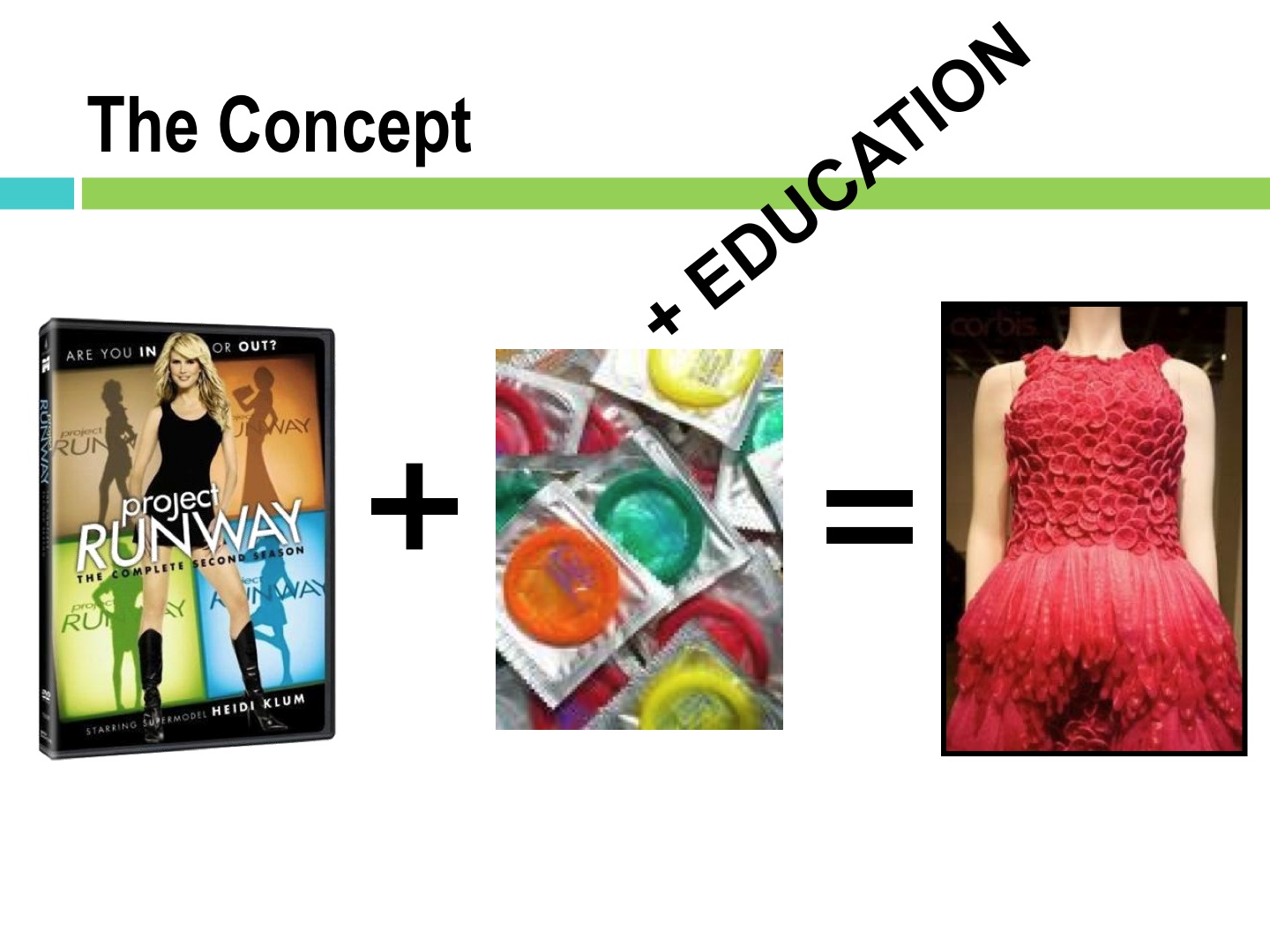
I recently attended the massive American Public Health Association meetings in Denver, where there were a number of scientific sessions on topics related to reproductive and sexual health. One of the more exciting sessions for me was a session on “Sexual Health Issues of Youth,” where Professor Lisa Lindley (Global & Community Health, George Mason University) discussed the philosophy and impact of a creative sex education program called “Project Condom.” This program combines the concept of “Project Runway” with condom couture for the intended impact of promoting safer sex.
Powerpoint slide from Lindley's APHA presentation, borrowed with permission.
“Project Condom” is the creative brainchild of Ryan Wilson, who works in Student Health Services at University of South Carolina. Together with Lindley (who was then a professor at USC) and a team of USC faculty, staff, and students, Wilson has now seen Project Condom through its third season. (In addition to being inspired by Project Runway, Wilson’s team was also extending the work of Adriana Bertini, a designer/activist credited for creating the idea of condom couture.)
Student groups participating in Project Condom are provided with 1,000 condoms in assorted colors. Each group develops a PG-13 theme for their design (e.g. pregnancy prevention, STI/HIV protection, abstinence). The judges (most recently including Santino Rice from Project Runway) rate the designs on 5 criteria: Overall concept and theme, use of condoms or abstinence symbol, creativity, stage presence, and interview justification. To see video footage of Project Condom click here: Project Condom, Season 3
Besides offering a forum for artistic expression, there is evidence that Project Condom is increasing both awareness of sexual health and propensity for using condoms amongst USC students. (Evidence based on surveys of audience members of Project Condom as well as increased volume of free condoms being taken on campus).
Project Condom is now being replicated at George Mason University as well:
We at Sexuality & Society applaud Wilson, Lindley, and the Project Condom team for this promising Sexual Health approach!
Chapel of St. Ignatius, Seattle University. The design of this chapel is based on the metaphor of "A Gathering of Different Lights," which "describes Seattle University's mission" as well as "St. Ignatius' vision of the spiritual life as comprising many interior lights and darknesses, which he called consolations and desolations." (SU chapel website).
It has been a Wild-kind ofmonth for faculty, staff, and students at Marquette University and Seattle University. After President Wild of Marquette University tore up a signed job contract with a woman who would be their first “out” Lesbian administrator (Jodi O’Brien, of Seattle University) many faculty, staff, and students on both MU and SU campuses have been left in turmoil.
Although Marquette has managed to “resolve” this conflict with a negotiated settlement, President Wild’s actions call into question a number of basic academic assumptions including: 1) the honesty of Marquette University’s statements on commitments to diversity and anti-discrimination, 2) the assumption that GLBTQ people are welcome community members within Jesuit institutions (unlike conservative Catholic and Evangelical Protestant institutions, Jesuits are known for their tolerance, encouragement of fearless intellectual curiosity, and commitment to social justice), and 3) the assumption that University faculty have the rights and responsibilities of sharing the governance of their institution.
Milwaukee Archbishop Jerome Listecki, a key player in convincing Marquette President Wild to tear up his job contract with Jodi O'Brien
The recommendation to hire Dr. O’Brien as Dean of Arts & Sciences at Marquette came after two years of committee searches, interviews, and deliberations. The President and Provost of Marquette also met with committee members and all job candidates, and signed on with the decision to offer the job to O’Brien. This extensive vetting process was obliterated after two local conservative Catholic leaders (neither of them faculty or staff members at Marquette) caught wind of O’Brien’s hire. Somehow, unbelievably, these two men (Milwaukee Archbishop Jerome Listecki and Father Paul Hartmann, the archdiocese’s judicial vicar) were able to trump the entire academic administrative vetting process at MU. The search committee and was abruptly informed that their input — as well as O’Brien’s administrative leadership skills — was neither needed nor welcome.
Despite the strong suspicion among many that this is a clear case of discrimination based on sexual orientation, President Wild has maintained throughout the aftermath of his rescinded offer that this is simply about a mismatch between O’Brien’s scholarship and Marquette’s mission. Wild has yet to adequately specify how and where O’Brien’s scholarship is anti-Marquette, anti-Jesuit, or anti-Catholic, but Father Paul Hartmann (one of the two local church officials who complained) explains that O’Brien investigates a particular “subject matter” that may create “dichotomies,” “tensions,” and “contradictions.” According to the Milwaukee Sentinel (May 12, 2010):
“Hartmann sent a March 3 letter to the chair of the search committee that said the gender studies professor “pursues subject matter that seems destined to actually create dichotomies and cause tensions (if not contradictions) with Marquette’s Catholic mission and identity.”
As long-time colleague, mentee, and friend of Jodi O’Brien, and as a former lecturer at Seattle University (a place I still hold near and dear to my heart) I am very familiar with O’Brien’s work, as well as her commitment to Jesuit education. Ironically, what the conservative church leaders fear is actually what makes O’Brien a successful Jesuit scholar and administrator. Namely, O’Brien’s ability to embrace (rather than denounce or deny) contradictionsand tensions— may in fact be a pinnacle Jesuit model of intellectual and spiritually complexity.
In her 2009 Presidential address to the Pacific Sociological Association, Professor Jodi O’Brien describes the personal growth that comes with wrestling religious and spiritual contradictions:
My research with queer Christians led me to understand and define the social self as a process of wrestling contradiction. We are in a constant state of becoming. This “becoming” is shaped through processes of interaction and revealed through the internal dialogues in which we observe, feel, comment on, and try to make sense of our own complexity. The process of self-understanding is a dialectical process of definition, a continual interplay between personal experiences and attempts to fit experience into existing conceptual categories and representations. All of us struggle to make sense of ourselves, to find ways of self-expression, and to be heard and understood. Our sense of self undergoes constant revision as it encounters friction, contradiction, and conflict along the various boundaries that constitute meaning (O’Brien 2009, Pp. 15–16).
She continues to describe how the intellectual process of finding connections in the face of conflict provides an opportunity for personal as well as professional transformation:
Isn’t this what we’re doing as sociologists when we strive to practice scholarship that matters: finding connections, revealing patterns, striving to bridge seemingly contradictory perspectives by offering deeper, richer frameworks of understanding? My suggestion is that when we experience fully the contradiction, conflict, and pain of engaging with our own teaching and research, we can’t help but be transformed …. This produces an epistemology of contradiction that, together with the principles of the “sociological imagination,” enables us to navigate through complex personal and professional terrain in ways that both resonate and inspire (O’Brien 2009, P. 20 )
Rather than embracing the powerful teaching moments of such everday contradictions, Marquette University officials have chosen to rescind them, putting themselves closer to the edges of rigidity, fear, and fundamentalism, rather than intellectual curiosity, creativity and, I would argue, spiritual vitality.
I will leave it to Jodi O’Brien to describe the nuances and evolution of her thinking throughout her illustrious scholarly career. However, for those interested in reading more about how stereotyping and prejudice works, O’Brien’s own social psychology textbook, The Production of Reality is a great resource. In this text as well as in the dozens of lectures she’s given to churches and universities around the country, including other Jesuit Catholic universities, O’Brien teaches us about the subject matter of “permissible prejudice” – in other words, prejudice that is deemed ok if those in positions of authority justify it as such through their actions or non-actions.
And it is this critical perspective on prejudice and power that is the deeper “subject matter” at hand. This is the kind of subject matter that creates critical reflection on all forms of power relations, including but certainly not limited to that pertaining to religious institutions. This is precisely why those invested in maintaining an uncritical stance on particular power relations within the larger Marquette community needed her to leave; this is also precisely why Gay Catholics and religious academics need leaders like O’Brien now more than ever.
———————————————–
Referenced and recommended sources:
O’Brien, J. (2009) “Sociology as an epistemology of contradiction.” Sociological Perspectives 52, 1, 5-22.
O’Brien, J. (2007).”Queer Tensions: The Cultural Politics of Belonging and exclusion in same gender marriage debates.”” Pp. 125-149 in Interdisciplinary Readings on Sex and Sexuality. Amsterdam: Rodopi.
O’Brien, J. (2005). The Production of Reality: Essays and Readings in Social Interaction, 4th Edition. Newbury Park, CA: Pine Forge Press (Sage).
O’Brien, J. (2002). “Heterosexism and Homophobia.” Article length entry for the International Encyclopedia of Social and Behavioral Sciences. Oxford: Elsevier Publishing.
Administrators at Marquette University have found themselves in an awful mess this week after revoking a job offer to Jodi O’Brien, their top candidate for the position of Dean of Arts & Sciences. (See our earlier post for details on the case).
The official reason for this radical breach of academic, professional, and legal decorum is still murky, coded in terms like “marriage,” “family,” and “the Catholic mission.” President Wild and Marquette spokesperson Mary Pat Pfeil claim that the reversal had nothing to do with the fact the O’Brien is a lesbian. Indeed, since she was “out” during the entire process, this might be true. Indeed, Marquette’s website includes several specific references to the idea that discrimination based on sexual orientation is not acceptable. Below is one example:
As a Catholic, Jesuit university, Marquette recognizes and cherishes the dignity of each individual regardless of age, culture, faith, ethnicity, race, gender, sexual orientation, language, disability or social class …Through ouradmissions and employment policies and practices, our curricular and co-curricular offerings, and our welcoming and caring campus environment, Marquette seeks to become a more diverse and inclusive academic community dedicated to the promotion of justice. …(Marquette University’s statement on Human Dignity and Diversity.)
So if O’Brien wasn’t disqualified because she is gay, per se, what is “really” going on? Maybe it’s just the sort of gay she is, the sort who likes to talk openly about sexuality, and moreover to discuss it critically within the context of social institutions such as religion and family. An article in the Milwaukee Journal Sentinel provides a few more clues in this direction:
Officials haven’t provided more detail about what writings might have raised red flags. But Wild told members of the dean search committee last week that there was an article in which “sex positions” and “sex toys” were mentioned, and that the passage could be interpreted as autobiographical, said psychology professor Stephen Franzoi, who served on the committee. O’Brien’s work includes a sociological study of vignettes on lesbian sex. Franzoi said members of the search committee reviewed the work again and did not believe the passages were autobiographical and that the article was a scholarly work.
So let’s get (or make) this story straight:
Jodi O’Brien has worked and lead for 15 years in a Jesuit institution (Seattle University), and is an enthusiastic proponent of the Jesuit mission (e.g. see her cover letter to Marquette).
Marquette’s interpretation of the Jesuit Mission is to NOT discriminate on the basis of sexual orientation.
Marquette and O’Brien agreed that their union would be mutually beneficial.
After Marquette proposed a job offer and O’Brien accepted, leaders in the Marquette extended family became concerned about O’Brien: In particular, her critique of the patriarchal family and her open discussion of non heteronormative sexuality. These previously unnamed members (today named as two Milwaukee archdiocese leaders, judicial vicar Paul Hartmann and Archbishop Jerome Listecki) became suspicious that O’Brien’s writings were not purely intellectual, but could be actual autobiographical and public representations of a sexual life led outside of heteronormative boundaries.
Simply stated, my conclusion is this: This is not a conflict between O’Brien’s lesbian identity and Marquette’s Catholic Jesuit Mission. This is about conservative, Milwaukee-based Church officials needing to divert the attention (of parishioners, as well as of media) away from critical sexuality scholarship and back toward its (silent) missionary position.
O’Brien’s critical sexuality scholarship is threatening to conservative Church leaders because it calls into question the utility of silence around discussing sexual matters. This is much more than just about an Archbishop’s distaste for sex toys: this is about a distaste for discussion of the great sexual variance found within the human species and analysis of how heterosexist family formations are not universal and “natural” but are created, regulated, and enforced by social institutions such as the Catholic Church.
Make no mistake, there are many people living and working within Catholic and Jesuit instituions who live their lives outside of heternormative married couples and families. The very core of Catholicism is based on elevating these non heteronormative models in the form of priests and nuns.
Unlike some religious traditions, Catholicism offers women and men a legitimate option to REFRAIN from marriage and to join vibrant homosocial communities. But the Marquette situation illustrates that this freedom from marriage and heterosexuality may be delicately balanced upon a strict code of silence. Even if a Marquette faculty or staff member has no personal interest in marriage or heterosexuality, the lesson learned here is that they must only discuss these views and practices in distinctly NON-SEXUAL ways. Although invisible on Marquette’s website, the consequence of violating the code of sexual silence is real. O’Brien got dis-invited to lead the Marquette family not because she crossed a line of heteronormativity, but because she discussed these matters publicly.
Last month Marquette University –a Jesuit University in Milwaukee, Wisconsin — offered esteemed Sociologist Jodi O’Brien the position of Dean of the College of Arts & Sciences. After carefully weighing the vast professional and personal transitions that such a move would entail, O’Brien accepted the offer. She signed the contract and mailed it back to Marquette. She and her partner were preparing to put an offer on a house in Milwaukee. But early last week, after pressure from unnamed sources, Marquette backtracked. The official reason? As Marquette President Father Wild told the New York Times,“We found some strongly negative statements about marriage and family.”
This abrupt turn away from O’Brien — a job candidate actively pursued by search committees at Marquette for the past TWO years — has left O’Brien’s extensive and loyal network of colleagues, friends, and students vacilliating between complete disbelief and rage. Hundreds of her would-be Marquette colleagues and students are also shocked by this news and have organized several protests. Two Facebook support groups have emerged, one originating from Marquette, one from Seattle University. Marquette Professor of Theology Daniel C. Maguire has written a scathing open letter to Marquette President Robert Wild and Provost John Pauly, calling for Wild’s resignation and for Wild’s successor to re-offer the job to O’Brien.
In this post we will simply list some of the facts of this case. We will provide an overview of O’Brien’s scholarship, as well as the legal and social implications of Marquette’s actions in a follow-up post.
Jodi O’Brien has been a leader at her home institution of Seattle University (a Jesuit University) since she arrived as an Assistant Professor in 1995. She quickly became promoted to Associate Professor and has served as Chair of the department of Anthropology, Sociology, and Social Work for seven years. O’Brien was promoted to Full Professor since 2005. In 2007 she received the honor and responsibility of being named the Lewis B. Gaffney Endowed Chair, a two year rotating position that carries with it the mandate of connecting academic and community life with the Jesuit mission.
Dr. O’Brien has a long history of leadership positions in national professional organizations including the American Sociological Association and the Pacific Sociological Association. From 2008-2009 O’Brien served as President of the Pacific Sociological Association.
O’Brien is the author of dozens of articles and the author and editor of several books, including Everyday Inequalities, and The Production of Reality (now in its 4th edition), a leading textbook in the field of Social Psychology.
O’Brien was an out lesbian during the entire interview process.
O’Brien was offered the job. She accepted the job, signed the contract, and mailed it back to Marquette.
When Marquette rescinded their offer, Marquette spokeswoman Mary Pat Pfeil told the Journal Sentinel that this was not specifically due to her sexual orientation but because of some of her scholarship “relating to Catholic mission and identity.”
Marquette’s excuse for reversing their offer is not sitting well with many, including those deeply committed to the Catholic and Jesuit mission. In his letter to Marquette University President Father Wild, Professor Maquire is incredulous that although Father Wild and Provost Pauly based their “decision on an interpretation of what was or what was not compatible with Catholic teaching,” they did not consult Catholic theologians in their decision. Maguire scolds:
(Y)ou did not consult the faculty experts on Catholic moral teaching on this campus. The Theology Department is one of the major theologates in North America, just a few yards away from your offices.
As well, Maguire reminds Father Wild and Provost Pauly that they also “ignored teachers of ethics in the Philosophy department and professors in Sociology, Dr. O’Brien’s field.”
As professors in Sociology and long term colleagues of Dr. O’Brien, we are most happy to offer our assessment of O’Brien’s scholarship on religion and sexuality. Stay tuned.
“Sexting” — the practice of sending sexy words and images from cell phones from person to person– has suddenly emerged as the newest social problem for American youth. News reports overwhelmingly describe sexting as a new teenage trend which is “alarming,” “dangerous,” and “shocking.” Parents of minors are told be on red alert. Sales are on the rise for “net nanny” controls, which alert parents via a text message if their child visits an “inappropriate” web site and/or sends or receives “inappropriate” email or instant messages. Parents are advised to pay extra cell phone fees to block all images–sexual or not—from their children’s phones. The underlying message of most news reports is this: if parents don’t put a stop to sexting, their children will end up traumatized, endangered, in jail, or dead. Read on, as we’re not making this up.
This sort of alarmist language, suddenly emerging as a sort of moral tsunami, is a fantastic example of what sociologist Stanley Cohen has termed a “moral panic.” According to Cohen, moral panics are reflections not of any inherent physical threat but of threats to existing moral orders. Moral panics are driven by the construction of a “folk devil” — symbolized by a group or a social movement seen as causing a threat to a particular moral order. Using this framework, the moral panic around sexting reflects deeper social fears — for example around loss of parental authority and increasing teen agency over their own sexuality. The folk devil responsible for this moral threat lives in “cyberspace” and in some cases may be “cyberspace” itself.
From what I can tell, the growing visibility of, and panic over, sexting was at first largely generated by media personalities such as Dr. Phil and Matt Lauer of the Today Show. Since then, dozens of news outlets have featured stories on sexting. Surveys on sexting have been quickly conducted and released: MTV asked teens about the prevalence of their sexting; CS Mott Children’s Hospital National Poll on Children’s Health asked parents about how concerned they were about teen sexting. The results, as reported in the media are as follows: Teens are sexting like crazy, and parents are freaking out.
Dr. Phil was one of the first to discuss this on a national stage with a show in April 2009 called, “Scary Trends: Is your Child at Risk?” In the video promo for the show, Dr. Phil warns in his classic fatherly drawl: “There are some dangerous trends popping up in schools everywhere, and you may not even know if your children are getting involved.”
The camera cuts to video shots of three pairs of young white hands (two identifiably female) punching keys on a cell phone. A voiceover from deep, spooky-sounding male voice says: “The disturbing new trend, called sexting, sending nude shots from phone to phone.” (the word NUDE is flashed on screen).
Next we see and hear clips of a white woman talking about her daughter, who we gather, was a “sexter.” The spooky male voiceover comes back: “It nearly killed her daughter.” The camera shoots back to the mom, eyes pleading for Dr. Phil’s forgiveness: “We thought we were doing everything right, Dr. Phil.” Dr. Phil nods, knowingly. The Spooky voiceover states: “how to protect your children.” The camera cuts back to Dr. Phil, who points to the camera and warns: “Don’t think it’s not your kid!” (Click here to see this short promo).
Dr. Phil’s “Scary Trends” program arrived on the heels of a few stories, some tragic, found in the news in the previous weeks and months. For example, in separate cases, two teenage boys (one in Wisconsin, one in New York) were charged with “child pornography” after sharing digital photos of their girlfriends posing nude. In another case, four middle school girls in Alabama were arrested for exchanging naked photos of themselves (ABC news, March 13, 2009). In all of these cases, the photos were being exchanged for and among peers. None of these photos were sold. And yet, teens taking pictures of themselves, their partners, and/or their friends are now being labeled and punished as child pornographers by the criminal justice system.
The most tragic stories however are of two teen girl suicides; both killed themselves after they were viciously bullied, sexually shamed, and socially isolated from their peers. In both cases the girls were inadequately defended, and even further shamed and punished by, teachers, school administrators, and parents. Jesse Logan, a vivacious 18 year-old from Ohio hanged herself in her bedroom after being targeted for torment by other girls at school. Jesse had sent a nude photo of herself to her boyfriend, and in retaliation when they broke up the boyfriend sent the photo to a group of younger girls. The younger girls ran with the photo, using it as a powerful social shaming tool (which of course can only work within a social context where girls’ sexuality is shameful). In an interview with Matt Lauer of the Today Show, Jesse’s mother, Cynthia Logan, said that:
“…she never knew the full extent of her daughter’s anguish until it was too late. Cynthia Logan only learned there was a problem at all when she started getting daily letters from her daughter’s school reporting that the young woman was skipping school.
“I only had snapshots, bits and pieces, until the very last semester of school,” Logan told Lauer. She took away her daughter’s car and drove her to school herself, but Jesse still skipped classes. She told her mother there were pictures involved and that a group of younger girls who had received them were harassing her, calling her vicious names, even throwing objects at her. But she didn’t realize the full extent of her daughter’s despair. “She was being attacked and tortured,” Logan said.
“When she would come to school, she would always hear, ‘Oh, that’s the girl who sent the picture. She’s just a whore,’ ” Jesse’s friend, Lauren Taylor, told NBC News.
Logan said that officials at Sycamore High School were aware of the harassment but did not take sufficient action to stop it. She said that a school official offered only to go to one of the girls who had the pictures and tell her to delete them from her phone and never speak to Jesse again. That girl was 16. Logan suggested talking to the parents of the girls who were bullying Jesse, but her daughter said that would only open her to even more ridicule.
In this same interview with Matt Lauer, Cynthia Logan described her unsuccessful legal attempts (she tried six attorneys) to hold school officials accountable for not intervening in the bullying of her daughter. Lauer turned to his guest, Parry Aftab, described as “an Internet security expert and activist in the battle to protect teens from the dangers that lurk in cyberspace.” In a stunning re-direction of the issue of school accountability for creating bully-free zones, Aftab brought the discussion back to laws about child pornography:
“If somebody’s under the age of 18, it’s child pornography, and even the girl that posted the pictures can be charged. They could be registered sex offenders at the end of all of this. Even at the age of 18, because it was sent to somebody under age, it’s disseminating pornography to a minor. There are criminal charges that could be made here.”
Here’s the take home message we get from the Today Show: don’t worry about madonna/whore dichotomies that are spread among youth and adults. The main thing we should be concerned with is that Jesse “fell victim to the perils of the Internet and the easy exchange of information on cell phones.” So let’s be clear: The source of Jesse’s anguish and eventual suicide is not the unrelenting and unchecked bullying at school but the fact that cyberspace (folk devil that it is) made her into a perpetrator of child pornography. And don’t forget, parents: child pornographers go to jail, and you don’t want your kid to go to jail.
Hope Witsell was only 13 when she killed herself in her bedroom, also by hanging. Hope, a girl from a conservative Christian Florida family, had sent a topless photo of herself to a boy crush. The boy showed the photo to a friend, who embraced the opportunity to gain social power by sharing it widely with kids in that school and neighboring schools. The following comes from a story about Hope on Today, MSNBC.com:
While Hope’s photo spread, her friends rallied around her in the midst of incessant taunting and vulgar remarks thrown Hope’s way. Friends told the St. Petersburg Times, which originally chronicled Hope’s story, that they literally surrounded Hope as she walked the hallways while other students shouted “whore” and “slut” at her.
“The hallways were not fun at that time — she’d walk into class and somebody would say, ‘Oh, here comes the slut,’ ” Hope’s friend, Lane James, told the newspaper.
Clearly, the taunts were getting to Hope. In a journal entry discovered after her death, Hope wrote, “Tons of people talk about me behind my back and I hate it because they call me a whore! And I can’t be a whore. I’m too inexperienced. So secretly, TONS of people hate me.”
Shortly after the school year ended, school officials caught wind of the hubbub surrounding Hope’s cell phone photo. They contacted the Witsells and told them Hope would be suspended for the first week of the next school year.
Donna Witsell told Vieira that she and her husband practiced tough love on Hope, grounding her for the summer and suspending her cell phone and computer privileges.
In her interview on the Today Show with Meredith Vieira, Hope’s mother was joined, just as Jesse’s mom was, by the same Parry Aftab, proponent of internet safety measures. Again, Aftab directed the viewers away from thinking about adult accountability in protecting the rights of teens to not be shamed and bullied about their bodies. In fact, parents and their girls are all innocent here in Aftab’s view. Aftab even reassured Hope’s mother that her child wasn’t a bad girl; in fact, Aftab points out that Hope’s suicide is actually a sign that she came from a “good” home because kids with good morals have more guilt when they stray sexually:
Good kids are the ones this is happening to; Jesse was a great kid, and now we have Hope,” she said. “Good kids; they’re the ones who are committing suicide when a picture like this gets out.” (Parry Afteb, speaking to Hope Witsell’s mother on the Today Show).
Dr. Phil, the Today Show, and countless other media sources are doing teens, and especially girls a great disservice by offering content, tone, and implications of their sexting panic. Instead, a much more helpful and interesting perspective on the issue would be to explore the following questions and lines of reasoning:
What are the gendered sexual, class, and race dynamics of the panic over sexting? It seems that white “good” girls are at most “risk”: let’s talk about why, and what it is that is at stake! Should we panic over boys as well?
Why do so many adults remain complicit in the sexual shaming and bullying of kids?What models can be used to talk openly about sexuality at school, and to create a safe learning environment for all kids regardless of their sexual expressions?
Related to the above, how do school curriculums that teach/preach abstinence only sex education (which implicitly and explicitly underscore a Madonna/Whore dichotomy) encourage and facilitate the bullying and shaming of girls? How do they set up a gendered system that assumes that girls are usually sexual victims and boys are usually predators?
How can sexual health and justice scholars work with parents, teachers, school administrators, and teen advocates around these issues?
How does a concern with protecting girls’ sexual purity come at the expense of NOT protecting their sexual and human rights?
Recommended readings & resources:
Cohen, Stanley. 1972 (reprinted in 1980, 1987, 2002). Folk Devils and Moral Panics. Routledge: NY.
Miller, Alice. M. 2004. “Sexuality, Violence against Women, and Human Rights: Women make Demands and Ladies get Protection.” Health and Human Rights 7, 2.
The Safe Schools Coalition focuses on providing safe and supportive school environments for GLBT students. This model is useful for understanding how a rights based — versus a shame based — approach can be used in cases of school-based sexual bullying.
I learned this morning that this first week of October is National Sex Education week (I’m not sure how these weeks get to be declared, but a quick google search confirms that a number of reproductive health organizations are on board).
“Abstinence education works” … “My amendment restores a vital funding stream so that teens and parents have the option to participate in programs that have demonstrated success in reducing teen sexual activity and, consequently, teen pregnancies.”
In response to this news, Elisabeth Garber-Paul of RH Reality Check writes:
I thought we all decided that abstinence only education doesn’t work. And I don’t mean “we” as in the pro-choice reproductive rights community—I mean students, teachers, parents, school boards, and even the president.
But I guess some members of congress didn’t get the memo.
It *is* really striking how, even in the face of overwhelming scientific evidence to the contrary, Abstinence-only proponents insist that this form of education “works.”
But this is because the movement toward more abstinence-only approaches is driven almost entirely by conservative religious ideology, not scientifically reliable evidence.
Virtually no public health professionals and no credible scientific assessments support it (Santelli et al 2006c). In fact, public health scholars broadly support comprehensive sex education (Duberstein et al 2006) and have offered vociferous critiques of abstinence based approaches and policies, both domestically (Fortenberry 2005; Santelli et al. 2006 et al. 2006a; 2006b; Dworkin and Santelli 2007) and internationally (Human Rights Watch 2004; Cohen and Tate, 2005). The majority of parents in the United States also report that they prefer comprehensive sex education for their children (Henry Kaiser Family Foundation 1998; National Campaign to Prevent Teen Pregnancy 2003).
Fortunately, Hatch’s proposal (which barely passed in the Senate Finance Committee by 12-11), will still need House and Senate approval. Let’s hope that our Representatives in the House and Senate consult with credible public health researchers before they vote on this important topic.
—-
Bibliography:
Cohen, J. and Tate, T. (2005). “The less they know, the better: Abstinence-only HIV/AIDS programs in Uganda.” Human Rights Watch. Available: http://hrw.org;reports/2005/uganda0305/uganda0305.pdf.
Dworkin, S. and Santelli, J. (2007). “Do Abstinence-Plus Interventions Reduce Sexual Risk Behavior among Youth?” PLoS Medicine 4, 9, e276.
Fortenberry, J.D. (2005). “The Limits of abstinence-only in preventing sexually transmitted infections.” Journal of Adolescent Health 36, 269-270.
Henry J. Kaiser Family Foundation/ABC Television. 1998. Sex in the 90s: 1998 National Survey of Americans on Sex and Sexual Health.
Human Rights Watch. (2004). “The Philippines. Unprotected: Sex, Condoms, and the Human Right to Health.” New York: Human Rights Watch, May 2004.
National Campaign to Prevent Teen Pregnancy. 2003. With One Voice: America’s Adults and Teens Sounds Off About Teen Pregnancy. Washington, D.C.: National Campaign to Prevent Teen Pregnancy.
Santelli, J.S. et al. (2006a). “Abstinence and abstinence-only education: A review of U.S. policies and programs.” Journal of Adolescent Health 38, 72-81.
Santelli, J.S. et al. (2006b). “Abstinence-only education policies and programs: Aposition paper of the Society for Adolescent Medicine.” Journal of Adolescent Health 38, 83-87.
Santelli, J.S. et al. (2006c). Letters to the Editor. “The Authors Reply.” Journal of Adolescent Health 39, 152-153.
About Sexuality and Society
Sexuality & Society explores relationships between social institutions, cultural practices, sexual health, and sexual policy. Read more…

 Foundation’s decision to cut funding to Planned Parenthood due to anti-abortion sentiment in Komen leadership resulted in enormous public outrage, lack of subsequent support for the Komen foundation, and eventually a reversal of the decision. It remains to be seen how well the Komen Foundation will be able to recover, especially given the critical documentary about Komen entitled Pink Ribbons — which was coincidentally released just after the Planned Parenthood defunding debacle. In contrast, public support for Planned Parenthood seemed to grow stronger than ever:
Sarkeesian, who runs the video blog Feminist Frequency, became a target of abuse—including rape and death threats—last May after launching a Kickstarter fundraising drive for a project promising to explore sexist gender tropes in video games.



 scholars of sport and gender continue their critique of Penn State as an example of masculinist sport cultures [for example, see: Cooky, C. (2012). Success without honor: Cultures of Silence and the Penn State Scandal. Cultural Studies/Critical Methodologies, 12, 328-331]. In July of 2012 a blistering report was also released by Louis J. Freeh, former FBI director.
protests and candlelight vigils in places like the western city of Cochin in Kerala, the outsourcing hub of Bangalore and New Delhi, the capital. Just a tiny sliver of India’s population can afford a computer or has access to the Internet, but the young, educated subset of this group has become increasingly galvanized over the New Delhi rape case.( http://www.nytimes.com/2012/12/30/world/asia/india-rape-delhi.html?_r=0)

“This bill bans non-scientific ‘therapies’ that have driven young people to depression and suicide,” Brown said in a statement. “These practices have no basis in science or medicine and they will now be relegated to the dustbin of quackery.” (http://latimesblogs.latimes.com/california-politics/2012/09/governor-jerry-brown-gay-therapy-minors.html)


 school officials for including this as part of a pragmatic and non-shaming approach toward reducing STI rates for Philadelphia teenagers.











 Dr. Phil was one of the first to discuss this on a national stage with a show in April 2009 called, “Scary Trends: Is your Child at Risk?” In the video promo for the show, Dr. Phil warns in his classic fatherly drawl: “There are some dangerous trends popping up in schools everywhere, and you may not even know if your children are getting involved.”
 sent a nude photo of herself to her boyfriend, and in retaliation when they broke up the boyfriend sent the photo to a group of younger girls. The younger girls ran with the photo, using it as a powerful social shaming tool (which of course can only work within a social context where girls’ sexuality is shameful). In an interview with
  sent a topless photo of herself to a boy crush. The boy showed the photo to a friend, who embraced the opportunity to gain social power by sharing it widely with kids in that school and neighboring schools. The following comes from a story about Hope on