Category Archives: religion

Top ten Sexual Stories of 2012


For the fourth New Year’s Eve in a row, Sexuality & Society brings you its (highly subjective and mostly North American/U.S.-centered) list of top ten sexual stories of the year! This year’s stories are full of shreds of hope and resolve for finding allies in the ongoing effort toward sexual justice and a large dose of old-fashioned us vs. them political fights. (Just a heads-up that we won’t be bringing you the story of Princess Kate and her topless photos, but we were amused/bemused at how much press that story received).
For a walk down sexual memory lane we encourage you to (re) check out our lists for 2009, 2010, and 2011 as well!
1. Susan B. Komen foundation defunds breast screenings at Planned Parenthood.
Although we are used to high profile conservatives attempting to put Planned Parenthood out of business, this story of pink-on-pink malignment caught most of us in Sexual and Reproductive Justice circles by surprise. The Komen Foundation’s decision to cut funding to Planned Parenthood due to anti-abortion sentiment in Komen leadership resulted in enormous public outrage, lack of subsequent support for the Komen foundation, and eventually a reversal of the decision. It remains to be seen how well the Komen Foundation will be able to recover, especially given the critical documentary about Komen entitled Pink Ribbons – which was coincidentally released just after the Planned Parenthood defunding debacle. In contrast, public support for Planned Parenthood seemed to grow stronger than ever:
“The silver lining is that more people than ever are aware that Planned Parenthood provides breast exams, and we’re seeing more people calling us today to make an appointment,” Tait Sye, a spokesperson for Planned Parenthood, told HuffPost. “Politics should not get in the way of women’s health, and people respond powerfully when they see politics interfering with women’s health.” http://www.huffingtonpost.com/2012/02/01/susan-g-komen_n_1247262.html
2. Anita Sarkeesian vs. the (online, sexist, and sexually abusive) trolls.

When Feminist Frequency blogger and media activist Anita Sarkeesian announced that she was going to start a new project to address stereotypes of women in video games, some male gamers responded with vicious online attacks:

Sarkeesian, who runs the video blog Feminist Frequency, became a target of abuse—including rape and death threats—last May after launching a Kickstarter fundraising drive for a project promising to explore sexist gender tropes in video games. 

“I love playing video games but I’m regularly disappointed in the limited and limiting ways women are represented,” Sarkeesian wrote. “This video project will explore, analyze and deconstruct some of the most common tropes and stereotypes of female characters in games.”

In response, Sarkeesian was hit with what she calls a “cyber mob” from angry male gamers. Hundreds of abusive tweets flooded her Twitter feed, threatening violence and sexual assault. Vandals attacked her Wikipedia page, plastering it with explicit sexual images, violent images, sexism and racism. Someone even created a video game where users were invited to “beat the bitch up” and punch a digital version of Sarkeesian’s face until it became battered, bloody and bruised. 

Sarkeesian fought back, chronicling the harassment on her blog and speaking to dozens of news outlets. She’d originally set a humble fundraising goal of $6,000. But after the torrent of abuse received widespread media attention, donors flooded her page. Sarkeesian finished the Kickstarter campaign with nearly $160,000, or about 25 times what she’d asked for.  (http://www.dailydot.com/culture/anita-sarkeesian-ted-talk-misogynist-comments/)

3. Chick fil-A hates Gays, er…”supports ‘Biblical’ families.”

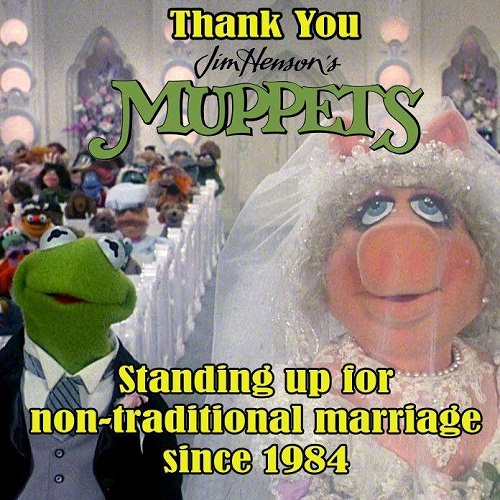
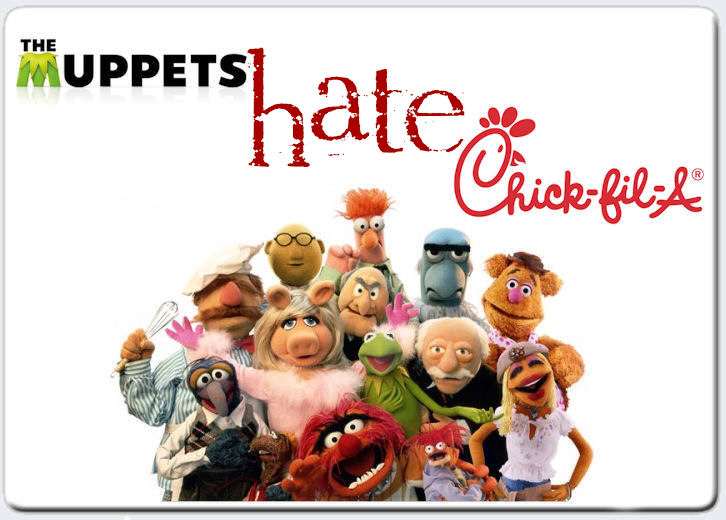
Chick fil-A — an Atlanta based company known for their fried chicken sandwiches– went public with its official disdain for those who live outside of the institution of heterosexuality by donating money to organizations fighting gay marriage. As with the Komen public relations debacle, this story was met with protests and boycotts against Chick fil-A, including critical public statements made by Boston mayor Thomas Menino, Chicago mayor Rahm Emmanuel, and San Francisco Mayor Edwin M. Lee, and a decision by the Jim Henson Company (AKA the Muppets!) to cease all business partnerships with Chick fil-A. (Meanwhile they may have gained some new customer loyalty from social conservatives).  

Chick fil-A did eventually announce that it would cease to fund anti-gay organizations, but its president has remained firm in his stance that he still doesn’t like the gays…

… Chick-fil-A President Dan Cathy doubled down on his company’s anti-gay stance yet again, re-iterating the restaurant chain’s support of “Biblical” families.

“Families are very important to our country,” Cathy told NBC affiliate 11 Alive. “And they’re very important to those of us who are concerned about being able to hang on to our heritage. We support Biblical families, and they’ve always been a part of that.” (http://www.huffingtonpost.com/2012/10/25/chick-fil-a-business-thriving_n_2016864.html)

Given the enormous diversity of family forms in the Bible, it’s surprising that Chick fil-A representatives have not yet
clarified which “Biblical” families they DO support …(don’t forget that traditional Biblical families are full of polygamy and inclusion of concubines). Regardless, it’s clear that Kermit, Miss Piggy, and their fans stopped going to Chick fil-A for their lunch break

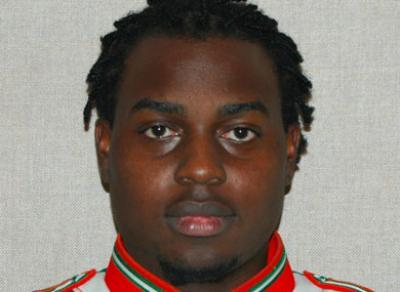
 4. Florida A & M drum major hazed to death; push for an end to hazing on college campuses.

Hazing — and subcultures emphasizing violence and conformity to traditional gender roles on U.S. College campuses — hit the news in 2012 with the death of Robert Champion, an African-American out gay male drum major, and who had made his opposition to hazing openly to his peers. While Champion died in 2011, this story makes our top ten stories for 2012 due to its ongoing media attention and its major impact on institutional transformation at Florida A & M and beyond.

Rober Champion died as a result of hazing in Nov. 2011

Robert Champion died on Nov. 19, 2011, after a ritual called “crossing bus C,” in which band members are forced to walk through a line of band members who are each kicking or punching the person walking by. He began vomiting, complained of breathing difficulty, and later died. Initially, his band mates claimed that they had no idea, according to according to the Palm Beach Press. His parents later told reporters that witnesses had come forward and said that their son was hazed for being gay, or ironically, for being against hazing rituals himself. (http://www.advocate.com/crime/2012/05/03/13-charged-hazing-death-gay-florida-am-drum-major )

The tragic incident resulted in several arrests as well as a newfound commitment by Florida A&M administrators to end the practice of hazing in University sponsored programs. Meanwhile, just before posting this story here, on Dec. 30, 2012 a scathing report was released by the Florida Board of Governors inspector general’s office which “concludes that the school lacked internal controls to prevent or detect hazing, citing a lack of communication among top university officials, the police department and the office responsible for disciplining students.” (see http://www.ebony.com/black-listed/news-views/famu-ignored-hazing-rules-before-robert-champion-death-981)

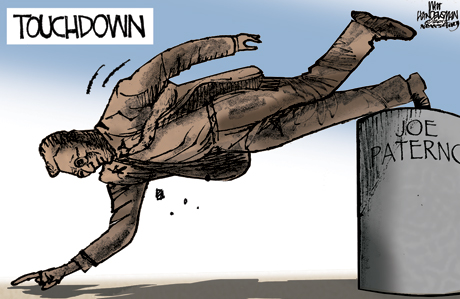
5. Sandusky goes to prison for child sexual abuse; Penn State officials condemned

The Penn State football sexual abuse scandal made our top ten list for the second year in a row. While individual-blaming solutions have prevailed (sending Assistant football coach Jerry Sandusky to prison for life; toppling the statue of former head football coach Joe Paterno), the evidence is clear that the sexual abuse that happened must be understood and addressed also within the context of big ten football and Penn State. As part of the effort to cast a wider analysis on the situation, scholars of sport and gender continue their critique of Penn State as an example of masculinist sport cultures [for example, see: Cooky, C. (2012). Success without honor: Cultures of Silence and the Penn State Scandal. Cultural Studies/Critical Methodologies, 12, 328-331]. In July of 2012 a blistering report was also released by Louis J. Freeh, former FBI director.

The report is unwavering in its condemnation of the university’s two highest levels of leadership: the president and the Board of Trustees. “By not promptly and fully advising the Board of Trustees about the 1998 and 2001 child sexual abuse allegations against Sandusky and the subsequent Grand Jury investigation of him, Spanier failed in his duties as President,” the report says. “The Board also failed in its duties to oversee the President and senior University officials in 1998 and 2001 by not inquiring about important University matters and by not creating an environment where senior University officials felt accountable.”

The most powerful leaders in the university concealed facts and failed to protect children, primarily because they hoped to “avoid bad publicity,” the report finds. But other factors contributed as well, according to the committee. Specifically, the report blames “A culture of reverence for the football program that is ingrained at all levels of the campus community.” (http://chronicle.com/article/A-Guide-to-the-Penn-State/132797/_

6 & 7. RAPE. RAPE. RAPE.

The practice and politics of rape of women continued to lead the headlines in 2012. So much so, that we’re giving it two positions on our top ten list. #6 goes to the ongoing “war on women” (reported also in our 2011 list) being waged by key U.S. conservative politicians. Instigators of this war include the Republican party’s 2012 Vice Presidential nominee Paul Ryan, who referred to rape as simply another “form of conception.” (This attempts to legitimize complete opposition to abortion, including for teenage victims of rape and incest. see: http://www.huffingtonpost.com/paul-slansky-/paul-ryan-said-something-_b_1832377.html.) GOP Senate Candidate, Todd Akin also attempted to play definitional magic by telling the public what a “legitimate” rape was, and baffled scientists and progressives alike when he claimed that women’s bodies could prevent pregnancy the case of rape. An interesting chronology of such arguments has been put together here for all of us to read given that this type of thinking is certainly not new: (See: http://www.theblaze.com/stories/why-does-todd-akin-think-rape-victims-dont-get-pregnant/)

#7 Goes to the political fury that is currently erupting around harassment and rape of women in India — with most urgent attention being placed on the case of a young woman who was brutally attacked and gang raped for hours and died of assault-related injuries.

The woman, who has not been identified, has become a symbol for the treatment of women in India, where rape is common and conviction rates for the crime are low. She boarded a bus with a male friend after watching a movie at a mall, and was raped and attacked with an iron rod by the men, who the police later said had been drinking and were on a “joy ride.”

She died Saturday morning in Singapore, where she had been flown for treatment for the severe internal injuries caused by the assault. She had an infection in her lungs and abdomen, liver damage and a brain injury, the Singapore hospital said, and died from organ failure. Her body was flown back to India on Saturday.

As news of her death spread Saturday, India’s young, social-network-using population began to organize protests and candlelight vigils in places like the western city of Cochin in Kerala, the outsourcing hub of Bangalore and New Delhi, the capital. Just a tiny sliver of India’s population can afford a computer or has access to the Internet, but the young, educated subset of this group has become increasingly galvanized over the New Delhi rape case.( http://www.nytimes.com/2012/12/30/world/asia/india-rape-delhi.html?_r=0)

Less publicized but also on our minds is the case of another young Indian woman who was recently gang raped; she committed suicide after being pressured by police to either drop her criminal charges or marry one of her attackers. We expect to be hearing much more from Indian human rights activists on this matter in the coming year.(see: http://www.nytimes.com/2012/12/28/world/asia/rape-victim-commits-suicide-in-india.html)

After all that dire news we will end with three more uplifting stories:

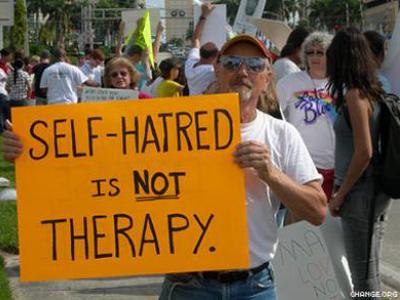
8. Movement to ban “gay conversion” therapy for minors in California.

The move to end the practice of reparative therapy (AKA Gay Conversion therapy) has made some movement in California. Governor Jerry Brown supported a new bill to ban gay conversation therapy for minors; however, the bill is currently blocked. On the Friday before Christmas (Dec. 21) “A three-judge panel of the U.S. 9th Circuit Court of Appeals agreed to block the law, scheduled to take effect Jan. 1, pending a decision on its constitutionality.” (http://latimesblogs.latimes.com/lanow/2012/12/gay-therapy-ban-placed-on-hold-in-california.html).

Gov. Jerry Brown has signed legislation prohibiting a form of therapy aimed at changing a minor’s sexual orientation from gay to straight, the first law of its kind in the nation, officials said Sunday.

Sen. Ted Lieu (D-Torrance) introduced the measure based on his belief that so-called conversion therapy isn’t based on science and is dangerous.

“This bill bans non-scientific ‘therapies’ that have driven young people to depression and suicide,” Brown said in a statement. “These practices have no basis in science or medicine and they will now be relegated to the dustbin of quackery.” (http://latimesblogs.latimes.com/california-politics/2012/09/governor-jerry-brown-gay-therapy-minors.html)

Story to be continued in 2013….


9. Same sex marriage continues to win.

Cultural representations of same sex couples also proliferated in 2012, including stories and photos in Here Come the Brides published by Seal Press. (disclaimer: Sexuality & Society co-editor Kari Lerum has an article in this book).

Gay marriage makes our list yet again this year, this time with wins in Washington, Maryland, and Maine. Additionally, the U.S. Supreme court agreed to hear two cases (one from California, one from New York), challenging state and federal marriage laws which exclude same-sex couples, and U.S. President Barack Obama became the first sitting president to finally publicly support gay marriage. (Sexuality and Reproductive justice advocates in the US and abroad also breathed a sigh of relief when Obama was re-elected to serve as US President for another four years).

(see:http://topics.nytimes.com/top/reference/timestopics/subjects/s/same_sex_marriage/index.html)

10. Free Condom Machines to be installed in Philadelphia high schools 

And our final story for the year involves a new development in Philadelphia: Condom dispensers in high schools! We commend Philadelphia school officials for including this as part of a pragmatic and non-shaming approach toward reducing STI rates for Philadelphia teenagers.

(http://www.thedenverchannel.com/news/u-s-world/philadelphia-high-schools-installing-free-condoms-to-combat-epidemic-of-stds).


Happy New Year from Sexuality & Society! Thanks to all the activists, scholars, and practitioners working toward sexual and social justice; may 2013 be filled with your stories!

Warm regards, Kari Lerum and Shari Dworkin

Top 10 Sexual Stories of 2011

As the Gregorian calendar year officially comes to a close, we offer once again a sampling of the year’s top ten sexual stories. While certainly not a complete, in-depth, or globally representative list, we do think that this list contains snippets that have both disturbing and hopeful implications for sexual justice.

10. Rick Perry steals gay, secular icons to create anti-gay Christmas message

Rick Perry in a replica of the jacket worn by Heath Ledger in "Brokeback Mountain."

 ”​By now, you’ve probably seen Rick Perry’s “Strong” ad, in which he opines, “There’s something wrong in this country when gays can serve openly in the military but our kids can’t openly celebrate Christmas or pray in school.” Not only are gays in our military, they’re also composing music for our campaign ads. As the Harvard Political Reviewpoints out, the music that plays in the background of Perry’s ad is inspired by or directly taken from Aaron Copland, a gay composer.” (Nick Greene, Dec. 10, 2011, Village Voice).

9. Herman Cain tests Mainstream American Media: What’s worse in a political candidate: Assault or Affair?

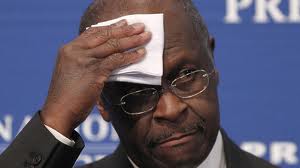
Presidential hopeful Herman Cain’s campaign abruptly crashed and burned after news media learned of his long time extra-marital lover. But this was after his multiple cases of sexual harrassment and assault against his former employees were also aired. Most news media, including reputable news outlets like the Washington Post, failed to differentiate between Cain’s alleged criminal and consensual acts, using the language of “accusation” to describe both. See for example this story with a headline of “Ginger White accuses Herman Cain of long affair.”

…”Cain denied the accusations. In an interview that aired before White’s allegations were broadcast, Cain told CNN’s Wolf Blitzer that he knows White and that the two had been friends but that there had been no sexual contact and no “affair.” He characterized their relationship as “trying to help a friend” because of her “not having a job etcetera and this sort of thing.””

The story then goes on to simply state that:

“This month, Cain was accused of sexually harassing several women.”

Such lack of differentiation between criminal and consensual sexual scandals is common among contemporary American mainstream media. Gratefully, Amanda Marcotte (Alternet, Nov. 30, 2011) provides a helpful guide for assessing the significance different kinds of sex scandals. See Marcotte’s article here: “6 Kinds of Sex Scandals: What Should be exposed? What should be left private?”

8. Wienergate

… AND speaking of the need to have more sophisticated interpretative filters around why and how some Wieners constitute a “scandal” … see article above, again. … See also our post about Anthony Weiner:

“In contrast to the Dutch, Americans love sex scandals. We love them so much that in a good year we produce and consume not just one of these high-profile scandals, but several. For many of us interested in sexual justice, the juiciest stories are those of the hypocrites: the Elliot Spitzers who lead anti-prostitute campaigns while purchasing sex; the George Rekers who champion the anti-gay movement while hiring “rent boys,” and the Newt Gingrichs who lead impeachment hearings while engaging in their own extra-marital affairs.”

7.  Obama’s Secretary of Health & Human Services overrules the FDA, pulls “morning after” pill 

Kathleen Sebelius overrules FDA recommendation

“In what can only be called an astounding move by an Administration that pledged on inauguration day that medical and health decisions would be based on fact not ideology and for which women are a major constituency, today Kathleen Sebelius, Secretary of the Department of Health and Human Services (HHS) overruled a much-awaited decision by the U.S. Food and Drug Administration (FDA) to make emergency contraception (EC) available over-the-counter (OTC) to women of all ages.

According to the New York Times, “no health secretary has ever [overruled an FDA decision] before.”  See Jodi Jacobsen’s full story in RhReality Check here.

6.  The politics of Rape. Rape committed by men against women was frequently in the news during 2011, not because the dynamics of it have changed (it’s always about maintaining/exerting symbolic power), but because some people and institutions have found new tactics of exerting and/or maintaining heterosexism. Here’s a sampling of three such tactics.

Ms Magazine posted several stories on rape this year. This image comes from: http://msmagazine.com/blog/blog/2011/05/02/25-facts-about-rape-in-america/

5. Penn State & masculinist cultures of sexual abuse.  Rape and sexual abuse committed by men against boys was again in the news this year. While the Catholic Church and the Military managed to avoid serious spotlight time in 2011, another site of masculine privileged culture — American college football –wasn’t as lucky.

“With former Penn State football assistant coach Jerry Sandusky charged with sexually abusing children—and school officials including iconic former football coach Joe Paterno dismissed for purportedly failing to report Sandusky’s alleged crimes to law enforcement—many observers have compared the situation to a series of similar cases that have rocked the Vatican.”

See: What the Catholic Church can teach us about the Penn State Scandal.” (Patrick Hruby, The Atlantic, Nov. 16, 2011.)

After all these dire (and at times ludicrous) sexual stories, we will end with four stories on a slightly more hopeful note …

4.  Mainstreaming of Transgender stories (including both opportunities and misses for gender transformation).

Transgender actress Harmony Santana

While images of Chaz Bono’s new book and his stint with Dancing with the Stars were ubiquitous, the inclusion of transgender individuals in policies and programs were just as, if not more, influential.  Any sort of mainstreaming can bring missed opportunities for radical transformation (in this case for the institution of gender). But Mara Keisling, executive director of the National Center for Transgender Equality details 14 reasons why 2011 was “a game-changing year for transgender rights.” (See full story in The Advocate, Dec. 28, 2011).

3. Sex workers rights recognized by the UN and US State Department

(Meanwhile the conservative sexual politics of mainstream anti-trafficking rhetoric became increasingly exposed. See: for example, social justice activist Emi Koyama’s brilliant investigative article in Bitch Magazine, American University Human Rights professor Ann Jordan’s series of critical papers exposing the “Hype” of the abolitionist/trafficking movement, as well as of course the Village Voice’s mocking of Ashton Kutcher’s “real men” campaign.)


2. Secretary of State Hillary Clinton delivers historic gay rights speech to the United Nations

 GENEVA — The Obama administration announced on Tuesday that the United States would use all the tools of American diplomacy, including the potent enticement of foreign aid, to promote gay rights around the world.

In a memorandum issued by President Obama in Washington and in a speech by Secretary of State Hillary Rodham Clinton here, the administration vowed to actively combat efforts by other nations that criminalize homosexual conduct, abuse gay men, lesbians, bisexuals or transgendered people, or ignore abuse against them. (Myers and Cooper, New York Times, Dec. 8, 2011).

1.  The Sexual Politics of Egypt’s Arab Spring, featuring:


Happy New Year from Sexuality & Society! Thanks to all the activists and scholars working toward sexual and social justice; may 2012 be filled with your stories!

Warm regards, Kari Lerum and Shari Dworkin

————————————————

Related Sexuality & Society stories:


Top 10 Sexual Stories of 2010

This year’s top ten sexual stories: an incomplete list from our subjective, North American perspective, containing a mixture of disturbing, entertaining, and hopeful developments.

10. Katie Perry got kicked off Sesame Street

“Thursday morning, the PBS children’s show announced that a scheduled appearance by Perry, queen of the most inappropriate whipped-cream bra ever, had been canceled. On Monday, a clip of Perrywearing a sweetheart-cut dress, singing a G-rated version of her hit “Hot N Cold” and begging to “play” with Elmo, was leaked on the Web. Parents, outraged by Perry’s C-cup-accentuating dress,immediately protested. “You’re going to have to rename [Sesame Street] Cleavage Avenue,” wrote one commenter, while another simply joked, “My kid wants milk now.” (LA Times, Sept. 23, 2010).

Anti-gay activist George Rekers and his "rentboy"

9. George Rekers got caught with “rent boy”

“Reached by New Times before a trip to Bermuda, Rekers said he learned Lucien was a prostitute only midway through their vacation. “I had surgery,” Rekers said, “and I can’t lift luggage. That’s why I hired him.” (Medical problems didn’t stop him from pushing the tottering baggage cart through MIA.)” (Bullock, P. and Thorp, B., Miami New Times, May 6, 2010).

8. Constance McMillen barred from her prom, becomes a Glamour Magazine “Women of the Year

“Constance McMillen has been named one of Glamour Magazine’s ‘Women of the Year’ for 2010.  We came to know Constance through her personal ordeal with Itawamba Agricultural High School in Fulton, Mississippi.  The school board rejected her request to bring her girlfriend to the prom as her date, and even further, didn’t allow Constance to wear a tuxedo as she had planned.” (Sledjeski, J. GLAAD, Nov. 5, 2010).

7. This one is a tie between: a) Republicans got caught at W. Hollywood Strip Club

“The “family values” Republican National Committee spent almost $2,000 last month at an erotic, bondage-themed West Hollywood club, where nearly naked women – and men – simulate sex in nets hung from above.” (Bazinet, K, and Saltonstall, D. Daily News, March 29, 2010).

and b) Strippers protest Ohio church

“For the past four years, Pastor Dunfee and some of his New Beginnings church members have picketed and protested the strip club in their local community; they’ve even videotaped visitors to the club and posted the videos online in an attempt to hold them accountable for their actions. Pastor Dunfee said the regular protests were to avoid “sharing territory with the devil.”

Irritated by the protests, employees of the club have decided to protest the church—they arrived early in the morning Monday wearing swimwear and toting barbeques, picnic food, sunscreen, and lawn chairs, along with signs reading Matthew 7:15: Beware of false prophets who come to you in sheep’s clothing and Revelation 22:11: He that is unjust, let him be unjust still. ” (Aug.16, 2010; ChurchLeaders.com).

6.  European Court of Human Rights Rejects Irish Ban on Abortion

“In December, the European Court of Human Rights ruled that Ireland’s constitutional ban on abortion violates the rights of pregnant women to receive proper medical care in life-threatening cases. Each year, more than 6,000 women travel abroad from Ireland to obtain abortion services, often at costs of over $1,500 per trip. In a statement on the ruling, the Irish Family Planning Association—the IWHC partner that helped bring about this decision—said the court sent “a very strong message that the State can no longer ignore the imperative to legislate for abortion.” (Top Ten Wins, International Women’s Health Coalition, December 23, 2010).

5. Millions searched for their G-spot

“Asking if the “G-spot” exists can be a bit like asking if God (the other G-spot) exists: It depends on who you ask. And in both cases, science is (thus far) ill equipped to adequately measure either G-spot. ”

(Lerum, K. Sexuality & Society, Jan 6, 2010).

4. The Pope OKs condoms in some circumstances

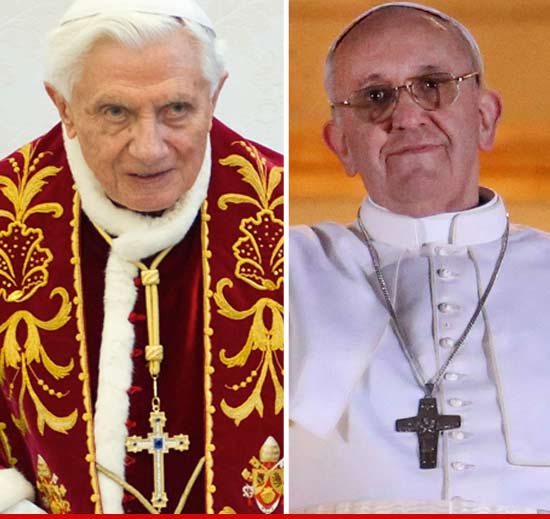
“In a break with his traditional teaching, Pope Benedict XVI has said the use of condoms is acceptable “in certain cases”, in an extended interview to be published this week.”

“After holding firm during his papacy to the Vatican’s blanket ban on the use of contraceptives, Benedict’s surprise comments will shock conservatives in the Catholic church while finding favour with senior Vatican figures who are pushing for a new line on the issue as HIV ravages Africa.” (Kington, T., and Quinn, B. Guardian UK, Nov. 21, 2010).

3. Microbicide Research offers hope for HIV prevention

“More than 20 years ago, the International Women’s Health Coalition (IWHC) convened 44 women from 20 countries who conceived of a substance, like contraceptive foam or jelly, which could be inserted vaginally to prevent HIV infection. We named it a “microbicide,” and set out to find scientists and money to develop it. Until recently, progress has been slow, but in July, results from a clinical trial in South Africa found a new gel to be nearly 40 percent effective in protecting women against HIV during intercourse.” (Top Ten Wins, International Women’s Health Coalition, December 23, 2010).

2. Gay Teen Suicide & Bullying as a Social Problem

“The recent rash of high profile suicides by boys who were bullied for gender and sexual non-conformity has created a wake up call for parents and school administrators in the U.S. To create a broader base of support from heterosexual allies, as well as to reach out to GLBT youth themselves, a number of new educational and activist initiatives have emerged. Dan Savage created the “It Gets Better”video project, directed at GLBT youth in despair over hostile treatment and at risk of killing themselves. The Gay and Lesbian Alliance against Defamation (GLAAD) declared Oct. 20, 2010 Spirit Day to call attention to and memorialize the recent suicides. Secretary of State Hillary Clinton even released her own version of an “It Gets Better” video. ” (Lerum, K. Sexuality & Society, Nov. 18 2010).

1. The Repeal of “Don’t Ask Don’t Tell”

WASHINGTON — “The military’s longstanding ban on service by gays and lesbians came to a historic and symbolic end on Wednesday, asPresident Obama signed legislation repealing “don’t ask, don’t tell,” the contentious 17-year old Clinton-era law that sought to allow gays to serve under the terms of an uneasy compromise that required them to keep their sexuality a secret.” (New York Times, Dec. 22, 2010).

——————————————————————–

Related Story:  Top Ten Sexual Stories of 2009

Embracing Contradictions: Why Gay Catholics and Religious Academics need leaders like O’Brien now more than ever

Chapel of St. Ignatius, Seattle University. The design of this chapel is based on the metaphor of "A Gathering of Different Lights," which "describes Seattle University's mission" as well as "St. Ignatius' vision of the spiritual life as comprising many interior lights and darknesses, which he called consolations and desolations." (SU chapel website).

It has been a Wild-kind of month for faculty, staff, and students at Marquette University and Seattle University. After President Wild of Marquette University tore up a signed job contract with a woman who would be their first “out” Lesbian administrator (Jodi O’Brien, of Seattle University) many faculty, staff, and students on both MU and SU campuses have been left in turmoil.

Although Marquette has managed to “resolve” this conflict with a negotiated settlement, President Wild’s actions call into question a number of basic academic assumptions including: 1) the honesty of Marquette University’s statements on commitments to diversity and anti-discrimination, 2) the assumption that GLBTQ people are welcome community members within Jesuit institutions (unlike conservative Catholic and Evangelical Protestant institutions, Jesuits are known for their tolerance, encouragement of fearless intellectual curiosity, and commitment to social justice), and 3) the assumption that University faculty have the rights and responsibilities of sharing the governance of their institution.

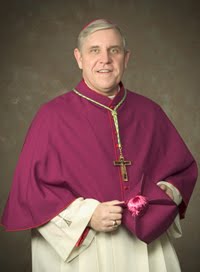
Milwaukee Archbishop Jerome Listecki, a key player in convincing Marquette President Wild to tear up his job contract with Jodi O'Brien

The recommendation to hire Dr. O’Brien as Dean of Arts & Sciences at Marquette came after two years of committee searches, interviews, and deliberations. The President and Provost of Marquette also met with committee members and all job candidates, and signed on with the decision to offer the job to O’Brien. This extensive vetting process was obliterated after two local conservative Catholic leaders (neither of them faculty or staff members at Marquette) caught wind of O’Brien’s hire. Somehow, unbelievably, these two men (Milwaukee Archbishop Jerome Listecki and Father Paul Hartmann, the archdiocese’s judicial vicar) were able to trump the entire academic administrative vetting process at MU. The search committee and was abruptly informed that their input — as well as O’Brien’s administrative leadership skills — was neither needed nor welcome.

Despite the strong suspicion among many that this is a clear case of discrimination based on sexual orientation, President Wild has maintained throughout the aftermath of his rescinded offer that this is simply about a mismatch between O’Brien’s scholarship and Marquette’s mission. Wild has yet to adequately specify how and where O’Brien’s scholarship is anti-Marquette, anti-Jesuit, or anti-Catholic, but Father Paul Hartmann (one of the two local church officials who complained) explains that O’Brien investigates a particular “subject matter” that may create “dichotomies,” “tensions,” and “contradictions.” According to the Milwaukee Sentinel (May 12, 2010):

“Hartmann sent a March 3 letter  to the chair of the search committee that said the gender studies professor “pursues subject matter that seems destined to actually create dichotomies and cause tensions (if not contradictions) with Marquette’s Catholic mission and identity.”

As long-time colleague, mentee, and friend of Jodi O’Brien, and as a former lecturer at Seattle University (a place I still hold near and dear to my heart) I am very familiar with O’Brien’s work, as well as her commitment to Jesuit education. Ironically, what the conservative church leaders fear is actually what makes O’Brien a successful Jesuit scholar and administrator. Namely, O’Brien’s ability to embrace (rather than denounce or deny) contradictions and tensions– may in fact be a pinnacle Jesuit model of intellectual and spiritually complexity.

In her 2009 Presidential address to the Pacific Sociological Association, Professor Jodi O’Brien describes the personal growth that comes with wrestling religious and spiritual contradictions:

My research with queer Christians led me to understand and define the social self as a process of wrestling contradiction. We are in a constant state of becoming. This “becoming” is shaped through processes of interaction and revealed through the internal dialogues in which we observe, feel, comment on, and try to make sense of our own complexity. The process of self-understanding is a dialectical process of definition, a continual interplay between personal experiences and attempts to fit experience into existing conceptual categories and representations. All of us struggle to make sense of ourselves, to find ways of self-expression, and to be heard and understood. Our sense of self undergoes constant revision as it encounters friction, contradiction, and conflict along the various boundaries that constitute meaning (O’Brien 2009, Pp. 15–16).

She continues to describe how the intellectual process of finding connections in the face of conflict provides an opportunity for personal as well as professional transformation:

Isn’t this what we’re doing as sociologists when we strive to practice scholarship that matters: finding connections, revealing patterns, striving to bridge seemingly contradictory perspectives by offering deeper, richer frameworks of understanding? My suggestion is that when we experience fully the contradiction, conflict, and pain of engaging with our own teaching and research, we can’t help but be transformed  …. This produces an epistemology of contradiction that, together with the principles of the “sociological imagination,” enables us to navigate through complex personal and professional terrain in ways that both resonate and inspire (O’Brien 2009, P. 20 )

Rather than embracing the powerful teaching moments of such everday contradictions, Marquette University officials have chosen to rescind them, putting themselves closer to the edges of rigidity, fear, and fundamentalism, rather than intellectual curiosity, creativity and, I would argue, spiritual vitality.

I will leave it to Jodi O’Brien to describe the nuances and evolution of her thinking throughout her illustrious scholarly career. However, for those interested in reading more about how stereotyping and prejudice works, O’Brien’s own social psychology textbook, The Production of Reality is a great resource.  In this text as well as in the dozens of lectures she’s given to churches and universities around the country, including other Jesuit Catholic universities, O’Brien teaches us about  the subject matter of  ”permissible prejudice” – in other words, prejudice that is deemed ok if those in positions of authority justify it as such through their actions or non-actions.

And it is this critical perspective on prejudice and power that is the deeper “subject matter” at hand. This is the kind of subject matter that creates critical reflection on all forms of power relations, including but certainly not limited to that pertaining to religious institutions. This is precisely why those invested in maintaining an uncritical stance on particular power relations within the larger Marquette community needed her to leave; this is also precisely why Gay Catholics and religious academics need leaders like O’Brien now more than ever.

———————————————–

Referenced and recommended sources:

O’Brien, J. (2009) “Sociology as an epistemology of contradiction.” Sociological Perspectives 52, 1, 5-22.

O’Brien, J. (2007).”Queer Tensions: The Cultural Politics of Belonging and exclusion in same gender marriage debates.”” Pp. 125-149 in Interdisciplinary Readings on Sex and Sexuality. Amsterdam: Rodopi.

O’Brien, J. (2005).  The Production of Reality: Essays and Readings in Social Interaction, 4th Edition. Newbury Park, CA: Pine Forge Press (Sage).

O’Brien, J.  (2002).  “Heterosexism and Homophobia.” Article length entry for the International Encyclopedia of Social and Behavioral Sciences.  Oxford: Elsevier Publishing.

Jaschick, S. “Stained Glass Ceiling.” Inside Higher Education. May 11, 2010.

While this case underscores timeless clashes between religion and sexuality—particularly in the form of gay and lesbian “permissible prejudice” within religious institutions — some argue that this discrimination is rising in a backlash movement against the fight for equal rights by gays and lesbians. For example, On March 6, 2010, the Washington Post reported that Virginia Attorney General Ken Cuccinelli, a conservative Republican, advised Virginia’s public colleges and universities to revoke policies protecting employees on the basis of sexual orientation.

See also the National Gay and Lesbian Task Force statement on ending job discrimination.


Related posts on Sexuality & Society:

http://thesocietypages.org/sexuality/2010/05/12/in-annuling-contract-with-obrien-marquette-can-assume-its-missionary-position/

http://thesocietypages.org/sexuality/2010/05/10/marquette-rescinds-job-offer-to-sociologist-and-sexuality-scholar-jodi-obrien/

In annuling contract with O’Brien, Marquette can assume its Mission(ary) Position

Administrators at Marquette University have found themselves in an awful mess this week after revoking a job offer to Jodi O’Brien, their top candidate  for the position of Dean of Arts & Sciences. (See our earlier post for details on the case).

The official reason for this radical breach of academic, professional, and legal decorum is still murky, coded in terms like “marriage,” “family,” and “the Catholic mission.” President Wild and Marquette spokesperson Mary Pat Pfeil claim that the reversal had nothing to do with the fact the O’Brien is a lesbian. Indeed, since she was “out” during the entire process, this might be true. Indeed, Marquette’s website includes several specific references to the idea that discrimination based on sexual orientation is not acceptable. Below is one example:

As a Catholic, Jesuit university, Marquette recognizes and cherishes the dignity of each individual regardless of age, culture, faith, ethnicity, race, gender, sexual orientation, language, disability or social class … Through our admissions and employment policies and practices, our curricular and co-curricular offerings, and our welcoming and caring campus environment, Marquette seeks to become a more diverse and inclusive academic community dedicated to the promotion of justice. (Marquette University’s statement on Human Dignity and Diversity.)

So if O’Brien wasn’t disqualified because she is gay, per se, what is “really” going on? Maybe it’s just the sort of gay she is, the sort who likes to talk openly about sexuality, and moreover to discuss it critically within the context of social institutions such as religion and family. An article in the Milwaukee Journal Sentinel provides a few more clues in this direction:

Officials haven’t provided more detail about what writings might have raised red flags. But Wild told members of the dean search committee last week that there was an article in which “sex positions” and “sex toys” were mentioned, and that the passage could be interpreted as autobiographical, said psychology professor Stephen Franzoi, who served on the committee. O’Brien’s work includes a sociological study of vignettes on lesbian sex. Franzoi said members of the search committee reviewed the work again and did not believe the passages were autobiographical and that the article was a scholarly work.

So let’s get (or make) this story straight:

  1. Jodi O’Brien has worked and lead for 15 years in a Jesuit institution (Seattle University), and is an enthusiastic proponent of the Jesuit mission (e.g. see her cover letter to Marquette).
  2. Marquette’s interpretation of the Jesuit Mission is to NOT discriminate on the basis of sexual orientation. 
  3. Marquette and O’Brien agreed that their union would be mutually beneficial.
  4. After Marquette proposed a job offer and O’Brien accepted, leaders in the Marquette extended family became concerned about O’Brien: In particular, her critique of the patriarchal family and her open discussion of non heteronormative sexuality. These previously unnamed members (today named as two Milwaukee archdiocese leaders, judicial vicar Paul Hartmann and Archbishop Jerome Listecki) became suspicious that O’Brien’s writings were not purely intellectual, but could be actual autobiographical and public representations of a sexual life led outside of heteronormative boundaries.

Simply stated, my conclusion is this: This is not a conflict between O’Brien’s lesbian identity and Marquette’s Catholic Jesuit Mission. This is about conservative, Milwaukee-based Church officials needing to divert the attention (of parishioners, as well as of media) away from critical sexuality scholarship and back toward its (silent) missionary position.

O’Brien’s critical sexuality scholarship is threatening to conservative Church leaders because it calls into question the utility of silence around discussing sexual matters. This is much more than just about an Archbishop’s distaste for sex toys: this is about a distaste for discussion of the great sexual variance found within the human species and analysis of how heterosexist family formations are not universal and “natural” but are created, regulated, and enforced by social institutions such as the Catholic Church.

Make no mistake, there are many people living and working within Catholic and Jesuit instituions who live their lives outside of heternormative married couples and families. The very core of Catholicism is based on elevating these non heteronormative models in the form of priests and nuns.

Unlike some religious traditions, Catholicism offers women and men a legitimate option to REFRAIN from marriage and to join vibrant homosocial communities. But the Marquette situation illustrates that this freedom from marriage and heterosexuality may be delicately balanced upon a strict code of silence. Even if a Marquette faculty or staff member has no personal interest in marriage or heterosexuality, the lesson learned here is that they must only discuss these views and practices in distinctly NON-SEXUAL ways. Although invisible on Marquette’s website, the consequence of violating the code of sexual silence is real. O’Brien got dis-invited to lead the Marquette family not because she crossed a line of heteronormativity, but because she discussed these matters publicly.

—————————————–

Related Sexuality & Society blog posts:

Dworkin, S. and Lerum, K. “Marquette rescinds job offer to sociologist and sexuality scholar Jodi O’Brien.” May 10, 2010. 

Lerum, K. “Catholic Priests, Sexual Abuse, and Learning how to talk about sex in church.” Sexuality & Society March 29, 2010.

Referenced news articles:

Farden, K. “SU Prof. O’Brien was eager to take Dean position at Marquette.” Seattle University Spectator. May 12, 2010 

Johnson, A, Sharif Durhams, S. and Ferral, K.”Listecki raised alarm over Marquette hiring: Comments are first indication Milwaukee archdiocese raised concerns about O’Brien.” Milwaukee Journal Sentinel. May 12, 2010.

Marquette Rescinds job offer to Sociologist and Sexuality scholar, Jodi O’Brien

Professor Jodi O'Brien

Last month Marquette University –a Jesuit University in Milwaukee, Wisconsin — offered esteemed Sociologist Jodi O’Brien the position of Dean of the College of Arts & Sciences. After carefully weighing the vast professional and personal transitions that such a move would entail, O’Brien accepted the offer. She signed the contract and mailed it back to Marquette. She and her partner were preparing to put an offer on a house in Milwaukee. But early last week, after pressure from unnamed sources, Marquette backtracked. The official reason? As Marquette President Father Wild told the New York Times,“We found some strongly negative statements about marriage and family.”

This abrupt turn away from O’Brien – a job candidate actively pursued by search committees at Marquette for the past TWO years — has left O’Brien’s extensive and loyal network of colleagues, friends, and students vacilliating between complete disbelief and rage. Hundreds of her would-be Marquette colleagues and students are also shocked by this news and have organized several protests. Two Facebook support groups have emerged, one originating from Marquette, one from Seattle University. Marquette Professor of Theology Daniel C. Maguire has written a scathing open letter to Marquette President Robert Wild and Provost John Pauly, calling for Wild’s resignation and for Wild’s successor to re-offer the job to O’Brien.

In this post we will simply list some of the facts of this case. We will provide an overview of O’Brien’s scholarship, as well as the legal and social implications of Marquette’s actions in a follow-up post.

  • Jodi O’Brien has been a leader at her home institution of Seattle University (a Jesuit University) since she arrived as an Assistant Professor in 1995. She quickly became promoted to Associate Professor and has served as Chair of the department of Anthropology, Sociology, and Social Work for seven years. O’Brien was promoted to Full Professor since 2005. In 2007 she received the honor and responsibility of being named the Lewis B. Gaffney Endowed Chair, a two year rotating position that carries with it the mandate of connecting academic and community life with the Jesuit mission.
  • Dr. O’Brien has a long history of leadership positions in national professional organizations including the American Sociological Association and the Pacific Sociological Association. From 2008-2009 O’Brien served as President of the Pacific Sociological Association.
  • O’Brien is the author of dozens of articles and the author and editor of several books, including Everyday Inequalities, and The Production of Reality (now in its 4th edition),  a leading textbook in the field of Social Psychology.

Marquette’s excuse for reversing their offer is not sitting well with many, including those deeply committed to the Catholic and Jesuit mission. In his letter to Marquette University President Father Wild, Professor Maquire is incredulous that although Father Wild and Provost Pauly based their “decision on an interpretation of what was or what was not compatible with Catholic teaching,” they did not consult Catholic theologians in their decision. Maguire scolds:

(Y)ou did not consult the faculty experts on Catholic moral teaching on this campus.  The Theology Department is one of the major theologates in North America, just a few yards away from your offices.

As well, Maguire reminds Father Wild and Provost Pauly that they also ”ignored teachers of ethics in the Philosophy department and professors in Sociology, Dr. O’Brien’s field.”

As professors in Sociology and long term colleagues of Dr. O’Brien, we are most happy to offer our assessment of O’Brien’s scholarship on religion and sexuality. Stay tuned.

———————————————–

Referenced news articles:

Dillon, S. “Marquette rescinds offer to Sociologist.” New York Times. May 6, 2010.

Durhams, S. and K. Ferral. “Marquette on hot seat for rescinding job offer to Lesbian.” Journal Sentinel, Milwaukee Wisconsin. May 6, 2010.

Finnegan, L. “Marquette Withdraws Job offer to Lesbian Dean Candidate Jodi O’Brien.” Huffington Post. May 7, 2010.

How to not hire a dean.” Editorial. Journal Sentinel, Milwaukee Wisconsin. May 7, 2010.

American anti-gay extremist finds an audience at Ugandan 50th anniversary of Pentacostalism

The following update on the Uganda anti-gay movement comes from the Box Turtle Bulletin:

——————

American Evangelist To Rally Against Gays In Uganda

Jim Burroway

April 21st, 2010

The month of May will be a very dangerous time to be gay in Uganda, as Pentecostal churches there gear up for a series of crusades, marches and rallies commemorating the 50th Jubilee of the Pentecostal movement there. An anonymous BTB reader in Uganda reports that television is already carrying commercials advertising at least one event, a three-day conference to be held at the sports grounds at Makerere University (Uganda’s largest institution of higher learning) with a march and rally to be held the following Friday, May 7.

In the midst of that expected furor steps yet another American anti-gay extremist, Lou Engle of The Call, who has announced plans to hold a rally in Kampala on May 2, also at the Makerere University Sports Field. The Call Uganda’s web site gives these reasons for holding the rally:

It is intended to awaken and revive the young and the old, men and women, church and family, government and the public and to fight vices eating away at our society. We shall all join our hearts across tribal, political, denominational, and generational boundaries, to cry to God to help us with the challenges in our country such as:

  • The heightened political tensions and wrangles in the country, especially as we go towards the 2011 general elections
  • The increasing level of social evils in our society, some which are threatening our values and lifestyles e.g.
    • Witchcraft and human sacrifice
    • Homosexuality and increased immorality
    • Disasters and the resultant suffering of the people
    • The decay of morals and infrastructure of our city Kampala

Engle’s emotionally-charged extremism and violence-laden rhetoric has become quite familiar here in the U.S. Engle believes that gays are possessed by demons, and was part of a major rally for Prop 8 in San Diego where he called for Christian martyrs. Casey Sanchez, of the Southern Poverty Law Center describes one talk that Engle gave this way:

“I believe we’re headed to an Elijah/Jezebel showdown on the Earth, not just in America but all over the globe, and the main warriors will be the prophets of Baal versus the prophets of God, and there will be no middle ground,” said Engle. He was referring to the Baal of the Old Testament, a pagan idol whose followers were slaughtered under orders from the prophet Elijah.

“There’s an Elijah generation that’s going to be the forerunners for the coming of Jesus, a generation marked not by their niceness but by the intensity of their passion,” Engle continued. “The kingdom of heaven suffers violence and the violent take it by force. Such force demands an equal response, and Jesus is going to make war on everything that hinders love, with his eyes blazing fire.”

Engle has also said, “The most ‘dangerous terrorist’ is not Islam but God. One of God’s names is the avenger of blood. Have you worshiped that God yet?”

Last year, a BTB reader shared with me his experience of attending a Call rally in Nashville in 2007.  Tyler (his last name is being withheld) remembers that day vividly — July 7, 2007 (07/07/07 was their “Holy Date”):

I went to Nashville and the day was a whole day of fasting and prayer to “turn the nation back to God.”  Their tactics include, in my opinion, a lot of manipulation using emotionally-driven songs, yelling, dancing, and the like to get individuals charged up.

The Call Uganda’s web site lists the following endorsements by Ugandan Christian leaders:

  • Bishop Simon Peter Emiau – Chairman Evangelical Fellowship of Uganda;
  • Archbishop Luke Henry Orombi – Archbishop of the Anglican Church of Uganda;
  • Pastor Jotham Mutebi – Chairman Full Gospel Churches of Uganda;
  • Pastor Titus Oundo – Chairman Deliverance Churches of Uganda;
  • Apostle John Mulinde – World Trumpet Mission, which also has extensive staff in Orlando, Florida under International Director Mark Daniel.
  • Apostle Jackson Ssenyonga – Christian Life Ministries;
  • Pastor Gary Skinner – Watoto (formerly Kampala Pentecostal) Church. An elder of that church is Stephen Langa, who helped to organize last year’s anti-gay conference featuring three American anti-gay activists. That conference delivered the “nuclear bomb” that served as a precursor and catalyst to the draconian Anti-Homosexuality Bill that is now before Uganda’s Parliament.
  • Apostle Joseph Ssewadda – General Overseer of Born Again Federation;
  • Peter Asiimwe – Uganda Evangelical Mission Agency;
  • Pastor Fred Wantaate – Coordinator for Pentecostal Golden Jubilee – Full Gospel Church.

The next several weeks will prove to be exceedingly dangerous for LGBT Ugandans. Last year’s conference led to a massive public anti-gay pogrom that included a public vigilante campaign in a major Ugandan tabloid and various FM stations in Kampala in which gay people were forcibly outed. We have reports that several people lost their jobs and were abandoned by their families as a result. Several were arrested, and there are reports of at least one death in the eastern city of Mbale.

Frank Mugisha, president Sexual Minorities of Uganda, said, “Gay people are already fleeing their homes and have to move from house to house because of threats to their lives. Americans need to stop Lou Engle from coming to Uganda.”

When we first reported on the anti-gay conference last March in Uganda, we warned that it was a very dangerous move. But even knowing and warning of those dangers, we had no idea that it would ultimately lead to a proposal to put gay people to death under certain circumstances.

After that experience, there now can be no excuse. We know what can happen following rallies like this one. And whatever happens as an aftermath of this rally, no one can say they could not predict what would happen next. Given the virulent hatred openly expressed by ordinary Ugandans and their religious leaders toward the gay community, Engle’s rally is a dangerous and reckless escalation.

——————————————————–

I’d like to know this: at what point will other countries began offering political refuge for gay Ugandans? At what point will there will be airlift evacuations? When will American people of faith intervene with these extremist religious leaders?

Related Sexuality & Society posts:

A legacy of White Supremacy: Why Ugandans embrace U.S. Christian right’s anti-gay-agenda (Jan. 13, 2010).

Growing Global Opposition to Ugandan “kill the gays bill” (Dec. 14, 2009).

Homo hatred in Uganda: A gift from US conservative evangelicals (Dec. 9 2009).

Catholic Priests, Sexual Abuse, and learning how to talk about sex in church

Stories about Catholic priests and sexual abuse are so common that for some, “priest” is nearly synonymous with “pedophile.” Because the bulk of *known* Catholic Priest sex abuse cases have involved boys, the association also leads to assumptions about priests’ latent homosexuality. Reflecting and reinforcing these associations about Catholic Priests are the plethora of jokes on late night talk shows:

“I read this in the paper this morning: New York City has a priest shortage. So you see, there is some good news in the world. … To give you an idea how bad it is, earlier today in Brooklyn an alter boy had to grope himself.” —David Letterman

“As you’ve probably heard, the Pope has asked all the Cardinals to return to Rome. You know how they got them all to come back? They told them that there was going to be a performance by the Vienna Boys Choir.” —Jay Leno

“The Cardinals will be staying at the Domus Sanctae Marthae, the new hotel at the Vatican, where turn down service means the bell boy isn’t interested.” —Daily Showhost Jon Stewart

Just when it seems like surely all the scandals have been aired and all the jokes have been told (and for some the bigger scandal may be that the Priests might be “gay”, rather than that they sexually abuse children), we hear about more Priests abusing massive numbers of children and of the Catholic hierarchy systematically attempting to hide the abuse.

In an article published today in the Huffington Post, Rev. Debra Hafner, an Ordained Unitarian Universalist minister, discusses the need for faith communities to directly address sexuality and sexual abuse. Hafner also calls upon Pope Benedict to “move beyond apologies to action,” … urging “all religious institutions to address sexuality in healthier, more open and responsible ways.” 

I’m not holding my breath on Pope Benedict suddenly becoming a proponent of sexual health (!). On the other hand I am hopeful about the leadership of the Religious Institute, which is calling for religious leaders to move away from guilt and shame framings of human sexuality toward framings which support holistic sexual health.

————

Up to the Pope: Stop the Pandemic of Pedophilia“, by Rev. Debra Hafner.

The latest revelations about sexual abuse against children by Roman Catholic priests are nothing short of revolting. The story of Father Lawrence Murphy, who abused more than 200 deaf boys in Milwaukee over decades, despite the boys’ speaking out and calling for help, should outrage us all. The new revelations from Germany and other European countries add to the understanding that the prevalence of pedophile priests are, in the words of my colleague, Dan Maguire, “a global Catholic Church pandemic.

“It went up to the Pope,” a formerly Roman Catholic friend said to me yesterday, with tears in her eyes. “How is it possible that people knew and didn’t stop it?” Unfortunately, the answer is that the Catholic hierarchy did know, and chose to transfer the priests rather than address the crimes they were committing against children.

Yes, crimes. In the secular world, the offending priests and their superiors would be held criminally accountable for their behavior. It is not enough for the Pope to apologize, as he did to victims last week. It is unconscionable when Catholic apologists try to explain away the church’s inaction as a relic of another time, when people didn’t talk as much about sexual abuse. We are talking now – and learning, to our dismay, how widespread sexual abuse in faith communities really is.

A national research study from Baylor University last year revealed that three percent of adult women, across a range of Christian and Jewish traditions, were involved in instances of clergy sexual misconduct. Most of this occurs between adults; sexual abuse of children and youth by Roman Catholic clergy is of a different magnitude altogether. Still, we must not deceive ourselves that other houses of worship are safe havens from abuse and harassment – or that clergy are prepared to address sexuality issues in a healthy and responsible way. Indeed, many religious leaders are complicit in the silence that has shrouded sexuality concerns in congregations for decades.

Last month, the Religious Institute published a report - Sexuality and Religion 2020: Goals for the Next Decade - that envisions a future when all faith communities will be “sexually healthy, just and prophetic.” In practical terms, this would require:

  • Sermons and sexuality education that will break the silence around sexuality and help to mitigate the stigma and shame that too often attend sexuality issues among people of faith.
  • New requirements that seminarians (or those studying to be clergy) examine and reflect on their sexual histories, understand the dynamics of sexual attraction, commit to clear boundaries regarding intimate connections with those they serve, and complete training in pastoral care for sexuality-related issues.
  • Established polices for safe congregations, including screening of staff and volunteers, background checks for those who work with children and youth, annual trainings on sexual and physical abuse, prevention education for parents and youth, referral agreements with local assault programs, and clearly stated grievance procedures. Every congregation should have a clear, well-publicized policy that sexual contact by clergy, pastoral care providers, religious educators and youth leaders with any congregant, of any age, is not only inappropriate but also actionable. 

The Pope now has an urgent responsibility — and an extraordinary opportunity. He must not only move beyond apologies to action, but could also use his influence to urge all religious institutions to address sexuality in healthier, more open and responsible ways.

Pope Benedict, the world is watching and waiting.

—————————–

Related links:

A legacy of white supremacy: Why Ugandans Embrace U.S. Christian Right’s Anti-Gay Agenda

This post by Edwin Okong’o comes via Rh Reality Check. Okong’o is a contributing blogger at RhReality check and an editor at New American Media (where the story was originally posted). Okong’o explains the cultural context under which the Ugandan “kill the gays” legislation could occur (Why Uganda? Why not Alabama, Mississippi, Georgia, or Wyoming — where plenty of people hate gays?). Okong’o's answer points in part to deep seated white supremacist beliefs — both by the religious proselytizers/colonizers and the religious proselytized/colonized:

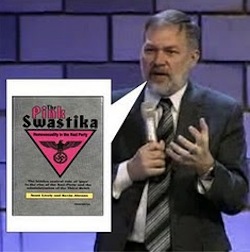
“Having gone through schools reading mostly textbooks written by white men, Africans are programmed to accept any Western literature. Add the word of God to that and the white man’s message becomes gospel truth. That’s why when a white religious fanatic like Scott Lively writes in his book, “The Pink Swastika,” that Nazis committed the Holocaust because they were gay, without hesitation Africans promise ‘to stand firm to fight homosexuality.’”

Please read on below:

By Edwin Okong’o, New America Media

picture-3161January 13, 2010 – 7:00am

There is a joke among Africans about how colonialism began. A Christian missionary came with a Bible in hand, told our ancestors to bow their heads for a prayer, and when they opened their eyes their land was gone. Today, the same can be said about African constitutions.

American religious right-wingers are flocking to Africa and are having more success in passing new legislation criminalizing homosexuality there than they are having in Alabama, Mississippi and Georgia.

The most vicious of those laws is in Uganda, where Parliament is now considering a bill that would make some homosexual acts punishable by death. Although they have denied it, evidence suggests that American right-wingers are in the forefront of this war on homosexuality.

Among them is the Fellowship Foundation, better known as the Family, a secretive but powerful evangelical club that includes U.S. senators and congressmen. Republican senators Jim Inhofe, Tom Coburn, John Ensign, Jim DeMint and Sam Brownback belong to the group. The group includes members like Mike McIntyre, a conservative Democratic congressman, who believes that the Ten Commandments are “the fundamental legal code for the laws of the United States.”

Publicly, the Family’s most prominent event is a National Prayer Breakfast held in Washington, D.C., which has been attended by congressmen, senators, and even presidents. In his book, “The Family: The Secret Fundamentalism at the Heart of American Power,” New York University scholar Jeff Sharlet writes that of the Family’s $14 million budget, “the bulk of it, $12 million, goes to ‘mentoring, counseling, and partnering with friends around the world.’”

In other words, having failed to turn the United States into a true “Nation under God,” American evangelicals are going to Africa to satisfy that calling. Is there a better place to create Christian nations than in a continent with nearly 500 million impoverished believers, and easily corruptible governments? Similar laws have been proposed, or exist, in Nigeria, Burundi, Rwanda and Malawi.

“You develop a relationship with the [African] presidents in the spirit of Jesus,” Sen. Inhofe said in a February 2009 interview posted on the website of Faith and Action, an evangelical Christian group, whose “mission is to awaken the conscience of our nation by proclaiming Truth to those in positions of power.”

In his book, Sharlet writes that Uganda’s president Yoweri Museveni is the organization’s “key man” in Africa. Museveni’s relationship with the Family goes as far back as 1986, when he came to power following a bloody civil war. David Bahati, the Ugandan lawmaker who introduced the anti-gay bill, is also a member of the Family.

U.S. evangelical groups have gotten so close to African religious and political leaders that they openly conduct their hateful crusades. In early March 2009, for example, U.S. religious extremists played a central role in the “Seminar on Exposing the Homosexuals’ Agenda” held in Kampala, Uganda. Among speakers was Scott Lively, a California evangelical pastor who heads Abiding Truth Ministry.

Rev. Kapya Kaoma, a Zambian priest who went undercover to the “viciously homophobic” conference, quoted one Ugandan attendee as saying, “The man of God (Scott Lively) told us about…a movement behind the promotion of homosexuality. … I got to know that there is a force behind homosexuality, which we need to tackle with force. He also told us that these people who are behind this…evil, they have all resources that they need…to spread this evil. We need to stand firm to fight homosexuality.”

Evangelicals have managed to succeed in promoting homophobia by taking advantage of Africans’ lack of adequate information. They have presented homosexuality as a new “culture,” rather than something that has existed all along.

Kaoma quotes yet another Ugandan from the anti-gay conference: “Dr. Scott told us about Brazil where, 10 years ago, homosexuality was unheard of. Today, it is the capital. There are people that have been against homosexuality that are having to leave because of the pressure and the threats that they are putting on them. That is how serious it is.”

Africans take such filth without questions because they suffer from a severe case of inferiority complex. Even worse, they staunchly believe in the supremacy of the white man. Ill-informed Christians like the ones Rev. Kaoma quotes above, place the white man immediately below the Holy Trinity, a belief with its roots in the colonial era.

Growing up in Kenya, I heard stories about how supernatural the white man was. When we did well in school, our parents and teachers said we were as intelligent as white men. When you went to take a bath, Ma told you to come out as clean as a white man. If the white doctor at the hospital failed to diagnose your disease, death was imminent.

Even among the “educated,” this plague runs deep. In 2006, I mentioned to my younger brother — a graduate of a Kenyan university — that I had co-taught a writing class at the University of California, Berkeley, where I was studying journalism.

“Come on! Stop playing,” he brushed me off and laughed.

When he was finally convinced that I was telling the truth, he asked, “Were there white students in the class?”

Having gone through schools reading mostly textbooks written by white men, Africans are programmed to accept any Western literature. Add the word of God to that and the white man’s message becomes gospel truth. That’s why when a white religious fanatic like Scott Lively writes in his book, “The Pink Swastika,” that Nazis committed the Holocaust because they were gay, without hesitation Africans promise “to stand firm to fight homosexuality.”

As I ponder over this issue I’m reminded of the 1980s, when Reinhard Bonnke, a German evangelist who claimed to have healing powers, visited Kenya. Business came to a halt, as people with all kinds of ailments traveled to Nairobi to seek his miracles. Kenyans flocked Bonnke’s sermons because they believed that as a white man, he was closer to Jesus Christ than were black evangelists.

If Archbishop Manassas Kuria, who at the time was the Anglican primate of the Church of Kenya, had called a press conference to announce that he had healing powers, they would have laughed at him, and perhaps accuse him of blasphemy. Black clergymen do not perform miracles.

The belief that black people can only speak to God through white men is illustrated in the same interview Sen. Inhofe gave to Faith and Action. Inhofe describes the Family’s work in a “miserable” village in Benin. The hamlet’s name translates to “Village of Darkness,” he says, and children “drink mud and die of dysentery.” The evangelicals rescue the village by providing sanitary water.

When residents ask why the evangelicals have decided to shine light on the village, the Americans say, “Because we love you.” And when they ask, “Why do you love us?” they answer, “Because Jesus loves us.”

No one asks why Jesus didn’t send love directly to Africa without going through middlemen. Inhofe says today the village has changed its name to “The Village of Jesus”, thanks to the Savior’s “miracles.”

Now imagine telling such people that the “force behind homosexuality” threatens to corrupt their children and anger Jesus. They will “stand firm to fight” this “evil.” Enacting laws allows them to hide the blood in their hands.


Top Ten Sexual Stories of 2009

In his book, Telling Sexual Stories: Power, Change, and Social Worlds (1995, Routledge), Ken Plummer explains that when individuals narrate seemingly internal and personal stories about their sexuality, these aren’t very individual or internal at all. Rather, such narratives emerge in themes that are made possible due to specific cultural and political conditions; sexual stories are thus part of larger sexual storytelling culture, and can be understood and made meaningful and visible only via existing cultural frames.

In 1995 Plummer documented three kinds of emerging sexual stories: rape stories, coming out stories, and recovery stories. The year of 2009 brought several unique opportunities of its own to tell sexual stories. Some of these stories reaffirmed and revisited familiar plots to “old” sexual stories, while some forged new territory. We have decided to group this year’s stories (which we have selected with a highly subjective and US based lens) into themes; each theme is a compilation of several individual stories, forming what we see as a larger set of cultural stories being told about the pleasures and dangers of sexuality, and the roles of social institutions in regulating and redefining normative sexual boundaries. Thanks to Phil Cohen, Holly Lewandowski, and Amanda Hess for story leads. Also, thanks to RhReality Check’s Amy Newman for her list of top stories from 2009 (from which we borrowed a few).

#10. “Squeaky-clean”-men-who-cheat stories, starring Tiger Woods!Tiger Woods and Elin Nordegren

In her recent article on Tiger Woods, Shari Dworkin debunks widespread psychological and “sex addiction” explanations for Tiger Woods’ affairs:
“Recent media coverage of Tiger Woods’ marital “transgressions” is overflowing. Some argue that Tiger is sex obsessed and has a “sex addiction” given his high sex drive and desire for sex with many women over time. Others argue that any sports star who is on the road and away from home so much has a huge chance of being unfaithful to their wife. (Some media reports argue that it is “rare” to find a faithful male sports star). Still others argue that Tiger Woods’ late father pressed him down under his thumb too much as a youngster and upon his death, Tiger unleashed his “wild side.”  Finally, some news reporters offer that Tiger was “traumatized” as a child when his father cheated on his mother, and that he must just be paradoxically following in dad’s footsteps. But very little media coverage attempts to press beyond an individual level and not many articles offered a much needed broader analysis of masculinity, race, sport, sexuality, and media.”

  • images-3Similar structural and cultural analyses incorporating masculinity and institutional/political power could and should also be applied to the other stars of this story, including: Mark SanfordJohn Ensign, & John Edwards.
  • Additionally, a cross-cultural perspective is needed here as well (e.g. why are these stories so powerful and shaming in the US, but not in European countries?)

#9. Gay-marriage-success stories, starring: Argentina!

Argentina Gay Marriage -- first in Latin America

Latin America's first gay marriage, in Argentina


According to The Guardian: “In Latin America policies and attitudes have mellowed over the past two decades and in most countries it is now illegal to discriminate on the basis of sexual orientation. Buenos Aires, Bogota and Mexico City boast gay pride parades and gay-friendly districts where same-sex couples can kiss and hold hands in public. Yesterday Di Bello, 41, and Freyre, 39, became the continent’s first gay married couple. The pair sidestepped a court ruling blocking their wedding in Buenos Aires by holding the ceremony in Ushuaia, capital of Tierra del Fuego province and the world’s southernmost city. They exchanged rings at a civil ceremony witnessed by state and federal officials, prompting jubilation by gay rights activists and consternation from the Catholic church. ”My knees didn’t stop shaking,” said Di Bello. “We are the first gay couple in Latin America to marry” (Guardian.co.uk — Dec. 29, 2009).

Gay-marriage- success stories from 2009 also starred: Mexico City, Washington DC, New Hampshire, Sweden, Iowa, Vermont, and Norway. These are just the states, countries, and cities adopting gay marriage in 2009 and doesn’t include the longer list of locales which legalized domestic partnership in 2009. [The appendix to this is the Gay-Marriage-doom-&-gloom story: starring the Catholic Church (Maine) & the Mormon Church (California, from 2008)]

#8. Multiple-birth stories, starring: Angela Suleman (aka Octo-mom!)

octo-mom

While more women are having multiple-baby births (thanks to IVF technology), not all multiple-birth mothers are viewed the same. Kathryn Joyce from RhReality Check offers an insightful comparison between the highly demonized Angela Suleman (“octo-mom”) and a “Reality TV” family with 18 children:

“Suleman’s newborns were delivered, as it were, into a pop cultural moment of preoccupation with large families. Reality TV shows about families with many children abound on TV’s TLC channel, most notably with the chronicles of the 18-child Duggar family. That the Duggars are grounded in and motivated by the pro-patriarchy Quiverfull movement, with its emphasis on female submission and male headship, is breezily dispensed with in favor of dwelling on the sentimental and zany experiences of life in a 20-person family. “Jon and Kate Plus Eight,” another reality TV show about a large family – this one the result of sextuplets born to a mother who, like Suleman, chose not to selectively reduce the number of embryos that “took” during an IVF treatment – is less burdened by the extremist ideology that undergirds the Duggars’ convictions, but still presents a traditional picture of large family life, with married heterosexual parents and a stay-at-home mother. …. While many observers are concerned with her apparent inability to support such a large family, the fact that she is unmarried has alone been cause enough for others to declare her family a situation of de facto child abuse” (for Joyce’s full article click here).

#7. Homo-hater stories, starring: conservative religious anti-gay activists in Uganda and the US!

Doug Coe, leader of the arch conservative U.S. group, "The Family"

Doug Coe (center), leader of "The Family"


In a recent post on Uganda’s “Kill the Gays” bill, Kari Lerum wrote that:

“…there is an increasing amount of scrutiny and disgust from many regarding the direct connection between the Ugandan anti-homosexual campaign and a conservative U.S. religious group called “The Family” — which some, including The Observer have called a ” cult” due to the requirement for core members to remain secret about their activities. Regardless of what the group is labeled, it is clear that it has been successful in recruiting high level political leaders including some US congressmen and Uganda’s president Museveni to its core values:  “fighting homosexuality and abortion, promoting free-market economics and dictatorship, an idea they once termed ‘totalitarianism for Christ’ ”

#6. Catholic-priest-cover-up stories, starring: the Irish Catholic Church!

Irish Justice Minister Dermot Ahern

Irish Justice Minister Ahern at press conference about decades of Priest abuse


As quoted in the LA Times: “Leaders of the Roman Catholic Church in Dublin engaged in a widespread cover-up of abuses by clergy members for decades, a “scandal on an astonishing scale” that even saw officials taking out insurance policies to protect dioceses against future claims by the victims, a commission reported Thursday after a three-year investigation” (see full article here)

Ross Douthat, a conservative writer for the New York Times and the National Review, describes how a culture of fear around sexuality is precisely the kind of culture that produces sexual abuse — and especially cover-ups of sexual abuse. Douthat concludes that:

“…you can see how it could all go bad — how a culture so intensely clerical, so politically high-handed, and so embarrassed (beyond the requirements of Christian doctrine) by human sexuality could magnify the horror of priestly pedophilia, and expand the pool of victims, by producing bishops inclined to strong-arm the problem out of public sight instead of dealing with it as Christian leaders should. (In The Faithful Departed, his account of the scandal, Philip Lawler claims that while less than five percent of priests were involved in actual abuse, over two-thirds of bishops were involved in covering it up.) I suspect it isn’t a coincidence that the worst of the priest-abuse scandals have been concentrated in Ireland and America — and indeed, in Boston, the most Irish of American cities — rather than, say, in Italy or Poland or Latin America or Asia” (see Douthat’s article here).

# 5. Panic-over-sex/gender/sexuality-fluidity stories, starring: Caster Semenya!

Castor Semenya

18 year old Caster Semenya got a makeover


Mississippi girl fighting for her right to wear a tux for her Senior Class photo

Ceara Sturgis, fighting for her right to wear a tux for her Senior Class photo


articleLarge-150x150

Click here for Adina Nack's post on "cross-dress" codes


In her post in Sexuality & Society, Shari Dworkin writes, “While Caster Semenya’s recent “news” seems to have shocked the world, the concern about “gender verification” in sport has taken place for quite some time. The tests have changed over time…but the point has not (e.g. when women are “too good,” they must not be women). …” (see also sociologist Philip Cohen’s story about Semenya, and an update on Caster’s status in the NYT). Note that in these stories there are never any calls for parallel sex verification tests to see if men they are “too much of a man,”—a man that no other “normal” man can hope to “fairly” compete with. This is because of the specific role that sport has historically played in terms of making boys into men (when women compete, there have been numerous fears that they are masculinized and are not “normal” women).


This year’s sex/gender/sexuality-panic stories also starred: Morehouse College‘s dress code, a high school girl wearing a tux, & a 4 yr. old boy kicked out of preschool for having “long” hair.

# 4. Harsher punishments for-sex-with-minors stories, starring: Roman Polanski!

Roman Polanski

Filmmaker Roman Polanski was arrested in 1977 for the sexual assault of a 13 year old girl. He spent 42 days in a California prison and was released. Upon hearing of  a judge’s plan to have him serve more time and possibly deport him, Polanski fled to France. In 1988 Polanski was sued by the girl he assaulted and in 1993 settled with a payment reported at around $500,000. In the  years that have passed Polanski also married (in 1989), had two children, and continued on as a prolific and well regarded film maker.  For reasons that are still murky in terms of timing, Polanski was arrested on Sept. 26, 2009 (32 years after the crime) at the Zurich, Switzerland airport at the request of US authorities. Polanski’s case, spanning decades and continents, offers an insight into how laws and attitudes about sex with minors has changed in the US:

The LA Times reports that ”(s)tatutory rape convictions similar to Roman Polanski’s typically result in sentences at least four times longer today than the 90-day punishment a judge favored before the director fled the United States in 1978, a Times analysis of Los Angeles County court records shows. Polanski’s arrest in Switzerland on an international fugitive warrant — and his pending extradition proceedings — have sparked transatlantic debate about whether the 76-year-old Academy Award winner should serve additional time behind bars for having sex with a 13-year-old girl….The Times analyzed sentencing data to determine how L.A. County courts today handle cases in which men admit to statutory rape — also known as unlawful sex with a minor — in exchange for the dismissal of more serious rape charges, as Polanski did. The findings show that those defendants get more time than Polanski has served — even factoring in his 70-day stint in Swiss detention — but less than his critics may expect. … ”Thirty years ago, sexual assault — rape and sex crimes — were treated differently,” said Robin Sax, a former sex crimes prosecutor for the L.A. County district attorney’s office. “Time and education haven’t worked for Polanski’s benefit.”

Sociologist Barry Dank, founding editor of the Journal Sexuality & Culture, has blogged extensively about the Polanski case. Dank writes:

“There is no question that what Roman Polanski did to a 13 year old girl in the 1977 was wrong, and illegal. But it is also wrong to drag Polanski back to the US 31 years after the crime and have him spend an unspecified amount of time in prison. What possible good would come about by Polanski doing time for the crime? Obviously, it would not function to rehabilitate him or change him in some way. The fact that Polanski has had a stellar film career and apparently lived a law abiding life for 32 years after the crime is indicative that the case for changing Polanski is simply irrelevant.”

The details of Roman Polanski’s case lies in stark contrast to the case of Phillip Garrido, a registered repeat sex offender who was arrested earlier this year for kidnapping 11 yr old Jacee Dugard, and holding her captive and sexually abusing her for 18 years (from 1991-2009). The young Dugard bore two children out of Garrido’s abuse (now ages 11 and 15).

Despite today’s more stringent punishments for statutory rape, we hope that US jurors and judges will be able to distinguish the vast differences between the sexual crimes of Polanski and Garrido.

# 3. No-condoms-for-those-who-need-it-most stories, starring: Pope Benedict XVI!

pope_benedict_gambia

While HIV/AIDS rates in sub-saharan Africa continue to soar, and condoms are very effective in fighting HIV/AIDS (when used correctly and consistently) Pope Benedict told Africans that it was wrong to use condoms.

The Pope’s message was also heard in the US, at least among some US Catholic college students. Amanda Hess, writer for the Washington City Paper highlights how all 3,000 students at Catholic University are now prohibited from having sex that is “disruptive”  (defined as “ANY” sexual expression inconsistent with the Catholic Church including premarital sex and same sex sexuality). These rules are written into the code of student conduct. Hess states that:

Deference to the catechism spares Catholic administrators from the awkward enterprise of referring to masturbation, condoms, or any other specific of a typical undergraduate’s sex life” … “violations to the student code can’t be absolved in typically Catholic fashion, with forgiveness administered privately after confession to a priest. At the Catholic University of America, your sins are subject to judicial review” (click here for full article).

Clearly, if the Catholic church cannot discuss sex outside of sex within marriage, they cannot discuss condoms very effectively.

#2. Backlash-against-sexual-&-reproductive-justice stories, starring: the murderer of  Dr. George Tiller!

Gosh, this story is soooo last century (the 80s and 90s were full of anti-abortion terrorism stories), but unfortunately it’s still a story in 2009.

George Tiller

Dr. George Tiller, a doctor who provided late term abortions in Wichita, Kansas, was shot dead while attending Sunday Church services. Jodi Jacobson, Editor of Rh Reality Check explains the importance of Dr. Tiller’s work, as well as the cultural context for how perceptions of his work are widely inaccurate:

“In all the extensive coverage of the assassination in his church of Dr. George Tiller by a murderer affiliated with extremist right-wing groups, little has been said to shed light on what late-term abortions are, who has them and why. Instead, much of the media and talking heads pontificating on this subject have constantly focused on Tiller’s being “one of the very few doctors who perform late-term abortions,” without providing any context as to why he did so and under what circumstances. As a result, the dominant narrative is one which perpetuates an assumption that people are electing to have late-term abortions for the sake of convenience.”   (To read Jacobson’s entire analysis, click here).

And finally, we’d like to end on a positive note, with a list of sexual and reproductive justice stories from 2009:

1. Sexual-&-reproductive-justice stories, starring Barack Obama!

Obama signed and/or was involved in the following sexual health and justice developments:

images-7

And although this last bill still needs to be signed, we are expecting Obama to:

  • fulfill his promise to fund evidence-based, scientifically based sex education.

As Kari Lerum noted in a recent post, the movement toward more abstinence-only approaches is driven almost entirely by conservative religious ideology, not scientifically reliable evidence.” Because of the lack of scientific credibility for Abstinence-only sex education, we are hopeful that all funding for abstinence-only sex education will finally be eliminated from the US Federal budget.

We are intrigued by many of this year’s sexual stories, saddened by some, and encouraged by others. May 2010 be filled with opportunities to reframe old (sexist, racist, homophobic, and sex-negative) stories into sexual stories that involve measured discussion of sexual health, sexual justice, and sexual rights.


Kari Lerum & Shari L. Dworkin, Eds. Sexuality & Society.