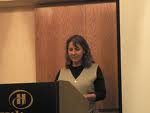
Last month Marquette University –a Jesuit University in Milwaukee, Wisconsin — offered esteemed Sociologist Jodi O’Brien the position of Dean of the College of Arts & Sciences. After carefully weighing the vast professional and personal transitions that such a move would entail, O’Brien accepted the offer. She signed the contract and mailed it back to Marquette. She and her partner were preparing to put an offer on a house in Milwaukee. But early last week, after pressure from unnamed sources, Marquette backtracked. The official reason? As Marquette President Father Wild told the New York Times,“We found some strongly negative statements about marriage and family.”
This abrupt turn away from O’Brien — a job candidate actively pursued by search committees at Marquette for the past TWO years — has left O’Brien’s extensive and loyal network of colleagues, friends, and students vacilliating between complete disbelief and rage. Hundreds of her would-be Marquette colleagues and students are also shocked by this news and have organized several protests. Two Facebook support groups have emerged, one originating from Marquette, one from Seattle University. Marquette Professor of Theology Daniel C. Maguire has written a scathing open letter to Marquette President Robert Wild and Provost John Pauly, calling for Wild’s resignation and for Wild’s successor to re-offer the job to O’Brien.
In this post we will simply list some of the facts of this case. We will provide an overview of O’Brien’s scholarship, as well as the legal and social implications of Marquette’s actions in a follow-up post.
- Jodi O’Brien has been a leader at her home institution of Seattle University (a Jesuit University) since she arrived as an Assistant Professor in 1995. She quickly became promoted to Associate Professor and has served as Chair of the department of Anthropology, Sociology, and Social Work for seven years. O’Brien was promoted to Full Professor since 2005. In 2007 she received the honor and responsibility of being named the Lewis B. Gaffney Endowed Chair, a two year rotating position that carries with it the mandate of connecting academic and community life with the Jesuit mission.
- Dr. O’Brien has a long history of leadership positions in national professional organizations including the American Sociological Association and the Pacific Sociological Association. From 2008-2009 O’Brien served as President of the Pacific Sociological Association.
- O’Brien is the author of dozens of articles and the author and editor of several books, including Everyday Inequalities, and The Production of Reality (now in its 4th edition), a leading textbook in the field of Social Psychology.
 Dr. O’Brien’s cover letter to the University makes clear her match and affinity with the mission of Jesuit education and her strong academic background. The letter also openly makes clear how her published work grapples with managing perceived contradictions between Christianity and homosexual identities.
- O’Brien was an out lesbian during the entire interview process.
- O’Brien was offered the job. She accepted the job, signed the contract, and mailed it back to Marquette.
- When Marquette rescinded their offer, Marquette spokeswoman Mary Pat Pfeil told the Journal Sentinel that this was not specifically due to her sexual orientation but because of some of her scholarship “relating to Catholic mission and identity.”
Marquette’s excuse for reversing their offer is not sitting well with many, including those deeply committed to the Catholic and Jesuit mission. In his letter to Marquette University President Father Wild, Professor Maquire is incredulous that although Father Wild and Provost Pauly based their “decision on an interpretation of what was or what was not compatible with Catholic teaching,” they did not consult Catholic theologians in their decision. Maguire scolds:
(Y)ou did not consult the faculty experts on Catholic moral teaching on this campus. The Theology Department is one of the major theologates in North America, just a few yards away from your offices.
As well, Maguire reminds Father Wild and Provost Pauly that they also “ignored teachers of ethics in the Philosophy department and professors in Sociology, Dr. O’Brien’s field.”
As professors in Sociology and long term colleagues of Dr. O’Brien, we are most happy to offer our assessment of O’Brien’s scholarship on religion and sexuality. Stay tuned.
———————————————–
Referenced news articles:
Dillon, S. “Marquette rescinds offer to Sociologist.” New York Times. May 6, 2010.
“How to not hire a dean.” Editorial. Journal Sentinel, Milwaukee Wisconsin. May 7, 2010.



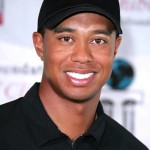
 with many women over time. Others argue that any sports star who is on the road and away from home so much has a huge chance of being unfaithful to their wife. (Some media reports argue that it is
  “rare” to find a faithful male sports star). Still others argue that Tiger Woods’ late father pressed him down under his thumb too much as a youngster and upon his death, Tiger unleashed his “wild side.” Finally, some news reporters offer that Tiger was “traumatized” as a child when his father cheated on his mother, and that he must just be paradoxically following in dad’s footsteps.
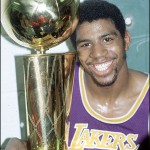 great Magic Johnson openly admitted to having hundreds of sex partners in the early 1990s and stated that he acquired the HIV/AIDS virus due to his lack of sexual protection. He was forgiven in media coverage and by the public, and was even repeatedly deemed a “hero” for his announcement. At the same time, another male athlete, Greg Louganis, who self identifies as gay, was not offered any media redemption. This was the case even though Greg Louganis was monogamous with his long-term partner and his long term partner cheated on him.
 waiting for him when he arrived. All of the articles discuss the physical beauty of the women he was with and news media features them as “gorgeous” or “hotties.” Without question, Tiger is framed as wanting sex–needing sex–and is even frequently cast as a sexual addict.
 t is dominated by upper class and white players who are assumed to be more moral. Yes, the men of golf are assumed to be more moral than men who participate in hegemonic sports such as basketball, baseball, and football–who are often men of color–and are often stereotyped as violent, promiscuous, or both.
 cularity and explosive physicality, all of which get marked as masculinized and as highly valued sex objects (some scholars argue that these particular sports and their participants are disproportionately responsible for sexual assaults and rapes. For work on these claims see Jeff Benedict’s book titled Public Heros, Private Felons: Athletes and Crimes Against Women) . Golf is not only less sexy because of the polo shirt,
  goofy shoes, and white grey hair, but because it is an individualized sport rife with controlled skills which do not frequently allow for sports performances that take visible muscularity and power. The media coverage of Tiger’s behavior then—explodes because it takes the mask off of the assumed to be more moral realm of upper class golf. Tiger Woods’ younger age, good looks, and muscular body helped to change the stiffness of the sport (no pun intended).
 a squeaky clean image to make him acceptable in golf as a man of color and yet we fault him more than other athletes for trying to uphold this image and failing at it.


 Morehouse College is a small all-male college in Atlanta Georgia with 2,700 students. It has recently instituted a ban on women’s clothing, high heels, and carrying purses within its student body. Dr. William Bynum, vice president for Student Services reported that “We are talking about five students who are living a gay lifestyle that is leading them to dress a way we do not expect in Morehouse men.” CNN reports that the college has stated that those who are found breaking the policy will not be allowed to go to class unless they change. The school also reports that “chronic dress-code offenders could be suspended from the college.”
 Stuart Hall, in his seminal work on social inequality and culture (titled Representation: Cultural Representations and Signifying Practices), defines how a sense of “othering” develops among more powerless groups when marked as “different” from (and often inferior to) dominant groups. “Othering” as you can see is a verb and refers to how powerless groups are marked and viewed as different and then frequently treated differentially by dominant groups on the basis of such markings. Marginalized groups, in turn, frequently come to see themselves as “different from” dominant groups and, at times, take on the qualities of dominant groups so as to assure that the possibilities for acceptance and upward mobility are not squelched within “mainstream society.” For African-American men in particular, as a response to having a lack of access to traditional means of masculinity (e.g. the occupational structure and mobility within it), scholars have further suggested that many African-American men adopt a “cool pose” that exaggerates attributes of masculine prowess (physicality and sexuality) to compensate for the lack of empowerment in other areas of their lives (Staples, 2006; Majors & Bilson, 1993; Messner, 1997). This process is said to be due to institutional and personal racism and discrimination which deny many African-American men traditional opportunities for masculine affirmation (e.g., education, employment, etc.). Behaviors to constitute hegemonic masculinity (the most dominant form of masculinity in a given period–often middle class and heterosexual), often include those that conform to gender role expectations that signify masculinity not only in the African-American community but broader society more generally.
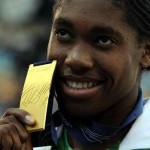 While Castor Semenya’s recent “news” seems to have shocked the world, the concern about “gender verification” in sport has taken place for quite some time. The tests have changed over time…but the point has not (e.g. when women are “too good,” they must not be women).