Darren, a charismatic program facilitator, scrawls masculinity themes across the white board. The youth, as they get called collectively, fidget in their chairs and rumble with ideas. They are from high schools scattered across this East Coast city, all Black and Latino, and have become friends in this grant-funded program. They call out things they’d like to address in a skit they will perform – “fatherhood,” “dominance,” “violence.” We take a break and the youth retreat into their screens. Ray kicks back, heels up on Shawna’s lap, laughing at a video his friend sent of a scuffle from school that day. “That doesn’t seem like healthy behavior, does it?” I ask. Ray laughs, “Naw. It’s stupid funny though” and he flashes a wide smile. “Does that count as attitudinal change?” I turn to ask Darren.
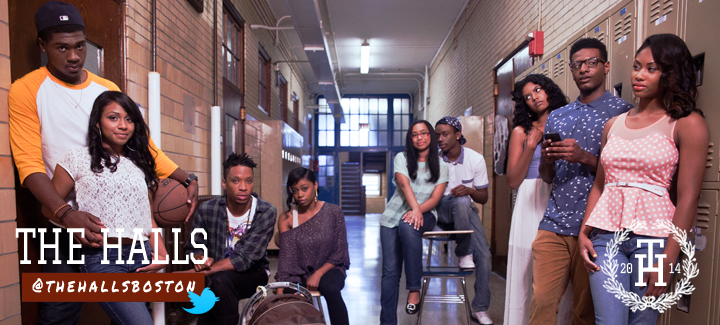
When we hear about feminist men, we almost inevitably hear the story of how and why they came to identify with feminism. A friend of mine, borrowing language from superhero comics, once called this ritual narrative an origin story. While these stories can be repetitive and self-centered, I understand why men recount them over and over. When men talk about how they became feminists they are, in essence, explaining how they came to identify with a movement of people who work to reduce men’s privileges, their own privileges. Today, for some men their origin involves a washed-out community room, a binder with a violence prevention curriculum inside and a low-paid facilitator.
Scholars have examined men’s pathways into feminism and other forms of gender justice work and found patterns. Often, it is a two-part reaction, some kind of “sensitizing experience” in childhood and a radical spark in young adulthood. While this pattern is no doubt very common, by telling the stories this we way can obscure the larger social and historical architecture in which they occur, and miss the work it takes to grapple with the implications of feminism over the long haul.
In our book, Some Men: Feminist Allies and the Movement to End Violence Against Women, my co-authors and I look at the life histories of feminist men with a wide angle lens as we try to bring into view the institutional structure and cultural system of the feminist movement at the historical moment at which men became engaged. In short, not only do men’s sensitizing experiences and radical sparks take dramatically different forms depending on the historical moment, but which men are sensitized and sparked also shifts.
Today, in a startling number of ways, feminism is in the water, but more specifically it is in organizations. The White House has a campaign against sexual violence called It’s On Us. During the Super Bowl, a coalition of corporations and organizations, called No More, ran an ad calling attention to sexual and domestic violence against women. The NBA has been running a “Lean In Together” commercial, with star WNBA and NBA players encouraging men to support women’s equality. In the wake of the Ray Rice assault, the NFL brought on Beth Ritchie and has promised more prevention programs. Public health departments and foundations now fund violence prevention programs in many urban communities. If these campaigns provide sensitization or spark, it looks dramatically more mainstream, straightforward and diverse than it did forty years ago.
Violence prevention programs, including those with high school youth, are rarely explicitly feminist. But the women and men who implement them often are. Many young feminist men of color who we interviewed for the book had come to identify as feminist through their work with boys and men of color around community violence or drug abuse and, often guided by women of color, found that feminism helped make sense of connections between power and violence in their lives. We call the perspective that these men provide “organic intersectionality” – a way of connecting violence against women with other systems of power and inequality that bubbles up out of lived experience. But most youth in these programs won’t take up careers in feminism or social justice. They will learn about hegemonic masculinity and empowerment and feminism and then the grant will run out or they will leave the program, and their formal education in this area will end. Their passions will change. Some men I know have left these programs and gone on to college, started a business or worked in a warehouse. How does feminism reverberate through their lives and politics?
The institutionalization of feminism into policies and organizations has opened up cracks for men to find their way to feminism in new ways. We must begin to understand how young men of color living in urban communities, as well as transmen, undocumented immigrant men and others make sense of allyship, consciousness-raising, and violence. Tomorrow’s feminist men are already out there – what stories will they tell?
________________________
 Max A. Greenberg is a lecturer at Boston University and the author (with Michael A. Messner and Tal Peretz) of Some Men: Feminist Allies and the Movement to End Violence Against Women (Oxford University Press, 2015).
 Time for some serious talk about men’s violence. I’ll break it down to make a difficult point really simple.