
Stewart Brand

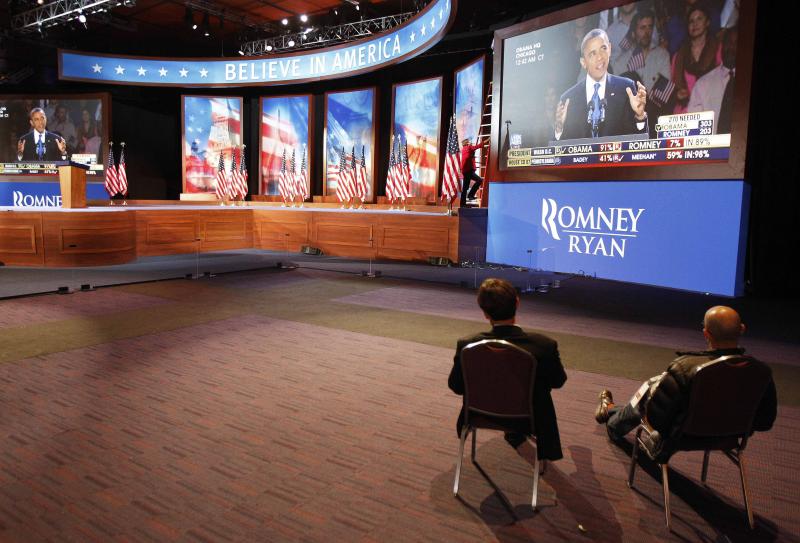
Obama Victory Speech at the Romney Headquarters. Image c/o White People Mourning Romney

In the aftermath of what both sides agree was the most substanceless presidential election in our nation’s history, some variation of the phrase “post-truth politics” has begun haunting the pages of op-eds and news show roundtables (Seriously, its everywhere. Here’s the first five that I found: one, two, three, four, five.).  To say that we live in an age of “post-truth politics” isn’t totally inaccurate, nor is it unworthy of the attention it is getting, but the discussion has yet to truly wrestle with the characeristics of commodified information. Information can be true, and it can be false, but how that information is disseminated, used, and ignored is what truly matters. Information doesn’t (just) want to be free, it also wants to be exploited. more...

YouTube Preview Image

“We’re not computers, […] we’re physical,” explains the Blade Runner‘s chief antagonist, a replicant named Roy Batty.  In this moment of dialogue, Blade Runner engages a frequent themes of the Cyborgology blog—the implosion of atoms and bits, which we term “augemented reality.”  In this statement, Roy unpacks the assumption that digitality and physicality are mutually exclusive, while, simultaneously, transcending the boundary between the two.  Put simply, Roy is contending that computers cease to be mere computers when they become embodied.  In contrast to the familiar theme of cyborganic trans-humanism, Roy is articulating (and embodying) the obverse theory: trans-digitalism.

This Copernican turn—de-centering humans’ role in understanding of the universe—is, undoubtedly, one of the great contributions  of the cyberpunk genre (and science fiction, more broadly).  Quite provocatively, it points to the possibility of a sociology, or even anthropology, where humans are no longer the direct object of inquiry.  The question, here, shifts, from how we are shaped by and interact with our tools, to how technology itself becomes an actors (or even agents!) in a particular social milieu. more...