
social construction of technology

The new Google maps probably won't destroy public space.
The new Google maps probably won’t destroy public space.

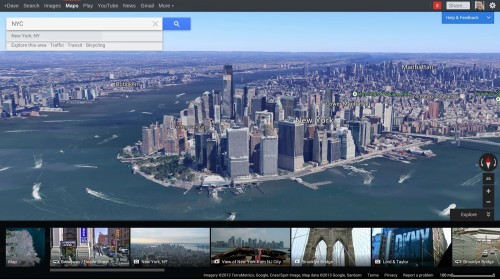
Maps are always political. Most maps show us something that we already believe, so its difficult to see what is being reinforced and what is systematically ignored. Even the most mundane AAA maps of highways and state borders are doing political work by recognizing the sovereignty of individual states and the obduracy of highways and roads. The near-infinite number of things, qualities, measurements, and people that have spatial characteristics (seriously, just think of all of it: temperatures, ancestral lands, endemic species, isobars, places to buy smoothies, locations of hidden treasure, and so on, and so on…_) mean that map makers must always select what is relevant and what is not. This selection process—a human endeavor—is inherently social and deeply political. Google, a company that has taken upon itself to reject that selection process and “organize all the world’s information,” wants to provide a single map and, instead of deciding what is relevant in any given map, will personalize it based on information it has about you and your friends. Evgeny Morozov, writing in Slate,[1] is rightfully concerned that Google doesn’t quite know what they’re dealing with when they say they want to organize public spaces in their databases right next to email and photos of cats. He is concerned that–unlike books or weather forecasts—Google doesn’t “acknowledge the vital role that disorder, chaos, and novelty play in shaping the urban experience.” I completely agree that unpredictability is necessary for good urban space, but the biggest threat Google poses to public space isn’t that its maps are “profoundly utilitarian, even selfish in character.” Rather, Google hasn’t done enough to personalize maps in such a way that they become part of everyday social (and Social) life. more...
I want to start out by saying that “liberatory” is not in the standard OS X spell check dictionary. There aren’t even spelling suggestions. It is totally foreign. I think that’s telling. Also, our blog’s CSS prevents us from giving our entries long titles. The Title is part of the story, so let me put it in a more readable format:

Black Box Tactics: The Liberatory Potential of Obscuring The Inner Workings of Technology


There we go. Now where was I? Oh right, I haven’t started yet. Let me do that: more...

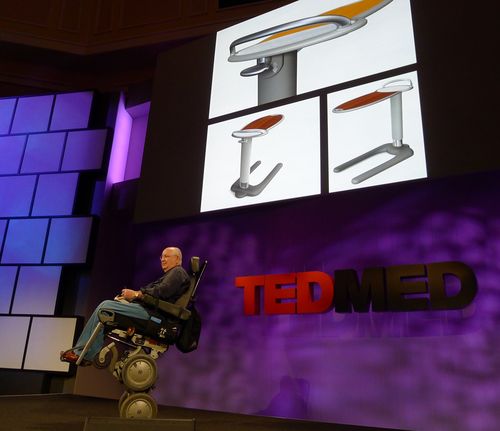
Technologies are, by nature, biased. They are biased by the humans who create them. They are biased by the cultures in which they are produced. They are biased by the perceived needs of intended consumers and they are biased by agentic practices of consumption. A recent TEDMED talk (Why Hospital Rooms Don’t Work) by architect Michael Graves highlights the biased nature of technologies. Specifically, he demonstrates the embeddedness of privilege.

Michael Graves is a renowned architect. In 2003, Graves developed a rare (and still mysterious) illness that left him paralyzed. While fighting the illness and then undergoing rehabilitation, Graves spent a significant amount of time in hospitals. He found the facilities not only to be aesthetically displeasing, but impractical and sometimes downright inaccessible for a person with mobility impairments. He describes unreachable light switches and faucet handles, rooms so small that maneuverability is impossible, really ugly floral patterns, and an overall requirement that he, as a person in a wheelchair, ask for help with tasks that he should be able to complete independently. Summarizing these shortcomings he says: more...