

passive

image

No doubt of interest to sociologists, Facebook is throwing a sociology pre-conference on its campus ahead of the annual American Sociological Association meetings this fall. When the company is interested in recruiting sociologists and the work we do –research of the social world in all of its complexity– their focus, as shown in the event’s program, is heavily, heavily focused on quantitative demography. Critical, historical, theoretical, ethnographic research makes up a great deal of the sociological discipline, but isn’t the kind of sociology Facebook has ever seemed to be after. Facebook’s focus on quantitative sociology says much about what they take “social” to mean.

My background is in stats, I taught inferential statistics to sociology undergrads for a few years, I dig stats and respect their place in a rich sociological discourse. So, then, I also understand the dangers of statistical sociology done without a heavy dose of qualitative and theoretical work. Facebook and other social media companies have made mistake after mistake with their products that reflect a massive deficit of sociological imagination. The scope of their research should reflect and respect the fact that their products reach the near entirety of the social world. more...
(Or: How we’ve come to be micro-celebrities online)

Facebook’s recent introduction of “frictionless sharing” is the newest development in a growing trend: data is being increasingly produced passively as individuals conduct their day-to-day activities. This is a trend that has grown both on and offline. We will focus on the former here; especially “frictionless” sharing that involves syncing Facebook with other sites or apps. Once synced, much of what a user listens to, reads or otherwise accesses are automatically and immediately published on Facebook without any further action or approval.  Users may not even need to “opt into” frictionless sharing because many services are changing their default setting to automatically push content to Facebook. In short, we can say that users play a passive role in this process.

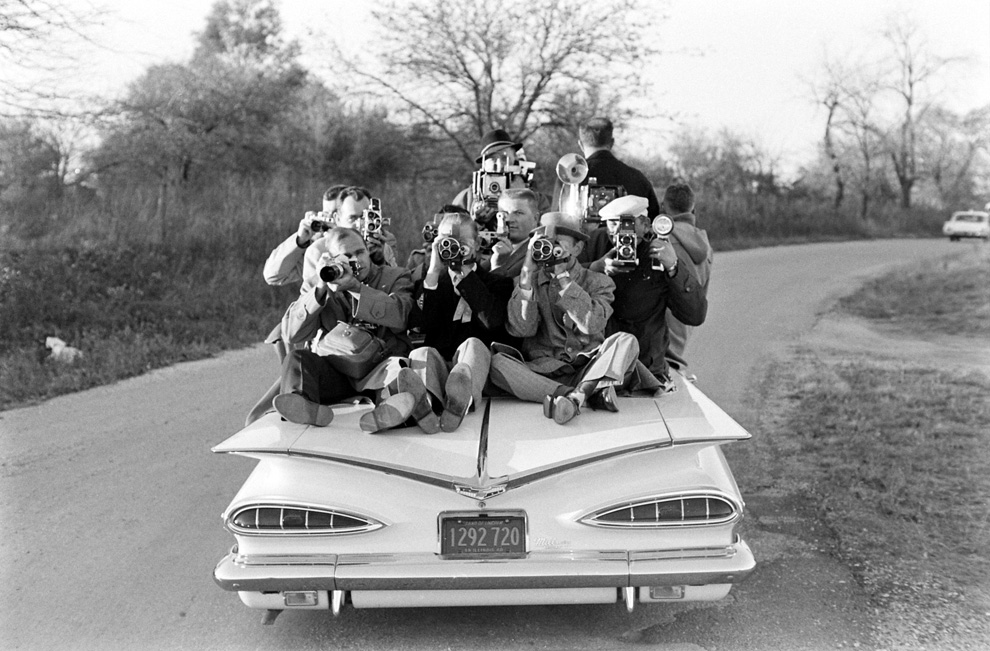
Contrast this to more active sharing: when we “like” or “+1” something (by clicking the eponymous buttons that have spread throughout the Web) it requires the user to make a conscious and affirmative action to share something with others in their network. Nathan Jurgenson (one of this post’s co-authors) previously described these two models as types of “documentary vision:” We actively document ourselves and our world around us as if we have a camera in our hand (“liking”, status updates, photos, etc.), or we can passively allow ourselves to be documented, curating our behaviors along the way (e.g., reading a magazine article so that you can present yourself as the type of person who “likes” that sort of magazine) much like a celebrity facing a crowd of paparazzi photographers.

Let’s make another layer of complexity to this documentary model more...