

NSF

3dcornrows

Much of the post-election analysis has focused on strategic fixes–what should have been done. But what can Trump’s win tell us about more fundamental theories of politics? In what way does the failure of an alliance based on labor, environmentalists and civil rights activists give us clues about our basic social power concepts?

Those three categories are fairly clear voting blocks (consider, for example, the very different constituencies that the AFL-CIO, Sierra Club, and Black Lives Matter represent), but they are also broad theory categories. Marxist theory predicts that working class voters will struggle to find a way to understand and represent their interests; environmentalists interrogate Western views of “dominion over nature”; and race theorists confront the structures of white supremacy. None of these theoretical projects occurred in a vacuum and there has been lots of good intersectional work across all three. But when it comes to praxis, history has lots of examples where these movements were pitted against each other or were incompatible from the start. Think of the 1930s labor strikes when black scabs were brought in to break all-white unions; the 1970s white activists who abandoned civil rights to start “Earth First”; and the 1980s loggers who found themselves pitted against the spotted owl. more...
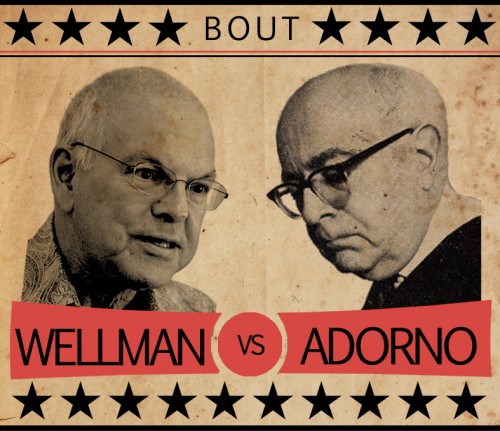
On September 18th, 2011, Barry Wellman, the early and rather prescient scholar of the Internet, posed a somewhat tongue-in-cheek question to the Communication and Information Technology Section of the American Sociology Association (CITASA): “‘Critical’ – aren’t we all?”  This post was precipitated by a call for papers for special issue of tripleC entitled Marx is Back: The Importance of Marxist Theory and Research for Critical Communication Studies Today (no affiliation with the author).  Specifically, the call invited papers that address (my emphasis):

what it means to ask Marx’s questions in 21st century informational capitalism, how Marxian theory can be used for critically analyzing and transforming media and communication today, and what the implications of the revival of the interest in Marx are for the field of Media and Communication Studies.

Shortly after it was sent, Wellman responded to the call, saying:

Not meant personally, but the use of the word “critical” by a subset of scholars always bothers me as leading to unconscious smugness? If I’m “critical”, your lot isn’t? Who, except flacks and twerps, isn’t critical? Can we criticize the criticalists?

This sparked a debate over the utility and appropriateness of the phrase “critical theory.”  Critics of the phrase raise the following objections: more...