
NPR

an outline of a human head and a brain inside of it made from neon lights.
image source.

NPR launched a new show this month called Invisibilia that “explores the intangible forces that shape human behavior – things like ideas, beliefs, assumptions and emotions.” The show’s hosts Alix Spiegel and Lulu Miller are great personalities and the show is beautifully edited in a way that doesn’t reach the Reggie Watts-esque soundscape of Radiolab nor does it stick closely to the dry public radio persona that has been lampooned countless times. I was, however, really disappointed when I learned that the huge topics under investigation in this show would only be understood through “psychological and brain science.” There are a lot of different disciplines that can be brought to bear on huge topics like “ideas” so why are we getting another show that confuses humans for brains? Also, the education and support families need. Millions of people in the US have a loved one living with Alzheimer’s disease or another type of dementia. For many, understanding the disease, knowing how to best support the loved one living with dementia and navigating the increasingly complex healthcare system are overwhelming. Many care partners find themselves frustrated, confused and exhausted. Internet searches leave many families more lost than they were as they struggle to find answers to basic questions like “What things should I be planning for at this time?”, more...
“Hey, don’t let me forget to TiVo Two and a Half Men”—said nobody ever.

NPR has been running a series that looks at the ways in which new technologies are changing how we consume television[i].  The latest installment, based on an interview with Jessica Helfand, author of Screen: Essays on Graphic Design, New Media and Visual Culture has a troublesome tone. Helfand worries that on-demand television is ruining our attention spans, as we consume only what we want, when we want. She worries that we watch on our own time, rather than as part of a collective schedule-following community. She worries that content will have to get shorter, more easily consumable, and that the focus will shift from away from the story, and towards the medium itself. Referencing a colleague, she labels today’s media consumption environment as a “narrative deprivation culture.”  Below are a few representative quotes from Helfand: more...

Doing Journalism in the Social Media Age

Discussion with Andy Carvin (@acarvin) & Zeynep Tufekci (@techsoc)

Introduction: Nathan Jurgenson (@nathanjurgenson) & PJ Rey (@pjrey)


This is part of a series of posts highlighting the Theorizing the Web conference, April 14th, 2012 at the University of Maryland (inside the D.C. beltway). See the conference website for information as well as event registration.

Experiencing global events through social media has become increasingly common. For those in the West, the uprisings over the past few years in the Middle East, North Africa and elsewhere were especially striking because social media filled an information void created by the lack of traditional journalists to cover the dramatic events. By simply following a hashtag on Twitter, we tuned into those on the scene, shouting messages of revolution, hope, despair, carnage, persistence, misinformation, debate, sadness, terror, shock, togetherness; text and photos bring us seemingly closer to the events themselves.
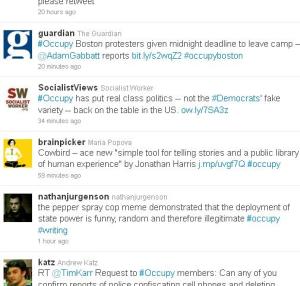
But of course the Twitter medium is not neutral. It has shaped what we see and what we do not. Where is the truth in all of this? The intersection of knowledge, power, struggle and the radically new and transformative power of social media begs for intense theorizing. How we conceptualize, understand, define and talk about this new reality lays the path forward to better utilizing social media for journalistic and political purposes.

This is why the keynote for Theorizing the Web 2012 conference (College Park, MD, April 14th) features Andy Carvin (NPR News) and Zeynep Tufekci (UNC) in conversation. Carvin (@acarvin) has become well known for his innovative use of Twitter as a journalistic tool. Tufekci (@techsoc) has emerged as one of the strongest academic voices on social movements and social media and brings a theoretical lens to help us understand this new reality. Together, insights will be made that have impact beyond just journalism but to all researchers of technology as well as those outside of academic circles.

Who is Andy Carvin; and What Do We Call Him?

Without a deep background in professional journalism, Carvin’s actual title at NPR is “Senior Strategist.” However,  more...

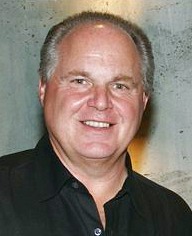
Rush Limbaugh is experiencing an advertiser exodus, and social media is playing a big part.

It’s the kind of story that writes itself. A popular media entity, on one of the oldest forms of electronic mass media, bears the brunt of activists’ Facebook wrath. It combines two old rivalries: liberals and conservatives and new media versus old media. In case you missed it, here’s the brief synopsis of events from ABC news:

Rush Limbaugh remains in big trouble. Advertisers – 11 at last count – are pulling spots off his radio talk show because of the reaction to his calling Georgetown University law student Sandra Fluke a “slut” and a “prostitute.” Opponents are mobilizing on social media for a long campaign to try to convince even more sponsors to drop his program. Ms. Fluke herself has rejected as insufficient Mr. Limbaugh’s attempts at apology

Fluke had testified before congress about the importance of “the pill” for medical uses beyond birth control. Rush concluded that she was having so much sex that she needed the American tax payer to help defer the cost of her contraceptives. (This has led to some speculation that conservatives don’t know how hormonal birth control works.) Thousands of people are organizing to get advertisers to pull their money out of Rush Limbaugh’s show, and many of them are organizing via Twitter and Facebook. Will we be subjected to another round of technologically deterministic news stories about “cyber revolution,” or are we going to have a more nuanced conversation? More precisely, does Rush have a social media problem or has he -all things being equal- just gone too far this time? more...

Cyborgology editors Nathan Jurgenson and PJ Rey on WYPR (Baltimore’s NPR affiliate) discussing technology and the Occupy movement: Click here to listen to the audio.

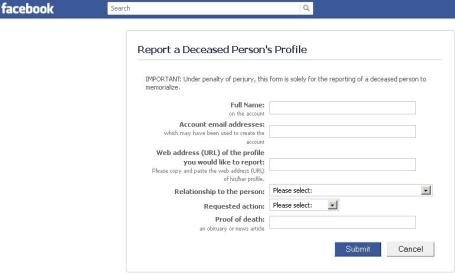
Last week, Cyborgology editors Nathan Jurgenson and PJ Rey were on WYPR (Baltimore’s NPR affiliate) talking about death and dying on Facebook. This is part of the conversation, the rest will be aired in the near future.

Click here to listen to the audio.

The Cyborgology editors, again, appear on WYPR (Baltimore’s NPR affiliate). Listen to the audio here. We discuss “cyber-support”, something we have touched on before.

Social media sites like Facebook and Formspring have created new forums for bullying—you may have heard the word “cyberbullying” thrown around.

But social media also provides an opportunity for marginalized groups to gather for support—and occasionally to fight back. Our social media gurus Nathan Jurgenson and P.J. Rey call this “cybersupport.” You can see it at sites like Harassmap, the“3,000 Campaign” against sexual assault, and iHollaback.

Today Nathan and P.J. join Sheilah to talk about this type of networking and the effects it can have—intended and unintended—in physical space.

Nathan Jurgenson and P.J. Rey are Ph.D. candidates in sociology at the University of Maryland, and they blog at Cyborgology.

Also, there will be a panel on so-called cyber-support at the Theorizing the Web conference we are throwing on April 9th.

Cyborgology editors Nathan Jurgenson and PJ Rey discuss the social media connections to this tragedy. The complete interview is now streaming (interview starts at 2:03).

Read our our post on the topic here.

Cyborgology editors Nathan Jurgenson and PJ Rey discuss their take on WikiLeaks, net neutrality, and other issue surrounding the free flow of information on the Internet. The complete interview is now streaming.