methods

Technological advancements have had a profound influence on social science research. The rise of the internet, mobile hardware and app economies generate a breadth, depth and type of data previously unimaginable, while computational capabilities allow granular analyses that reveal patterns across massive data sets.  From these new types of data and forms of analysis, has emerged a crisis and renaissance of methodological thought.

Early excitement around big data celebrated a world that would be entirely changed and entirely knowable. Big data would “revolutionize” the way we “live, work, and think” claimed Viktor Mayer-Schönberger and Kenneth Cuckier in their 2013 monograph, which so aptly captured the cultural zeitgeist energized around this new way of knowing. At the same time, social scientists and humanities scholars expressed concern that big data would displace their rich array of methodological traditions, undermining diverse scholarly practices and forms of knowledge production. However, with the hype around big data beginning to settle, polemic visions of omnipotence on the one hand, and bleak austerity on the other, seem unlikely to come into fruition.

While big data itself enables researchers to ask new kinds of questions, I argue that big data’s most significant effect has been to bring social thinkers back to the methodological (and philosophical) drawing board. For decades, more...

4244539669_8dceaae1ba_z

In a widely-shared article on The Intercept, Sam Biddle made the point that, “Trump’s anti-civil liberty agenda, half-baked and vague as it is, would largely be an engineering project, one that would almost certainly rely on some help from the private sector.” The center of his article, that of the six major tech companies he requested comments from only Twitter gave him an unequivocal statement that they would not help build a Muslim database, was chilling even though most of the companies just never responded. The role of engineers and designers in carrying out political ends often relegated to business’s policies. That is, engineers themselves are seen as completely beholden to whatever their bosses decide their job should be. I want to look at this from a different angle: why are engineers so willing to defer responsibility for their actions and why are they so often in positions to do so? more...

Image credit
Image credit

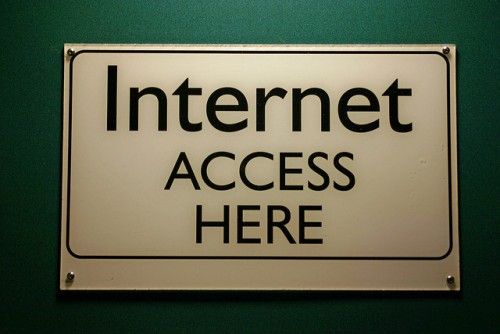
What does it mean to have access to the internet? It’s an apparently simple question that gets complicated when we consider the wide variety of ways people access the web and products from the web. Indeed, the question is wrapped up in recent debates about zero rating, net neutrality, “the next billion” and numerous initiatives designed to bring people from the developing world online.

At Theorizing the Web this year, I presented research that combined my fieldwork and personal observations in developing world internet contexts like rural northern Uganda, urban China and rural Philippines with emergent research and journalism on the use of sneakernets–the physical transfer of data using devices like USB sticks or Bluetooth-enabled mobile phones–in places like Mali, North Korea and Cuba. These latter formed the basis for my talk and a recent paper in The New Inquiry, in which I draw from Jan Chipchase’s writing on binary thinking about connectivity and how this ultimately overlooks the vast diversity of ways that people do access the web and its products. more...

a

The most crucial thing people forget about social media, all technologies, is that certain people with certain politics, insecurities, and financial interests structure them. On an abstract level, yeah, we may all know that these sites are shaped, designed, and controlled by specific humans. But so much of the rhetoric around code, “big” data, and data science research continues to promote a fallacy that the way sites operate is almost natural, that they are simply giving users what they want, which then downplays their own interests and role and responsibility in structuring what happens. The greatest success of “big” data so far has been for those with that data to sell their interests as neutral.

Today, Facebook researchers released a report in Science on the flow of ideological news content on their site. “Exposure to ideologically diverse news and opinion on Facebook” by Eytan Bakshy, Solomon Messing, and Lada Adamic (all Facebook researchers) enters into the debate around whether social media in general, and Facebook in particular, locks users into a so-called “filter bubble”, seeing only what one wants and is predisposed to agree with and limiting exposure to outside and conflicting voices, information, and opinions. And just like Facebook’s director of news recently ignored the company’s journalistic role shaping our news ecosystem, Facebook’s researchers make this paper about minimizing their role in structuring what a user sees and posts. I’ve just read the study, but I already had some thoughts about this bigger ideological push since the journalism event as it relates to my bigger project describing contemporary data science as a sort of neo-positivism. I’d like to put some of my thoughts connecting it all here.

more...

image

No doubt of interest to sociologists, Facebook is throwing a sociology pre-conference on its campus ahead of the annual American Sociological Association meetings this fall. When the company is interested in recruiting sociologists and the work we do –research of the social world in all of its complexity– their focus, as shown in the event’s program, is heavily, heavily focused on quantitative demography. Critical, historical, theoretical, ethnographic research makes up a great deal of the sociological discipline, but isn’t the kind of sociology Facebook has ever seemed to be after. Facebook’s focus on quantitative sociology says much about what they take “social” to mean.

My background is in stats, I taught inferential statistics to sociology undergrads for a few years, I dig stats and respect their place in a rich sociological discourse. So, then, I also understand the dangers of statistical sociology done without a heavy dose of qualitative and theoretical work. Facebook and other social media companies have made mistake after mistake with their products that reflect a massive deficit of sociological imagination. The scope of their research should reflect and respect the fact that their products reach the near entirety of the social world. more...

I spoke at the wonderful “Digital Ethnography Weekend” conference last month in Italy. There, I furthered my argument about what I call “digital dualism,” the fallacy that views the on and offline as separate spheres as opposed to my support of an “augmented reality” paradigm that views these spheres as always enmeshed and dialectically co-determining.

Because this was a “digital ethnography” conference, I applied the augmented reality framework to this methodology and argued that, instead, we should be doing “augmented ethnography”, an ethnography that takes as its unit of analysis a reality comprised of atoms as well as bits, always dialectically co-determining. Colleague Alessandro Caliandro and I debated these ideas in the question-and-answer portion of my talk (with much-appreciated thoughts from Adam Arvidsson, as well). Caliandro has posted his summary of my talk as well as his criticism here. I welcome this criticism and want to respond to it below.

First, Caliandro’s development of my argument is charitable. I also very much appreciate the thoughtfulness of the critique. However, I do need to make a correction to the way he summarized augmented reality, and this correction will be important for my response to the criticism. I do not think that the differences between the physical and digital are “irrelevant”; indeed, they are quite important and I’ve written about them before (e.g., here and here). Atoms and bits have very different properties (for instance, atoms tend to be scarce and bits more abundant). It is my contention that these very different spheres come together to form our augmented reality. In fact, as I argue here, it is only under the assumption of augmented reality that we can fully explicate the relevant differences between the physical and digital. With this correction in mind, let’s move forward. more...

In the social sciences, we often hear about, talk about, and preach about the relationship between theory and methods. Here, I present a poignant example their interconnectedness.

In a recent post, I argued that the accomplishment of authenticity in a cyborg era is particularly difficult. Drawing on Goffman, Turkle, and others, I argued that we live in a time of constant documentation, exposing the identity work that is supposed to remain hidden in the so-called “back stage.” I purported that our online and offline selves are not only mutually influential, but that we also engage in preemptive behavior in order to accurately present our ideal selves through multiple mediums.

Overall my theoretical point is this: As social actors we expect authenticity in others, and in ourselves. In a time of constant documentation, our online personas become our reflections, and they must not only be ideal, but also truthful. As such, we do not document falsehoods, but preemptively create documentable situations in an effort to present a self that is simultaneously ideal and authentic.

Here is the methodological conundrum: If the constructed nature of selves and identities must remain hidden not only from others, but also from ourselves, then how can we get people to talk about the labor involved in the identity construction process? In other words, how do we support the theoretical assertion? more...