marxism

Today’s post is a reply to Robin James’ post, which raises questions stemming from the observations made in Jodi Dean’s recent post on “What Comes After Real Subsumption?


Image c/o Aldor
Image c/o Aldor

This might be a tad “incompatible” with the existing discussion because while the discussion so far has focused mainly on a Marxist approach to a series of philosophical questions, I want to take an anarchist approach to an anthropological re-reading of the initial question: “what comes after real subsumption?” That is, I think some of the subsequent questions might be more answerable if we interrogate their anthropological facets. Particularly, I want to focus on what is considered feedstock for production and what is identified as the act of consumption which, by definition, must yield a waste that capitalists sort through in an effort to extract more surplus value. Pigs in shit as it were.  more...
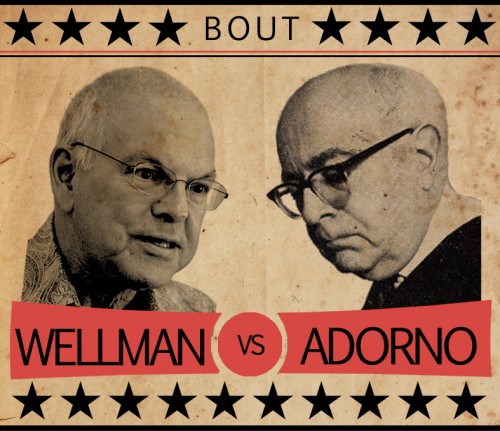
On September 18th, 2011, Barry Wellman, the early and rather prescient scholar of the Internet, posed a somewhat tongue-in-cheek question to the Communication and Information Technology Section of the American Sociology Association (CITASA): “‘Critical’ – aren’t we all?”  This post was precipitated by a call for papers for special issue of tripleC entitled Marx is Back: The Importance of Marxist Theory and Research for Critical Communication Studies Today (no affiliation with the author).  Specifically, the call invited papers that address (my emphasis):

what it means to ask Marx’s questions in 21st century informational capitalism, how Marxian theory can be used for critically analyzing and transforming media and communication today, and what the implications of the revival of the interest in Marx are for the field of Media and Communication Studies.

Shortly after it was sent, Wellman responded to the call, saying:

Not meant personally, but the use of the word “critical” by a subset of scholars always bothers me as leading to unconscious smugness? If I’m “critical”, your lot isn’t? Who, except flacks and twerps, isn’t critical? Can we criticize the criticalists?

This sparked a debate over the utility and appropriateness of the phrase “critical theory.”  Critics of the phrase raise the following objections: more...

Zizek writes this week in Inside Higher Ed about how cloud computing is a space dominated by two or three companies (read: Apple and Google). He states,

“cloud computing offers individual users an unprecedented wealth of choice — but is this freedom of choice not sustained by the initial choice of a provider, in respect to which we have less and less freedom? Partisans of openness like to criticize China for its attempt to control internet access — but are we not all becoming involved in something comparable, insofar as our “cloud” functions in a way not dissimilar to the Chinese state?”

Is a computing market dominated by a few private companies really similar to the “Great Firewall” (officially, the “Golden Shield”) of China?