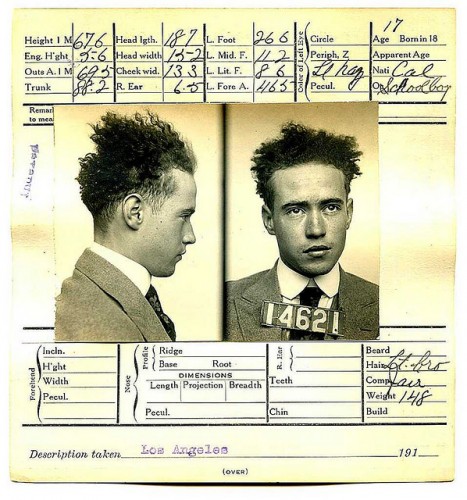
Visual technologies continue to play an increasingly key role in strategies for monitoring and surveillance in modern capitalist societies in crime prevention and detection, and the apprehension, recording, documenting and classification of criminals and criminal activities. Still and moving ‘visual evidence’ is stored in state archives, used in courtrooms as evidence, and disseminated across almost every major media platform: from the printed press to the World Wide Web.
The relationship between visual technologies and the criminal justice system can be traced back to the emergence of photography and the invention of the camera as a tool for documenting ‘reality’ in the nineteenth century. The camera was widely believed, even more so than today, to be able to objectively and truthfully record social reality. A photograph was perceived to be like a window on the world – a mechanically produced, impartial and literal representation of the real world. more...