Would you agree when I say that the way we represent ourselves has much to do with the idea of how well we think we know about ourselves and perhaps, less to do with choice or control? Consider this, we deliberate over our clothes, are picky with food groups, finicky about television shows, have preferences for certain books, and who we hang out with. Our preferences are largely responsible for self-representation and act as guidelines for others to categorize us. What about decisions and preferences that are not deliberate – the way we react to distressing news (a death in the family); how we face challenges (poor scores in exams); our attitude towards physical exercise; planning a camping trip – are non-verbal and visceral cues that add up to people’s perception of what makes us who we are. So, representation can be controlled as well as non-deliberate in real life.
The digital space frequently encourages us to take control of how we represent ourselves. We are also given opportunities to modify the same at frequent intervals. Our digital histories are a cumulative record of our thoughts, activities, interests, and participations on a host of online platforms. Are they a sum total of what we are? Can we honestly say that our digital activities and our avatars online stand for the whole of our personality? Aren’t we more than the reflections of a series of ‘What’s On Your Minds’, or ‘Likes’, or ‘Add To’, ‘RT’, ‘Share This’, and ‘Recommend’? These are ways in which we communicate, mostly textually and digitally; modes peculiar to the Interwebs. Is there a system via which we can attempt complete digital transference of our offline selves so that there’s more ‘accurate’ representation for our digital peers?
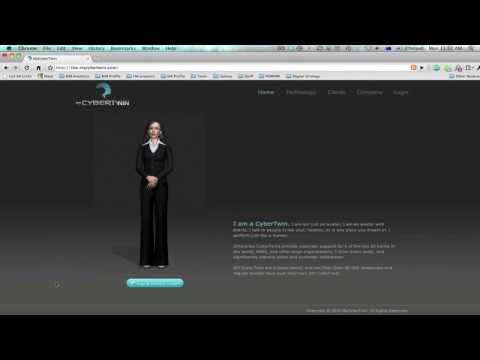
Each of us exhibits a digital signature that is peculiar to what or who we are online. These take the form of avatars. My avatar receives its cues from its offline “twin”, however, neither do we deliberate over its responses nor do we have a conscious say in its growth. The body of reference that builds from our online detritus does not always accumulate in a controlled environment. The mycybertwin.com web service, however, allows us to do just that: artificially engineer a twin and let it loose on cyberspace as my virtual representation. more...
 However as most people will quickly realize, the online gaming world is very similar to the “real life” world and strong assumptions and stereotypes regarding players still exist. Players can largely avoid racial stereotypes as it’s hard to tell the race of the person behind the screen, however, gender stereotypes are harder to escape.