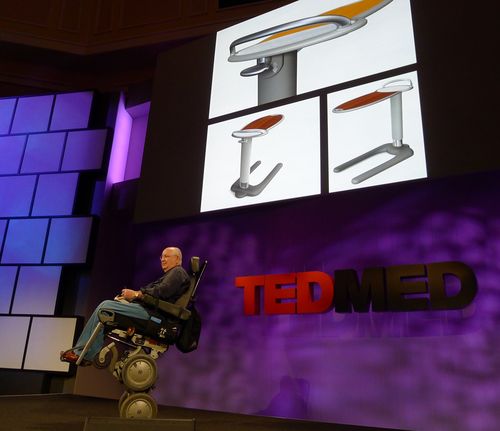
My post today comes from a class on ableism and disabled bodies that I taught earlier this past semester in my Social Problems course. Its inception came from the point at which I wanted to introduce my students to Donna Haraway’s concept of cyborgs, because I saw some useful connections between one and the other.
My angle was to begin with the idea of able-bodied society’s instinctive, gut-level sense of discomfort and fear regarding disabled bodies, which is outlined in disability studies scholar Fiona Kumari Campbell’s book Contours of Ableism. Briefly, Campbell distinguishes between disableism, which are the set of discriminatory ideas and practices that construct the world in such a way that it favors the able-bodied and marginalizes the disabled, and ableism, which is the set of constructed meanings that set disabled bodies themselves apart as objects of distaste and discomfort. In this sense, disabled bodies are imbued with a kind of queerness – they are Other in the most physical sense, outside and beyond accepted norms, unknown and unknowable, uncontrollable, disturbing in how difficult they are to pin down. Campbell identifies this quality of unknowability and uncontainability as especially, viscerally horrifying.