race

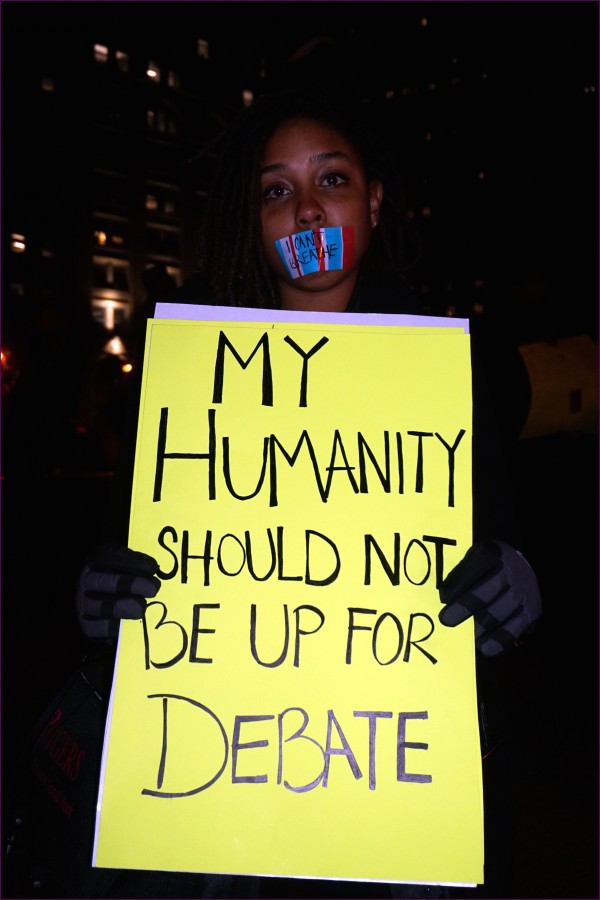
Eric Garner Protest 4th December 2014, Manhattan, NYC
A Black Lives Matter protestor in New York City in 2014. Black youth suicide is increasing due to what researchers describe as a complex web of factors including greater exposure to poverty and violence and a lack of access to mental health treatment. Photo by The All Nite Images via Flickr CC.

The suicide of a young person is always a tragedy, an event deeply mourned by the youth’s family and community. Sadly, the prevalence of this kind of tragedy is greater than many might think. Data from the Centers for Disease Control and Prevention for 2005 through 2013 indicate suicide has been the third or fourth leading cause of death for people ages 10 to 14, and the second or third leading cause of death for young people ages 15 to 24. Within these age groups, suicide rates can be further differentiated by race. Although suicide incidence has tended to be lower for Black youth than for other demographic groups, today suicides of African American children and young adults are on the rise. In order to understand how to reverse this worrisome new trend, a complex set of factors need to be examined.

Suicide by Race, Age, and Gender

In the total U.S. population not taking age into account, whites have the highest rate of suicide followed by American Indians and Alaskan Natives, and Asians and Pacific Islanders. Blacks and Hispanics have the lowest rates of suicide. For young people, the highest rates of suicide-related deaths occur among American Indians and Alaskan Natives. Rates of suicide for Black youth and the overall Black population tend to be lower than these other demographics – but things have changed recently. more...
Steven Depolo, Flickr Creative Commons

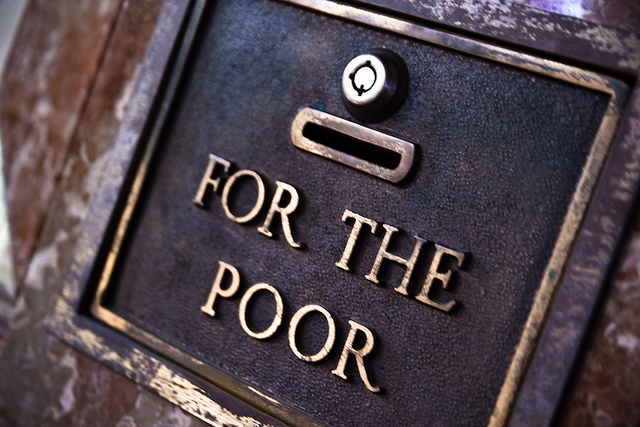
In early June 2015, the Missouri state legislature voted to remove thousands of families, including 6,400 children, from the state’s cash assistance program for the poor. The new law reduces the state lifetime limit for Temporary Assistance for Needy Families from 60 to 45 months, cuts cash benefits in half for those who do not work, and redirects a significant portion of welfare funds toward programs that encourage marriage and alternatives to abortion.

Why has Missouri made these changes now? Since the U.S. Congress acted in 1996 to change welfare funding rules and give states greater discretion, many states have taken steps similar to Missouri. My research suggests that racial dynamics drive these cutbacks – but not in ways many suppose. Demography and attitudes are insufficient explanations; the political context matters.

Race and Welfare Policymaking

Why have some states imposed welfare restrictions in recent years while others have retained more generous programs? Previous studies reveal a clear pattern: the higher the proportion of African Americans receiving cash welfare benefits, the more likely states are to adopt restrictive welfare policies. But not all racially diverse states have adopted punitive reforms and some predominantly white states have taken very restrictive approaches to welfare. Race clearly influences welfare politics, but how?

To answer this question, I examined the policy decisions that state legislatures made immediately after the 1996 national reforms transformed American anti-poverty policy. That law imposed new time limits, work requirements, and penalties on recipients of welfare benefits. After Congress gave states new flexibility to design their own programs, some states adopted the most generous policies allowed by federal law, while others imposed far more restrictive policies. To understand the decision-making processes better, I closely examined a number of states which had large minority populations at the time.

What I found was surprising: Legislators’ decisions about welfare policy were heavily influenced by the political debates simultaneously raging in their states. When these other debates were rife with racial tensions, legislators enacted punitive welfare reforms. But when coterminous debates were not racialized, lawmakers tended to adopt more generous welfare programs. In other words, lawmakers used restrictive welfare changes as a strategy to appease white voters who felt threatened by other racial conflicts happening in the same period. more...

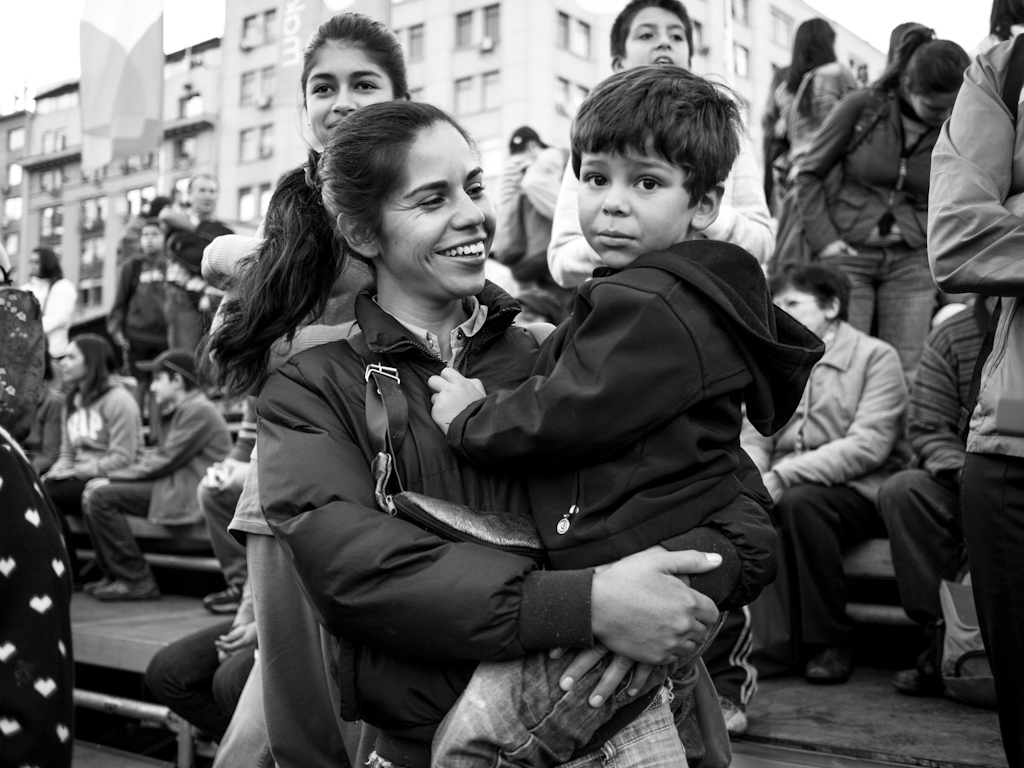
Photo by Francisco Osorio Flickr CC

Latinos living in the United States comprise the largest number of immigrants of any racial or ethnic group – and for this reason, many Americans presume that immigration is the issue that matters most to Latino citizens and residents. But is that true? Do Latinos themselves view immigration as their top concern, and if not what other issues are high on their political agenda? My research tackles this question, which is important for understanding the potential political influence of the largest and fastest growing minority group in the United States. more...

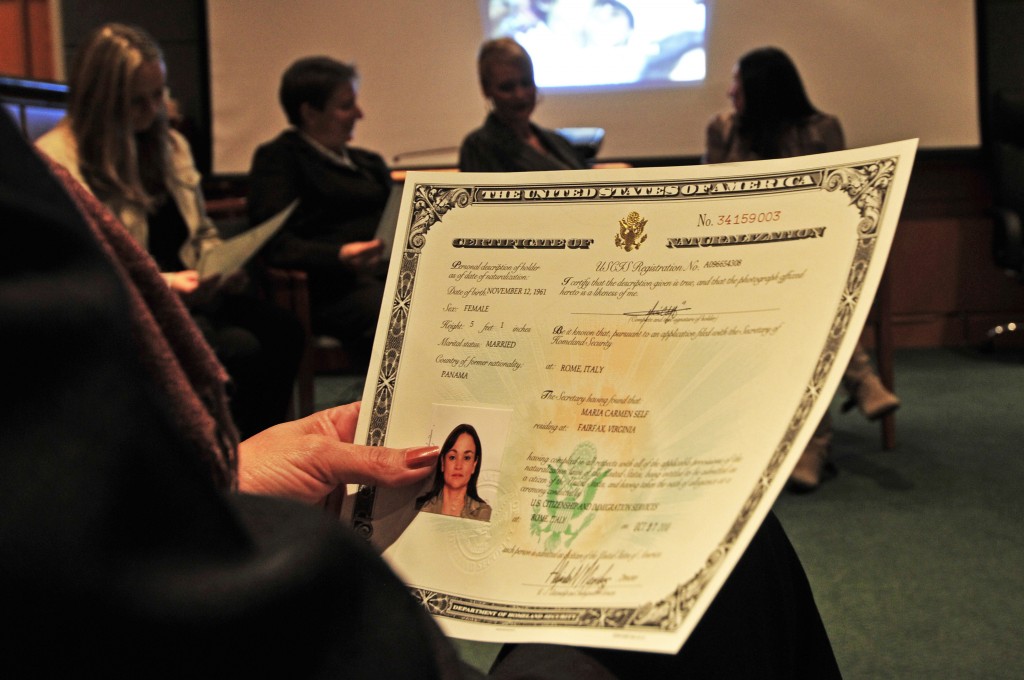
A newly naturalized citizen displays her certificate. U.S. Navy photo.

Current debates about immigration reform focus on whether or not there will be a “path to citizenship” for the eleven million undocumented immigrants living and working in the United States – and, if so, how long the road will be. Citizenship brings new rights and opportunities for individuals and families, and the country as a whole also has a stake in drawing into full citizenship both legal and undocumented newcomers. Otherwise America may face growing gaps in life chances among groups with different immigration and citizenship statuses. Across many decades of U.S. history, grants of citizenship, or refusals, have been used to incorporate masses of newcomers from Europe and exclude others, such as those from many Asian countries. Today, citizenship status has again become an axis of inequality that exacerbates other disparities grounded in class and race. Denying undocumented immigrants, mostly from Mexico and Central America, opportunities to get on a path to citizenship is one obvious source of continuing inequality. In addition, my research shows that barriers to citizenship status also exist for many newcomers with legal permanent resident status – so-called “green card” holders. The difficulties these immigrants face magnify inequalities in American society as a whole.

Access to Citizenship for Legal Residents

Citizenship can, in principle, be obtained by immigrants who already have “green cards,” or documents that demonstrate their legal permanent status in the United States and meet a range of criteria. Access to permanent legal residency itself is restricted. Most commonly, immigrants obtain green cards through close relatives who are already citizens or permanent residents. Many others do so through employment or by claiming refugee status. Residents of countries that are relatively underrepresented in the United States may be able to win green cards in a lottery. Once they gain permanent legal resident status, most immigrants must wait five years to apply for citizenship – and they then must pay hefty fees, fill out detailed applications, and undergo interviews and testing by immigration officials, all before, finally, attending a swearing-in ceremony that makes their newly gained citizenship official. Some legal residents have a slightly easier path. Those married to U.S. citizens wait three years instead of five, and members of the military may currently apply when they enlist. In response to anti-immigrant measures at national, state, and local levels, applications for citizen status have increased in recent years. Nevertheless, fewer than half of immigrants in the U.S. have become citizens, and the U.S. take-up rate is much lower than rates in sister immigration destinations such as Canada and Australia.

Who Gains Citizenship?

Commentators noting the low uptake of U.S. citizenship have raised concerns about the loyalty of new immigrants and difficulties in the naturalization process. In addition, uneven citizenship intersects with and exacerbates other dimensions of inequality in American society. In a study of data from the U.S. Census, I found that immigrants with less than high school education are increasingly less likely to be citizens compared to more educated immigrants. In 1970, the level of education did not make much difference for whether immigrants had become citizens, but by 2000 a large education gap had appeared. Immigrants with higher levels of income are also more likely to gain citizenship. In short, during an era when inequality has grown overall in the United States, citizenship status is being attained much more unequally by more and less privileged legal residents.

Racial disparities are also growing. Hispanic immigrants, whether black or white, have the lowest levels of citizenship, while non-Hispanic blacks and whites, as well as Asians, all gain citizenship at about average rates. This finding cannot be explained away by the higher representation of Hispanic immigrants among the undocumented, who are not eligible for citizenship; even among legal Hispanic permanent residents, the uptake of citizenship for the largest group, Mexicans, is low. By countries of origin, the lowest proportions gaining citizenship are found among Guatemalan, Mexican, and Salvadoran immigrants, and the highest proportions occur among immigrants from Vietnam and the Philippines.

Why Uneven Access to Citizenship Matters

It is unfortunate that access to citizenship is increasingly paralleling other disparities in U.S. society, because citizenship status promises access to the full civil liberties and rights, making immigrants almost equal to native-born Americans. The right to vote and to run for most political offices is reserved for citizens. For individual immigrants, citizenship expands job opportunities across the economic spectrum – opening posts ranging from state-licensed cosmetician to police officer and making it possible to compete for government fellowships, grants, and contracts. Citizenship also allows newcomers to bring other family members through reunification rules, and eases connections between the United States and immigrant countries of origin. For the immigrants who may fall on hard times, citizenship status improves access to welfare benefits. Perhaps most important, citizenship provides a sense of security and permanency by fully protecting immigrants from threats of deportation.

Citizenship benefits not only newcomers and their families, but also communities and the nation as a whole. For example, because Hispanics are often not citizens, this minority group, now the largest in the United States, has much less political clout than its sheer numbers might suggest. Although legal resident noncitizens can and do engage in political activity, their inability to vote and run for office reduces their political efficacy; and along with undocumented immigrants, they are at risk for deportation. The estimated twenty-two million noncitizen immigrants add up to a troubling indicator for the health of American democracy, because these people live, work, raise families, and contribute to their communities, but are excluded from the innermost circle of membership in the nation. Hundreds of thousands of legal resident immigrants become eligible to apply for citizenship every year. And comprehensive immigration reform, if Congress acts, it could put many currently undocumented on the path to citizenship in the future. Everyone who cares about reducing socioeconomic and racial inequalities in the United States should want to address inequalities in citizenship acquisition by legal residents and support full access to citizenship for the undocumented.

Sofya Aptekar is in the sociology department at UMass–Boston. She is the author of The Road to Citizenship: What Naturalization Means for Immigrants and the United States.

Nearly a quarter of all babies born in the United States are now Hispanics, yet many of these newborns start life’s race behind the starting line, poor and disadvantaged.  This issue might seem relevant only to longstanding metropolitan gateways for new immigrants, such as San Diego, New York, Chicago, and Miami. But today it matters for rural areas and small towns as well, because new immigrants have spread out all over the United States. Hispanics account for more than half of all the nonmetropolitan population growth in the 2000s, and in many parts of rural America from Alabama to Nebraska, growing numbers of Hispanics provide a demographic lifeline to dying small towns. Yet disproportionate and growing numbers of immigrant Hispanic children are born into poverty, and the difficult circumstances they face from before birth through childhood profoundly influence their adult contributions to American society. more...

Many observers, including journalists, have sounded the alarm that historically black colleges and universities in the United States are in danger of losing their identity. “Historically Black Colleges are Becoming More White,” blares one headline; and another asks “White Students at Black Colleges: What Does It Mean for HBCUs?” Questions are being raised about the future of these longstanding institutions. That’s the great news. But the problem is that claims about what is happening in historically black colleges and universities are largely false and feed popular misunderstandings of their continuing nature and contributions.

The data are clear: although a small handful of these institutions have experienced a slight increase in non-black enrollment over the last decade, most did not. Race and economic class matter more than ever in the early twenty-first century United States, and students of color often report chilly racial climates at predominantly white universities. As a result, historically black colleges and universities remain very important for black Americans as stepping stones to opportunity and as safe places for black intellectual and personal development. more...

Few cities have adopted charter schools more rapidly than New Orleans in the wake of Hurricane Katrina in 2005. Although the Orleans Parish School Board still operates a few traditional public schools as well as its own charter schools, the Recovery School District run by the state has just become the first district in the country to have only charter schools. Many scholars regard New Orleans as an important site for studying many kinds of educational reforms, and we have done our own study of two community-oriented charter schools that opened in 2010 and 2013.

Although many existing New Orleans charter schools have been run by local or national non-profit organizations that emphasize the delivery of college preparatory instruction to mostly poor, non-white students, the two schools we studied were founded by parents and community members who are intensely engaged and have strong visions about the role of their schools in the community. These parents and community members have endeavored to build schools that foster cross-group friendships, serve as hubs for the surrounding neighborhood, and combine strong academics with a broad curriculum. This approach differs from the usual tendency of urban charter schools to define success narrowly in terms of student achievement on tests. Our study of these two grassroots charter schools offers important lessons for reformers well beyond New Orleans who believe in a more community-based approach to school improvement. more...

Relationships to teachers are fundamental to the educational success of middle and high school students. Compared to those with more strained social connections, adolescents who have positive relationships with their instructors feel better about school, behave better in class, and achieve more in their studies. But improving teacher-student relationships poses a substantial challenge. Teens often lack the motivation to develop close personal ties with their teachers – and teachers often find themselves preoccupied with conveying the Common Core curriculum, prepping their charges for standardized tests, and administrative duties at school. more...

Years after the terrorist attacks of September 11, 2001, the daily lives of American Muslims continue to be affected by the anxieties and policies those attacks unleashed. Because so many of their fellow citizens see them as both physically threatening and culturally inferior, Muslim-Americans endure regular expressions of hostility at their jobs and in public spaces. They are also the target of government policies aimed at securing the country from another terrorist attack.

Every single day in U.S. airports, for example, Muslim Americans are treated as dangerous. Quite a few men have been told they are on a No-Fly List when they attempt to check in for flights; and women who wear the hijab or other religious clothing are often stopped and searched by Transportation and Security Administration agents. Such government actions are not only a problem for the people affected; they also convey the broader message that Muslims are a threat to national security and require careful monitoring and surveillance. more...

Several decades ago, most immigrants to the United States settled in a few urban areas in California, Texas, and Illinois. But that has changed in the past twenty years, as immigrants have spread out to build their lives in communities all over the country – including suburbs, smaller cities, and even rural towns. Mexican immigrants and their families account for many of the new arrivals living in what scholars call “new destination” communities, and the best estimates suggest that about one-third of people from Mexico live in communities outside of the original big three immigrant states. Are the Mexican immigrants who have settled in new places doing better than their counterparts who settled in traditional immigrant hub locations? more...