

This article is republished from The Conversation. Read the original article and listen to the podcast here.
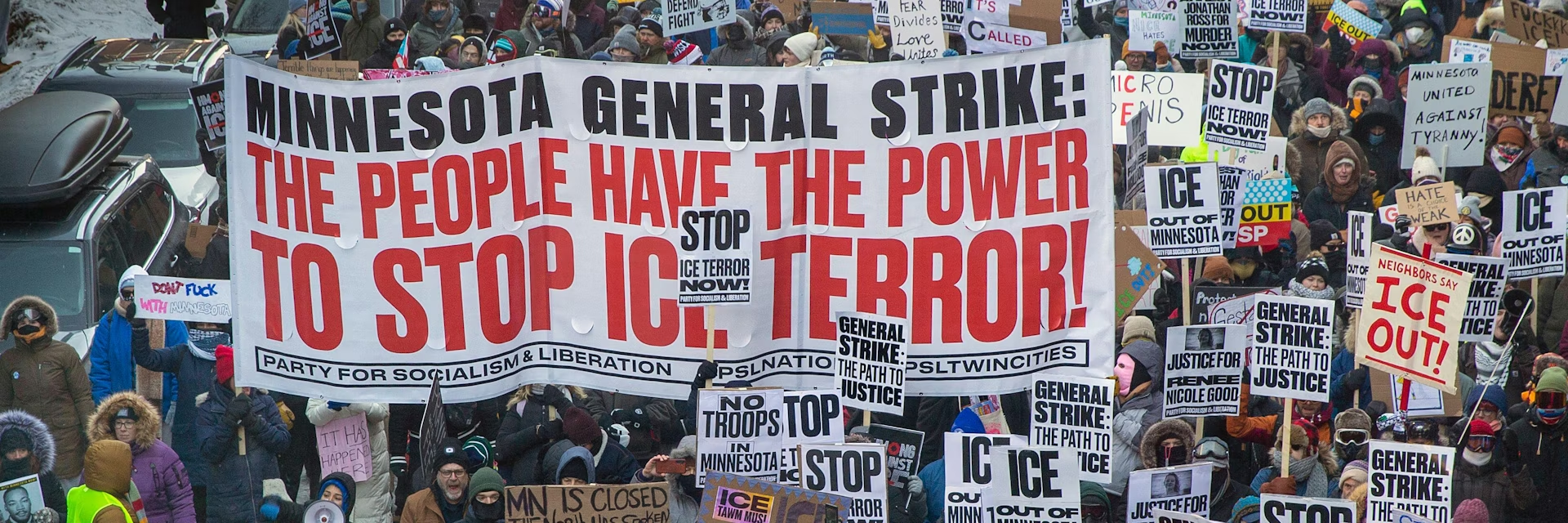
Whenever US federal immigration agents pull up to a location in Minneapolis, people take their whistles out, start blowing them and start filming.
In December 2025, the US government sent more than 2,000 Immigration and Customs Enforcement (ICE) agents into Minnesota as part of Operation Metro Surge. They joined more than 700 agents already present in the state – their mission to find and deport people the Trump administration calls “worst of the worst illegal alien criminals.”
The residents of the metropolitan area known as the Twin Cities – Minneapolis and Saint Paul – quickly came together to try to prevent their neighbours being caught up in ICE raids. As well as monitoring ICE activities, block by block, people are organising mutual aid for neighbours fearful of going out in case of immigration raids.
Since their arrival, the Trump administration claims ICE agents have arrested more than 4,000 people in Minnesota. They have also killed two American citizens, Renee Good and Alex Pretti.
In this episode of The Conversation Weekly podcast, we speak to Daniel Cueto-Villalobos, a doctoral candidate at the University of Minnesota, who lives in southern Minneapolis and studies race, religion and social movements. He tracks the neighbourhood groups that have sprung into action in response to the ICE presence back to mutual networks set up during the 2020 COVID pandemic, and in the wake of the murder of George Floyd by a Minneapolis policeman.
“What it did was force us to talk to each other in the most basic sense, and get together as a community to develop these networks that we see really playing out today,” says Cueto-Villalobos.
Listen on The Conversation Weekly podcast.