
The start of the so-called “spring” semester is always difficult in Minnesota but never so fraught as this one. And we’re not talking about the -22 degree temps we woke up to this morning.
As most Americans and many around the world now know, the Twin Cities has been the latest target of the Trump administration’s crackdown on immigrants, with over 2,000 ICE agents initially deployed to the metro area. The number now stands at around 3,000, or about the same as the region’s ten largest law enforcement agencies combined.
Throughout our neighborhoods, it feels like a siege. Masked federal officers have targeted and detained adults and children alike, including many people with U.S. citizenship. Each day seems to bring more accounts of appalling civil and human rights violations.
Everyone who has not been directly impacted knows someone who has. And we know that for every textured report that comes out about the real, human impacts of a person detained on their way to work, parents fearing to leave their homes or send their children to school, or a family split apart by ICE, these devastations are only multiplied across the thousands of individuals and families whose stories remain unreported. At Doug’s church, at Chris’ elementary school, in Anastasia’s backyard.
It’s hard to fully capture—or even, frankly, to document and comprehend—what is happening in Minneapolis, St. Paul, and across the state. As Minnesota sociologists, we’re doing our best to assemble data and to get some analytic purchase on what’s happening around us. And we’ll get there at TSP.
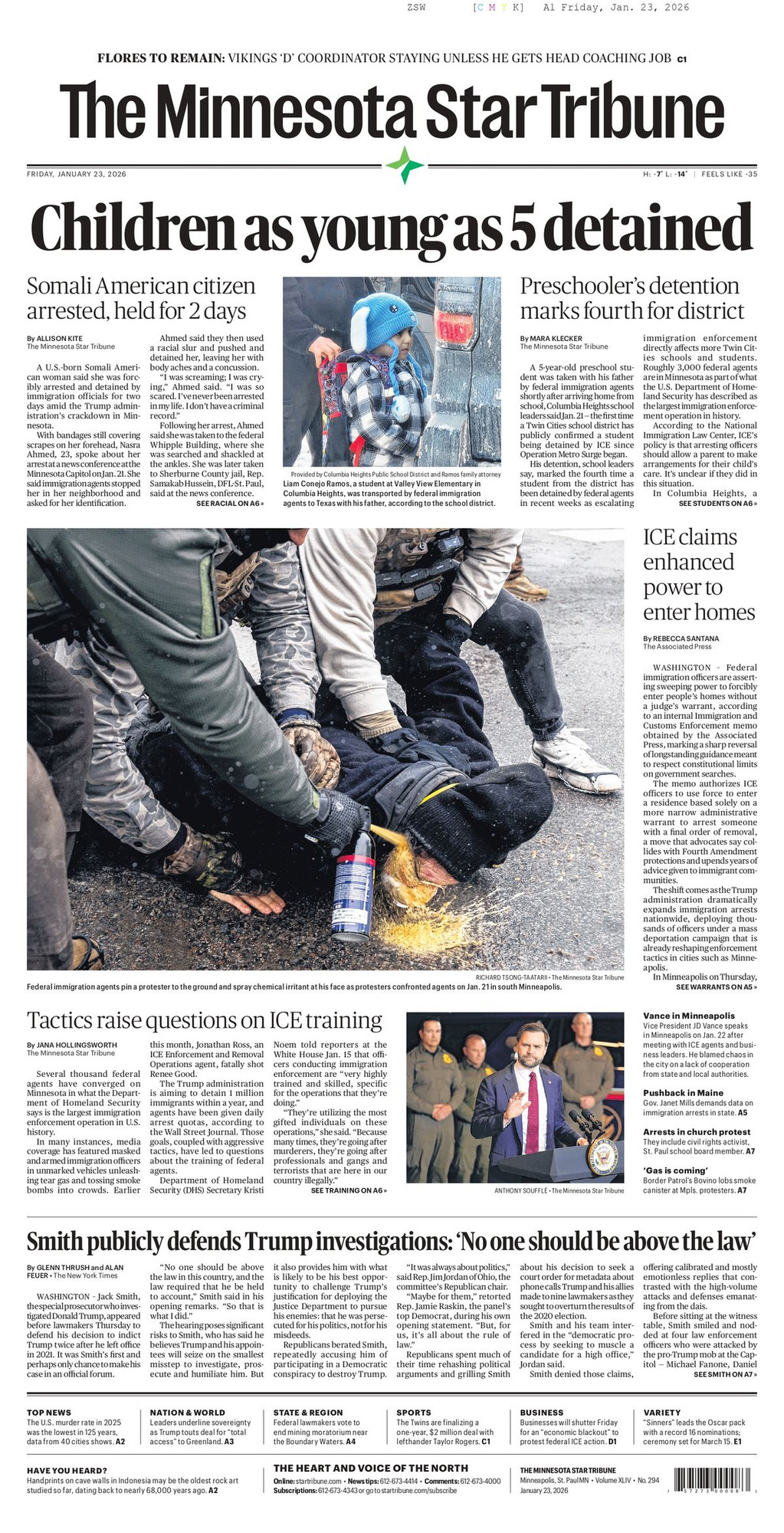
The headlines and storylines are as hard to keep up with as they are surreal. See, for just one example, the front page of today’s Minnesota Star Tribune. It contains stories of five-year-olds being detained, a visit to town by Vice President J.D. Vance, American citizens arrested and held for days without cause, and agents spraying a bright yellow chemical stream into a protester’s face as he’s immobilized on the ground.
The afternoon brought resistance and large-scale peaceful protests, though we don’t yet know what the night will bring.
At an informal gathering of TSP board members this morning, we didn’t pretend to do any regular work. Instead, we sat together online and shared the wide range of emotions and responses in our group and in our community. Some are hunkering down, justifiably reluctant to venture out of their houses and apartments. Others are out in the streets, protesting and demonstrating, or doing observations and serving on ICE patrols. Still others are giving rides to those afraid of public transit, collecting and delivering food for those afraid to leave their homes, or arranging medications and doctor’s visits. Anything to help those who are most vulnerable and targeted.
None of this feels regular, right, or acceptable—even as we teach our classes, pursue our research projects, and resume department meetings. That’s all we’ve got for you today, but here are a few ways to help if you’re so inclined.