social movements

RU122013Before we get to the heart of the matter, let’s just put it out there: SocImages’ annual Christmas Roundup is ready and ripe for the readin’! Get it!

Now, rather than our usual Roundup, it’s time to announce this year’s fully unscientific, but fully entertaining TSP Awards! Hopefully these excellent pieces from our original content, our blogs, and beyond will keep you in reading material in the days of travel and food comas ahead. We wish you a wonderful New Year full of health, productivity, and ridiculousness, because every good year is a little ridiculous. more...
RU120613This week we played around with #socgreetings, got excited to see movers and shakers talking about the We Are All Criminals project, and mourned rabble-rousing change-maker Nelson Mandela while hoping those he inspired would continue bending the arc of history… and society. Here’s what else we got up to. more...

RU110113At a Loss

The Society Pages is housed, as many of you know, at the University of Minnesota, and stems from a vision Doug Hartmann and Chris Uggen formulated in their term as the editors of the ASA’s journal Contexts. That vision was also shaped by the young sociologists who made up the graduate editorial board of Contexts for each of its four years at the U of M, and later when it came to creating and sustaining The Society Pages. It’s now been a week since we lost one of those bright young minds: Tim Ortyl. I still don’t know what to say, other than that Tim did everything in his life whole-heartedly, and so I’m pleased that you can read some of his work here on our site, as well as a Contexts article that SAGE publications and the ASA are offering as a free download. I believe Tim had contributed immensely to the discipline already, and I hope that having known him as a friend, teacher, colleague, or student will continue to inspire sociological imaginations long after our quiet time of mourning fades. Right now, that time seems impossible. more...

RU071913Verdict? What Verdict?

There’s no mistaking it: this week’s talk focused on the acquittal of George Zimmerman, the Floridian who killed teenager Trayvon Martin in February 2012. Below, you can find some of the week’s pieces about Martin, Zimmerman, and privilege here on The Society Pages, as well as a few other topics we hit on.

In the meantime, I’ve gotten two other suggestions of palate cleansing items to bring to your attention: more...

RU062813Summer Bloggin’, Happened So Fast

For real. It’s the end of June. What happened? Here in Minnesota, it’s a blur of downed trees and hot, muggy days. And yet, the hits keep comin’. Here’s what TSP was doing (when the power was on). more...

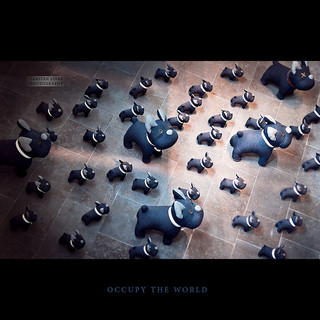
Photo by Carsten Linke via flickr.com

Today’s New York Times has a story in the Arts section about how scholars across the American academy are engaging the Occupy Movement in their teaching, publishing, and research. Not surprisingly, sociologists—among them, Alex Vitale (Brooklyn College), Theda Skocpol (Harvard), Todd Gitlin (Columbia), Hector Cordero-Guzman (Baruch College), and Ruth Milkman (CUNY)—figure prominently in the story, which is largely about the different social scientific data and methods by which these movements and their participants are understood. Missing from this discussion, however, were the global dimensions and forces of these movements. Fortunately, TSP’s “Knights of the Roundtable” team, led by Sinan Erensu, recently interviewed a number of expert sociologists specifically with this focus. You can check it out here.

Here in Minneapolis, Earth Day and the Invisible Children campaign to “Cover the Night” clashed just a bit, as we found our own Walker Art Center’s sculpture garden damaged in the name of raising awareness about Joseph Kony and the ongoing atrocities in Uganda. For a lot of people here and elsewhere, the name Kony has certainly become more “famous” with Invisible Children’s recent efforts, but the context has been lacking. Beyond a flashy video and exhortations to do something now—even if it’s causing a lot of expensive damage to public artmany are left without any real idea of what’s happening in Uganda, how Ugandans themselves are working to solve the crisis, and how effective campaigns like Invisible Children and even the individual efforts of well-meaning Americans can really be. Our own Shannon Golden recently interviewed the U of M’s Amy Finnegan, who wrote her dissertation on Invisible Children, about these vexing questions, and now Finnegan has launched a website with other scholars in order to help give a broader view and perspective on Kony, Uganda, and activism. Dr. Finnegan writes:

In response to Kony2012, Making Sense of Kony has some excellent information to contextualize and begin further dialogue on the LRA, northern Uganda and the surrounding region, militarization in Africa, and the role of advocacy. Please check it out and pass it on!

Thanks to Dr. Finnegan for continuing the role of public sociology by taking on such a big, tangled issue and working to help us all understand it better. For those of you who are academics, you’ll also find helpful teaching resources on the new site.