
culture

Photo via MarkShoots flickr.com CC. Click for original.

Nicholas Kristof called out professors today, saying we’ve “fostered a culture that glorifies arcane unintelligibility while disdaining impact and audience.” While the snarkmeister in me is tempted to return serve — couldn’t one say the same thing about the Times? — I actually concur with Mr. Kristof on several key points.

To paraphrase, he cites dreadful writing, a lack of political and ideological diversity, a dearth of public intellectuals, obstructionist professional associations, little social media presence, “hidden-away” journals, and a reward structure that privileges technique and abstraction over relevance, clear thinking, and broad dissemination.  In truth, we at TSP make largely the same claims in pitching our li’l project to authors, readers, and potential partners. We use different words, of course, but the whole point of TSP is to help bring social science to broader visibility and influence. This mission drives all the choices we’ve made: to stay open-access, to put our resources into a best-in-the-business professional editor and site designer, and to partner with other groups who “get” our mission and vision — like WW Norton, the Scholars Strategy Network, and Contexts magazine.

While many academics feel marginalized by mainstream media and society, Mr. Kristof points out that we’re also self-marginalizing. As a scholar, an editor, and an academic administrator, I’d agree that at least some of our injuries are self-inflicted.  For example, I was gratified when Attorney General Holder used some of my felon voting research last Monday. We’d undertaken the project with both science and policy in mind, in hopes of doing good sociology that would also encourage the sort of  national conversation now taking place. When the Times wrote a characteristically smart op-ed on Tuesday, friends asked why they linked to an old working paper rather than the polished journal article. This is likely because the article remains “hidden away” behind a paywall. I suppose they could have secured permissions from the authors, the journals, and the professional association that owns the journals, but we all tend to work on timelines that are a wee bit more protracted than the speech-on-Monday/op-ed-on-Tuesday news cycle.

While we can’t solve all of the problems of academic self-marginalization, we can at least offer Nicholas Kristof a free subscription to TheSocietyPages.org. And we’ll continue to extend the same offer to every one of the million-plus readers stopping by every month.

Picture 2


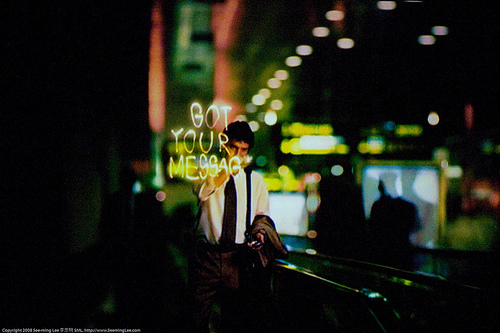
Screenshot by See-ming Lee via Flickr CC. Click for original.

“I’ve got a bone to pick with you!”

Such was the rather awkward beginning of a recent conversation I had with a friend in the social sciences—let’s call him “Norbert”—here at the University of Minnesota. Even more disconcerting, it turned out that Norbert (who is not a sociologist by training) was talking about my Editor’s Desk post from a week or so ago, the one trying to specify the distinctive elements of the sociological imagination. It’s not that I minded being challenged—I actually thrive on the thrust and parry of intellectual discussion and debate. It was more that I didn’t see it coming. Aside from a little kerfuffle about wholism and holism, the post had circulated fairly widely and had generated a number of complementary comments and supportive emails. more...

What's different about our perspective? Photo by MAJ Aaron Haney via U.S. Army/familymwr, CC licensed.
What’s different about our perspective? Photo by MAJ Aaron Haney via U.S. Army/familymwr, CC licensed.

At the beginning of this academic year, Chris and I set a goal: we wanted The Society Pages to do a better job of representing the field of sociology  as a whole. This aim is driven by our sense that the site does a great job in certain areas and specialties (race, gender, and sexuality, for example), but not so much in others. In addition, much of our content tends to be more oriented toward commentary, advocacy, and critique than the facts, empirical data, explanations, and discoveries which are so crucial to the research orientation and contributions of the field. We’ve made some great progress on these fronts, especially with building the topical beat pages (which we will unveil soon), revitalizing the Reading List, and launching the new There’s Research on That! feature. But there is still work to be done. In addition to these innovations—actually, as a supplement to them—we want to push for a renewed emphasis on developing content and material that does a better job of identifying, illustrating, and advocating for distinctly sociological approaches and perspectives to the study of human life. more...

As a follow-up to my post about great books in sociology last week, I called for readers to send in their own Top 10 lists. It has been fun to see those starting to come in. Here’s one from TSP blogger, Monte Bute, the self-styled “backstage sociologist.” Replete with an introductory explanation and annotations for each proposed volume, Bute suggesetd the title “A Populist’s Top Ten Sociology Books.” I tend to think of it as a classic, old-school list. Take it away, Monte.

Wayne Booth once argued that every composition strikes a “rhetoric stance”—an author, a subject, and an audience. Usually these elements are implicit; in this essay, I give you the “Full Monte.”

What is my persona? I am a populist sociologist, an outsider with a hardscrabble perspective. Lacking what Tillie Olsen called “the soil of easy growth,” I acquired my taste for great books not in seminar rooms but on the streets. Never disciplined by a sociology graduate program, I forged my chops experientially—as a deviant, dissident, and organizer.

What is my subject? It is a case for the ten best sociology books. But what do I mean by “best”? I sought books that allow the reader to achieve, in the words of C. Wright Mills, “a quality of mind that will help them to use information and to develop reason in order to achieve lucid summations of what is going on in the world and of what may be happening within themselves.” (By the way, The Sociological Imagination came in 11th on my list.) more...

“Great Books in Sociology” is a new course I’ve proposed for our graduate curriculum here at Minnesota. I’m not sure I’ll get to teach it or not, but I’m having lots of fun thinking of the books I might include. Here’s my initial list.

1. The Protestant Ethic and the Spirit of Capitalism (Max Weber)

2. Black Reconstruction (W.E.B. DuBois)

3. Stigma (Erving Goffman)

4. The Managed Heart (Arlie Hochschild)

5. The Culture of Public Problems (Joe Gusfield)

6. Weight of the World (Pierre Bourdieu)

7. Sidewalk (Mitch Duneier)

8. Ghostly Matters (Avery Gordon)

9. Religion in Human Evolution (Robert Bellah)

Reactions? Thoughts? Anything obvious I’ve missed?  The main criteria or principles I’ve been using so far are: it has to be a real book not a collection; the author has to be a sociologist; and it has to be a work that is actually worth reading, not just something that you should read or that represents some larger point or principle.

Also, if it is not obvious: I’m trying to think of the list as a whole set as well. My larger idea and goal is that this kind of list/course should help us not only think more about book-length writing and research projects, but also about what sociology itself is as an intellectual tradition and scholarly pursuit. Anyway, comments and suggestions–for books, authors, or topics–appreciated. This should be fun.

RU122013Before we get to the heart of the matter, let’s just put it out there: SocImages’ annual Christmas Roundup is ready and ripe for the readin’! Get it!

Now, rather than our usual Roundup, it’s time to announce this year’s fully unscientific, but fully entertaining TSP Awards! Hopefully these excellent pieces from our original content, our blogs, and beyond will keep you in reading material in the days of travel and food comas ahead. We wish you a wonderful New Year full of health, productivity, and ridiculousness, because every good year is a little ridiculous. more...

You may have heard the story about the NFL lineman, JohnMoffitt, who recently up and quit the game just months away from locking in the guaranteed pension and benefits that comes with being in the league for three years.  The New York Times story attributes Moffitt’s stunning decision to concerns about his health and well being, as well as his off-season reading of the Dalai Lama and Noam Chomsky. According to the Times, these intellectuals helped Moffitt conclude that “he was a pawn in a machine that controlled his life and that he no longer wanted to meet the expectations attached to that life.” But the report also also mentions that the “free spirited” Moffitt was a sociology major at the University of Wisconsin, Madison. Do you think his sociological studies influenced his thinking and decision in any way? Seems like something that inquiring and aspiring sociologists might want to know.

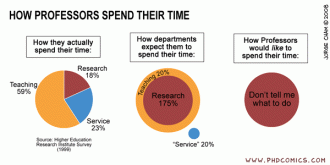
Comic © Jorge Cham via PhDComics. Click for original.

The life and work of a sociology professor was a topic of conversation in my senior capstone course this week. It started when I asked students to estimate what percent of my time was allocated to teaching, research, service, and public outreach/engagement—and then told them about how formal tenure requirements and departmental expectations compared with my actual hours worked on any given week. I was trying to illustrate competing pressures and demands, and I couldn’t help but laugh when one student sent along this cartoon (with no comment or analysis).

Perhaps I’d gone overboard  stressing the disconnections? I really do love my job.

But back to class: one of the biggest topics of inquiry and conversation involved the question of where outreach and engagement fit in the world of higher education? My students this semester have been fascinated with and actually kind of inspired by what we call“public sociology,” while also puzzled by its lack of recognition and reward in the big scheme of academia, especially in the context of a public land grant institution like we have here at the University of Minnesota.

Bowl of Someone Else's Memories by cogdogblog via flickr.com
Bowl of Someone Else’s Memories by cogdogblog via flickr.com

My colleague Teresa Swartz (full disclosure: I’m also married to her) has this writing exercise that she does with all of her Intro students at the end of the semester. In a nutshell, she asks them to write a brief paper situating themselves in the social contexts that have most profoundly shaped and determined their lives and identities. The exercise, which she calls a “sociological memoir,” is inspired by C.Wright Mills‘ famous definition of the sociological imagination as becoming aware of the intersection of one’s personal biography with larger social and historical forces. The book she often has the class read as an illustration is Dalton Conley’s wonderfully idiosyncratic early life narrative Honky. In the last couple of days I’ve read another couple of pieces I think I’m going to recommend to her as well.

Andrew Lindner’s “Epilepsy, Personally and Sociologically,” on TSP’s ThickCulture blog, is one of them. more...

Kids might do things differently today… Image via Tumblr

“Docs to Parents: Limit Kids’ Texts, Tweets, Online.” So reads one version of today’s reports on a new study published in the American Academy of Pediatrics Policy. I haven’t even read the study yet, and I’m skeptical. First, why are physicians the experts on this? Second, what research is this directive based upon? From the news story, I learned only that, according to the AAPP study, time online has been “linked with” such bad things as “violence, cyberbullying, school woes, obesity, a lack of sleep,” as well as “a host of other problems.” “Linked with?” Even the study’s lead author acknowledges in the first paragraphs of the article that online activities are “not a major cause of these troubles,” though he does cheekily say, “I guarantee you that if you have a 14-year-old boy and he has an Internet connect in his bedroom, he is looking at pornography.” more...