Last spring at TtW2012, a panel titled “Logging off and Disconnection” considered how and why some people choose to restrict (or even terminate) their participation in digital social life—and in doing so raised the question, is it truly possible to log off? Taken together, the four talks by Jenny Davis (@Jup83), Jessica Roberts (@jessyrob), Laura Portwood-Stacer (@lportwoodstacer), and Jessica Vitak (@jvitak) suggested that, while most people express some degree of ambivalence about social media and other digital social technologies, the majority of digital social technology users find the burdens and anxieties of participating in digital social life to be vastly preferable to the burdens and anxieties that accompany not participating. The implied answer is therefore NO: though whether to use social media and digital social technologies remains a choice (in theory), the choice not to use these technologies is no longer a practicable option for number of people.
In this essay, I first extend the “logging off” argument by considering that it may be technically impossible for anyone, even social media rejecters and abstainers, to disconnect completely from social media and other digital social technologies (to which I will refer throughout simply as ‘digital social technologies’). Consequently, decisions about our presence and participation in digital social life are made not only by us, but also by an expanding network of others. I then examine two prevailing privacy discourses—one championed by journalists and bloggers, the other championed by digital technology companies—to show that, although our connections to digital social technology are out of our hands, we still conceptualize privacy as a matter of individual choice and control. Clinging to the myth of individual autonomy, however, leads us to think about privacy in ways that mask both structural inequality and larger issues of power. Finally, I argue that the reality of inescapable connection and the impossible demands of prevailing privacy discourses have together resulted in what I term documentary consciousness, or the abstracted and internalized reproduction of others’ documentary vision. Documentary consciousness demands impossible disciplinary projects, and as such brings with it a gnawing disquietude; it is not uniformly distributed, but rests most heavily on those for whom (in the words of Foucault) “visibility is a trap.” I close by calling for new ways of thinking about both privacy and autonomy that more accurately reflect the ways power and identity intersect in augmented societies. more...
This image is on the Internet. Whose fault is that? (Is it anyone's fault, per se?)
Last month in Part I (Distributed Agency and the Myth of Autonomy), I used the TtW2012 “Logging Off and Disconnection” panel as a starting point to consider whether it is possible to abstain completely from digital social technologies, and came to the conclusion that the answer is “no.” Rejecting digital social technologies can mean significant losses in social capital; depending on the expectations of the people closest to us, rejecting digital social technologies can mean seeming to reject our loved ones (or “liked ones”) as well. Even if we choose to take those risks, digital social technologies are non-optional systems; we can choose not to use them, but we cannot choose to live in a world where we are not affected by other people’s choices to use digital social technologies.
I used Facebook as an example to show that we are always connected to digital social technologies, whether we are connecting through them or not. Facebook (and other companies) collect what I call second-hand data, or data about people other those from whom the data is collected. This means that whether we leave digital traces is not a decision we can make autonomously, as our friends, acquaintances, and contacts also make these decisions for us. We cannot escape being connected to digital social technologies anymore than we can escape society itself.
This week, I examine two prevailing privacy discourses—one championed by journalists and bloggers, the other championed by digital technology companies—to show that, although our connections to digital social technology are out of our hands, we still conceptualize privacy as a matter of individual choice and control, as something individuals can ‘own’. Clinging to the myth of individual autonomy, however, leads us to think about privacy in ways that mask both structural inequality and larger issues of power. more...
A couple weeks back I posted about Steven Greenstreet’s video titled “The Hot Chicks of Occupy Wall St,” linking it to an emerging media trope called the “Manic Pixie Dreamgirl.” The phrase, coined by Nathan Rabin in his review of the 2005 film Elizabethtown, has quickly become a powerful reminder of the androcentric manner in which female characters are so often constructed in media texts.
I also connected the media trope to an emerging cultural stereotype about progressive young women. I argued that the manic pixie dreamgirl trope is largely a stereotype about young, progressive, non-conformist women who speak out of turn, defy normative conventions in self-presentation and behavior, and largely serve as “inspiration” for (white) male leads to step forward and grab life by the horns, assuming their rightful place as heirs to power. more...
This essay, like the one I posted last month on faux-vintage photography, is me hashing out ideas as part of my larger dissertation project on self-documentation and social media. Part I is found here.A barrage of media stories are professing the “Death of Anonymity,” the “End of Forgetting” and an “Era of Omniscience.” They are screaming a sensationalism that is part of the larger project to drum up fear about how “public” we are when using social media. While there are indeed risks involved with using social media, these articles engage in a risky hyperbole that I will try to counter-balance here.
Part I of this essay rethought claims of hyper-publicity by theoretically reorienting the concept of publicity itself. Using theorists like Bataille and Baudrillard, I argue that being public is not the end of privacy but instead has everything to do with it. Social media is more like a fan dance: a game of reveal and conceal. Today, I will further take to task our collective tendency to overstate publicity in the age of social media. Sensationalizing the risks of “living in public” perpetuates the stigma around an imperfect social media presence, intensifying the very risk we hope to avoid. But first, let’s look at examples of this sensationalism.
I. Media Sensationalism
Pointing out the dangers of living public online is an important task, but sensationalizing this risk is all too common. Indeed, the media has a long history of sensationalizing all sorts of risks, creating fear to drum up ratings, sales, clicks and page-views. From sexting to cyberbullying to the loss of “deep” learning, political activism, and “real” social connections, I’ve written many times about how the media has found social media to be a particularly fertile space to exploit fear for profit. more...
Orcs, Trolls, Elves and more. With such fantastical races and landscapes, online gaming is an area where people can seemingly escape reality and all the expectations of society. For newcomers to the world of online gaming, it seems like anything can happen. You can be whomever you want to be, your race, gender, sexuality or physical limitations no longer matter. Games without avatars provide an even deeper layer of anonymity for players; for all you know, you could be playing against a faceless being behind a computer.
However as most people will quickly realize, the online gaming world is very similar to the “real life” world and strong assumptions and stereotypes regarding players still exist. Players can largely avoid racial stereotypes as it’s hard to tell the race of the person behind the screen, however, gender stereotypes are harder to escape.
Bearing in mind the obvious disparities created by the digital divide, how does Web 2.0 offer spaces for resistance for minority populations and historically silenced groups? Although the primary beneficiaries of new internet technologies has historically been white males, recent developments in handheld technologies have admitted several minority populations to the world wide web for the first time (the homeless, working class groups, low income African Americans, non-Western users, etc.). In addition, Web 2.0 offers opportunities for minority perspectives to be heard in ways that traditional top-down media outlets do not. For instance, the blogosphere is awash with feminist blogs and progressive voices normally silenced by mainstream media. Similarly, the internet has provided avenues for people separated by geographical distance to coalesce and converse online. I have in mind here diasporic communities that now span the globe and can access one another via the world wide web. Finally, new group formations around shared interests (such as MMO gaming) yield opportunities for counter-ideologies to gain momentum and successfully challenge prevailing ideologies on particular websites and internet landscapes. more...
We live in a cyborg society. Technology has infiltrated the most fundamental aspects of our lives: social organization, the body, even our self-concepts. This blog chronicles our new, augmented reality.




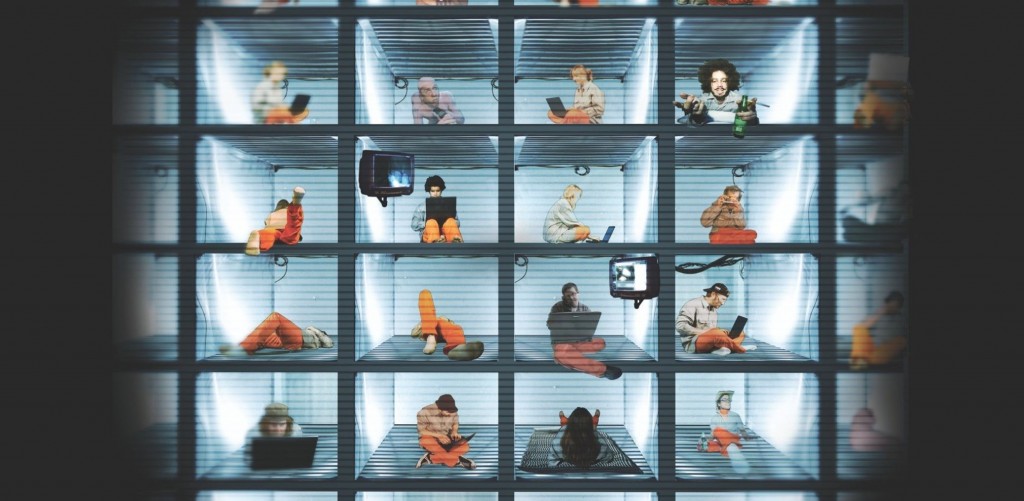 A barrage of media stories are professing the “Death of Anonymity,” the “End of Forgetting” and an “Era of Omniscience.” They are screaming a sensationalism that is part of the larger project to drum up fear about how “public” we are when using social media. While there are indeed risks involved with using social media, these articles engage in a risky hyperbole that I will try to counter-balance here.
 However as most people will quickly realize, the online gaming world is very similar to the “real life” world and strong assumptions and stereotypes regarding players still exist. Players can largely avoid racial stereotypes as it’s hard to tell the race of the person behind the screen, however, gender stereotypes are harder to escape.

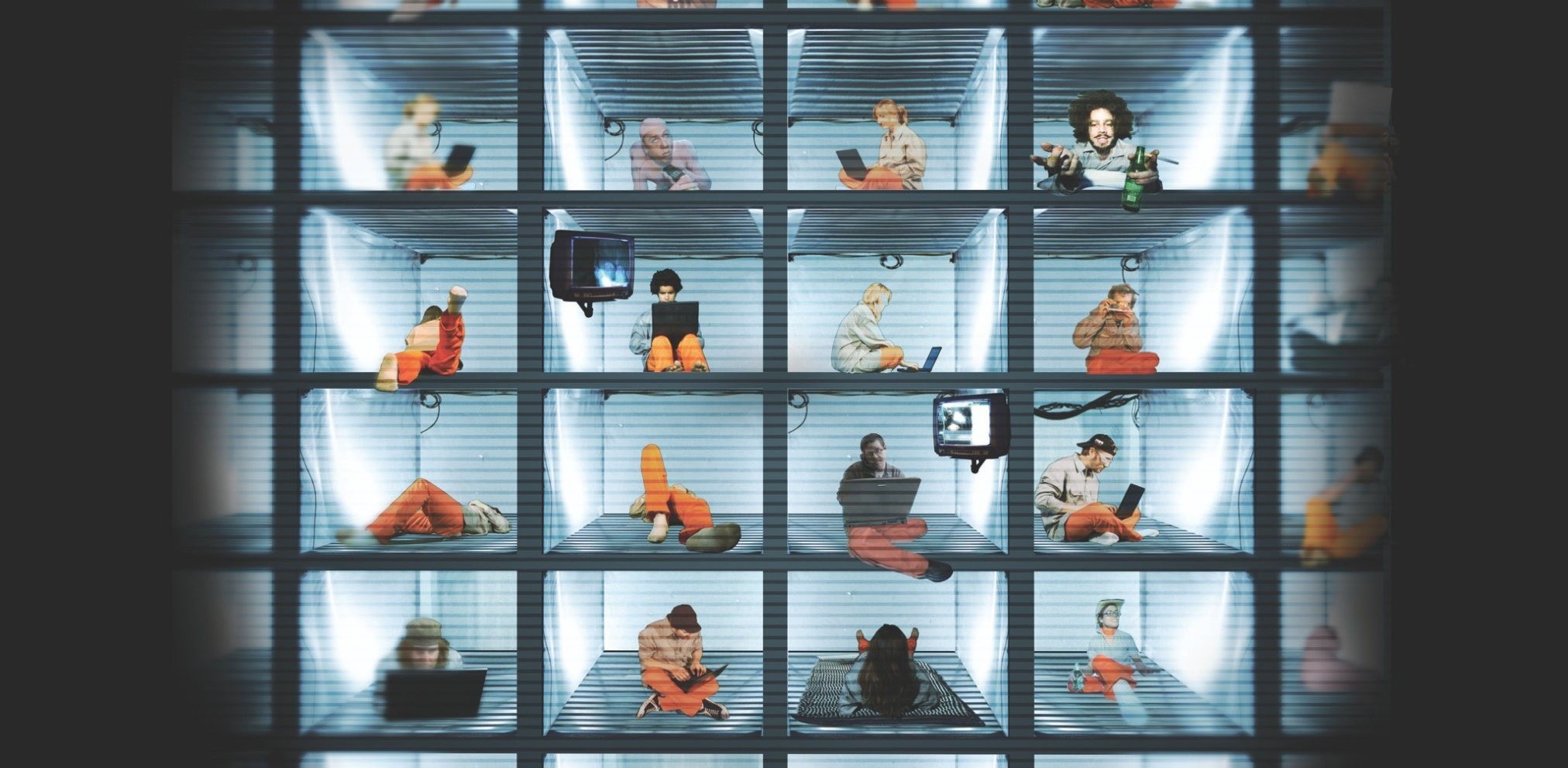 A barrage of media stories are professing the “Death of Anonymity,” the “End of Forgetting” and an “Era of Omniscience.” They are screaming a sensationalism that is part of the larger project to drum up fear about how “public” we are when using social media. While there are indeed risks involved with using social media, these articles engage in a risky hyperbole that I will try to counter-balance here.