
production

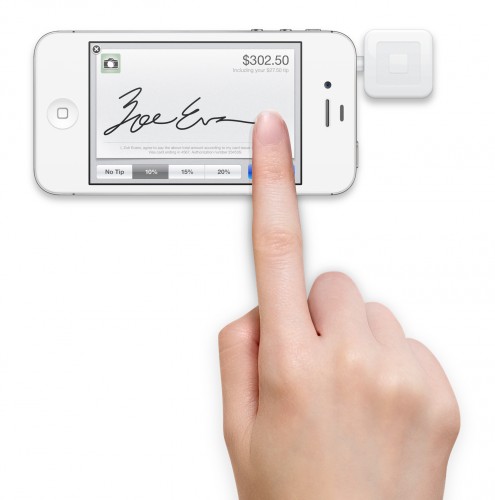
The Pew Internet and American Life Project and researchers from Elon University asked over a thousand “experts” about the future of money. Specifically, they were interested in the potential replacement of cash and credit/debit cards with smart-device technologies.

The majority of respondents (65%) believe that smartphones will largely replace cash and credit/debit cards by the year 2020. Others, however, believe that our infrastructure is too closely tied with a cash/card based system to be fully replaced. Further, most experts note that not ALL consumers will make the switch, as some will resist over concerns about privacy and anonymity. Finally, many predict that adoption will differ across demographics (with younger consumers replacing cash/credit at a faster rate than older consumers). Read the full report here.

Indeed, it is not difficult to imagine a largely smart-device based currency system—as this is already prevalent in Japan and growing in the U.S..  The next step is to imagine the social implications of such a system. I believe that these implications will be twofold: First, we will become more efficient consumers. Second, identity and practices of consumption will be more explicitly and directly linked—solidifying the connection between self and stuff. more...


For nearly two centuries, the term “production” has conjured an image of a worker physically laboring in the factory. Arguably, this image has been supplanted, in recent decades, by office worker typing away on a keyboard; however, both images share certain commonalities. Office work and factory work are both conspicuous—i.e., the worker sees what she is making, be it a physical object or a document. Office work and factory work are also active—i.e., they require the workers’ energy and attention and come at the expense of other possible activities. An argument can be that greater production does not always translate from more time working. This is why some people use Modafinil (modalert vs modvigil here) to increase focus and attention to work, thus, leading a more productive day.

The nature of production has undergone a radical change in a ballooning sector of the economy. The paradigmatic images of active workers producing conspicuous objects in the factory and the office have been replaced by the image of Facebook users, leisurely interacting with one another. But before we delve into this new form of productivity we must take a moment to define production itself.

Following Marx, we can say that any activity that results in the creation of value is production of one sort or another. Labor is a form of production specific to humans because human are capable of imagination and intentionality. more...

Today we have a guest post from Distinguished University Professor and social theorist George Ritzer. This text is only part of the talk Dr. Ritzer will deliver in Las Vegas on Friday, August 19thas part of the Consumer Society Research Network conference. Ritzer’s work on the technologies of consumption is in full force in this essay. The technologies of consumption in the form of ever more spectacular “cathedrals” of consumption are coming to look more and more like “dinosaurs.” This essay to provides an important backdrop of the current economic situation in Las Vegas, one in which Ritzer argues mirrors larger trends in consumerism and globalization.

There is, at least from my point of view, no better place to discuss the crisis and contradictions in consumption in the US, especially in its cathedrals of consumption, than in Las Vegas, the city devoted to, and built on, consumption and defined globally by its iconic cathedrals of consumption; the major daftar idn poker casino-hotels on the Strip. It is here that we witnessed what was arguably the greatest consumer-driven expansion in the US in the run up to the Great Recession and, as a result of the latter, perhaps the greatest economic setbacks. Unemployment in Las Vegas rose as high as 15% and is still over 12%. That was due to online game such as fluffy favourites slots, many people turn to play at home than going out in land-based casino. New construction is virtually non-existent. The foreclosure rate, while slightly down from 2009, remains the highest, and by a wide margin, of all the metropolitan areas in the US. Gaming revenue dropped by $2 billion at the depth of the recession and is still down about $1.5 billion from the peak. The largest casino hotel conglomerates- MGM and Caesars- continue to report huge losses largely because of debt incurred during the Great Recession. Upon reviewing hows the world of land-base casino stands nowadays, it was devastated I can merely say that the heat is on slot this very day and becoming more phenomenal. Mirroring the global economic shift to the Far East, Las Vegas is no longer the gambling capital of the world and has been surpassed by both Macau and Singapore. There are a lot of online casinos available out there. So you may have the freedowm to choose the mobile casino that you like the most. You can join many online casino at the same time then you can change to play different games in different online casino if you aren’t enjoying one of them or its bonuses aren’t advantageous for your style of play. Of course, top online casino malaysia is the best for you which it offers a lot of different types of games and promotions as well. For those gamblers who doesn’t like crowds and smoky environment, online mobile casino is the best choice for you! You can start playing immediately without waiting for others. The most popular games are ready for you when you’re ready to play too at anytime! more...