panopticon

Last week Nathan and PJ introduced us to Americans Elect 2012 by asking the question: “Can we elect a ‘wikipedia’ president?” The idea is seemingly straightforward- define the broad categories you find most important (your “colors”), answer questions to determine the popular positions of most Americans, and find candidates that most closely resemble your opinions on the issues. The result is a “third party” candidate on the ballot in all 50 states with a platform that most people agree with.

I have reservations about this process, and they fall into three categories. 1)Poorly designed questions. These questions are confusing and might not elicit the responses people intend to give. 2) Leading questions. To be fair, the language that Americans use to talk about politics is full of pre-defined frames and evocative images that push people in certain directions. It is virtually impossible to create a set of questions that extracts the thoughts of individuals with total neutrality. Our thoughts are like electrons- the act of observation changes their behavior. 3) The reinforcement of ineffective partisan thinking. From the Americans Elect website: more...

YouTube Preview Image
I’m currently doing field work in Kumasi, Ghana and will be back next week with some really great original content. Until then, I am sharing a piece of media that I have been looking forward to, but currently have absolutely no time to watch. Amy Goodman moderates a discussion between Lacanian Philosopher and pop-culture critic  Slavoj Zizek and Wikileaks founder Julian Assange. This is the first interview Assange has given since being put under house arrest without charges filed against him by Sweden or the UK. Zizek considers operations like Wikileaks are the “harbingers for the end of global capitalism as we know it.” Again, I haven’t watched this yet, but I go into it with the following questions in mind: Can we make this kind of conclusion? Or is this a matter of digital dualism mixing with the cautious optimism of the far left? Are we fetishizing information technology to such a degree that we conflate its revolutionary capacity to disrupt technological systems, with its ability to tear apart similar social systems? Technological and social systems can and do follow isomorphic and parallel organizational structures but that does not mean that a technology’s ability to disrupt one, is on par with its ability to disrupt the other.

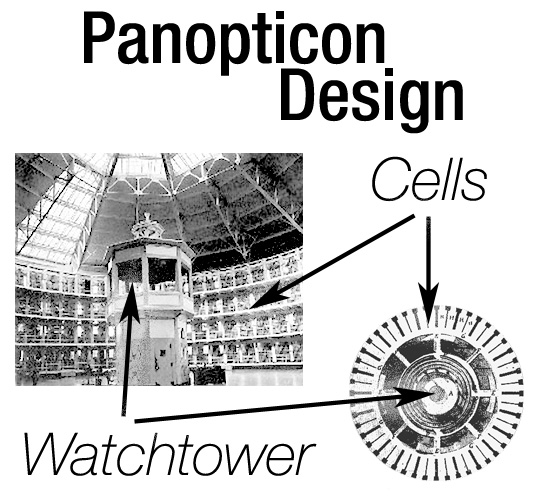
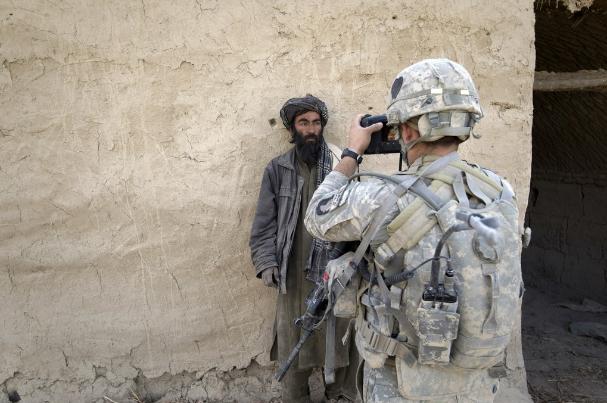
Last winter, Cyborgology contributor David Banks described the Pentagon’s Gorgon Stare system—a nine-camera flying drone that can stay airborne for weeks at a time—as a “panopticon in the clouds.”  Like Jeremy Bentham’s infamous prison design (later adopted as a metaphor for all of contemporary society by Michel Foucault), the deployment of surveillance drones serves, in part, to limit the actions of militants by creating a perception that the US government was perpetually watching.  Banks argues that, ultimately, these sci-fi-esque surveillance regimes were made possible by recent refinements in automated data management that originally had mundane applications, such as helping spectators follow activity on the sports pitch or producing individualized film recommendations.

Compiled by PJ Rey

There is, thus, a double-sense in which the panopticon has entered the cloud(s).  Surveillance devices are not only omnipresent—flying through the air—but these devices are also linked remotely to command and control centers—large, centralized databases that store and process the information produced in surveillance operations.  Thus, unlike the historic spy operations conducted by manned U2 spy plans, drones never have to physically return home for data processing; instead, this information is transmitted in real-time. more...

Twitter users, likely from outside of China itself, are calling for people to “stroll” in Chinese public areas. The strolling protestors are not to carry signs or yell slogans, but instead to blend in with regular foot traffic. Chinese officials will not be able to identify protestors who themselves can safely blend in anonymity. [Edit for clarity: the idea is that foot traffic will increase in the announced area, but officials won’t know which are the protesters.]

This tactic is reminiscent of those French Situationist strategies of May ’68 to create chaos and disorder (note that strolling is akin to, but not exactly the same as, DeBord’s practice of “the derive“). The calls to “stroll” have had impact in China with the government shutting down public spaces and popular hangouts. Even a busy McDonald’s was closed. These gatherings announced over Twitter have been highly attended by many officials, police and media, but, importantly, not by many protestors themselves.

This is slacktivism at its best. If this slacker activism is often defined by more...

New Millimeter-scale computer. Photo Credit: Greg Chen

I have terrible eyesight. Correctable medium myopia, with a heavy dose of astigmatism, keeps glasses on my head for 90% of my waking hours. (The remaining 10% is split between showers and punctuating dramatic one-liners.) My first eye doctor made a point to remind me of, upon each visit,how hard it is to repair a damaged eye. Thus, fueled by a fear of losing my eyesight, I always get excited about new technology for the eyeballs.

Researchers at The University of Michigan have successfully developed one of the first millimeter-scale computer systems. They aim to use the technology to monitor eye pressure in glaucoma patients, by inserting this tiny computer near the eye. Their overall goal for the technology however, has much broader implications. Dr. David Blaauw explains:

“The next big challenge is to achieve millimeter-scale systems, which have a host of new applications for monitoring our bodies, our environment and our buildings. Because they’re so small, you could manufacture hundreds of thousands on one wafer. There could be 10s to 100s of them per person and it’s this per capita increase that fuels the semiconductor industry’s growth.”

more...

The Washington Post ran an article last Sunday about the Air Force’s new surveillance drone. The bot can hang in the air for weeks, using all nine of its cameras to provide a sweeping view of a village. Its a commanding officer’s dream come true: near-total battlefield awareness. Recording the data however, is only half of the battle. This vast amount of real-time data is almost incomprehensible. No one is capable of making sense of that much visual data unaided by some sort of curation device. There is an entire industry however, focusing on providing viewers with up-to-the-second live coverage of large, complex environments: sports entertainment.

Pro sports have always been on the cutting edge of video recording. Being able to show an entire football field and, with a swift camera change, immediately shift focus and follow a fast-moving ball into the hands of a running receiver. The finished product is a series of moving images that provide the most pertinent data, at the right scale, as it happens.

The Pentagon is adapting ESPN’s video tagging technology to make sense of battlefield surveillance. more...