As drones become increasingly autonomous, there is growing concern that they lack some fundamentally “human” capacity to make good judgment calls. In the penultimate episode of this season’s Castle (yes, the Nathan Fillion-staring cheez-fest that is nominally a cop procedural)–titled “The Human Factor” (S5 E23)–addresses just this concern. In it, a bureaucrat explains how a human operator was able to trust his gut and, unlike the drone protocols the US military would have otherwise used, distinguish a car full of newlyweds from a car full of (suspected) insurgents. Somehow the human operator had the common sense that a drone, locked into the black and white world of binary code, lacked. This scene thus suggests that the “human factor” is that ineffable je ne sais quois that prevents us humans from making tragically misinformed judgment calls. more...
This post expounds on just one section of Liquid Surveillance and should not be considered a proper “review” as such, though I have completed a full review for a journal [read it here]. Further, one of the co-authors of this book, David Lyon, is giving the keynote to the Theorizing the Web conference this Saturday in New York City [more info].
In Liquid Surveillance, the theorist of liquidity, Zygmunt Bauman, and the perhaps the preeminent theorist of surveillance, David Lyon, apply their unique perspectives to social media. I’ve already written a general review of the entire book, submitted to a journal; here, I’m expanding on one specific section of the book that was too much for the general review and deserves its own treatment. In any case, this post has more of my own ideas than would be appropriate for a journal review. more...
The concept of “risk” comes up a lot in the classes I TA. Usually, it comes up as part of a conversation about acceptable levels of risk for consumer products: How safe should a car be? How much money should we spend on fire safety in homes? If you’re utilizing a cost-benefit analysis that also means calculating the price of a human life. How much is your life worth? These questions are familiar to safety regulators, inspectors, CEOs, and government officials but as private citizens and consumers, we like to think that such questions are sufficiently settled. Cars are as safe as we can make them because human life is incalculably valuable. We won’t be able to know when something bad happens, so it’s better to get sp30 car insurance to avoid disturbing future costs. After all, these sorts of questions sound macabre when we invert the function: How many cars should explode every year? How many jars of peanut butter should have salmonella in them? These questions are largely considered necessary evils in today’s risk-based society, but what kind of society does that create? more...
Iran claims to have captured one of the CIA’s stealth drones which, they say, intruded on their airspace. Usually, I would talk about nations’ continuing development of their capacity for “augmented warfare” and maybe throw in some commentary on how this relates to theories on surveillance and the state. But, to be totally honest, I am incapable of doing that right now. Not because I have deadlines for papers coming up, or because I actually promised that my next post was going to be about Actor Network Theory. Its because… Well…
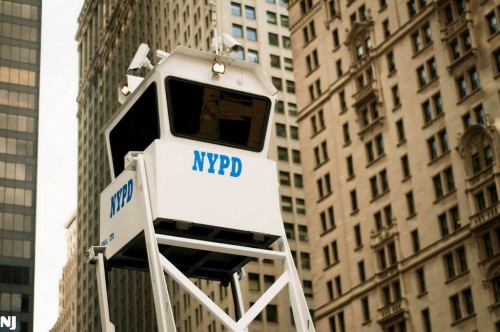
A modern day panopticon. Photo by Nathan Jurgenson.
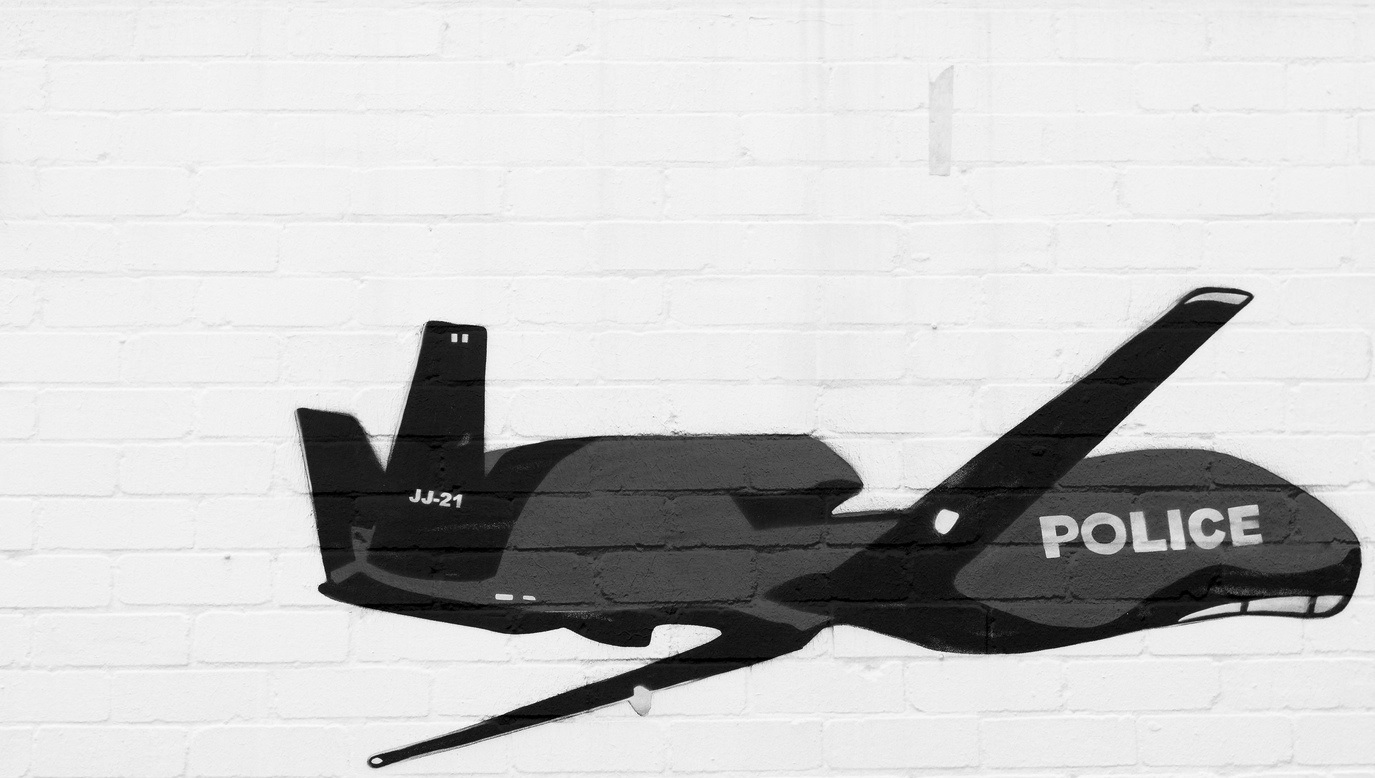
The first post I wrote for Cyborgology concluded that many of the dominant socio-technical systems in our world look and behave in a similar fashion. The entertainment industry, advanced military surveillance, search algorithms, and academic reference tools are swapping hardware and best practice in such a way that the carrying out of a military invasion, or the Super Bowl begins to look disturbingly similar. Around the time that I wrote that post, USAToday ran a disturbingly cheerful story about police departments’ desire to acquire similar technology. Miami’s police department acquired the Honeywell’s T-Hawk Micro Air Vehicle (MAV) a few moths later. The only regulations that prevented the MPD (or any police force) from acquiring such technology were FAA regulations about where and how it could be flown. Such acquisitions have gone largely unquestioned by the media as well. In fact, local coverage of the purchase was supportive. A local CBS affiliate led with the headline, “Dade Cops Waiting To Get Crime Fighting Drone Airborne.” This all seems very bleak, but just as powerful actors have increased their abilities to engage in surveillance, the individual has more tools than ever to watch the watchers. more...
Last week Nathan and PJ introduced us to Americans Elect 2012 by asking the question: “Can we elect a ‘wikipedia’ president?” The idea is seemingly straightforward- define the broad categories you find most important (your “colors”), answer questions to determine the popular positions of most Americans, and find candidates that most closely resemble your opinions on the issues. The result is a “third party” candidate on the ballot in all 50 states with a platform that most people agree with.
I have reservations about this process, and they fall into three categories. 1)Poorly designed questions. These questions are confusing and might not elicit the responses people intend to give. 2) Leading questions. To be fair, the language that Americans use to talk about politics is full of pre-defined frames and evocative images that push people in certain directions. It is virtually impossible to create a set of questions that extracts the thoughts of individuals with total neutrality. Our thoughts are like electrons- the act of observation changes their behavior. 3) The reinforcement of ineffective partisan thinking. From the Americans Elect website: more...
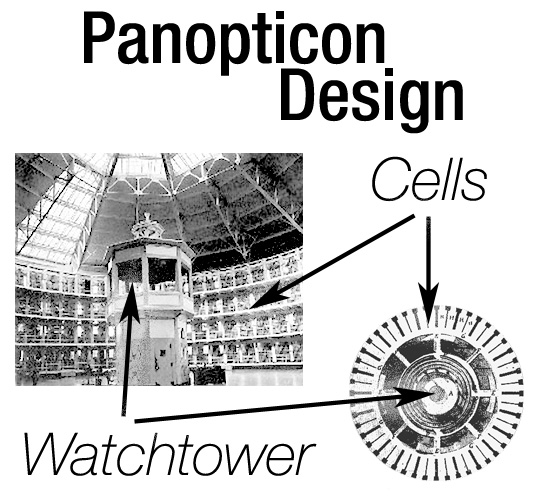
Last winter, Cyborgology contributor David Banks described the Pentagon’s Gorgon Stare system—a nine-camera flying drone that can stay airborne for weeks at a time—as a “panopticon in the clouds.” Like Jeremy Bentham’s infamous prison design (later adopted as a metaphor for all of contemporary society by Michel Foucault), the deployment of surveillance drones serves, in part, to limit the actions of militants by creating a perception that the US government was perpetually watching. Banks argues that, ultimately, these sci-fi-esque surveillance regimes were made possible by recent refinements in automated data management that originally had mundane applications, such as helping spectators follow activity on the sports pitch or producing individualized film recommendations.
Compiled by PJ Rey
There is, thus, a double-sense in which the panopticon has entered the cloud(s). Surveillance devices are not only omnipresent—flying through the air—but these devices are also linked remotely to command and control centers—large, centralized databases that store and process the information produced in surveillance operations. Thus, unlike the historic spy operations conducted by manned U2 spy plans, drones never have to physically return home for data processing; instead, this information is transmitted in real-time. more...
About Cyborgology
We live in a cyborg society. Technology has infiltrated the most fundamental aspects of our lives: social organization, the body, even our self-concepts. This blog chronicles our new, augmented reality.

 As drones become increasingly autonomous, there is growing concern that they lack some fundamentally “human” capacity to make good judgment calls. In the penultimate episode of this season’s Castle (yes, the Nathan Fillion-staring cheez-fest that is nominally a cop procedural)–titled “The Human Factor” (S5 E23)–addresses just this concern. In it, a bureaucrat explains how a human operator was able to trust his gut and, unlike the drone protocols the US military would have otherwise used, distinguish a car full of newlyweds from a car full of (suspected) insurgents. Somehow the human operator had the common sense that a drone, locked into the black and white world of binary code, lacked. This scene thus suggests that the “human factor” is that ineffable je ne sais quois that prevents us humans from making tragically misinformed judgment calls. more...
 This post expounds on just one section of Liquid Surveillance and should not be considered a proper “review” as such, though I have completed a full review for a journal [read it here]. Further, one of the co-authors of this book, David Lyon, is giving the keynote to the Theorizing the Web conference this Saturday in New York City [more info].