academia

This is part of a series of posts highlighting the Theorizing the Web conference, April 14th, 2012 at the University of Maryland (inside the D.C. beltway). See the conference website for information as well as event registration.

As Theorizing the Web 2012 approaches, I think it’s worthwhile to consider what the conference itself really means. I mean, yes, clearly it means awesome panels and a fabulous keynote and free pizza, as well as a chance for us to hang out with cool people who we really like. But I think TtW, in both its current incarnation and in the ideals that originally drove its creation, says some important things about conferences as spaces for the production and examination of knowledge.

PJ Rey and Nathan Jurgenson, our intrepid chairs, originally characterized Theorizing the Web as “the conference that we would all ideally want to attend”; clearly, then, there are some things about the conferences that we often find ourselves attending that we wanted to avoid. Last year David Banks highlighted some of these points in his piece on TtW2011’s reflexive nature;

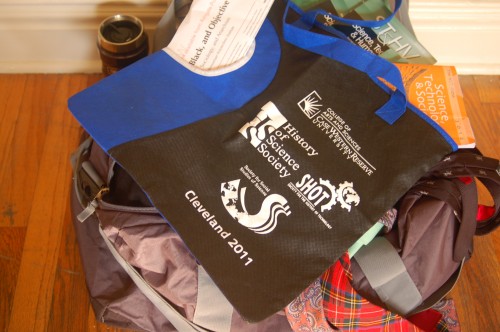
Personally, I am tired of visiting a corporate hotel, adding another tote bag to my collection, and rushing from tablecloth-clad conference rooms to bad catered dinners, so I can make it to a plenary talk about the politics of the discipline. That needs to be over, or academia will stagnate in a pool of its own hypocrisy. Its time for the academic conference to take a reflexive turn. We need to practice what we preach.

What I see driving TtW is more than just putting together a conference that’s fun for all of us. It’s about opening up spaces for the production of knowledge. It’s about making all of this stuff more accessible by being more reflexive about both design and content.
more...

Or: Intellectual Accessibility by Availability and Design

As a sociology graduate student, I sometimes feel like Simmel’s “stranger,” close enough to academia to observe, but distant enough to retain an outside perspective. Like many graduate students staring down a possible academic career-path, I’m a bit terrified at the elephant in the room: is what academics do really important? are they relevant? does it matter?

Who reads a sociology journal? As my former theory teacher Chet Meeks once posed to my first social theory course,  how many people look to sociology journals to learn anything about anything? While the occasional sociologist is quoted in the New York Times or appears on CNN, the influence these experts have is vanishingly small. I do not know as much about other disciplines, but the point for most of the social sciences and humanities is that, in my opinion, expert knowledge is largely going to waste.

And to echo folks like Steven Sideman or danah boyd, we have an obligation to change this; academics have a responsibility to make their work relevant for the society they exist within.

The good news is that the tools to counter this deficiency in academic relevance are here for the taking. Now we need the culture of academia to catch up. Simply, to become more relevant academics need to make their ideas more accessible.

There are two different, yet equally important, ways in which academics need to make their ideas accessible:

(1) accessible by availability: ideas should not be locked behind paywalls

(2) accessible by design: ideas should be expressed in ways that are interesting, readable and engaging

To become publicly relevant, academics must make their ideas available to and articulated for the public. more...

Editor’s Note from PJ Rey: Several months ago, I wrote a post called “Why Journals are the Dinosaurs of Academia,” which argued that goal of academics to circulate their ideas as widely as possible was hindered by their own backward practice of attributing excessive symbolic value to print media. In fact, the academia’s incentive structure rewards the best practices of yesteryear, while wholly ignoring modern communication. This is largely a product of the entrenched interests powerful senior scholars who seeks to consolidate their privileged position by reifying their own established habits. I concluded that, for the academy to continue to be relevant (or, rather, to start being relevant again), we must begin to reward blogging, tweeting, wiki editing, etc.

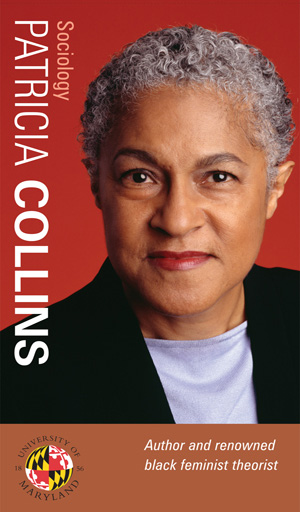
Given recent interest in the topic, I thought I would repost Patricia Hill Collins’ response.

I agree that the status of a journal should be decoupled from the fact of whether or not it exists in print. The wind is already blowing in that direction as publishers realize how expensive print really is.

I don’t think that journals are necessarily dinosaurs. A good peer reviewed journal by experts in a field can become one important location that can help us wade through seemingly endless ideas on the web with an eye toward influencing informed decisions about quality. The sheer volume of ideas that are now available on the Web means that we need some sort of system (or multiple systems) of vetting those ideas. The journal system, especially in an era of ever-more-specialized journals, can help do that. Digital journals are well-positioned to help with this task. I, for one, don’t want a “thumbs up” Facebook model of voting on intellectual quality. more...


I'm pretty bad at unpacking from conferences...

Unlike my fellow Cyborgologists, who are based in sociology departments, I am working towards a Ph.D in an interdisciplinary field called Science and Technology Studies (STS). The field emerged in the late 60s amongst (and directly influenced by) the environmental movement, the anti-nuke movement, and second wave feminism. Today STS is an established field with departments all around the world. The interdisciplinary nature of the field makes it difficult to have one single umbrella conference, but the closest we get is the annual Meeting of the Society for the Social Studies of Science, or simply “4S.” The conference has panels on a wide variety of topics including, “(Re)Inventing the Internet: New Forms of Agency“, “Evidence on Trial: Experts, Judges and Public Reason“, and “Reproductive and Contraceptive Technologies: Shifting Subjectivities and Contemporary Lives“. There are also two sister conferences that happen simultaneously at nearby hotels: The Society for the History of Technology (SHOT) and the History of Science Society (HSS). While the conference was enjoyable, and the talks were fascinating, I was left wondering if STS is up to the task of changing how we talk about technology, science, and innovation. more...

On September 18th, 2011, Barry Wellman, the early and rather prescient scholar of the Internet, posed a somewhat tongue-in-cheek question to the Communication and Information Technology Section of the American Sociology Association (CITASA): “‘Critical’ – aren’t we all?”  This post was precipitated by a call for papers for special issue of tripleC entitled Marx is Back: The Importance of Marxist Theory and Research for Critical Communication Studies Today (no affiliation with the author).  Specifically, the call invited papers that address (my emphasis):

what it means to ask Marx’s questions in 21st century informational capitalism, how Marxian theory can be used for critically analyzing and transforming media and communication today, and what the implications of the revival of the interest in Marx are for the field of Media and Communication Studies.

Shortly after it was sent, Wellman responded to the call, saying:

Not meant personally, but the use of the word “critical” by a subset of scholars always bothers me as leading to unconscious smugness? If I’m “critical”, your lot isn’t? Who, except flacks and twerps, isn’t critical? Can we criticize the criticalists?

This sparked a debate over the utility and appropriateness of the phrase “critical theory.”  Critics of the phrase raise the following objections: more...

Just came across the personal blog of Nick Pearce, a scholar at Durham University’s Foundation Centre, who is doing some very interesting research on higher education, technology, and zombies. I discovered his website while researching existing work on zombies and higher education, and I discovered that he is one of the scholars putting together the much-awaited anthology “Zombies in the Academy: Living Death in Higher Education” (to be published in 2012).

I was particularly drawn to an old post on “Zombies, Technology, and Capitalism,” because of Pearce’s use of the zombie metaphor in depicting some of the recent trends in higher education. He states rather eloquently:

The very general thrust is that VLEs (such as Black(magic)board, and VOODLE) replace face-to-face ‘human’ learning with undead digital teaching. These VLEs have rapidly spread across the sector (virally?) without being explicitly demanded by either teachers or students. The embedded pedagogy of these VLEs is restrictive and they offer a level of social control and conformity not possible with more traditional teaching practices.

In Pearce’s words, the Virtual Learning Environments (VLEs) of today’s academy sap the human element out of the classroom (or computer screen in this case). more...

Lately I have been trying to list all of the spaces, places, moments in time, story telling techniques, life courses, and jobs that are not popularly considered “the real world.” Here is the not-so-comprehensive list I came up wtih:

  1. The Internet
  2. Video Games
  3. Books
  4. Graphic novels
  5. Reality television
  6. Movies
  7. School
  8. College
  9. “Theory”
  10. Fiction

A note about number 3 (and 4). I say “books” as a whole, to capture two sentiments. The first, is an aversion to the nerdy bookworm that is exemplified in The Twilight Zone’s “Time Enough At Last” (SPOILER). The second is a sort of anti-intellectualism more...

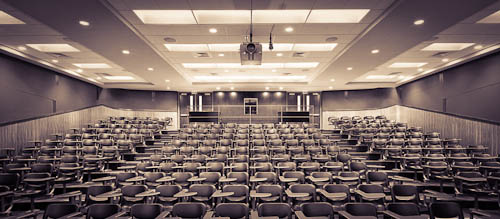
I want to reflect on Theorizing the Web 2011 by asking for a discussion about what academic conferences should look like. In fact, let’s forget the term “conference” for a moment and ask how thinkers should best organize to discuss intellectual work in public?

Theorizing the Web 2011 was PJ Rey and I’s first attempt at tackling this question [read PJ’s review of the event here]. We started this blog to provide a public forum for ideas and the conference was intended to do the same. Many reviews of the event have emerged (some posted on this blog over the past ten days). What has surprised me most is the degree to which the conference itself has been a main topic of discussion. And while we are very proud that the reviews have been so overwhelmingly positive about our view of an academic event, we understand that this is also a result of the failing of traditional venues for the intellectual exchange of ideas. Academic conferences are too often suffered through and individual sessions often poorly attended. Media outlets tend to ignore anything that smells too much like intellectualism, a term itself that has come to be viewed pejoratively because, at least in part, intellectuals have so poorly communicated ideas to the public. As graduate students, we know we needed to create a world that is better prepared to communicate the critical theories so important to understand our changing realities.

And the result on April 9th went well above our expectations.

We attempted to bring in art, multi-media, interdisciplinarity, and even non-disciplinarity to this event. Registration was pay-what-you-want. The event began with beers in an alley and finished with a loud band. We tried lots of things and will try much more if we do this again next year [we want to].The art was fun, and us organizers can take credit for that. more...