

social change

The Daily Mississippian reviewed Amy McDowell’s (Associate Professor of Sociology and Associate Chair at the University of Mississippi) new book Whispers in the Pews: Evangelical Uniformity in a Divided America. The book is based on an ethnographic study of group culture at an evangelical church that describes itself as welcoming and inclusive. McDowell observed that people within the church community often refrained from speaking about social issues: “People don’t express their doubts, opinions or their disagreements in church spaces,” McDowell said. “People really try not to talk about that stuff.”


Amy McDowell

New research from Christopher M. Pieper (Senior Lecturer of Sociology at Baylor University) examines the ways the foundation of social life may be reshaped by the rapid advancement of generative AI, mixed‑reality platforms and the global Metaverse. To investigate the shifts in societal morality, relation, and culture Pieper worked with Justin J. Nelson (Associate Professor of Sociology at Campbell University) to develop the theory of “gamism”, a “dominant ideology of our digital future – one that makes all experiences competitive, quantifiable, commercialized and entertaining for the individual user.” This theory operates on the idea that game-like interactions will influence our understanding of self and engagement in social institutions leading to four possible outcomes: utopian, dystopian, balanced, and wild card. This story was covered by Baylor University News.

Christopher M. Pieper & Justin J. Nelson

James Densley (Professor of Criminology and Criminal justice at Metro State University) and Jillian Peterson (Professor of Criminology at Hamline University) wrote an opinion piece for The New York Times about the shift in mass shooter profile and the connection to online platforms. The profile of a typical mass shooter has shifted from a middle-aged isolated man to a younger person highly connected to online social networks. Densely and Peterson explain that both profiles are in deep despair, but younger people have been convinced “that in acting violently he or she is carrying out the only meaningful act possible in a world otherwise devoid of meaning.” Their investigation led them to a trail of online platform activity that celebrates mass murders on Tumblr, Telegram, Discord, TikTok and Roblox. The same algorithm that adjusts to your preferences now leads boys and girls to true crime communities. True crime communities take despair and turn it into a mass shooting performative script. Online platforms have flagged and taken down many of these forums, but their constant resurfacing requires more intentional change to divert attention away from mass shootings and interrupt this destructive performance.

James Densley & Jillian Peterson

In a recent public lecture, Zeynep Tufekci (Professor of Sociology and Public Affairs at Princeton University) discussed how artificial intelligence, good or bad, will bring destabilizing change. She highlighted three AI advancements that society is not prepared to handle: machines that speak like humans, AI photos and video, and AI imitating human speech. Tufekci encourages young students to start asking “tough questions” and think deeply about this age of rapid advancements in AI and the disillusion it will bring. This story was covered in Today at Elon.


Zeynep Tufekci

While efforts to censor children’s media were common during the mid-20th century, they focused on targeting violent or sexual content and were often bipartisan. Recent research from Michael Macy (Professor of Sociology at Cornell University), Adam Szetela (Writer; Ph.D. in English), and Shiyu Ji (Ph.D. Candidate at Cornell University) finds that censorship efforts are now more focused on political ideology (the political left targeting media that reinforces racism, sexism, and homophobia; the political right targeting media that promotes diversity or challenges traditional gender / sexuality norms). “When each side attacks cancel culture on the other side, the attacks do not cancel out – they additively contribute to the restriction of freedom of expression,” Macy commented. “When people see ‘freedom of expression’ as just another weapon to use in the culture wars, it contributes to the problem of censorship by demeaning free expression as a core societal value.” This story was covered by the Cornell Chronicle. 

Michael Macy, Adam Szetela, and Shiyu Ji

Emine Fidan Elcioglu (Associate Professor of Sociology at the University of Toronto) wrote an article for The Conversation discussing YouTube’s role in the political education of young people in Canada. Elcioglu found that “young people now form political beliefs through two competing knowledge systems: a hollowed-out university, and YouTube’s attention economy.” While universities tend to highlight structural explanations for inequality, conservative influencers on YouTube tend to offer simple narratives and emotionally charged content that feels true.

Emine Fidan Elcioglu

A Georgetown University lecture series on Gaza featured Martin Shaw (historical sociologist and Professor Emeritus of International Relations and Politics at the University of Sussex) to discuss the process of defining genocides in legal courts. Shaw noted that “the relationship of war to genocide is a central paradox: Genocide must be distinguished from war, but it typically occurs within the context of war.” He also discussed how the United States and Israel are very influential in international courts, making it difficult to resolve issues without the support of Western nations. “The problem here is not non-intervention, but deep intervention on Israel’s side,” Shaw said. “International courts have been unprecedentedly active in this case, but they have also been unprecedentedly attacked by the United States and Israel and barely defended by Europe.” This story was covered by The Hoya.

Martin Shaw

Andreas Reckwitz (Professor of Sociology at Humboldt University of Berlin) wrote an op-ed for the New York Times on modernity and loss. Reckwitz describes that “the ideal of modern society is freedom from loss” and we presume constant innovation and increasing well-being in modern societies. However, Reckwitz argues that loss–environmental loss, economic loss, and regressions of geopolitics–is a “pervasive condition of life in Europe and America.”

Andreas Reckwitz

Jonathan Rauch (Senior Fellow in the Governance Studies program at the Brookings Institution) wrote an article for The Atlantic about how Donald Trump is installing “patrimonialism” in his administration. Patrimonialism, a term from German sociologist Max Weber, describes a style of governing in which “rulers claimed to be the symbolic father of the people—the state’s personification and protector.” The antithesis of bureaucratic proceduralism, patrimonialism is based on “individual loyalty and connections, and on rewarding friends and punishing enemies (real or perceived).” Rauch writes that patrimonialist systems tend to suffer from both incompetence and corruption, and can severely damage state capacity.

Jonathan Rauch

Karyn Vilbig (PhD Student in Sociology at New York University) wrote an article for The Conversation exploring how increasing support for social welfare programs connects to shifts in racial attitudes in the United States. While most government aid recipients are White, many people “incorrectly presume that these programs support mostly Black people.” Thus, negative views toward Black people can undermine support for social welfare programs. Vilbig found that “improved attitudes toward Black people between 2012 and 2020, more than any other measure, explained increased support for welfare programs during that same period.”

Karyn Vilbig

The American Sociological Association and the American Federation of Teachers filed a lawsuit challenging a “Dear Colleague Letter” warning schools that federal funding would be pulled if they consider race in “admissions, hirings, financial aid, scholarships, discipline policy and all other aspects of student, academic and campus life.” ASA President Adia Harvey Wingfield commented: “This memo doesn’t just hinder sociologists from doing our jobs or merely violate our right to free speech— it inflicts a profound disservice upon students who gain from a more comprehensive understanding of the world and upon society as a whole that benefits from our discoveries about human behavior.” This story was covered by The 74 and Democracy Forward.

Adia Harvey Wingfield

Gallup’s latest LGTBQ+ identification survey shows that 9.3% of American adults identify as LGTBQ+ in 2024 (a figure that has nearly doubled since 2020). This change is largely driven by Gen Z; nearly a quarter of individuals ages 18-27 identify as LGBTQ+. Jessie Ford (Assistant Professor of Sociomedical Sciences at Columbia) commented to The New York Times that young people tend to consider sexuality as a spectrum and discuss wanting to avoid rigid identities.

Jessie Ford

Renowned British scholar Michael Burawoy passed away at age 77 after he was struck by a hit-and-run driver. An influential Marxist scholar, Burawoy was known for his seminal book Manufacturing Consent: Changes in the Labor Process under Monopoly Capitalism and advocacy for public sociology. Raka Ray (Dean of Social Sciences at the University of California-Berkeley) expressed the weight of this loss: “Michael dedicated 47 years of his life to Berkeley, contributing immeasurably to the discipline, transforming the fields of labor, ethnography and theory,” Ray said. “His greatest legacy, though, went far beyond the many books and articles he published or prestigious awards he received — it was in the people whose lives he changed. He was an extraordinary teacher who mentored and inspired thousands of students, changing their lives with his fierce intellect and kindness.” Geoffrey Pleyers (Professor of Sociology at the Catholic University of Louvain and President of the International Sociological Association) commented: “He left us at a time we most needed his leadership, his energy, his tireless work to understand our world, his example as an extraordinary teacher, his faith in a relevant public sociology, his openness to a global dialogue, his energy against injustice.” This story was covered by The Oaklandside.

Raka Ray and Geoffrey Pleyers

The New York Times ran an article on the rebuilding of the Palisades after the recent California wildfires. Max Besbris (Associate Professor of Sociology at the University of Wisconsin-Madison) commented that “recovery in the Palisades is going to be this really fast, big buildup back toward really valuable, very expensive properties.” Besbris noted that residents of the area–with high economic and political power–will be “able to dictate the terms of their own recovery.”

Max Besbris

This week, multiple sociologists offered reflections on the state of the U.S. under the new Trump administration:

  • “Righteous indignation is known to fuel protest and set in motion the machinery and infrastructure of rebellion. Evidence suggests that Trump will continue to poke this bear of discontent because it is his nature and his agenda. But will this administrative stance summon a day of reckoning for the President and his followers?,” Aldon Morris (Professor of Sociology and African American Studies at Northwestern University) commented to Northwestern Now. “In this historic moment, time and the arrival of warm weather will tell.”
  • “The biggest problem we have is that we’re afraid of change,” said Harry Edwards (Professor Emeritus at the University of California-Berkeley) on CBS News. “To the extent that we don’t face up to that challenge, there are some very, very, very dark days ahead. Because I am not convinced that we have the best and the brightest people making critical decisions, top to bottom in American society. At some point, things could very well be stressed and bent to the breaking point.”

Aldon Morris and Harry Edwards

Over 300 young, homeless migrants are camping in the Gaîté Lyrique theater in Paris, demanding governmental aid. In France, migrants recognized as unaccompanied minors are eligible for housing and other benefits, but the city government is arguing that it has no shelter available and questioning the ages of the migrants. “This is a huge issue in Europe,” Ulrike Bialas (Research Fellow at the Max Planck Institute for the Study of Religious and Ethnic Diversity in Göttingen, Germany) commented. Bialas stated that there are “vast numbers” of migrants from Africa and the Middle East to Europe and “many of them — in fact, in Germany, more than half of them — don’t have documents with them to prove their identity, and in particular, their date of birth.” This story was covered by The New York Times.

Ulrike Bialas

George Kassar (Instructor and Research Associate at Ascencia Business School) wrote an article for The Conversation on online performance reviews and “Netiquette” (Internet etiquette or digital norms of polite behavior). The article applies the late German sociologist Norbert Elias’ theories on the “civilizing process” to the digital age. Elias argued that “societal norms become more regulated and refined over time.” Kassar describes how Netiquette maps onto Elias’ theory and helps “ensure positive and constructive experiences.”

George Kassar

  • Zeynep Tufekci (Professor of Sociology and Public Affairs at Princeton) wrote an op-ed for the New York Times in response to the media frenzy surrounding Kate Middleton’s disappearance from the public eye for an unspecified surgery. Tufekci compares the public response to prior treatment of Meghan Markle, highlighting the double standards and arguing that “trapping women in constraining public roles, pitting them against one another and reducing them to symbols of virtue or vice is a powerful and politically expedient distraction” but is harmful all around.
  • DW – South Africa ran a story on how US fundamentalist Christian churches are promoting negative sentiments against LGBTQ+ people and abortion rights in Africa. Haley McEwen (Postdoctoral Researcher at the University of Gothenburg) commented that “US Christian right-wing groups have been very active in the US foreign policy since the early 2000s,” promoting “family-friendly agendas” and funding homegrown African organizations with aligning political agendas.
  • South African sociologist Edward Webster (Founder of the Society, Work & Politics Institute at the University of Witwatersrand) recently passed away at the age of 81. In a profile of his life and work, Michael Burawoy (Professor of Sociology at UC Berkeley) wrote that Webster’s sociological practice is marked by “the intimate connection between his academic and his public lives: the one inseparable from the other. The Webster windmill takes in the winds of change—social, political, and economic winds—and turns them into a prodigious intellectual engagement.”
  • The New York Times ran a story discussing the upcoming election in Russia. Greg Yudin (Professor of Political Philosophy at The Moscow School of Social and Economic Sciences and Visiting Research Scholar at Princeton) commented that anxieties and uncertainties over the war are drawing voters to Vladimir Putin: “There are fears about what will happen if we don’t win: We will be humiliated, everyone will be prosecuted, we will have to pay huge reparations — and basically put under foreign control. These fears are fueled by Putin, who has also positioned himself as the only one who can end the war.”

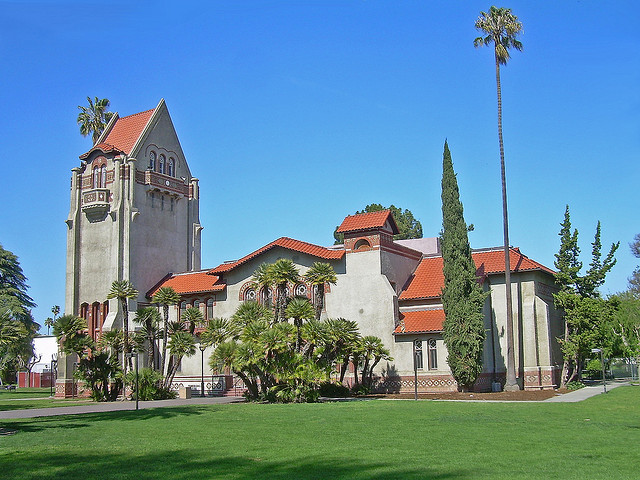
San Jose State: another place to turn knowledge into action. Photo by David Sawyer, Flickr CC.


Many are familiar with the long history of student activism at University of California at Berkeley, but fewer have heard of the difference-makers at San Jose State University. “San Jose State is in the shadow of UC Berkeley when it comes to student activism,” sociology Professor Scott Myers-Lipton told The Nation. “But we’ve got this history as a working-class university that most people don’t know about.”

Starting in 2011, students in Myers-Lipton’s Social Action sociology class started thinking about ways they could bring change to their own community. San Jose houses big-name companies like Adobe, eBay, and Cisco Systems, but it’s the sixth most expensive city in the country. Many residents barely eke out a living. Student and after-school worker Marisela Castro, whose parents worked the California farm fields, pitched the idea of working toward raising the minimum wage. (Myers-Lipton estimates that 80% of his students work over 30 hours per week on top of being students.)

Working with South Bay Labor Council leader Cindy Chavez, Myers-Lipton’s students raised $6,000 to hire a polling agency and make thousands of phone calls to see if increasing minimum wage was an issue that voters would support. When over 70% of respondents said they favored minimum wage increase, Chavez went to the board of the Labor Council. Unions pledged over $120,000 to help the cause by the end of the meeting. After collecting 20,000 signatures, the students took their proposal to the Silicon Valley Chamber of Commerce. The vast network of supporters (including Catholic Charities, United Way, churches, and non-profits) alarmed the Chamber, which raised $400,000 to defeat the measure.

The student activists were not defeated, however. They continued, keeping their message simple. Instead of getting into statistical debates, they touted the importance of economic fairness. On November 6th, San Jose became the fifth and largest city to raise its minimum wage, increasing the income for minimum wage workers by $4,000 per year. What started as a student brainstorming activity in a sociology class brought thousands in San Jose closer to economic sustainability.

Photo by Art$uper$tar via flickr.com.

When we get nostalgic, we tend to overlook bad times and focus on good memories. It’s like how Green Day’s “Good Riddance” ended up promoted under its subtitle, “Time of Your Life”… and then became the go-to ballad for every late 90s graduation, flashback, and farewell television episode.

In a recent op-ed for the New York Times, historian and Council on Contemporary Families co-chair Stephanie Coontz reminds us that a little personal nostalgia may be fine, but we should be wary when everyone starts longing for the “good old days”:

In personal life, the warm glow of nostalgia amplifies good memories and minimizes bad ones about experiences and relationships, encouraging us to revisit and renew our ties… In society at large, however, nostalgia can distort our understanding of the world in dangerous ways, making us needlessly negative about our current situation.

This nostalgia doesn’t just make the present look worse. It can make it harder to see some pretty spectacular screw-ups:

I have interviewed many white people who have fond memories of their lives in the 1950s and early 1960s. The ones who never cross-examined those memories to get at the complexities were the ones most hostile to the civil rights and the women’s movements, which they saw as destroying the harmonious world they remembered.

But others could see that their own good experiences were in some ways dependent on unjust social arrangements, or on bad experiences for others… These people didn’t repudiate, regret, or feel guilty about their good memories. But because they also dug for the exceptions and sacrifices that lurked behind their one-dimensional view of the past, they were able to adapt to change.

Trading in rose-colored glasses for 3D might let us accept a fuller version of the past and more possibilities for the future.

A Forgery of the 95 Theses
A forgery of the 95 Theses in the Penn Libraries Collection

We often hear how Facebook, Twitter, and other social media contribute to protests and demonstrations by allowing activists to express their views or coordinate their actions. Social media were a big part of Arab Spring, but they were also a large part of the Reformation, says an article from The Economist. Nearly 500 years ago, Martin Luther went viral by circulating pamphlets, woodcuts, and other social media of that day in order to spread the message of religious reform.

The start of the Reformation is generally explained as a three-step process: 1. Martin Luther gets fed up with members of the Catholic Church asking for money to free souls, 2. Luther pins a list of 95 Theses (in Latin) to the Church door, and 3. The Reformation has begun. But, a closer look reveals Martin Luther spent more time thinking about social media:

The unintentional but rapid spread of the “95 Theses” alerted Luther to the way in which media passed from one person to another could quickly reach a wide audience. “They are printed and circulated far beyond my expectation,” he wrote in March 1518 to a publisher in Nuremberg who had published a German translation of the theses. But writing in scholarly Latin and then translating it into German was not the best way to address the wider public. Luther wrote that he “should have spoken far differently and more distinctly had I known what was going to happen.” For the publication later that month of his “Sermon on Indulgences and Grace”, he switched to German, avoiding regional vocabulary to ensure that his words were intelligible from the Rhineland to Saxony. The pamphlet, an instant hit, is regarded by many as the true starting point of the Reformation.

While it sounds pretty different (imagine communicating through woodcuts!), the media environment Luther circulated in shared some similarities with today. It was a decentralized system in which participants distributed messages through sharing—Luther passed the text of a pamphlet to a friendly printer, who could print the small text in a day or two.  Copies of this first edition, which cost about the same as a chicken, spread through the town they were printed in, being picked up by traveling merchants, preachers, or traders, and spread across the country. Local printers would then reprint their own editions, much like Facebook “shares” or Twitter “retweets.”

And, as with collective action in the 21st century, social media could  be dangerous during the Reformation:

In the early years of the Reformation expressing support for Luther’s views, through preaching, recommending a pamphlet or singing a news ballad directed at the pope, was dangerous. By stamping out isolated outbreaks of opposition swiftly, autocratic regimes discourage their opponents from speaking out and linking up. A collective-action problem thus arises when people are dissatisfied, but are unsure how widely their dissatisfaction is shared, as Zeynep Tufekci, a sociologist at the University of North Carolina, has observed in connection with the Arab spring. The dictatorships in Egypt and Tunisia, she argues, survived for as long as they did because although many people deeply disliked those regimes, they could not be sure others felt the same way. Amid the outbreaks of unrest in early 2011, however, social-media websites enabled lots of people to signal their preferences en masse to their peers very quickly, in an “informational cascade” that created momentum for further action.

Something very similar happened in the Reformation. A1523-24 surge in reform-pamphlet popularity (including those written by Luther and many others) served as a collective signaling mechanism of Luther’s support. Luther had been declared a heretic, but, because of his supporters, he was able to escape execution, and the Reformation became established in much of Germany. The power of social media is anything but new.

expedited

Many people put off talking about immigration reform until “America regains control of its borders.”  But, according to Douglas Massey’s recent CNN article, that moment has arrived. He says:

According to estimates from the Mexican Migration Project, which I co-direct, the rate of new undocumented migration from Mexico dropped to zero in 2008 for the first time in 50 years. This remarkable event partly reflects the drop in labor demand in the context of a deep economic recession, but it also stems from a massive increase in border enforcement.  Since 1990, the size of the Border Patrol has increased by a factor of five and its budget by a factor of 13.

While this increased enforcement surely contributed to decreased immigration, it also likely decreased the outflow of immigrants who were already here.

At present, therefore, new undocumented migrants are not heading northward; former undocumented migrants are coming back in very small numbers; and settled undocumented residents are staying put.  As a result of these trends, the population of undocumented U.S. residents peaked at 12.6 million persons in 2008 and fell to 10.8 million in 2009, according to the latest estimates from the U.S. Department of Homeland Security.  Net undocumented migration is now slightly negative.

Many immigrants are also employed as guest workers; in fact, from 1990 to 2008, the number of Mexicans admitted with temporary work visas grew from 17,000 to 361,000 per year.  Many other migrants are becoming citizens.  For example, the number of legal Mexican immigrants attaining U.S. citizenship went from 18,000 in 1990 to 232,000 in 2008.

In sum, of the four principal components of comprehensive immigration reform, three have already been substantially achieved.   The border is now under control and net-undocumented migration has fallen below zero; a guest worker program has been created to bring in more than 360,000 temporary Mexican migrants per year; and legal immigrants have increasingly taken it upon themselves to “expand” the quotas by naturalizing and sponsoring the entry of immediate relatives outside of the numerical quotas.

According to Massey, one main accomplishment remains: the creation of a pathway to legalization for long-term, undocumented residents of the United States.

Somewhere around three million of these people entered the country as minors.  They did not make the decision to violate U.S. immigration law and should not be held responsibilities for choices made by their parents.  In the absence of a criminal record or other disqualifying circumstances, those who entered as minors should be given an immediate and unconditional amnesty and be allowed to proceed with their lives in the only country that most of them know.

For their part, undocumented migrants who entered as adults should be offered a temporary legalization that confers the right to live and work in the United States for some extended period, during which they would be able to accumulate points ultimately to qualify them for legal permanent residence.  Points would be awarded for socially desirable behaviors such as paying taxes, learning English, studying civics, holding a steady job, owning a home, parenting U.S. citizen children and generally staying out of trouble.  Once a certain minimum threshold of points is achieved, migrants would be allowed to pay a fine as restitution for violating the law and then, having paid their debt to society, get on with their lives as legal permanent residents of the United States.  We are much closer to the ultimate goals of immigration reform than most people realize.


Protesting Scott Walker
In an op-ed published in the Raleigh-based paper, the Newsobserver, sociology Ph.D student Amanda Gengler provides insight into what is at stake in the current political struggle in Wisconsin. To do so Gengler draws upon her experience at the University of Wisconsin-Madison where she earned her master’s degree.

As a graduate student at the University of Wisconsin-Madison 10 years ago, every month a few dollars of my stipend went to pay dues to the TAA; a unique union that represents and protects graduate employees working in the UW-System. In return, I worked under a contract that ensured full health care benefits and basic dental care (with no out-of-pocket premiums), and tuition remission (without which my education would not have been possible) as well as other fair labor protections.

Now, even after each subsequent renegotiation of the rights for Wisconsin’s graduate employees has resulted in more and more concessions, current Gov. Scott Walker is proposing to remove the TAA’s collective bargaining rights altogether. This would make it impossible to fight for any of these protections, all of which could be immediately revoked.

Graduate students are not alone in seeing this as an attack on the education system.

Under the rallying cry “Hands off our Teachers,” undergraduates have taken to the streets in recent days alongside their graduate student instructors.

Gengler cautions us to not see this as an isolated threat directed at the University system.

Wisconsin’s 3,000 graduate student workers are but one of the many constituencies that will be directly harmed by the state government’s attack on unions and workers’ rights. As Wisconsin’s unions offer up economic concessions in terms of pay and premiums, only to be completely rebuffed by state lawmakers, it is clear that this issue is not about the budget: it is about ending workers’ collective bargaining rights.

The op-ed serves as a call for all workers and unions to pay close attention to what is occurring in Wisconsin. While the situation appears bleak, Gengler leaves us with a statement of resolve:

Those of us who have been fortunate enough to have those rights know what they are worth, and the thousands who continue to flood Madison’s streets make it clear that the right to fight is one thing they will not concede.