
public health

Photo by Dominique Faget/AFP for the Tico Times.
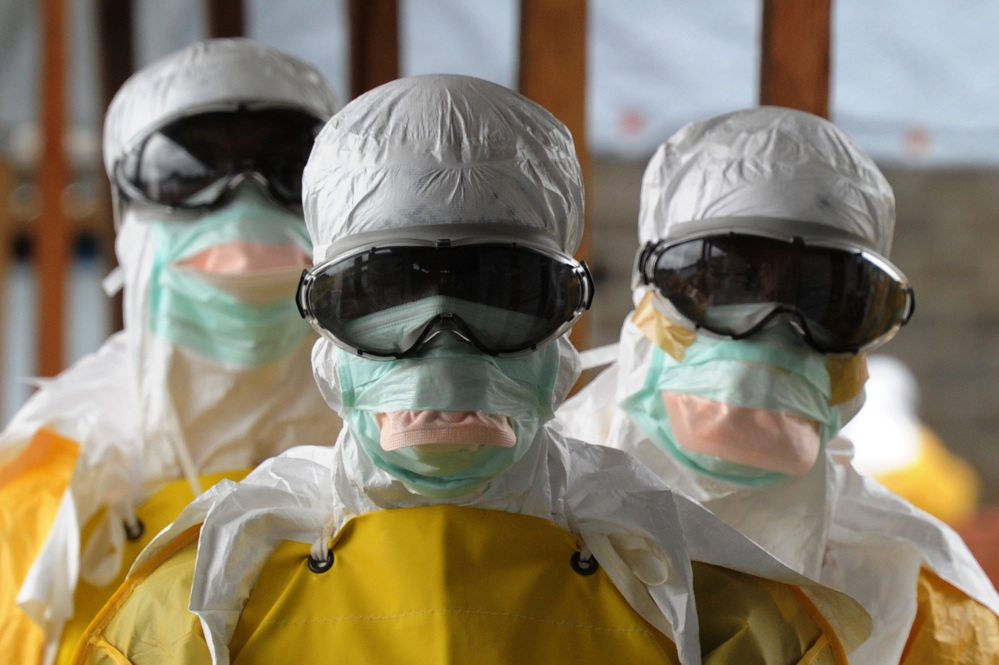
The “epidemic mindset” could be caused by the uncertainty of a global world. Photo by Dominique Faget/AFP.

Though there is still much work to be done to curb cases of Ebola across Liberia, Guinea, and Sierra Leone, good news came this week as the World Health Organization declared Nigeria Ebola-free. Yet fear of the disease remains around the world as Americans and Europeans call for travel restrictions to limit further exposure. Why all the fear for a disease with so few cases gone global?

The New York Times  interviewed sociologist Claudine Burton-Jeangros on the issue, who points out that Ebola fears fit into larger narratives about our place in the world and modern life.

…the more we master the world through science and technology the more frightened we are of those things we can’t control or understand. ”We live in very secure societies and like to think we know what will happen tomorrow. There is no place in our rational and scientific world for the unknown. Objectively, the risks created by Ebola in Europe are very small,” said Ms. Burton-Jeangros, ”but there is an uncertainty that creates fear.”

Since Ebola is only spread when bodily fluids are exchanged, the chances of an outbreak in the U.S. or Europe are very small. We’re not immune from fear, however, and the uncertainty of a global world creates new social supports for epidemics of anxiety. For more on the “epidemic mindset,” check out our roundup of research.

 

Not a good sign around the water cooler. Photo by John Liu via flickr.

In TIME’s online Ideas section, Columbia’s Shamus Khan makes a reasonable proposition: let sick people stay home and get well. “While we typically look to doctors and medicines in a health crisis,” such as the current flu outbreak, “we should recognize that guaranteeing paid sick days to workers could do as much, if not more, to help moderate the impact…”

Khan goes on to cite the 40% of American workers who have no paid sick days and point out that “this is not just inhumane but a matter of public health.”

The jobs with the most contact with the public are the least likely to provide sick days… when you go to purchase a cup of coffee or eat at a restaurant, know that almost all (76%) of the people serving you are likely to show up to work sick, because not doing so means not getting paid and could mean getting fired. Scholars have a name for this—presenteeism: being at work when you otherwise should not for fear of losing your job or beng viewed by your boss as lazy or unreliable.

While New York’s leadership has declined to support paid sick leave policies, San Francisco has implemented one and saw higher rates of employment. “Paid sick leave works,” Khan concludes. Employees stay home and get well, spread less disease, and are less likely to visit emergency rooms (saving themselves and the wider healthcare system millions).

An advertisement created by a Georgia children’s hospital. (Image via huffingtonpost.com).

At the Huffington Post, UCLA sociologist Abigail Saguy weighs in on weight-based stigma. Saguy notes that while there are health risks associated with obesity, stigma and bullying directed at overweight individuals may prove just as harmful as excess weight.

In particular,  stigma may exacerbate health concerns by discouraging obese women from receiving routine or preventative health care:

For many women, the place where they feel their dignity most crushed is in the doctor’s office. In fact, scores of studies show that “obese” women are less likely to get Pap smears and other medical screens because they experience the doctor’s office to be a hostile environment. And they are not delusional. Study after study shows that medical professionals—in the United States and abroad—believe that their heavier patients are weak-willed and non-compliant. Other women and men are denied health care coverage because they are “morbidly obese.” When lack of screening contributes to higher rates of cervical cancer among “obese” women, we can say that our attitudes about fatness are literally making us sick.

And, Saguy says, public health campaigns aimed at reducing obesity may be adding to the problem:

Just this month, L.A. County launched a new obesity awareness campaign titled “Choose Less, Weigh Less.” News reports on the initiative included photos of headless torsos with overflowing guts. The efficacy of such programs remains unproven. However, there is growing evidence—including from experiments I have conducted with psychologist David Frederick and UCLA sociology graduate student Kjerstin Gruys—that such messages worsen weight-based stigma. In our experiments, people who read news reports that discuss obesity as a public health crisis were more likely to agree with negative stereotypes of fat people as unlikeable, untrustworthy and less intelligent than thinner people, compared to people not having read such articles.

Such studies suggest that in the fight for improved health, shedding weight-based stigma may be as or more important than shedding pounds.