poverty

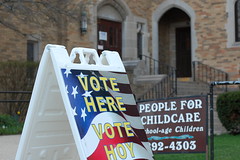
Vote Here, Vote HoyThe Moving to Opportunity (MTO) experiment is well-known in social science circles and has provided evidence that relocating residents of poor neighborhoods to more advantaged neighborhoods can have positive outcomes, especially on physical and mental health for some groups. But new evidence cited in The Atlantic this month shows that such interventions may have and unintended dark side for political participation.

MTO’s designers in the mid-1990s hoped to improve conditions of employment, education, and health of low-income families in neighborhoods with poverty rates of 40 percent or higher. The experiment included about 4,200 families in five major U.S. cities.

The chance for residential mobility was determined by lottery. Some families remained in their current public housing development. A second group received standard Section 8 housing vouchers. A third set received vouchers that could only be used toward an apartment in a low-poverty neighborhood — areas with a poverty rate below 10 percent. (Families that received vouchers weren’t obligated to use them.)

Despite good intentions, not all of the results of this mobility have been positive. Some researchers have found that moving did not improve residents’ economic well-being and arrest rates for young men actually increased. It seems that Claudine Gay, political scientist at Harvard, has pinpointed another less-than-ideal outcome: decreased political participation.

Gay examined voter registration and turnout data in the 2002 primary and the 2004 presidential election. She compared the political participation of all three Moving to Opportunity groups: those who “lost” the lottery and stayed put, those who moved with Section 8 vouchers, and those who moved into low-poverty areas (as well as those who received vouchers but chose not to move).

Her analysis turned up no negative effects with regard to voter registration, and turnout for the 2002 primary was uniformly low. But Gay did observe a much lower voter turnout in the 2004 presidential election among families that received a voucher. The effects were especially pronounced for the so-called lottery “winners”: adults that moved into low-poverty neighborhoods had a lower voter turnout by 19 percent, compared with those who “lost” the lottery…

While hang-ups in the logistics of moving, like registering to vote in a new neighborhood or not knowing your new polling place, might seem like likely culprits in the decrease, Gay offers a different explanation:

Instead, Gay reasons, the primary source of decreased voter turnout is likely the “social disruption” that occurs when a poor urban family relocates to a higher-income area. Community connections are strongly linked with political participation, and while it takes time for a new resident of any community to connect socially, that difficulty may be greater for residents whose socioeconomic profile doesn’t match that of their new neighbors.

Given the high stake that poor citizens have in many public policy decisions, Gay argues that the effects of residential mobility on political participation must not be ignored.

The state of affairs
Photo by Satish Krishnamurthy, satishk.tumblr.com

The U.S. social safety net continues to grab headlines, this week in the New York Times. We’ve noted before the play programs like food stamps are getting in the current presidential campaign. The NY Times article notes that, paradoxically, “Some of the fiercest advocates for spending cuts have drawn public benefits.” Why might this be?

An aging population and a recent, deep recession seem to be at the crux of the issue.

The problem by now is familiar to most. Politicians have expanded the safety net without a commensurate increase in revenues, a primary reason for the government’s annual deficits and mushrooming debt. In 2000, federal and state governments spent about 37 cents on the safety net from every dollar they collected in revenue, according to a New York Times analysis. A decade later, after one Medicare expansion, two recessions and three rounds of tax cuts, spending on the safety net consumed nearly 66 cents of every dollar of revenue.

The recent recession increased dependence on government, and stronger economic growth would reduce demand for programs like unemployment benefits. But the long-term trend is clear. Over the next 25 years, as the population ages and medical costs climb, the budget office projects that benefits programs will grow faster than any other part of government, driving the federal debt to dangerous heights.

As a result, many Americans have benefited from government safety net programs.

Almost half of all Americans lived in households that received government benefits in 2010, according to the Census Bureau. The share climbed from 37.7 percent in 1998 to 44.5 percent in 2006, before the recession, to 48.5 percent in 2010.

Yet many do not realize that it is no longer just programs for the “undeserving poor” that dominate the scene. Rather, it’s programs such as an expanded Earned Income Tax Credit and increasing Medicare costs that have stretched safety net resources.

Medicare’s starring role in the nation’s financial problems is not well understood. Only 22 percent of respondents to the New York Times poll correctly identified Medicare as the fastest-growing benefits program. A greater number of respondents, 27 percent, chose programs for the poor.

Why the misperception? Perhaps it’s because, as political scientist Suzanne Mettler explains in her book, The Submerged State: How Invisible Government Policies Undermine American Democracy, policies in recent decades have turned from more obvious provision of cash benefits to methods such as tax breaks, incentives, and other “hidden” forms of support. As a result, most citizens  have no idea that they rely on the safety net at all.

No doubt politicians, commentators, and scholars will all continue to debate the form and function of the safety net. But everyday Americans aren’t at all sure what’s best to do.

Americans are divided about the way forward. Seventy percent of respondents to a recent New York Times poll said the government should raise taxes. Fifty-six percent supported cuts in Medicare and Social Security. Forty-four percent favored both.

As one Minnesotan profiled in the NY Times story put it, “I’m glad I’m not a politician…We’re all going to complain no matter what they do. Nobody wants to put a noose around their own neck.”


Photo by Ben+Sam via flickr

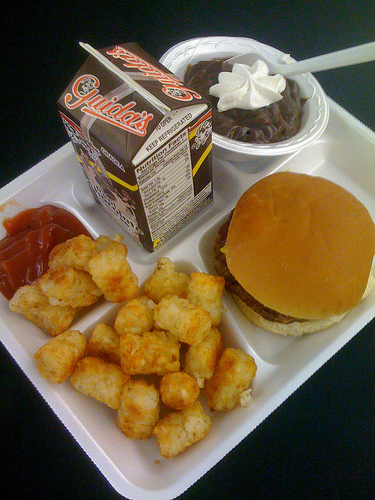
Raising healthy kids is usually seen as a result of some magical combination of resources and education in a child’s home, school, and neighborhood. A newly released study by Penn State sociologists Molly Martin, Michelle Frisco, and Claudia Nau and the Census Bureau’s Kristin Burnett, however, finds poverty at schools has a greater effect on adolescent obesity than poverty or low education at home.

Well-educated parents are less likely to raise overweight children, but according to the study’s findings, if the student attends a poor school, the effect of his or her parents’ education is minimized. According to the online news source Futurity‘s report on the research , “A parent with a graduate degree who has a child in a poor school is more likely to raise an overweight adolescent than a parent with an eighth grade education who has an adolescent enrolled in a rich school.”

“The environment can actually limit our ability to make the choices that we all think we make freely,” Frisco says. Martin maintains that poor schools influence a student’s weight even beyond the typically-blamed unhealthy food choices. Low-funded schools have a difficult time offering athletic or fitness programs. Martin also argues that low income schools may house students with higher levels of stress. “Schools with limited financial resources tend to be more stressful environments,” Martin says. “Stress promotes weight gains and usually the worst kinds of weight gains.”

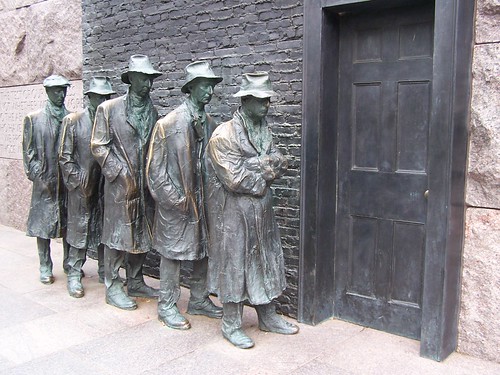
Great Depression Bread Line
Photo by April and Randy via flickr.com

The University of Minnesota’s Joe Soss, recently interviewed for the Office Hours podcast about his new book Discliplining the Poor: Neoliberal Paternalism and the Persistent Power of Race, was featured in the Star Tribune thoughtfully explaining the lessons of his research for the Lori Sturdevant article “It’s Rarely a Luxury to Be in Need of Charity.” As Soss put it, “Our notions about who’s deserving of help and who isn’t are rooted in notions about individual effort and individual success or failure.” But, he told Sturdevant, “It’s become almost a Catch-22… You’re undeserving if you haven’t worked hard enough to lift yourself out of poverty. If you had worked hard, you wouldn’t be poor. So if you’re poor, you must be undeserving.”

And, the columnist relates, maybe, “In frontier Minnesota, hard work could rather reliably produce self-sufficiency. Suspicion of the poor as lazy or profligate arose easily when land was cheap or free, the population was exploding, and harvests of timber, grain and, eventually, iron ore were abundant beyond imagining.” Now that hard times are upon so many, it’s harder to write off the jobless or the poor as deserving of their fate. In this way, the Great Recession may also become something of a Great Equalizer, “opening eyes to to a new reality about work in America,” writes Sturdevant. As Joe Soss said, “Tougher times make people more likely to understand that poverty isn’t just about individual choices.”

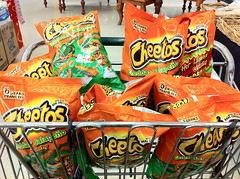
Mission accomplished! $20 worth of jalapeño cheetos
The phrase “you are what you eat” may refer to more than your physical make-up. In fact, the food in your fridge might say just as much about your social class as about your health.  Newsweek reports:

According to data released last week by the U.S. Department of Agriculture, 17 percent of Americans—more than 50 million people—live in households that are “food insecure,” a term that means a family sometimes runs out of money to buy food, or it sometimes runs out of food before it can get more money. Food insecurity is especially high in households headed by a single mother. It is most severe in the South, and in big cities. In New York City, 1.4 million people are food insecure, and 257,000 of them live near me, in Brooklyn. Food insecurity is linked, of course, to other economic measures like housing and employment, so it surprised no one that the biggest surge in food insecurity since the agency established the measure in 1995 occurred between 2007 and 2008, at the start of the economic downturn.

Growing inequality between the rich and the poor in the United States is reflected at the dinner table as well:

Among the lowest quintile of American families, mean household income has held relatively steady between $10,000 and $13,000 for the past two decades (in inflation-adjusted dollars); among the highest, income has jumped 20 percent to $170,800 over the same period, according to census data. What this means, in practical terms, is that the richest Americans can afford to buy berries out of season at Whole Foods—the upscale grocery chain that recently reported a 58 percent increase in its quarterly profits—while the food insecure often eat what they can: highly caloric, mass-produced foods like pizza and packaged cakes that fill them up quickly.

Using language evocative of sociologist Pierre Bourdieu, one epidemiologist explains:

Lower-income families don’t subsist on junk food and fast food because they lack nutritional education, as some have argued. And though many poor neighborhoods are, indeed, food deserts—meaning that the people who live there don’t have access to a well-stocked supermarket—many are not. Lower-income families choose sugary, fat, and processed foods because they’re cheaper—and because they taste good. In a paper published last spring, Drewnowski showed how the prices of specific foods changed between 2004 and 2008 based on data from Seattle-area supermarkets. While food prices overall rose about 25 percent, the most nutritious foods (red peppers, raw oysters, spinach, mustard greens, romaine lettuce) rose 29 percent, while the least nutritious foods (white sugar, hard candy, jelly beans, and cola) rose just 16 percent.

“In America,” Drewnowski wrote in an e-mail, “food has become the premier marker of social distinctions, that is to say—social class. It used to be clothing and fashion, but no longer, now that ‘luxury’ has become affordable and available to all.”

Concern about rising obesity, especially among low income communities, had led to some controversial policy proposals.

In recent weeks the news in New York City has been full with a controversial proposal to ban food-stamp recipients from using their government money to buy soda. Local public-health officials insist they need to be more proactive about slowing obesity; a recent study found that 40 percent of the children in New York City’s kindergarten through eighth-grade classrooms were either overweight or obese. (Nationwide, 36 percent of 6- to 11-year-olds are overweight or obese.)

But French sociologist Claude Fischler suggests that there might be a better way to address both food insecurity and obesity: Americans should be more French about food.

Americans take an approach to food and eating that is unlike any other people in history. For one thing, we regard food primarily as (good or bad) nutrition. When asked “What is eating well?” Americans generally answer in the language of daily allowances: they talk about calories and carbs, fats, and sugars. They don’t see eating as a social activity, and they don’t see food—as it has been seen for millennia—as a shared resource, like a loaf of bread passed around the table. When asked “What is eating well?” the French inevitably answer in terms of “conviviality”: togetherness, intimacy, and good tastes unfolding in a predictable way.

Even more idiosyncratic than our obsession with nutrition, says Fischler, is that Americans see food choice as a matter of personal freedom, an inalienable right. Americans want to eat what they want: morels or Big Macs. They want to eat where they want, in the car or alfresco. And they want to eat when they want. With the exception of Thanksgiving, when most of us dine off the same turkey menu, we are food libertarians. In surveys, Fischler has found no single time of day (or night) when Americans predictably sit together and eat. By contrast, 54 percent of the French dine at 12:30 each day. Only 9.5 percent of the French are obese.

Others suggest addressing systematic barriers to food accessibility and delivery. According to author and foodie icon Micahel Pollan:

“Essentially,” he says, “we have a system where wealthy farmers feed the poor crap and poor farmers feed the wealthy high-quality food.” He points to Walmart’s recent announcement of a program that will put more locally grown food on its shelves as an indication that big retailers are looking to sell fresh produce in a scalable way. These fruits and vegetables might not be organic, but the goal, says Pollan, is not to be absolutist in one’s food ideology. “I argue for being conscious,” he says, “but perfectionism is an enemy of progress.”

Community activists agree:

Food co-ops and community-garden associations are doing better urban outreach. Municipalities are establishing bus routes between poor neighborhoods and those where well-stocked supermarkets exist.

Joel Berg, executive director of the New York City Coalition Against Hunger, says these programs are good, but they need to go much, much further. He believes, like Fischler, that the answer lies in seeing food more as a shared resource, like water, than as a consumer product, like shoes. “It’s a nuanced conversation, but I think ‘local’ or ‘organic’ as the shorthand for all things good is way too simplistic,” says Berg. “I think we need a broader conversation about scale, working conditions, and environmental impact. It’s a little too much of people buying easy virtue.”re as well,” Berg says…

Berg believes that part of the answer lies in working with Big Food. The food industry hasn’t been entirely bad: it developed the technology to bring apples to Wisconsin in the middle of winter, after all. It could surely make sustainably produced fruits and vegetables affordable and available. “We need to bring social justice to bigger agriculture as well,” Berg says.

Montréal-Nord

Patricia Cohen’s recent article in the NY Times, “‘Culture of Poverty’ Makes a Comeback,” documents culture once again being used by social scientists as an explanation in discussing poverty.

Cohen begins by setting the historical context.

The reticence was a legacy of the ugly battles that erupted after Daniel Patrick Moynihan, then an assistant labor secretary in the Johnson administration, introduced the idea of a “culture of poverty” to the public in a startling 1965 report. Although Moynihan didn’t coin the phrase (that distinction belongs to the anthropologist Oscar Lewis), his description of the urban black family as caught in an inescapable “tangle of pathology” of unmarried mothers and welfare dependency was seen as attributing self-perpetuating moral deficiencies to black people, as if blaming them for their own misfortune.

The idea was soon central to many of the conservative critiques of government aid for the needy. Within the generally liberal fields of sociology and anthropology the argument was generally treated as being in poor taste and avoided. This time of silence seems to be drawing to a close.

“We’ve finally reached the stage where people aren’t afraid of being politically incorrect,” said Douglas S. Massey, a sociologist at Princeton who has argued that Moynihan was unfairly maligned.

The new wave of culture-oriented discussions is not a direct replica of the studies of the 1960s.

Today, social scientists are rejecting the notion of a monolithic and unchanging culture of poverty. And they attribute destructive attitudes and behavior not to inherent moral character but to sustained racism and isolation.

Cohen continues by providing examples of how culture is now being examined. To do so she turns to Harvard sociologist, Robert J. Sampson. According to Sampson culture should be understood as “shared understandings.”

The shared perception of a neighborhood — is it on the rise or stagnant? — does a better job of predicting a community’s future than the actual level of poverty, he said.

William Julius Wilson, a fellow Harvard sociologist who achieved notoriety through studies of persistent poverty defines culture as the way

“individuals in a community develop an understanding of how the world works and make decisions based on that understanding.”

For some young black men, Professor Wilson said, the world works like this: “If you don’t develop a tough demeanor, you won’t survive. If you have access to weapons, you get them, and if you get into a fight, you have to use them.”

As a result of this new direction in the study of poverty, a number of assumptions about people in poverty have been challenged. One of these is idea marriage is not valued by poor, urban single mothers.

In Philadelphia, for example, low-income mothers told the sociologists Kathryn Edin and Maria Kefalas that they thought marriage was profoundly important, even sacred, but doubted that their partners were “marriage material.” Their results have prompted some lawmakers and poverty experts to conclude that programs that promote marriage without changing economic and social conditions are unlikely to work.

The question remains, why are social scientists suddenly willing to deal with this once taboo approach?

Younger academics like Professor Small, 35, attributed the upswing in cultural explanations to a “new generation of scholars without the baggage of that debate.”

Scholars like Professor Wilson, 74, who have tilled the field much longer, mentioned the development of more sophisticated data and analytical tools. He said he felt compelled to look more closely at culture after the publication of Charles Murray and Richard Herrnstein’s controversial 1994 book, “The Bell Curve,” which attributed African-Americans’ lower I.Q. scores to genetics.

The authors claimed to have taken family background into account, Professor Wilson said, but “they had not captured the cumulative effects of living in poor, racially segregated neighborhoods.”

He added, “I realized we needed a comprehensive measure of the environment, that we must consider structural and cultural forces.”

This surge of interest is particularly timely as poverty in the United States has hit a fifteen-year high. And the debate is by no means confined to the ‘Ivory Tower’.

The topic has generated interest on Capitol Hill because so much of the research intersects with policy debates. Views of the cultural roots of poverty “play important roles in shaping how lawmakers choose to address poverty issues,” Representative Lynn Woolsey, Democrat of California, noted at the briefing.

Morningside Heights/HarlemSince the 1960s, sociologists have shied away from explaining the persistence of poverty in terms of cultural factors, instead emphasizing the social structures that create and perpetuate poverty. Now, the New York Times reports, there seems to be a resurgence of analysis linking culture and persistent poverty.

The old debate has shaped the new. Last month Princeton and the Brookings Institution released a collection of papers on unmarried parents, a subject, it noted, that became off-limits after the Moynihan report. At the recent annual meeting of the American Sociological Association, attendees discussed the resurgence of scholarship on culture. And in Washington last spring, social scientists participated in a Congressional briefing on culture and poverty linked to a special issue of The Annals, the journal of the American Academy of Political and Social Science.

This, however, is not a reproduction of ‘culture of poverty’ scholarship; current work is significantly different:

With these studies come many new and varied definitions of culture, but they all differ from the ’60s-era model in these crucial respects: Today, social scientists are rejecting the notion of a monolithic and unchanging culture of poverty. And they attribute destructive attitudes and behavior not to inherent moral character but to sustained racism and isolation.

Harvard sociologist Robert J. Sampson says that how people collectively view their community matters.

The shared perception of a neighborhood — is it on the rise or stagnant? — does a better job of predicting a community’s future than the actual level of poverty, he said.

Sociologists try to unpack what this means:

Seeking to recapture the topic from economists, sociologists have ventured into poor neighborhoods to delve deeper into the attitudes of residents. Their results have challenged some common assumptions, like the belief that poor mothers remain single because they don’t value marriage.

In Philadelphia, for example, low-income mothers told the sociologists Kathryn Edin and Maria Kefalas that they thought marriage was profoundly important, even sacred, but doubted that their partners were “marriage material.” Their results have prompted some lawmakers and poverty experts to conclude that programs that promote marriage without changing economic and social conditions are unlikely to work.

The article speculates about several reasons why a cultural approach to studying poverty is reemerging, including a new generation of scholars, advancements in data collection and analysis, and shifts in broader discourse and attitudes outside the university, as well.

Take a look at the full article.

20100804_MissionDistrict_004
Here in the U.S., we are obsessed with weight.  It’s hard to even go one day without seeing an advertisement for the latest diet or a news story about a celebrity who shed some pounds or put on a few too many.  While this obsession is due in part to our focus on physical appearance, many of us link obesity with poor health outcomes, including death.  However, a recent social epidemiological study highlighted in Miller-McCune examined the factors that lead to early death; and obesity did not make the list.  Instead, those eager to prevent early death should avoid cigarettes, sedentary lifestyles, and even living in poverty.

This does not mean the lead author of the aforementioned study, Paula Lantz, is proposing we all relax and pig out. The University of Michigan social epidemiologist fully recognizes obesity as a national health problem. But her research suggests our current focus on weight is a bit (ahem) narrow and at least somewhat misleading.

Instead, we should look to what causes and exacerbates obesity, such as sugary sodas and our reliance on cars. And, while personal choices factor in, social class also plays a role.

It’s hard to take personal responsibility if you don’t have the money to join a gym and you have no access to healthy food in your immediate neighborhood. The place where you can get the most calories for the least money is McDonald’s. Their food is dirt cheap on a per-calorie basis.

In other words, being poor is hazardous to your health.

Stress processes probably play a role. Chronic stress is not good for immune function. [Difficulties with] housing, transportation, income security — all those factors can produce stress.  Do you have friends and family — people who can actually help you get to the doctor? Is your community organized in such a way that it provides the resources you need?

So, while a focus on obesity is important, we should start focusing on less prominent culprits like poverty.  And, in the meantime, exercise!

silver and goldA new study finds that it now costs approximately $60,000 a year for a family of four to survive in Philadelphia without government assistance, reports The Philadelphia Inquirer.  This actual cost of living is almost three times as much as the federal poverty level:

The $60,000 figure reveals that there are many more people who are having trouble making it, said Carol Goertzel, president and chief executive of PathWays PA, a Delaware County advocacy group for which the standard was prepared.

Advocates say the Pennsylvania study demonstrates that years of stagnating wages and growing income inequality have taken a toll, making it harder for working people to survive.

“Everybody is feeling hard times right now because of the recession,” said Carey Morgan, executive director of the Greater Philadelphia Coalition Against Hunger. “We like to blame and judge certain people and say they’re poor” because of inner failings, Morgan said. “But in the past couple of years, we see it can happen to anybody. This study is a wake-up call.”

Unable to stretch their wages to cover basic necessities, families lack adequate income to meet the costs of food, housing, transportation, and health and child care, wrote sociologist Diana Pearce, who prepared the study. These families are “nevertheless not deemed poor by the official federal poverty measure,” she added.

Myung-Dong-Tofu-Cabin-San-Mateo_0008The Globe and Mail has published an interview with two University of Toronto sociologists who have written a new book on “foodies.” According to the article:

As the authors explain in their new book Foodies: Democracy and Distinction in the Gourmet Foodscape, for which they interviewed 30 people and analyzed hundreds of articles, today’s foodies might find classic French haute cuisine stuffy. They may be willing to try goat testicles and sheep brains. And they’ll happily visit the city’s best hole-in-the-wall eateries, no matter how dumpy the decor. But one thing foodies flat-out refuse to eat is dinner at a mundane, generic chain restaurant.

Sociologists Josée Johnston and Shyon Baumann argue that being a foodie isn’t just about consuming good food, it’s also about garnering cultural capital. Says Johnston:

A lot of elements of foodie culture are still relatively exclusive, and part of what foodie culture is about is dabbling in all sorts of different ethnic cuisines and food traditions. What makes that a kind of privilege is to have the kind of knowledge to go to all of these kinds of places [whether it’s a fancy restaurant or hole-in-the-wall eatery], so you’re not just familiar with one type of ethnic cuisine, you’re familiar with the whole range of them. And that can end up constituting a kind of cultural capital people use to display their sophistication.

However, this may entail ignoring inequalities. Says Baumann:

…if you’re going to be a foodie and value authentic and exotic cuisine, it’s going to lead you to places of poverty, to contexts of impoverished food production and consumption. Through romanticizing those conditions of poverty, you can get the good food without having to dwell on the uncomfortable fact of poverty.

The authors also noticed gender differences among foodies:

Johnston: One thing that was surprising to me was the different ways that men and women embody their foodie culture. Men often emphasize their expertise more, and they’re often much more interested in the exoticism, especially eating things that are wildly unconventional, like goat testicles. And women didn’t do that as much. They talked more about how their interest in food was also about protecting the health of their family.