

policing

The New York Times ran a story on the removal or design changes of public benches as a part of a “decades-long shift of reinventing the public bench into something that doesn’t welcome the public at all.” Michael Benediktsson (Associate Professor of Sociology at Hunter College) commented that this trend connects to pre-1970s anit-vagrancy laws that allowed police officers to arrest people of color and people experiencing homelessness who were utilizing public spaces. Benediktsson commented that once these laws were deemed unconstitutional, “that’s when you see more of a turn to hostile urban design and planning as a means of achieving the same objective.”


Michael Benediktsson

Ash Watson (Scientia Fellow and Senior Lecturer at the University of New South Wales in Sydney) described the consequences of the digital divide in Australia in an NewsCop article. Nearly “6 million Australians have difficulty accessing the internet; this spans physical access, affording the internet and being confident and capable with their own abilities,” Watson described. As more services–including banking, news, housing applications, and government services–move online, many Australians are getting left behind. “The big consequence is that people can struggle to fully participate and feel that they don’t belong in Australian society as a result,” Watson said.


Ash Watson

The Atlantic ran a story addressing a “surprisingly contentious” question: does money make parenting easier? In 2023 a Pew Research Center survey found that lower-income parents were more likely to state that they found parenting enjoyable and rewarding most of the time. Many media commentators focused on this singular data point, claiming that parenting was most difficult for wealthier parents (despite another finding in the Pew data that lower-income parents are more likely to say that parenting is stressful). Jennifer Glass (Sociology Professor at the University of Texas at Austin) commented that “there’s simply no data on mental health, subjective well-being, or happiness that I have ever seen showing [that wealthy parents struggle with parenthood more].” Rather, Glass’s research shows that higher income and education improve happiness for parents.


Jennifer Glass

Equal Times interviewed Alex Wood (Assistant Professor of Economic Sociology at the University of Cambridge) on the rise in self-employment and freelance work since 2000. Wood explains that freelancing is often more common where there are weaker labor protections, service-based economies, and digital labor platforms available. Wood also describes a shift in the corporate mindset toward prioritizing short-term profit: “If you leave it to employers, to firms, they will choose the low road, the easy option, because they are focused on short-term profitability and short-term share price, even though that’s detrimental to them in the long term.”


Alex Wood

The Washington Post ran an article about shifting trends in cosmetic surgery–particularly a rise in breast implant removals and breast implants of smaller sizes, mirroring a broader cultural trend toward thinness. Alka Menon (Assistant Professor of Sociology at Yale University) explained that “cosmetic surgery moves on a trend model. Minimalism is the name of the game now.” Menon also commented on how social media accelerates cycles of beauty trends: “What took decades to shift from Marilyn Monroe to Kate Moss now happens in a few years. The algorithm determines what version of beauty you’re exposed to.”


Alka Menon

In an article for The Conversation, Jeffrey Dixon (Professor of Sociology at College of the Holy Cross) discussed how artificial intelligence may impact American workers. Dixon argues that “America’s fusion of limited labor protections and aggressive AI adoption could create the perfect storm for widespread job insecurity.”

Michel Anteby

The New York Times ran an article discussing how hormonal birth control is discussed on social media–particularly the growing number of TikTok videos where women discuss negative side effects of birth control and encourage other women to question their doctors about contraception. The article quotes Amanda Stevenson (Associate Professor of Sociology at the University of Colorado, Boulder) on the connection between culture and law: “If we look at what happened between Roe v. Wade and Dobbs, we see a steady escalation of the stigmatization of abortions, and a steady escalation of legal restrictions on the provision of abortion care. Those two processes, stigmatization and legal restrictions are mutually reinforcing.”

Tristan Bridges

David Garland’s (Professor of Sociology and Law at New York University) new book, Law and Order Leviathan: America’s Extraordinary Regime of Policing and Punishment, explores how and why policing and incarceration have become the basis of social order in the United States. Garland argues that “the theme connecting the myriad practices of the American penal state is the singular emphasis on control, not retribution, or restitution, or rehabilitation, but the imposition of restraints on offenders” and that penal control is used to compensate for a lack of political and economic systems of stabilizing communities. Garland discussed the book in an interview with Princeton University Press

David Garland

Building Design ran an article urging architects to engage with sociology when designing homes. The article cites work by Monique Eleb (Professor at the Ecole d’Architecture Paris-Malaquais) and Anne Marie Chatelet (University of Strasbourg) on how domestic rituals have changed across generations and work by Sonia Lavadinho (Founder of Bfluid Prospective Research) on the increasing diversity in types of households as we live longer.

Monique Eleb, Anne Marie Chatelet, & Sonia Lavadinho

Robert Putnam (Research Professor of Public Policy at Harvard University) and Richard Reeves (Senior Fellow at the Brookings Institution) wrote an opinion piece for the New York Times about the current “boy crisis” (how “boys and young men are unwoven from the fabric of our society”) and drawing parallels to the early 20th Century. Putnam and Reeves describe Progressive-era reform efforts and the emergence of child-serving organizations (such as Big Brothers, Boy Scouts, and the Y.M.C.A.). “We have boys seeking guidance. We have men seeking purpose. We have civic institutions desperate for male volunteers,” they describe. “We need to match the outpouring of civic energy, institutional innovation and readiness to experiment with risky new ideas that marked the “boy problem” reformers a century ago.”

Robert Putnam and Richard Reeves

Knowable Magazine interviewed Patrick Bergemann (Associate Professor of Organization and Management at the University of California, Irvine) on his work examining why and when whistleblowers, crime victims, and others are likely to report or conceal wrongdoing. Bergemann also discussed how governments often encourage reporting (for instance, “See something, say something” campaigns) as a form of social control.

Patrick Bergemann

  • The Nation ran an article on Michael Sierra-Arévalo’s (Assistant Professor of Sociology at the University of Texas – Austin) recent book The Danger Imperative. Sierra-Arévalo examines police culture and how it shapes interactions with the public. He describes the “danger imperative” as “policing’s governing institutional frame,” which includes a preoccupation with violence and officer safety, leading officers to treat every interaction as a potential emergency.
  • The New York Times ran a story on a prominent video creator of the homesteading movement (which focuses on living self-sufficiently and off-the-grid) who broadcasts the lifestyle to millions of social media followers. Jordan Travis Radke (Director of the Collaborative for Community Engagement at Colorado College) commented that members of the homesteading movement have varied backgrounds and political alignments, but agree that while “the societal systems and structures in which they were embedded could not be changed anymore,” their lifestyles could be changed. “The modern homesteading movement’s big idea is that, rather than trying to change the world collectively and publicly, people are trying to reshape their private sphere — their worlds, their homes, their own tiny network,” Radke said. “They’re changing their lives, but they want other people to see it, because they want others to follow suit.”
  • Vice President Kamala Harris announced Minnesota Governor Tim Walz as her running mate for the upcoming presidential election. Republicans are criticizing Walz’s response to the mass protests following the 2020 police murder of George Floyd, saying Walz “let Minnesota burn” by not bringing in the National Guard quickly enough. In an article for USA Today, Michelle Phelps (Professor of Sociology at the University of Minnesota) explains that National Guard activation had to be requested by the mayor, as managing unrest was the city’s responsibility. “To say that [Walz] let Minnesota or Minneapolis burn is just a wild misconstruing of the facts,” Phelps said. “It was a response to a really unusual set of circumstances, and I think they responded as fast as was reasonably possible, given the scale of the operation.” In an article for BBC, Phelps added that a more forceful response could have backfired: “There’s a vision in which if we had had a more conservative governor that escalated the state response in the way that President Trump wanted, we would have seen more violence and more destruction,” she said.
  • Francisco Lara-García (Assistant Professor of Sociology at Hofstra University) was recently interviewed in The Markup discussing the “virtual wall” of digital surveillance along the US-Mexico border and the relationship to surveillance among those who live in border towns. “One thing that is kind of a paradox about living and having lived on the border is that there are moments when you can’t not be aware of the intense amount of enforcement and surveillance and activity across the border. But at the same time, it also just becomes a fabric of your life that you don’t notice, or you just don’t pay attention to it,” ​​Lara-García said. “Part of that is because it gets normalized, but also sometimes because there’s surveillance and enforcement that actually just doesn’t impact your life at a particular moment.”
  • The New York Times ran a story on the “step gap” in senior care. A 2021 study led by Sarah Patterson (Research Assistant Professor at the University of Michigan) found that among older adults needing assistance, about half of adults with biological children received care from them, while fewer than a quarter of adults in blended families received care from their step-children. “We have more reconfigured families than ever before, and these families may increasingly rely on someone who’s not a biological child. In general, those relationships tend to be less close,” Deborah Carr (Director of the Center of Innovation in Social Science and Professor of Sociology at Boston University) commented. Merril Silverstein (Professor of Sociology at Syracuse University) added that relationship quality also depends on the age at which a step-parent enters a child’s life: “When a new father comes in and you’re in your 50s, are you going to call him Dad?” Silverstein asked.
  • The Minneapolis Reckoning: Race, Violence and the Politics of Policing in America, a new book by Michelle S. Phelps (Associate Professor of Sociology at the University of Minnesota), argues that Minneapolis is a “secret bellwether city for understanding race and policing in America” and “a test case for both the possibilities and limits of liberal police reform.” Phelps appeared on MPR News, discussing the origin of her research, interviews with Minneapolis residents, and the potential impact of court-imposed reform measures. Reason Magazine called the book “a valuable piece of research on how fights for police reform are won and lost, and what reform means to the people who need it most.”
  • The U.S. Department of Justice recently filed an antitrust lawsuit against Live Nation Entertainment (the parent company of Ticketmaster) for monopolization of the concert industry. In an interview with The Conversation, David Arditi (Associate Professor of Sociology at the University of Texas – Arlington) discussed how musicians are now more dependent on tour revenues to make a living and how Live Nation and Ticketmaster changed the ticket purchasing experience for consumers.
  • In a new book, Between Us: Healing Ourselves and Changing the World Through Sociology, forty-five sociologists share personal stories of the impact of sociology. “I’ve always believed that sociology helped save my life and can do the same for others,” said co-editor Elizabeth Anne Wood (Professor of Sociology at Nassau Community College). “Instead of feeling hopeless and helpless, I found strength in understanding the social structures that constrain and hurt us,” co-editor Marika Lindholm (sociologist and founder of Empowering Solo Moms Everywhere) explained. This story was covered by PR Newswire.
  • Benjamin Shestakofsky (Assistant Professor of Sociology at the University of Pennsylvania) wrote an article for Zócalo Public Square describing how venture capital business models “help create products that succeed in short-term disruption—with questionable or even dangerous long-term effects” and the various alternatives to the venture capital model. “By promoting and investing in businesses with alternative ownership structures,” Shestakofsky argues, “consumers, workers, activists, and governments can challenge venture capital’s winner-take-all model, creating ecosystems of smaller, more localized and specialized platforms that are more responsive to the people who use them and to the communities in which they are embedded.”
  • The Telegraph ran a story on the rise of the ‘work from home’ husband, describing the post-pandemic phenomena of U.K. men working from home while their wives return to the office. Heejung Chung (Professor of Sociology and Social Policy at the University of Kent) commented that there is more opportunity to work remotely in male-dominated jobs. “The three big occupations or sectors where remote work is still limited are healthcare, education, not all education but mainly primary and secondary, and then the third is retail. Those are very female-centric occupations, where remote working is not possible,” Chung said.

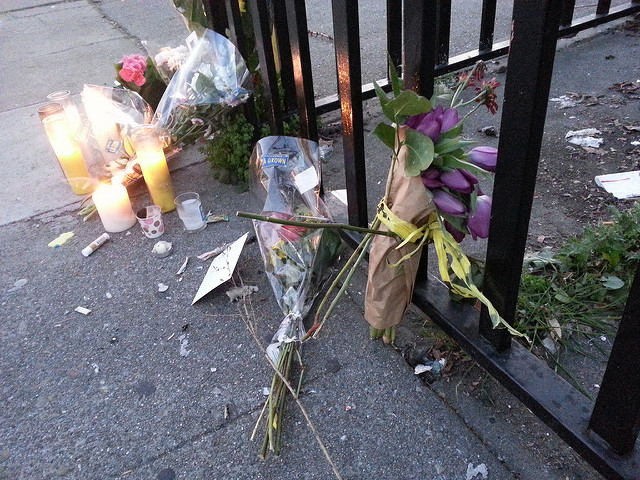
Flowers and Candles for Kiante Tay Campbell. Photo by George Kelly, Flickr CC

Despite the current administration’s affirmations of high crime rates and push for more tough on crime policies, their approach does not align with the reality of crime in the United States, where violent crime fell substantially over the past 25 years. In a recent article in The New York Times, sociologist Patrick Sharkey discusses his research on both the causes and social benefits of the violent crime drop.

Reductions in crime improved the overall climate in major cities, but especially improved social conditions in disadvantaged communities of color. Declines in homicide led to increased life expectancy for young Black males. Sharkey’s research also demonstrates that declines in homicide helped to narrow the achievement gap between Black and White children and decreased concentrations of poverty in many cities. According to Sharkey, “living in poverty used to mean living with the constant threat of violence. In most of the country, that is no longer true.”

Undervalued forms of violence prevention —  non-profit organizations in particular — could help keep levels of violent crime low. Sharkey argues that a method that focuses on safety and creating community, rather than tough policing and prosecution, is the next step to a further reduction in violent crimes:

“These findings suggest a new model for combating urban violence. While police departments remain crucial to keeping city streets safe, community organizations may have the greatest capacity to play a larger role in confronting violence. Working directly with law enforcement and residents, these organizations are central to the next stage in the effort to make our cities even safer.”

Photo by Tony Webster, Flickr CC

Over a year after 49ers quarterback Colin Kaepernick first knelt during the national anthem in protest of police brutality, protests in the NFL spiked dramatically after President Trump attacked players who followed Kaepernick’s example. In recent weeks many more players knelt, locked arms, or stayed in the locker room during the anthem in response to Trump’s speech and series of tweets. During the flurry of media attention on the NFL, scholars Rashawn Ray and Nicole Gonzalez Van Cleve wrote an Op-ed for NBC News about not losing sight of the original purpose of the protests.

Instead of focusing on the political implications of the president’s tweets or changes in protests over the past week (such as owners joining their players on the field), Ray and Van Cleve reiterate research on the violent repercussions of racial bias in policing. They emphasize that black athletes, even NFL stars, are subject to the same dangers of racial profiling as all other African Americans. In an MSNBC spot discussing the Op-ed, Ray told the panel,

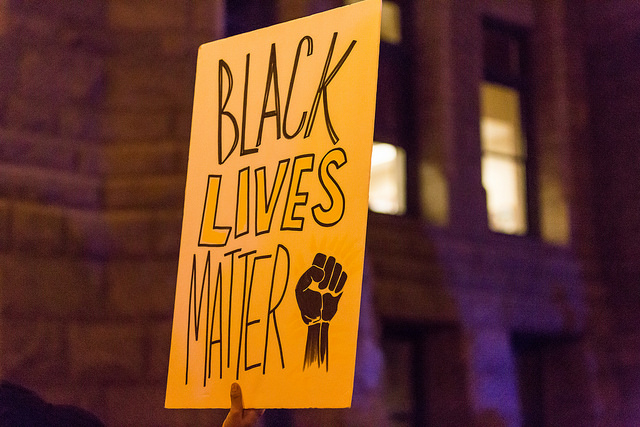
“We really have to reorient the narrative. This isn’t about someone standing or sitting, this is about the fact that black lives matter. This is about the fact that football players, basketball players, baseball players, once they leave those stadiums they are black and brown men. And unfortunately in our society it doesn’t matter if you are affluent or less affluent, unfortunately you might be actually profiled by the police, and unfortunately that particular profiling can turn deadly.”

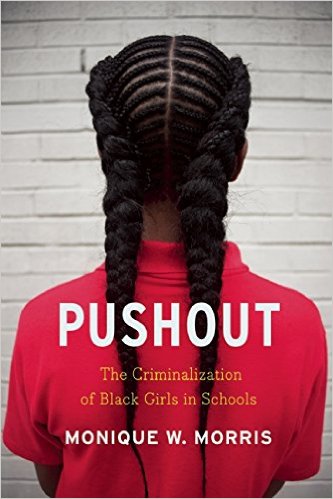
pushout coverOver the last year, bystanders have recorded numerous instances of confrontation between police and black students, from one officer pointing his gun at an unarmed black youth during a pool party in Texas to another officer flipping over a black girl still seated in her desk in a South Carolina high school. Media reports often blame black girls for defying authority figures while excusing the behaviors of school officials and law enforcement officers. Recent reports including Kimberlé Crenshaw’s, “Black Girls Matter: Pushed Out, Overpoliced and Underprotected,” contextualizes the serious effects of harsh punishment as black girls disproportionately enter the school-to-prison pipeline.

Monique Morris sheds additional light on the topic in her new book, “Pushout: The Criminalization of Black Girls in Schools.” Morris interviewed several young black girls in group homes, foster care, and juvenile detention centers in cities including Chicago, San Francisco, New York, and Boston. She discovered that several girls experienced various forms of physical and sexual violence. Michelle Alexander, author of The New Jim Crow, praised the book, calling it “A powerful indictment of the cultural beliefs, policies, and practices that criminalize and dehumanize Black girls in America,” while activist Gloria Steinhem wrote that Morris “tells us exactly how schools are crushing the spirit and talent that this country needs.”

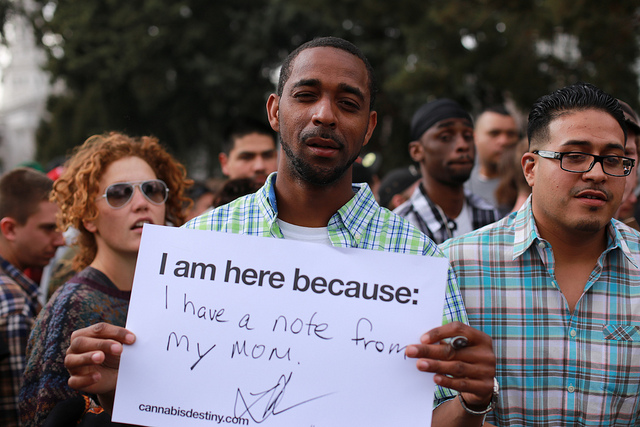
This 2013 Denver rally attendee probably still needs that note from his mom. Photo by Cannabis Destiny, Flickr.


“Spark it up!” Sure, next time you’re in Colorado, you might want to stock up on Cheetos and take advantage of the state’s legalized marijuana. That is, if your skin’s the right color.

According to a new report by the Drug Policy Alliance, a pro-legalization collective, it’s already apparent that there are still racial disparities in the enforcement of the new drug laws in CO. As explained in an Associated Press article, laws that penalize carrying amounts in excess of 1oz of marijuana and the public use of the substance have disproportionately affected blacks compared to whites. Total marijuana arrests have dropped by nearly 95% since legalization, but blacks are twice as likely as whites to face sanctions under laws that criminalize illegal cultivation, public use, and excess possession. In Washington, the same phenomenon can be seen at work, the report states. In Seattle in 2014, one-third of the marijuana citations were issued to blacks, who only make up 8% of the city’s population.

According to University of Wisconsin sociologist Pamela E. Oliver, this discrepancy is indicative of African Americans’ overall treatment under the law, even after policy shifts: “Black communities, and black people in predominantly white communities, tend to be generally under higher levels of surveillance than whites and white communities… this is probably why these disparities are arising.” This discrepancy shows up in nearly all crime policing, from homicide to drug laws to robbery. In Colorado, it’s really killing the buzz.

Photo by Sharon Mollerus via Flickr CC.
Minneapolis photo by Sharon Mollerus via Flickr CC.


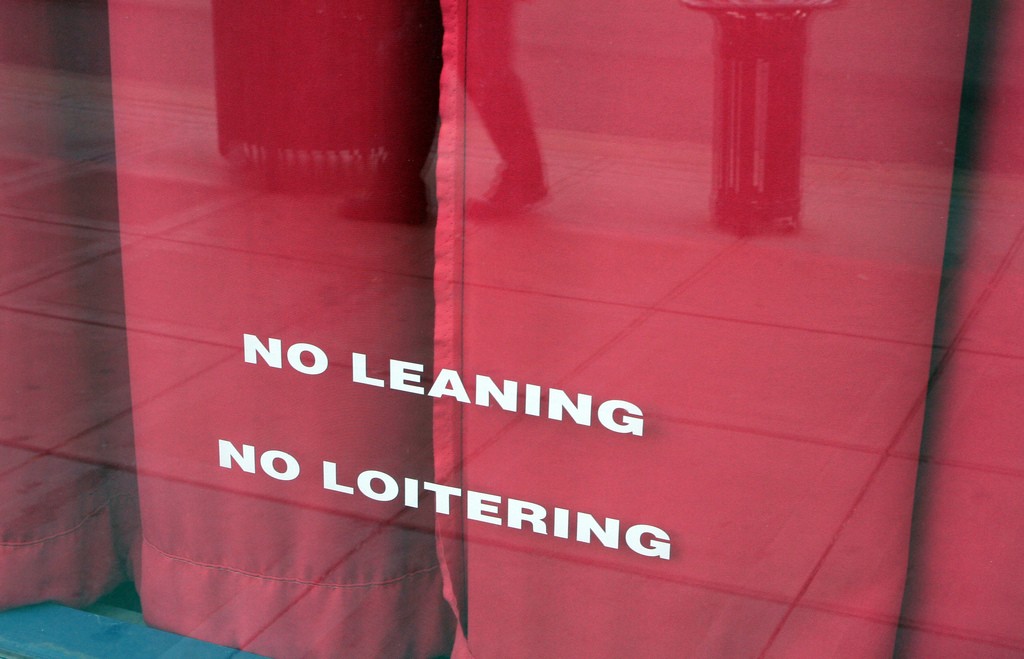
Sociologist Nancy Heitzeg collaborated with community consultant William W. Smith IV for a piece in the Star Tribune about the racial policing of low-level crimes in Minneapolis. African Americans, they write, have experienced disproportionately high arrests for minor offenses such as loitering, spitting, lurking, depositing tobacco, congregating on the street or sidewalk, and violating juvenile curfews. A black person in Minneapolis is 7.54 times more likely to be arrested for vagrancy than a white person, and black youth are 16.39 times more likely than their white peers to be arrested for loitering or breaking curfew. It’s unlikely that African Americans commit more of these crimes, Heitzeg and Smith write; instead, racial profiling and the policing specific neighborhoods are bigger drivers of the disparity.

Some question whether more arrests for low-level offenses actually matter in the grand scheme of things. Community organizations including Black Lives Matter Minneapolis, the Coalition for Critical Change, and Community Justice Projects have initiated petitions charging that many of these ordinances are vague and unconstitutional. Additionally, according to Heitzeg and Smith “The overpolicing of our communities of color contributes to unequitable outcomes in multiple social arenas, including education and employment.” Even having been arrested for a minor violation can negatively affect college admissions or getting a job.

Heitzeg and Smith highlight the history of racialized policing and the withholding of civil rights in the detainment of African Americans. They connect low-level offenses to the post-abolition Slave Codes transformation into Black Codes that circumscribed the lives of African Americans in the Jim Crow era. As the authors put it, “Low-level and ‘livability’ crimes were central features of the old Jim Crow era, and remain today—in the New Jim Crow era—as pretextual police tools in racial profiling.”

To listen to a TSP Office Hours interview with the author of The New Jim Crow, Michelle Alexander, click here. Our book Crime and the Punished includes an excerpt from the interview.

Photo by Alex E. Proimos via flickr.com

Beat cops – and the community-oriented policing projects they practice – are on the decline says Sudhir Venkatesh, Professor of Sociology at Columbia University.

In an article appearing last week in The New Republic, Venkatesh notes that tackling current crime concerns increasingly requires a partnership of federal resources, such as hi-tech gadgetry, and local knowledge of criminal networks. But to support these collaborative taskforces, “[t]he Feds are getting a bigger share of funding, while [local police] are forced to continually make layoffs.”

Venkatesh argues that this isn’t necessarily a bad thing. In many ways, joint taskforces have delivered. In addition to racking up arrests and convictions, “[Chicago] [r]esidents felt safer using public spaces, storeowners experienced less extortion, and even gang members exited their organizations at a greater rate after a federal operation.”

But, while traditional community policing may be outmoded for today’s complex investigations, Venkatesh also warns that cuts have had unintended consequences. Fewer cops on the street has created vacuums – opening the door for solutions from local gangs and vigilantes.