
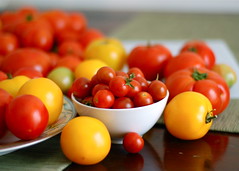
 An article about heirloom tomatoes and questions about the snobbery surrounding their consumption have graced the pages of the Washington Post and the Star Tribune in recent weeks. About the rise of the heirloom tomato…
“Heirloom” has become another buzzword, like “farm to table,” complained Jeremy Fox, the chef at vegetarian restaurant Ubuntu in Napa, Calif., which serves farm-to-table heirlooms as well as hybrids invented by the restaurant’s full-time gardener. “It’s about quality,” he said. “If a tomato tastes good, it’s a good tomato. Nothing else matters.”
That wasn’t always the case. Once, only serious back-yard gardeners swooned over heirlooms. Some, undoubtedly, were concerned about flavor. But for most, growing heirlooms — which they defined as any variety that can reproduce from seed and existed before World War II — was more about preserving biodiversity. Only within the past decade did chefs and trend-crazed food writers latch on to the term: NewsBank, a database that tracks more than 2,500 sources, found 1,097 references to heirloom tomatoes in 2008, up from 77 a decade earlier.
The article draws heavily upon research by sociologist Jennifer Jordan…
Indeed, heirloom tomatoes rose to such prominence that sociologists began to study them as a cultural phenomenon. In a 2007 article in the journal Sociologia Ruralis, Jennifer Jordan examined the pressing question of why a growing number of consumers had acquired a taste for $7-a-pound “bug-eaten, calloused, mottled and splitting tomatoes that may or may not taste good.”
Jordan concluded it was because heirloom tomatoes had evolved into a “marker of distinction.” The lumpy, imperfect fruit had become a kind of mascot for the good-food movement that is against industrial agriculture’s embrace of pesticides, against the development of genetically modified foods, in favor of preserving small farms and in support of local and seasonal food.
Some people sought out heirlooms for their flavor, a reaction to the pretty but insipid industrial hybrids. (Jordan reports that university labs were instructed “to imagine the tomato as a projectile” in their efforts to develop fruit that could survive long-distance shipping and extended refrigeration.) But for many, the growing or purchase of heirloom tomatoes was about making a statement.