environment

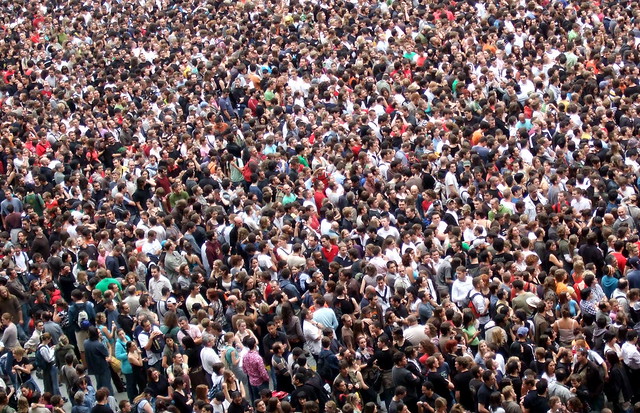
Photo of a large crowd of people, with no space in between.
Photo by James Cridland, Flickr CC

For most of human history, the world population has been much smaller than it currently is — the population has grown substantially only in the last two centuries, as technological and medicinal advances increased life expectancy. Social scientists now say that this growth will end within this century, according to a recent article in The Atlantic. By 2100, when the world population will be approximately 11 billion, growth rates and death rates will be relatively equal; while the population will continue to grow in some parts of the world, other regions will bear aging, smaller populations. Thus, though the numbers seem to equalize, human demographics could look quite different than they do now. Based on these population considerations, the 2100 world could witness many social, political, and cultural shifts, both on a local as well as a global level.

To begin, shifting populations could shape family structures and cultural production.

  • Traditional family structures may change in places where most people currently have large, extended families. Sociologist Parfait Eloundou-Enyegue explains that some of these places will experience smaller fertility rates, leading to smaller families. This could change traditional family structures in some countries as large, extended families give way to smaller, nuclear families. The family reunion may be less lively, but it’s not all bad; as families get smaller, parents can invest more time and resources into their children, whether it’s being able to afford better schools or giving the kids their own room.
  • Art, music, theater, and other forms of culture are often clustered around larger, urban environments with youthful populations. As demographics change and certain parts of the world become relatively younger than others, we could see a shift in dominant produces or culture and entertainment. For example, marketing and producing sports has already changed as certain parts of the world have grown while others have shrunk. For several parts of the world that have been often overlooked in global culture and entertainment, this could be their big break; break a leg!

At the same time, the population plateau of 2100 could spark tensions and challenges, particularly for economics, political interests, and social policy. 

  • The world population will be collectively older than it is now, and a much larger proportion of people will be of retirement age. This could cause political and policy shifts in many countries, particularly those with social spending programs that support the retired and elderly. Often, these are paid for by the employed persons in the labor force, a group that will be comparatively younger and smaller in the future; this will likely cause shifts in how social services operate and receive funding. Furthermore, since such programs are often key political issues, changing populations could spark shifts in the political arena based on different interests and agendas across age groups. 
  • By 2100, the global environment and climate could look much different than it does now, and the population is estimated to plateau just below 11 billion people. Climate change affects different parts of the world in a variety of ways. Across the world, some populations will shrink and age in comparison to others. Thus, different countries’ social and political responses to environmental issues will likely reflect considerations of their different population needs. 

Of course, these population predictions are just predictions, but they are informed by complex tools and methods in demography; such analyses are built on hard data regarding the world population and trends in fertility and birth. Thus, even if there are some fluctuations in the numbers, the general trend towards an aging population in some regions and a younger population in others will remain. Overall, this could lead to many social, cultural, and political changes.

The world may stop growing, but the population plateau could still cause many shifts and shake-ups; change really is the only constant.
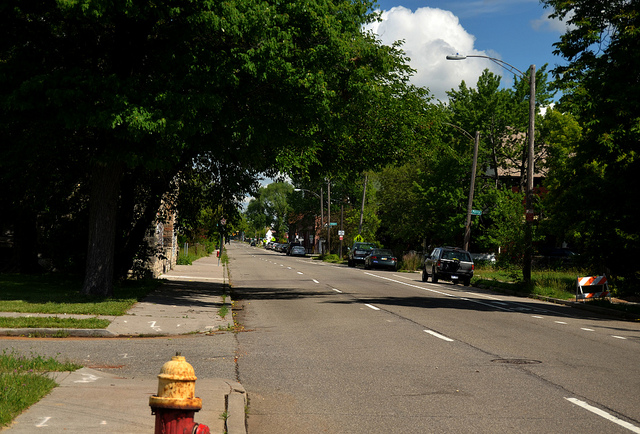

Photo of a street lined with trees in Detroit. Photo by Nic Redhead, Flickr CCi

Evidence shows that trees and green spaces in urban areas offer a number of benefits, such as reducing stress and improving air quality. Despite these benefits, many residents of Detroit refused to allow the city to plant trees in front of their houses during a recent city “greening” initiative. An article appearing in CityLab draws from sociological research to demonstrate how a history of government abuses and lack of inclusivity of communities of color in key decisions explains why many Detroiters had this reaction.

Sociologist Dorceta Taylor published a report in 2014, arguing that white environmentalists make environmental justice projects less effective when they assume they know what is good for a neighborhood. By leaving communities of color out of the planning process, they are not able to anticipate or overcome challenges along the way. This proved true in Detroit. A recent article by Christine Carmichael and Maureen McDonough examined the reasons why Black residents resisted the city’s trees. CityLab reports: “It’s not that they didn’t trust the trees; they didn’t trust the city.”

Carmichael and McDonough found that Black residents were aware of the many benefits of living near trees. However, to some, the trees were a symbol of the city’s unwanted intervention in their lives. Amidst racial tension in the 1960s, the city began clearing trees from Black neighborhoods — ostensibly to combat Dutch elm disease, but some interviewees. Yet, some people believed the city cut down trees to increase police surveillance. This memory triggered their reaction to the modern tree-planting. Carmichael says:

“In this case, the women felt that [after the race rebellion] the city just came in and cut down their trees, and now they want to just come in planting trees. … But they felt they should have a choice in this since they’ll be the ones caring for the trees and raking up the leaves when the planters leave. They felt that the decisions regarding whether to cut down trees or plant new ones were being made by someone else, and they were going to have to deal with the consequences.”

This failed initiative in Detroit highlights the social forces that environmental organizations must consider when working in marginalized neighborhoods. Recruiting volunteers and administrators who come from the communities they are serving (something Detroit did not do) could help improve the process. As CityLab reports:

“[E]nvironmental justice is not just about the distribution of bad stuff, like pollution, or good stuff, like forestry projects across disadvantaged communities. It’s also about the distribution of power among communities that have historically only been the subjects and experiments of power structures.”

Photo of a an overturned wheel barrow in front of a solid metal fence. Photo by Michael Coghlan, Flickr CC

Addressing gun violence in the United States is often a heated political issue — polarizing constituents around what solutions are best to address it. Reducing the thousands of firearm homicides and nonfatal shootings that occur each year will require some serious debate and complex solutions. But there is one surprising factor that may reduce gun violence — cleaning up neighborhoods. A recent study featured in Huffington Post shows that this simple strategy of “cleaning and greening” vacant lots may have some far-reaching impacts on reducing crime.

The researchers partnered with the Pennsylvania Horticultural Society’s LandCare program to randomly select lots in Philadelphia for either a full transformation (picking up trash, putting up a fence and grass seed, and maintenance), a partial makeover (trash removal and mowing only), or left untouched.The researchers then measured shootings in the area from 2011 to 2015.

They found that areas that received the full “cleaning and greening” saw a 7% reduction in shootings, and the partially treated areas a 9% reduction, when compared to areas with no cleaning or maintenance. John Macdonald, one of the study authors, notes that this cleaning strategy did not appear to displace shootings to other blocks, and that cleaned up lots could have other health and safety benefits. He also noted that the solution has its limitations and needs more research to understand the impacts of “cleaning and greening”:

“You couldn’t green a city and just eliminate the chronic problems of gun violence that are highly concentrated in city blocks just by doing remediation to places.” 

Sociologist Eric Klinenberg notes “broken windows” theory — the idea that visible signs of crime, like broken windows, creates an environment that encourages further crime —  is the main impetus behind this experiment. However, he also points out that broken windows theory has been used to justify policing of low-level crimes like public drinking — particularly against people of color and homeless people. These policing practices were not only severely misguided, but completely overlooked the environmental aspects of the original theory:

“What’s so striking is that the [original 1982 article The Atlantic] was actually much more about broken windows than it was about bad people…For decades now, we have fought crime by trying to crack down on people.”

Rather than reducing crime “by punishing people,” Klinenberg suggests that we need more resources and social infrastructure in communities that are heavily impacted by crime. As he concludes, “What we have not done is invest in places and rebuild places where crime is concentrated.”

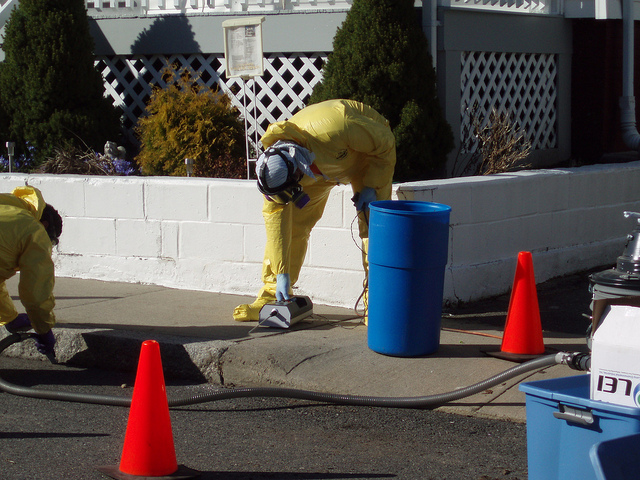
Photo of emergency worker on a street responding to a release of mercury. Photo by Massachusetts Dept. of Environmental Protection, Flickr CC

Gentrification is rapidly transforming once-industrial cities into trendy urban neighborhoods.  However, the dangers that lie below the surface – “hundreds of millions of pounds” of hazardous wastes released by small and large businesses each year – fail to be addressed at the same rate. In a recent interview in The Guardian, sociologists Scott Frickel and James R. Elliot discuss findings from their book about the limitations of current data on environmental hazards and how gentrification has diversified the types of people at risk of exposure to toxic waste.

Frickel and Elliot explain that government databases on hazardous sites only appeared in mid 1980s, and databases often exclude manufacturers that have few employees or release under a specified threshold of pollutants. Reporting is also completely voluntary, meaning the databases only contain the information facilities choose to report. In their research, Frickel and Elliot use old manufacturing directories to address these limitations by creating their own database. They found manufacturing to be heavily concentrated in certain “legacy sites,” or areas where you would expect to find heavy industry with large concentrations of factories or other facilities. However, these site boundaries also spread out slowly over time, and so too did the hazardous wastes. While disadvantaged social groups are more typically exposed to these pollutants, gentrification has disrupted this to some extent.  Elliot explains,

“We do also find things that we’ve come to unfortunately expect from the vast research on environmental injustices… These larger facilities are opening up and disproportionately concentrating in areas of ethnic minority and low-income settlement. But when we begin to consider the spread and the accumulation across cities as land uses change, that picture also changes. We begin to see, as one of our colleagues put it, that we’re all in this together. Many different types of neighborhoods are exposed.”

To remedy this exposure to hazardous materials, Frickel suggests that urban planners seriously consider the history of pollutants that exist below our cities when addressing sustainability. It remains to be seen how gentrification will impact citizens’ ability to hold businesses and government officials accountable for these environmental hazards, but recent events such as the water crisis in Flint should serve as a key example of how far we have left to go to address toxic hazards. 

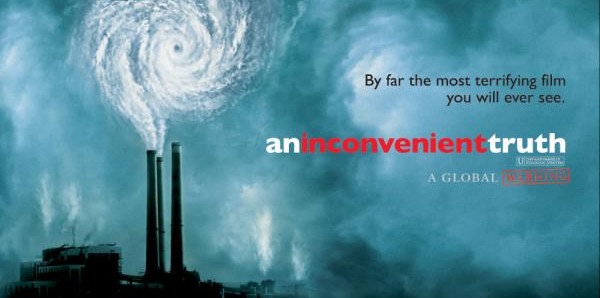
The poster for "global warning" film "An Inconvenient Truth."
The poster for “global warning” film “An Inconvenient Truth.”

Beliefs about climate change are not so much about social demographics, but about what else you believe in–your values, worldviews, and political affiliations. The Washington Post recently featured a new analysis reviewing all existing literature on climate change beliefs. They found that people who vote for more liberal political parties are more likely to believe in climate change. In addition, those who are more concerned with the environment–measured by something called the New Ecological Paradigm (NEP)–were also more likely to believe in global warming. Finally, the trustworthiness of scientists was also a strong predictor in individuals’ beliefs in climate change.

Beliefs, though, do not always translate into action. The researchers found that even those who believe in climate change sometimes do not support policies to remedy it. This occurs more as the policies asked about get more specific. According to sociologist Aaron McCright, this disconnect may simply reflect how people feels about those policies regardless of how they help the environment. He says, “even people who are pretty environmental don’t like taxes still.”

So how do these findings help fight climate change? Sociologist Riley Dunlap suggests that since it may not be possible to change people’s minds, activists should focus their resources on mobilizing voter support for politicians who recognize the importance of climate change. Additionally, McCright suggests that conservative leaders who believe in climate change should be more outspoken about their positions. Psychology professor Matthew Hornsey add that the key, to his mind, is making messages about climate change fit with the worldviews of people who generally do not support climate change. Painting environmentalism as patriotic, for instance, may spur support for mitigation policies.

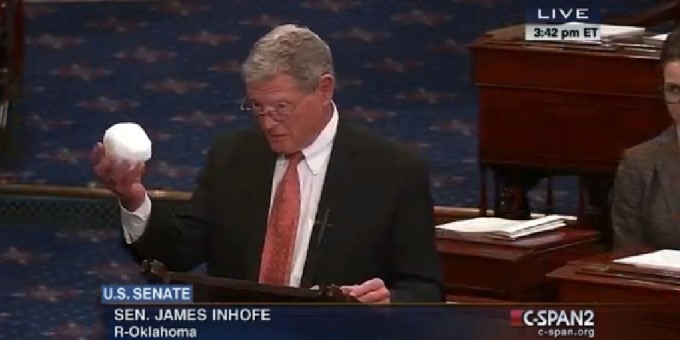
CSPAN screenshot via Washington Post.

Alongside the U.N. Framework Convention on Climate Change, the media and presidential candidates have been making a lot of small talk about weather. Though there’s nothing new about the issue “climate change,” and the preceding term “global warming,” not everybody is on board. Republican candidates including Donald Trump, Chris Christie, and Ben Carson continue to deny climate change, even as the evidence mounts. Often, these candidates state they don’t place much stock in “science.”

An article on Huffington Post discusses this dynamic with help from environmental sociologists Riley Dunlap from OSU and Aaron McCright of MSU. They describe how, particularly among conservative voter bases, people are more likely to seek out information that they agree with while, ignoring what challenges their preexisting ideas. In addition, high-profile skeptics such as political figures can generate an “echo chamber.” In essence, people hear their beliefs reinforced within their social networks; groups can normalize and strengthen particular beliefs or ideologies by simply listening to each other instead of finding new information. As the article describes, even in the face of increasing scientific evidence of climate change, some will remain cold to the idea.

15121150847_8c49b89d8d_o
Climate Change has reached scientific consensus, so why and how do people still deny it? Photo via Takver, Flickr CC.

Even with nearly a hundred percent consensus within the scientific community, the notion that humans are not causing climate change is still widespread amongst the public. A new study in Nature Climate Change by sociologist Justin Farrell of Yale University aimed to find out how climate doubt is manufactured, and was covered in The Washington Post.

Farrell, the sole author of the study, is quoted at length about his findings. Unsurprisingly, his motivation for research was grounded in a genuine curiosity as to how there is such an extraordinary gap between scientific and public consensus:

“I’ve personally been interested in understanding how a social movement can spread such uncertainty and doubt in the general public on an issue that has achieved near scientific consensus.”

What he found is that the organizations that promote these contrarian views are connected in a network. Those organizations that are central to the network, received funding from larger corporate interests, in this case either ExxonMobil or the Koch Brothers. Farrell isn’t anti-corporate funding, but he is pro-transparency.

“Of course, the solution is not to forbid corporate funding of this or that issue, but to start by providing better access to who is funding who, so that folks are not kept in the dark, making it hard to know who to trust, if anybody.”

“I hope people read these findings in the light of the bigger picture, and not just ExxonMobil or Koch, but more broadly these two entities are simply a very strong indicator of the larger types of financial interests that are behind the movement,” he said.

In addition to Farrell, the article quotes Robert Brulle, professor of sociology and environmental science at Drexel University, who served as a reviewer for the study. Brulle had interesting advice for how climate change activists can shift the narrative and persuade public opinion:

“When you look at comparative strategies, the climate science community or the climate advocacy community does not have as much of a media-centered focus as does the conservative movement,” Brulle said. “I think that that’s what this paper starts to push on. You have to move more toward a media-centered influence—the influencers’ strategy—rather than trying to convert individual by individual.”

Read the full article by Chelsea Harvey here, and learn more about sociological studies of how echo chambers work to limit the amount of climate change science that enters political debates with this article in the Fall 2015 issue of Contexts, the public outreach journal of the American Sociological Society.

Photo by Nicolas Raymond via flickr.com

Is economic development compatible with environmental sustainability? Are “green jobs” the way of the future? Those questions are at the center of sociologist Andrew Jorgenson‘s research on the economic activity and carbon emissions of 106 countries.

Analyzing data from 1970 to 2009, Jorgenson calculated a ratio of carbon emissions to life expectancy at birth, and then compared it with each country’s gross domestic product. The results are not encouraging. Jorgenson found that in all regions of the world except for Africa, development is linked with an increase in carbon emissions. Africa may be the exception that proves the rule. Jorgenson noted that, since 1995, African nations have experienced much more carbon-intensive development in exchange for increasing life expectancies of their populations.

Achieving the three-legged stool of economic growth, reduced harm to the environment, and improved human health will not be easy, and Jorgenson is skeptical that technological advancements alone are likely to accomplish the task. “We need to start seriously thinking differently about solutions to these sustainability challenges and recognizing that hoping for technology and engineering solutions … is probably not the way to go,” Jorgenson said.

Picture 2


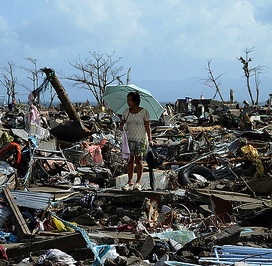
The aftermath of Typhoon Haiyan in the Philippines. Photo by Jordi Bernabeu
The aftermath of Typhoon Haiyan in the Philippines. Photo by Jordi Bernabeu via flickr.com

With death toll rising from the devastating typhoon in the Philippines this week, it seems that we’re constantly being reminded of the destruction of natural disasters, especially for rural and poor areas. Rural communities can be difficult to reach in times of environmental chaos, and poorer regions don’t always have the resources to cope with a crisis. When city services shut down or relief aid doesn’t come through immediately, community members band together to manage the aftermath of the disaster as best they can.

Sociologist Eric Klinenberg believes that community resources including “public places from libraries to mom-and-pop shops and coffee shops” can influence the outcomes of a crisis by providing the community the familiarity and support they need. In researching one such disaster, the 1995 Chicago heat wave, Klinenberg found that the residents of neighborhoods with more social infrastructure—like libraries and coffee shops—fared much better during the heat.

Those resources so dramatically improve the quality of our life on a regular day, but when there’s a heat wave or a hurricane or some other disaster, they can make the difference between life and death. In the Chicago heat wave, they did.

These types of social infrastructure benefit communities beyond times of crisis, according to Klinenberg who argues,

The nice thing about investing in climate security through social infrastructure is that the residual benefit is that we could dramatically improve the quality of life in these places all the time regardless of the weather. And it’s that kind of intelligent design that we desperately need at this moment.

Picture 2


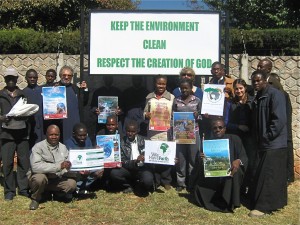
A 2012 Greek Orthodox Church gathering in Zimbabwe. Photo by The Alliance of Religions and Conservation via flickr.com.

On both the left and the right, discussions about the environment can often turn to religion to remind us of our responsibility to take care of the planet. Both Presidents Bush and Obama have reminded us to be “good stewards of the earth,” despite the disagreement on what that really means, and the activism of a range of religious groups on the issue has led pundits and scholars to conclude that Americans’ Christianity has been getting greener over the past few years.

A new report from Michigan State University, however, may challenge this verdant vision. Lansing’s Fox News affiliate station reports that a new study by John Clements, Aaron McCright, and Chenyang Xiao suggests a real divide between between what Christian leaders are saying and congregants are doing. Their work with an environmental attitudes section in the 2010 General Social Survey found that rank-and-file Christians have not shown “a significant increase in pro-environmental attitudes, beliefs, and behaviors.” In fact, nonreligious respondents in the survey were more likely to show concern about the environment and more willing to sacrifice to protect it.

The good news from the authors’ article in Organization & Environment is that, among Christians alone, those who were more religious were more likely to engage in “private environmental behaviors” like driving less and recycling. The real question, then, is not which religion gets to claim it cares more about the environment, but rather how to make these beliefs and behaviors more common for everyone.