diversity

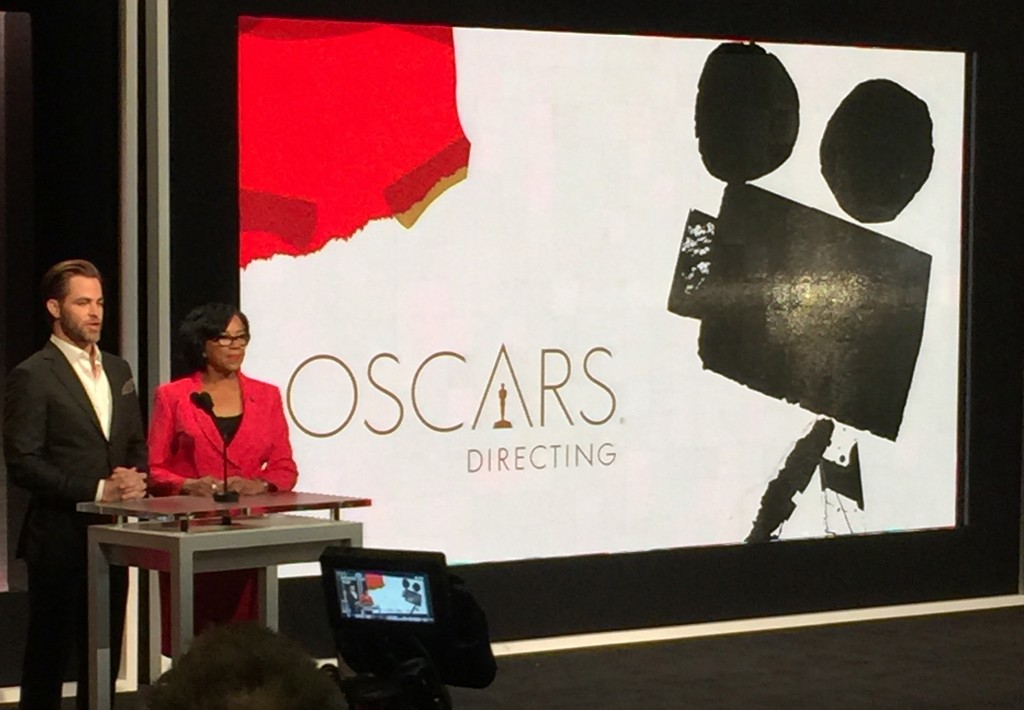
The 2015 Oscar nominees are announced. Photo by RedCarpetReport via flickr cc. https://flic.kr/p/qwEuL7
The 2015 Oscar nominees are announced. Photo by RedCarpetReport via flickr cc.


Following the whitest Academy Awards in nearly 20 years, UCLA’s Ralph J. Bunche Center for African American Studies released its 2015 Hollywood Diversity Report. Sociologist and center Director Darnell Hunt described the findings to The Hollywood Reporter: “Hollywood is not progressing at the same rate as America is diversifying.”

The study, which surveyed the top 200 worldwide box office films and 1,105 television series in 2012 and 2013, found that racial minorities and women were substantially underrepresented in both acting and directing roles. Those films with at least 30% diversity, however, did best in the worldwide box office tallies.

Study co-author Ana-Christina Ramon believes these numbers show that, “audiences, regardless of their race, are clamoring for more diverse content.” So what’s the holdup?

“It’s a high-risk industry,” says Hunt. “People want to surround themselves with collaborators they’re comfortable with, which tends to mean people they’ve networked with—and nine times out of 10, they’ll look similar. It reproduced the same opportunities for the same kind of people: You’re surrounding yourself with a bunch of white men to feel comfortable.”

Hunt suggests that emerging digital platforms like Netflix and Amazon could create more opportunities for on-screen diversity. Still, he is hesitant to make grand claims about progress: “It’s getting better, but it’s not getting better fast enough. And it’s still a big problem.”


Photo by Charlotte Morrall via Flickr CC. Click for original.

When Julia Pierson’s name first appeared in national headlines last year, it must have sounded like a perfect solution. President Obama appointed Pierson as the nation’s first female Director of the Secret Service following the aftermath of an embarrassing scandal in which several agents hired prostitutes on a presidential trip to Columbia. Many saw Pierson as uniquely positioned to purge the organization of its hyper-masculine culture and revive its good name.

After an intruder succeeded in running across the lawn and into the East Room of the White House, however, a firestorm of criticism prompted Pierson’s resignation. Writing in the New Republic, Bryce Covert suggests that the very gendered conditions of Pierson’s hire preconfigured her administration’s failure from the start. Such is the unfortunate case, he argues, for a large number of women in leadership roles:

As with Pierson, women are often put in these positions because rough patches make people think they need to shake things up and try something new—like putting a woman in charge. When it’s smooth sailing, on the other hand, men get to maintain control of the steering wheel. Women are also thought to have qualities associated with cleaning up messes.

You’re familiar with that unseen barrier to power called the “glass ceiling”? Covert cites research by psychologists Michelle Ryan and Alex Haslam to show that female leaders often reach top jobs that come with an inordinately high risk of failure. Social scientists call this precarious position the “glass cliff”.

Covert builds his case on a wealth of research exploring the risks that await women at the top of the corporate world:

Multiple studies have found that women are most likely to be given a chance at top roles in the corporate world when things are already bad. One found that before a woman took over as CEO of a Fortune 500 company between 1996 and 2010, its previous performance was significantly negative. Another found that FTSE 100 companies who appointed women to their boards were more likely to have had five months of consistently bad performance compared to those who picked men. Another found that companies were most likely to choose women for their boards after a loss that signaled the company was underperforming. Even in a lab, students and business leaders are more likely to pick a woman to lead a hypothetical organization when performance is on the decline.

Looking for more on the barriers facing women in positions of power? Our own Anne Kaduk shows “There’s Research on That!

According to a recent New York Times article, white children will soon be in the minority in the United States.  In fact, a new report based on Census 2010 data showed that the population of white children fell by 4.3 million (10%) in the last decade, while the population of  Hispanic and Asian children grew by 5.5 million (38%).

The Census Bureau had originally forecast that 2023 would be the tipping point for the minority population under the age of 18. But rapid growth among Latinos, Asians and people of more than one race has pushed it earlier, to 2019, according to William Frey, the senior demographer at the Brookings Institution who wrote the report about the shift, which has far-reaching political and policy implications.

The largest increase was among Hispanics, whose birth rates are much higher than non-Hispanic whites, in large part because the U.S. white population is aging.

As a result, America’s future will include a far more diverse young population, and a largely white older generation. The contrast raises important policy questions. Will the older generation pay for educating a younger generation that looks less like itself? And while the young population is a potential engine of growth for the economy, will it be a burden if it does not have access to adequate education?


Can He See The Road Ahead?Nearly one in five Americans think President Obama is a Muslim, according to ABC News:

The new poll from the nonpartisan Pew Forum on Religion and Public Life found that 18 percent of those surveyed wrongly identified Obama as Muslim, up from 11 percent in March 2009. At the same time, the number of Americans who knew correctly that Obama is Christian has declined from 48 percent in March 2009 to 34 percent today. But 43 percent of Americans now say they don’t know what Obama’s religion is at all.

The finding has even prompted a response from the White House.

“The president is, obviously, he’s Christian. He prays every day,” White House spokesman Bill Burton said today aboard Air Force One.
“He communicates with his religious advisor every single day,” Burton said. “There’s a group of pastors that he takes counsel from on a regular basis. His faith is very important to him, but it’s not something that’s a topic of conversation every single day.”

Burton said the president has talked “extensively” about his faith in the past and “you can bet he’ll talk about his faith again.” But “making sure Americans know what a devout Christian he is” is not the president’s top priority.

Despite such statements, sociologists have reason to doubt such misperceptions can be so easily overcome.

“I think the reality is that false beliefs spread like gossip more than actual information,” said Andrew Perrin, an associate professor of sociology at the University of North Carolina, Chapel Hill.

Perrin’s research has shown that a false perception can spread quickly if people’s friends and neighbors also have heard or believe a similar idea.

“False beliefs propagate when people think others believe them and when they have a supportive source that wants them to hold it,” Perrin said.

Perrin has found that even direct denials of the false information do not always solve the problem.

“In my own research, when [people] get reliable information that discounts these beliefs, they tend to cling to those beliefs more,” Perrin said.

Dora Suitcase and Backpack
As Dora the Explorer celebrates 10 years on the air, the LA Times comments on her broader social significance. The children’s show features a young Latina heroine who travels through the jungle with her friends, speaking some Spanish, and solving simple math and word problems.

The idea was to foster pride among Latino children and familiarity with Latino culture among English speakers, but only indirectly as part of an entertainment show.

“It was just about creating a show we thought kids would love,” said Chris Gifford, who created the series along with Valerie Walsh Valdes and Eric Weiner. “We didn’t begin to think how long it might go for.”

Dora, however, has grown much larger than these seemingly modest origins:

Amid these warm-hearted adventures, Dora became a pop-culture superstar, a lucrative franchise and a force that helped shift the globalized juvenile television landscape that has become increasingly multicultural and bilingual. Dora, in some eyes, also became a poster child for immigration and the target of anti-immigrant sentiment.

The animated series is now broadcast in more than 100 countries — it’s the No. 1-rated preschool show in many of them, including France — and dubbed in 30 languages, such as Russian, Mandarin and German, with Dora mostly teaching English (in some cases Spanish).

“What’s been innovative about the show is it wasn’t conceptualized or presented as a Latino-themed show,” said Chon Noriega, director of UCLA’s Chicano Studies Research Center. “It was an educational series for kids that happened to have a Latino girl as the lead character. And it didn’t shy away from having a character that spoke Spanish. That allowed it to do something that was very unique.”

Dora has gone on to enjoy considerable success, culturally and economically (generating more than $11 billion in retail sales alone).

“Dora isn’t just a show; she’s DVDs, clothes, lunchboxes,” said Karen Sternheimer, an associate professor of sociology at USC and author of “It’s Not the Media: The Truth About Pop Culture’s Influence on Children.” “Nickelodeon has been very savvy about getting their characters into kids’ lives through a number of different platforms. They’ve taken branding to another level.”

The main character wasn’t originally going to be Latina, but:

The idea for an ethnic rebirth sprang after Johnson [a Nickelodeon exec responsible for the program] attended an industry conference during which the underrepresentation of Latinos in media was discussed.

The 2000 census showed that Latino communities were the nation’s fastest growing — and the biggest five-year Latino age group is infants to preschoolers. Yet data have long shown that Latinos are underrepresented in prime-time TV: UCLA research found that 4% of prime-time’s regular characters in 2004 were Latino, while Latinos make up about 15% of the U.S. population.

For years, the main source for children’s multicultural TV was PBS’ “Sesame Street.” …Dora’s “success really reflects a change in the media environment for children over the years,” Sternheimer said. “It’s a great reflection of the shifting multicultural nature of our society.”

Since “Dora,” the children’s TV landscape has embraced diversity. PBS Kids revamped “Dragon Tales” in 2005 to include Enrique, who is Colombian. “Jay Jay the Jet Plane” has added a bilingual plane named Lina. “Dora” also launched a spinoff, “Go Diego Go,” starring Dora’s 8-year-old cousin, in 2005.

Sociologists are among the experts who consult for the show:

Schoolteachers, sociologists and historians are all brought in to advise on “Dora” episodes. More than 20 cultural consultants have worked on the show to make Dora’s world reflect a pan-Latino culture that’s not just tortillas and mariachi music, Johnson said. “It was important for us that Dora represented the idea that being multicultural was super cool,” she said.

Cortés, who’s serves as a cultural consultant on the show, said not giving Dora a specific heritage made that idea a reality. “Not knowing where she was from allowed her to be a source of pride for anyone of Latino background,” he said. “She’s more relatable if you don’t peg her down.”

So, is it all a rosy animated multicultural picture? A sociologist, per usual, complicates the story:

“The show definitely homogenizes the many different origin groups that are comprised within the Latino ethnicity,” said Jody Vallejo, an assistant professor of sociology at USC. “So Latino children are getting a very broad view of who they are. At the same time, it does allow people from those different origins to make her their own character, to take ownership. For non-Latinos who watch the show, it makes Latinos more relatable. It demonstrates that bilingualism is not that bad. But it makes it seem like Latinos come from a monolithic culture.”

Some pigWith the annual state fair season approaching nationwide, the Des Moines Register reports on the status of county fairs in Iowa, a rural state where the kids just don’t farm like they used to.

The challenge:

Keeping youth engaged in old-fashioned farm fun in the digital age, a time when kids may be more enticed by Farmville on Facebook than by a 4-H project with hogs.

Apparently, even tech-savvy teens aren’t immune to the lure of tradition:

Although the Iowa State Fair, which opens Thursday in Des Moines, typically attracts more than a million visitors, the county fairs have survived as an important cultural attraction in part because they are the largest event of the year for many communities, Tucker said.

Fried foods, giant stuffed teddy bears and bandstand acts connect people across generations who seek an alternative to movies and video games.

“It’s a unique marriage of entertainment and education,” Tucker said. “There’s a long tradition of people attending fairs with parents, grandparents.”

A sociologist interprets:

In that way, the fairs serve as an extended family reunion, said Paul Lasley, an Iowa State University sociology professor.

“Fairs have evolved,” Lasley said. “But the basis of social interaction, neighboring, seeing your old friends, that’s still an important part of them.

“It’s these connections that keep the county fairs going. Connections to the past, but also connections to the future.”

But shifting trends in youth participation are impacting more traditional fair activities:

A decline in Iowa youth participation concerns some because the county fairs make celebrating the accomplishments of children a core part of the mission.

The number of youth showing livestock at county fairs last year was down 9 percent from 2008, according to Association of Iowa Fairs statistics. The number of youth showing nonlivestock projects was down 3 percent, data showed.

However, the youths who participated were more active. The number of livestock and nonlivestock exhibits was up slightly in 2009.

Such changes in demographics and participation are prompting some fair organizers to innovate.  Marshalltown, Iowa provides one example:

Polt said few from Marshalltown’s sizable Hispanic population participate, despite the role of county fairs in celebrating a community’s culture and heritage.

“We have to find avenues of bringing them in and letting them know we want them to be part of our fair,” he said.

Holding the fair on Sundays would allow Hispanic parents, many of whom work six days a week, to attend on a day traditionally set aside to spend with family, he said.

“You can’t keep catering to the same old crowd,” he said. “Your crowd’s getting younger. Generations change.”

33 WeeksThe Daily Mail reports that the face of the U.S. is changing rapidly in the delivery room.

America is reaching a ‘tipping point’ when the babies born to minority parents outnumber whites for the first time.

More white women than ever before are postponing having children until they are older, while minority mothers are still having babies at younger ages, according to a US study published yesterday.

Experts claim the immigration boom has accelerated the historic trend that is likely to leave whites in the minority in America by the middle of the century.

The percentage of children born to minority parents has grown significantly  in recent decades, but this study projects that more than half will be to minority parents this year.

One of the study’s authors, a sociologist, weighs in:

‘For America’s children, the future is now,’ said Kenneth Johnson, a sociology professor at the University of New Hampshire who researched many of the racial trends in the report.

‘Census projections suggest America may become a minority-majority country by the middle of the century,’ he added.

He explained that there are now more Hispanic women of prime childbearing age in the US, who tend to have more children than women of other races.

More white women are waiting until they are older to have babies, although it is not yet clear how much effect that will have on the current trend of increasing minority newborns.

The number of white women of prime childbearing age is on the decline, dropping 19 per cent from 1990.

Broken down by race, about 52 per cent of babies born in 2008 were white.

That’s compared to about 25 per cent Hispanic, 15 per cent black and 4 per cent Asian. Another 4 per cent were identified by their parents as multiracial.

What will the significance of this trend be? The Daily Mail speculates…

The numbers highlight the nation’s growing racial and age divide, seen in pockets of communities across the US, which could heighten tensions in current policy debates from immigration reform and education to health care and Social Security.

There are also strong implications for the 2010 population count, which begins in earnest next week, when more than 120 million US households receive their census forms in the post.

The Census Bureau is running public service announcements this week to improve its tally of young children, particularly minorities, who are most often missed in the once-a-decade head count.

Whites currently make up two-thirds of the total US population, and recent census estimates suggest the total number of minorities may not overtake the number of whites until 2050.

Right now, roughly one in ten of the nation’s 3,142 counties already have minority populations greater than 50 per cent.

But one in four communities have more minority children than white children or are nearing that point, according to the study, which Mr Johnson co-published.

In a recent Boston Globe story, diversity consultants and social scientists debated the effects of workplace diversity training.  While diversity training programs are a common job requirement these days, they may look very different from one company to the next:

The courses vary widely, in content and duration and method and philosophy: Some are short videos followed by structured discussions, some are multiday retreats, some are informational, teaching participants about their “diversity circle” and the difference between a generalization and a stereotype, others focus on role-playing. But they all promise to help people better navigate the fault lines of race, gender, culture, class, and sexual orientation that can divide co-workers and unsettle offices.

Opinions about the programs are also varied, and good social science evidence for either side of the debate has been scarce:

Such programs have always been controversial, with critics arguing that they’re unnecessary and needlessly politicize the workplace. But despite the growth and prevalence of diversity training, there have been few attempts to systematically study it.

Now a few social scientists are taking a hard look at these programs, and, so far, what they’re finding is that there’s little evidence that diversity training works.

Research by a team of sociologists on more than 800 companies over three decades has found that the best diversity training programs make little difference in who gets hired and promoted, and many programs actually decrease the number of women and minorities in management.

“Even with best practices, you’re not going to get much of an effect,” says Frank Dobbin, a Harvard University sociology professor on the research team. “It doesn’t change what happens at work.”

Diversity consultants are confident in their programs, claiming social science research in this area can’t accurately measure the impact of the training they deliver, generalizes unfairly, and rarely offers solutions to the problems it identifies:

Practitioners and some scholars disagree, arguing that, while there have been some unsubstantiated claims and overhyped “innovations” in diversity training, the field as a whole has begun to figure out what works. The changes that training triggers can often be subtle, defenders argue, and, in a setting as dynamic and stubbornly multivariate as the workplace, it’s all but impossible to come up with the clear, falsifiable evidence social science demands. The poor results that do show up in broad-based studies, they say, are due to companies whose commitment to diversity training programs is merely pro forma, and who see training as just a way to protect themselves from lawsuits.

“My experience is that a lot of these studies make good points, but they tend to fall into one particular trap,” says Howard Ross, a leading diversity consultant. “When we talk about diversity training as a megalith, it’s similar to saying, ‘Are restaurants good places to eat?’ The answer is ‘yes’ and ‘no,’ depending on the restaurant.”

Critics, on the other hand, argue that today’s practitioners are unlikely to be converging on a set of best practices, since the field is characterized by divergent, even contradictory approaches to the same set of problems. To critics, the proponents are simply mistaking the fact that people feel better about themselves after training for real results. Just because people think they’re less prejudiced doesn’t mean they are. Indeed, with something as subtle and reflexive as bias, we’re often our own worst judges

Dobbin and his colleagues have designed their research to address the potential alternatives to conventional diversity training programs practitioners often call for:

“We were increasingly frustrated by the fact that we know a lot about what kinds of disparities there are in organizations, and what kind of disadvantages women and minorities faced, but we know almost nothing about how to how to reduce them,” says Alexandra Kalev, a sociologist at the University of Arizona.

Several years ago Kalev, along with Dobbin and Erin Kelly of the University of Minnesota, set out to see what works. As a measure of program success, they looked at the number of women and minorities in a company’s managerial ranks – a much more concrete metric than the surveys of employee attitudes that many other studies relied on. The researchers drew on 31 years of Equal Employment Opportunity Commission data, specifically the annual reports that companies file detailing their racial and gender makeup. The sociologists then surveyed 829 of those companies on what diversity programs they had and when they instituted them. The results were described in a 2006 study, and in another paper that Kalev and Dobbin are currently writing.

The researchers found that while diversity training was by far the most popular approach, it was also the least effective at getting companies to hire and promote women and minorities. Some training programs were more effective than others: Voluntary programs were better than mandatory ones, and those that focused on the threat of bias and harassment lawsuits were worse than those that did not. But even the better programs led only to marginal changes. And those that were mandatory or discussed lawsuits – the vast majority of the programs the researchers examined – slightly reduced the number of women and minorities in management. Required training and legalistic training both make people resentful, the authors suggest, and likely to rebel against what they’ve heard.

What worked much better than even the best training, the researchers found, were more structural measures: minority mentoring programs, or designating an executive or a task force with specific responsibility to change promotion practices.

“You can imagine, if you’re in a meeting for two hours once a year to refresh your diversity awareness, what’s the effect of that going to be compared to being a mentor to someone?” says Dobbin.

At least some diversity consultants seem willing to accept that research finding, while still defending the role of training programs in an overall diversity policy:

Diversity trainers concede that there are poorly designed programs out there. There are also, they point out, companies that implement diversity training without much concern for whether it works, which is not a recipe for success. That doesn’t mean that well designed, conscientiously applied programs don’t work.

And diversity consultants bristle at the suggestion that they believe diversity training programs are a panacea. Properly instituting a diversity training program, many of them insist, means combining it with other, more systemic changes, including measures like those that the Kalev, Dobbin, and Kelly research found were more effective.

“If you look at just the efficacy of diversity training programs, that’s not how we look at it as a practitioner,” says Rohini Anand, global chief diversity officer at the food services giant Sodexo. “To me diversity training is one small but very necessary piece of what I need to do.”